
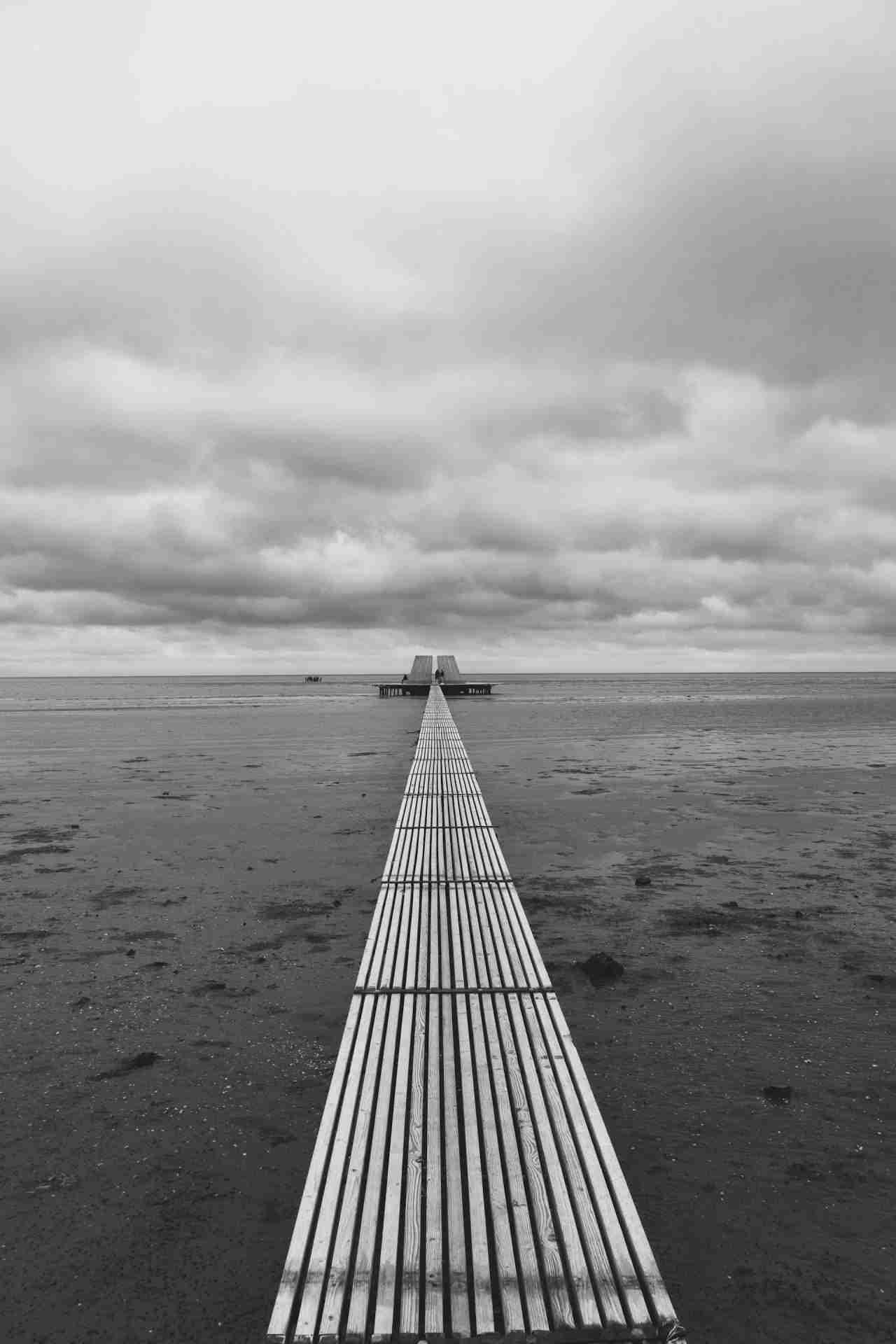
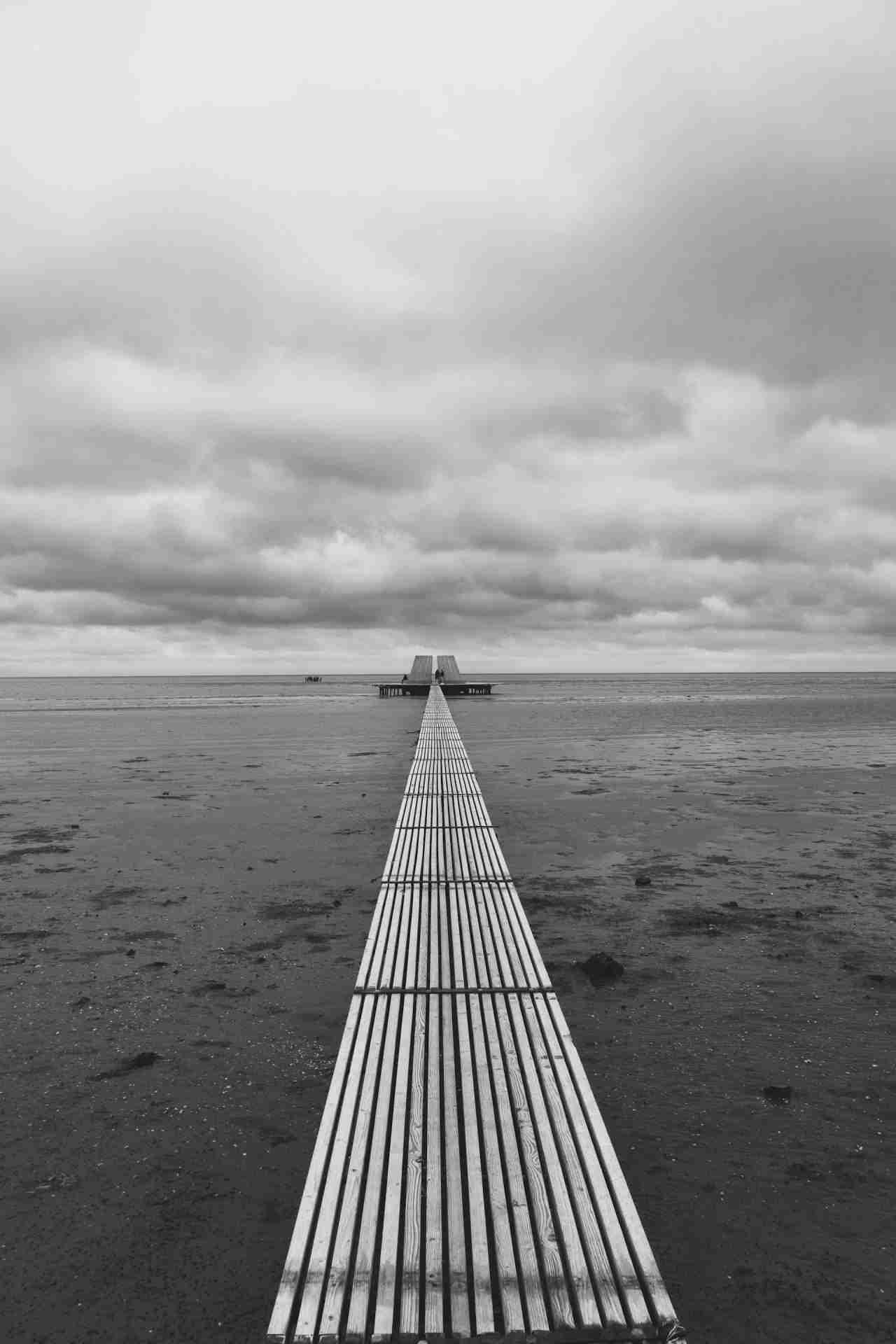
Positioned at the edge of land and sea on the Wadden Island of Terschelling, De Streken is a site-specific landscape artwork that invites a slow, intentional form of photography. Designed by Dutch artist Marc van Vliet, the installation rests on the tidal flats near Oosterend and is only accessible at low tide. Built with timber, stone, and earth, the structure physically rotates with the rising and falling sea, aligning with natural cycles while offering a unique visual dialogue between human creation and environmental change. For photographers, this is a rare opportunity to document an artwork that is part architecture, part performance, and part disappearing act. Whether approached as a minimalist subject, a compositional anchor in a vast horizon, or a lens through which to observe light and tide, De Streken is both a challenge and a reward to capture.
Best Photography Opportunities
• Low Tide Approaches and Leading Lines
: When the tide recedes, the seabed transforms into a textured foreground filled with ripples, tidal channels, and soft sand ridges that guide the eye naturally toward De Streken. These organic lines are perfect for wide-angle compositions, especially when shooting low to the ground to emphasize scale and depth. In early morning or late afternoon, the low sun grazes the flat landscape, casting long shadows across the mud and enhancing the visual separation between structure and ground. The contrast between the natural forms of the flats and the geometric precision of the sculpture gives each frame a grounded yet surreal quality. Reflections in residual water pools can be worked into the frame to double the impact of leading elements or anchor the sky's presence in your image.
• Aerial and Elevated Perspectives
: From above, De Streken reveals its true form as a symmetrical structure embedded within a vast, fluid landscape. This top-down perspective is ideal for emphasizing the relationship between the sculpture and its tidal context, especially during low tide when the surrounding mudflats stretch unbroken toward the horizon. Drones, when operated within legal restrictions, allow for precise framing that captures both form and shadow with clean edges. The best aerial shots are taken during golden hour when the low angle light adds warmth and defines the sculpture's outline with dramatic clarity. For photographers without drone access, nearby dunes around Oosterend offer slightly elevated positions that give just enough height to introduce perspective without losing intimacy.
• Reflections at Golden Hour
: When wind is minimal and the tide has receded but left behind standing pools of water, De Streken can be perfectly reflected on the surface. These conditions create mirror-like compositions that are ideal for symmetry and minimalist framing, especially when the light is warm and low on the horizon. Golden hour adds a gentle orange and pink hue to the structure and sky, which is picked up in the wet flats and residual water. Long exposures using neutral density filters can be used to smooth out minor ripples and subtly streak the sky, enhancing the quiet, contemplative nature of the scene. Shooting just before or after the sun dips below the horizon can also introduce cooler tones for a balanced complementary color palette.
• Human Interaction and Scale
: While the sculpture itself is often photographed in isolation, including human figures within your composition helps express its purpose and scale. The structure invites interaction—people climb it, sit within its arcs, or simply stand nearby observing the landscape—creating moments of quiet narrative. Wide-angle lenses used at low angles will exaggerate this human engagement, while a mid-range focal length is useful for more intimate captures. Silhouettes work well during sunrise or sunset, especially if figures are placed between open sky and the structure's curve. Including people not only adds scale but reinforces the artwork's function as a place of reflection and presence, not just an object.
• Changing Weather and Tidal Cycles
: De Streken is inseparable from its environment, and as that environment shifts, so does the tone and potential of every shot. Storm clouds gathering over the Wadden Sea provide an entirely different backdrop than a clear blue sky, and the reflective mudflats respond dramatically to these shifts in overhead light. Fog rolling across the low landscape can partially obscure the sculpture, allowing for soft-focus compositions that border on the abstract. The incoming tide can be used as a narrative element, gradually isolating the sculpture as the water reclaims the space. Photographers who return over time or remain at the site across multiple tidal phases will find no two images of De Streken are ever exactly the same.
Best Time to Visit
The best time to photograph De Streken is during low tide with calm weather and directional light, typically in the early morning or late afternoon. These times provide long shadows and soft color that enhance the textures of the mudflats and the sculpture itself. Morning light from the east is particularly effective for backlighting the structure and illuminating the Wadden Sea beyond, while evening light can produce glowing tones that reflect off remaining water and wet sand.
Spring and autumn offer the most consistently favorable light for landscape work, as well as cooler temperatures that reduce heat haze and atmospheric distortion. These seasons also bring more dynamic skies, which complement the minimal foreground. Summer light tends to be higher and flatter, but longer days allow for more flexibility in timing, especially if you are coordinating with a specific tide schedule. Winter, while harsher and often more inaccessible due to weather, can produce stark and powerful compositions, particularly when frost or snow dusts the flats.
Because access to De Streken is tidal, checking local tide tables is essential. Aim to arrive just before low tide and plan to leave as water begins returning, as the area floods quickly and footing can become slippery. Wind and cloud forecasts should also be factored in, as these will strongly affect visibility, water texture, and the presence or absence of reflections.
How to Get There
De Streken is located on the eastern end of Terschelling, near the small village of Oosterend. To reach the island, take a ferry from Harlingen to West-Terschelling, with services operated by Rederij Doeksen. The ferry accepts both passengers and bicycles, though bringing a car onto the island typically requires advanced booking. From West-Terschelling, the site can be reached by bicycle or local bus along Hoofdweg, followed by a short walk through the village and toward the coast.
The sculpture is not accessible during high tide, and the final approach across the mudflats must be timed carefully to coincide with low water. There are no formal signs or barriers, but local maps and posted tide charts at Oosterend provide guidance. There is no entrance fee or ticketing required to visit De Streken, but access is entirely dependent on tidal conditions. Sturdy, waterproof footwear is recommended for walking across wet sand, and camera gear should be carried in a weather-protected bag due to the exposure to salt and water.
Recommended Photography Gear
Photographing De Streken is an exercise in minimalism and planning, so every piece of gear should serve a purpose. A wide-angle lens in the 16 to 35 millimeter range is essential for capturing the sculpture in context, especially when including the mudflat textures and open sky. The structure's curvature and symmetry are best appreciated at close range, but you'll need room in the frame for environmental context. A mid-range zoom, such as a 24 to 70 millimeter lens, is useful for shooting from slightly elevated dunes or from farther along the shore when the structure is framed against the sea.
A tripod is vital for long exposures during golden hour or twilight, particularly on soft, shifting sand. Choose one with spiked feet or adjustable legs to stabilize on uneven surfaces. A remote shutter release or intervalometer will allow for precise timing during low light or composite sequences. Neutral density filters, especially six-stop and ten-stop options, are invaluable for softening water movement and emphasizing the stillness of the sculpture as the environment moves around it. A circular polarizer can help manage glare on wet sand or tidal pools, though its effect may vary based on the angle of light.
Because the site is fully exposed, weather protection for both gear and person is essential. A rain cover, dry bag insert, and microfiber cloth should be standard in your kit. Footwear must handle wet, slippery, and muddy terrain—waterproof hiking shoes or rubber boots are recommended. A compact drone may be useful if permitted, though always check current restrictions regarding aerial photography over nature reserves in the Wadden Sea. If you plan to photograph after sunset, bring a headlamp with a red-light option to preserve your night vision during departure.
Nearby Photography Locations
: East of De Streken, this vast protected wetland offers quiet dunes, migratory birds, and wide views across tidal plains. Sunrise is particularly striking here, with mist often rising off the land. It is best approached by bicycle or on foot, and lends itself to slow, observational photography.
: The broader Wadden Sea area, a UNESCO World Heritage site, offers expansive mudflats that shift with the tide and sky. Ideal for minimalist photography, especially during long exposures or when capturing lone walkers against distant horizons. The tidal lines and textures provide ever-changing compositions.
: This high dune west of Oosterend offers elevated views over the island's interior, the beach, and the sea. It is one of the best spots for sunset panoramas, especially when low clouds catch warm evening light. The surrounding heather and grasses add texture to foreground compositions.
• Drenkelingenhuisje (Drowning Victims' Shelter)
: Located along the beach on the northern shore of Terschelling, this small historic structure sits alone in the sand dunes and is striking in its isolation. Best shot with long lenses or during winter storms when the wind shapes dramatic patterns in the sand.
• Westerburen and the Dike Line
: On the southern coast of the island, this area blends sea defense infrastructure with open water views. The long straight lines of the dike offer clean symmetry, especially at sunset when the inland light turns warm against the dark sea.
Photographing De Streken is less about chasing the dramatic and more about waiting, observing, and responding to the slow choreography of tide and light. It is a subject that reveals itself gradually and asks the photographer to do the same. With careful timing, thoughtful framing, and a bit of patience, the experience becomes as much about presence as it is about the final image.
Comments
Loading comments…