
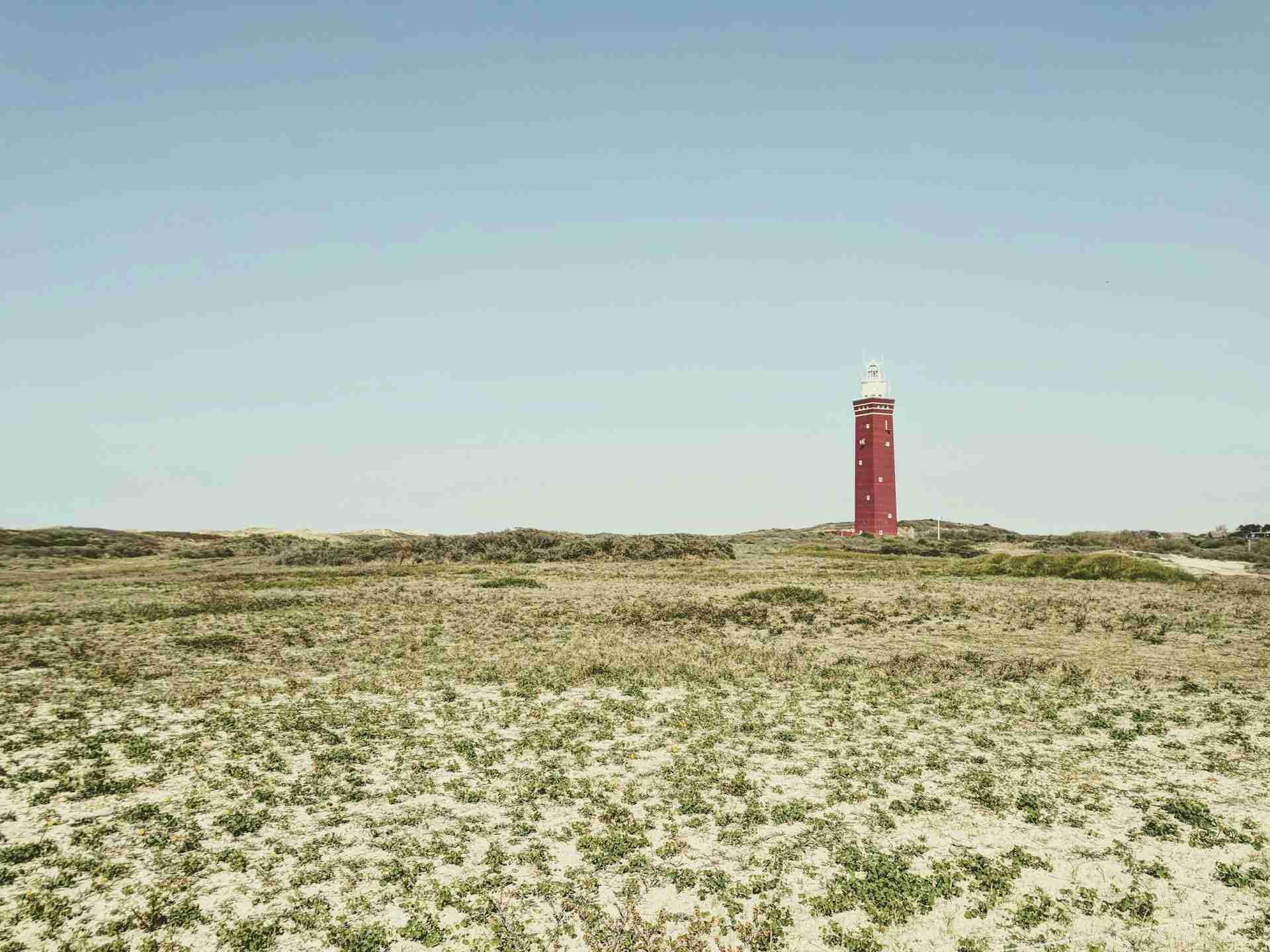
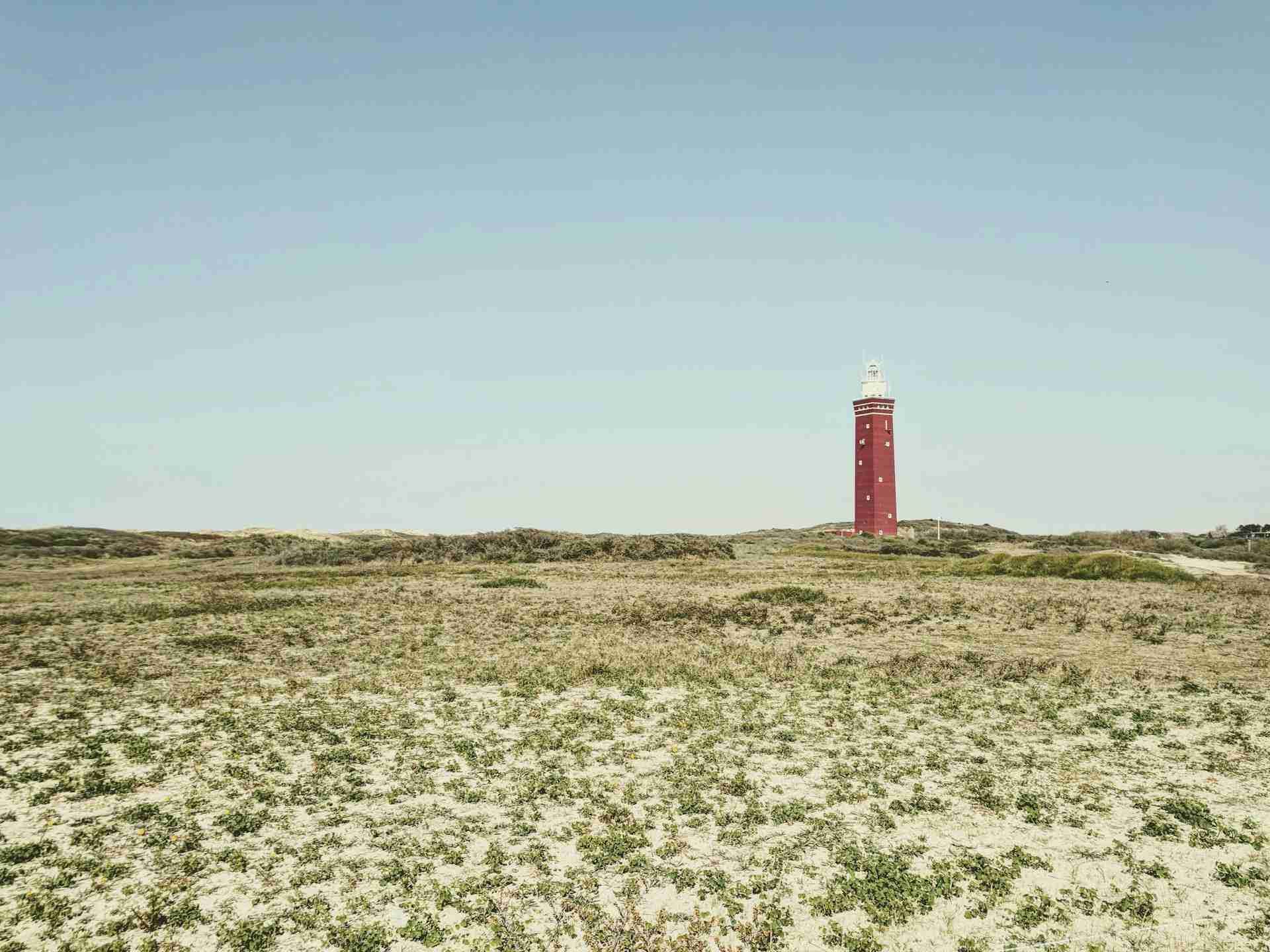
Rising from the dunes of South Holland near the coastal town of Ouddorp, Lighthouse Westhoofd stands tall and solitary against an ever-changing sky. Its square red-brick form is visible from miles away, offering a bold vertical contrast to the wide, flat landscape of sand, grass, and sea. Surrounded by protected dune habitat and long, windswept beaches, the lighthouse is an ideal subject for photographers drawn to strong geometry and coastal light. What sets this location apart is not just the structure itself, but the way it interacts with the vast openness around it. Whether it is silhouetted against low morning fog or catching warm evening light as it cuts across the tall dune grass, it rewards both minimal compositions and more immersive storytelling through layers of sky, structure, and sand.
Best Photography Opportunities
• Golden Hour Along the Dunes
One of the best ways to photograph Lighthouse Westhoofd is by placing it within the context of the dune landscape during golden hour. The light at this time gently brushes over the tall beach grass, creating soft textures and shadows that add depth to your foreground. Using a medium telephoto lens, you can compress the elements to bring the lighthouse closer while keeping the gentle roll of the dunes intact. Sunset often delivers warm, saturated tones that complement the deep red of the tower, while early morning offers a subtler, pastel palette. Look for compositions that lead the eye naturally through the grass toward the lighthouse.
• Wide-Angle Foreground Studies from the Nature Reserve
From the nature reserve trails east of the lighthouse, it is possible to frame the tower within a wide-angle landscape that includes sand paths, wooden fences, and dune vegetation. A 16 to 35mm lens lets you get low and dramatic with your framing, using leading lines and organic shapes to contrast with the lighthouse's clean, vertical geometry. This is a good area for storytelling compositions that balance natural textures with manmade structure. Overcast conditions work well here too, allowing you to highlight form and structure without harsh shadows. You can revisit the same path in different seasons to find new compositions as vegetation shifts.
• Fog and Low Cloud Isolation
In colder months or early spring mornings, low fog sometimes settles into the dunes, leaving only the top portion of the lighthouse visible above a sea of white. These conditions are rare but striking and are ideal for minimalist or moody compositions. A telephoto lens helps isolate the tower from the low horizon and simplifies the frame. Long exposures are effective here, especially when wind moves fog across the scene. Pack a fast prime if you are hoping to capture this at dawn, when visibility can change by the minute and the light is at its most fleeting.
• Beachside Silhouettes at Dusk
From the open beach to the west of the lighthouse, you can create clean silhouettes by shooting back toward the land at sunset. The lighthouse rises just far enough inland that it can be framed against the glowing sky from a low vantage point near the dunes. These compositions benefit from minimalism, keeping the frame clean and letting the contrast between form and color carry the image. A high f-stop and tripod will help ensure edge-to-edge sharpness as you work with longer exposures after sunset. Plan to arrive early to scout your angle before the light drops too far.
• Long Lens Details and Abstracts
Because of its textured red brick and bold white crown, the lighthouse also works well as an abstract subject when photographed with a long lens. Isolate corners of the structure, play with shadow lines, or use repetition in windows and architectural elements to create graphic studies. This is especially effective on bright, clear days when shadow play enhances the geometry. You can also frame parts of the lighthouse through the dune grasses for a layered, compressed effect that feels more intimate. These types of images work well in sets, showing variations in form and detail across different light conditions.
Best Time to Visit
Lighthouse Westhoofd can be photographed throughout the year, though conditions and lighting vary significantly by season. Spring and autumn provide the most versatile conditions. In spring, new dune growth adds a fresh layer of green to the foreground, and morning fog is more likely to occur. The sun rises at a low angle, offering extended shooting windows with soft light and long shadows. Autumn brings golden tones to the grasses and often more textured skies, especially as cold fronts pass through from the North Sea.
Summer brings long days and stable light, but also presents challenges with heat shimmer and harsh midday sun. Early morning and the last hour before sunset are the most productive times in summer. Light at these times is warmer and more directional, adding texture to the dunes and depth to your compositions. This is also the best time to photograph from the western beach, where the lighthouse can be silhouetted cleanly against the fading sky.
Winter is for the photographer who does not mind a little discomfort. The light is low throughout the day, which allows for good shooting conditions even at noon. Mist and rain are more frequent, and storm fronts move quickly, sometimes bringing dramatic skies that suit more abstract or high-contrast compositions. Be prepared for strong winds and rapidly changing conditions, especially if you are planning long exposure work or intend to hike into the dunes.
Wind is a constant presence in this part of South Holland. Some days it is manageable, while on others it can cause camera shake or move sand and grass into your frame. Always check the forecast and bring gear that can handle exposure to wind and sea air. Days with light wind tend to offer the clearest reflections and the most stable foregrounds for composition.
How to Get There
Lighthouse Westhoofd is located just outside the town of Ouddorp, on the island of Goeree-Overflakkee in South Holland. The most direct route from Rotterdam or The Hague is via the N57. Once in Ouddorp, look for signs marked "Vuurtoren" or "Vuurtorenpad," both of which will lead you toward the lighthouse area.
There is a small public parking lot near the edge of the nature reserve. From here, it is a short walk along sandy trails to reach the lighthouse and surrounding dunes. The lighthouse is not open for tours, but you can freely photograph the exterior from a variety of vantage points. There are no fees for access, and no photography permits are required for casual use. However, if you plan to fly a drone, check local restrictions and nature reserve boundaries, as some parts of the area are protected and may have seasonal flight bans due to bird activity.
Sunrise and sunset sessions are best planned in advance. The area is large and somewhat open, and while trails are clear, distances between vantage points can be longer than expected. Wear waterproof boots if you are venturing off the path, and bring water and weather protection, as there are no restrooms or shelter nearby.
Recommended Photography Gear
Photographing Lighthouse Westhoofd and its surrounding dunes calls for a well-rounded but rugged setup. A full-frame camera body with strong dynamic range and good low-light performance will help you capture both soft golden light and moody, overcast conditions. A wide-angle zoom such as a 16 to 35mm lens is ideal for showing the lighthouse within the larger dune environment. For more natural-looking compression and mid-distance subjects, a 24 to 70mm or 35mm prime offers excellent balance between context and detail.
A telephoto lens in the 70 to 200mm range allows you to isolate the lighthouse or capture tighter compositions that emphasize geometry and form. This lens is also useful for capturing compressed dune lines, birdlife in the reserve, or layering elements when fog is present. If your style leans more abstract or minimal, consider a 100 to 400mm for fine detail and deep background separation.
A sturdy tripod is critical here, especially when shooting long exposures near the beach or from dune tops where wind is more intense. Choose one with a wide base or spiked feet for sand, and use the center column only when necessary. Neutral density filters allow for creative motion blur in clouds or grass, and graduated ND filters are helpful for balancing dynamic skies with darker foregrounds. A circular polarizer can reduce glare when shooting during bright daylight but use it sparingly to avoid unnatural sky gradients.
Weather protection for your gear is essential. A rain cover, cleaning cloth, and extra lens caps will help protect against windblown sand and sea spray. A headlamp with a red-light mode is recommended if you plan to shoot before sunrise or after dark. Bring extra batteries, especially in colder months when they drain faster, and use a padded backpack with rain protection if you will be walking through the reserve for extended periods. Dress in layers and prepare for wind, even on sunny days.
Nearby Photography Locations
Located just south of Ouddorp, this protected area is home to shifting sandbanks, wild grasses, and brackish wetlands. It is ideal for wide-angle landscape work, bird photography, and abstract studies of wind-shaped textures. Cloudy days add drama and contrast, while calm mornings offer reflections and soft shadows.
A short drive east, Brouwersdam is a long sea barrier where natural views meet industrial design. Use the repeating lines and concrete structures as graphic elements, especially during stormy conditions when waves hit the walls. This location is excellent for long exposure work and offers a very different feel from the dunes and lighthouse.
This saltwater lake provides quiet, sheltered views ideal for calm reflections, especially during golden hour. The jetties and mooring poles along the shore can act as strong visual anchors. It is also a good location for capturing boats and marine details in low wind conditions.
North of Ouddorp, this landscape of rolling dunes and coastal wetlands offers more variety for photographers interested in layering and natural transitions. Paths lead through grassy valleys and up to elevated viewpoints that are excellent for sunrise light. The area is quieter than some of the larger beaches and offers opportunities for both macro and wide compositions.
This wide, sandy beach has a very open horizon, making it ideal for low tide reflection shots or minimalist silhouettes. Wooden piers and posts create clean graphic elements, and the setting sun often lights up the water in soft gradients. It is less busy than tourist beaches and is easy to access with a full gear kit.
Lighthouse Westhoofd is more than a standalone subject. It is a constant among shifting light, dunes, and sea air. Whether you are working with layered landscapes, stark geometry, or soft color transitions, this location offers photographers a wide canvas with subtle variations. It invites exploration, rewards patience, and never quite looks the same twice.
Comments
Loading comments…