
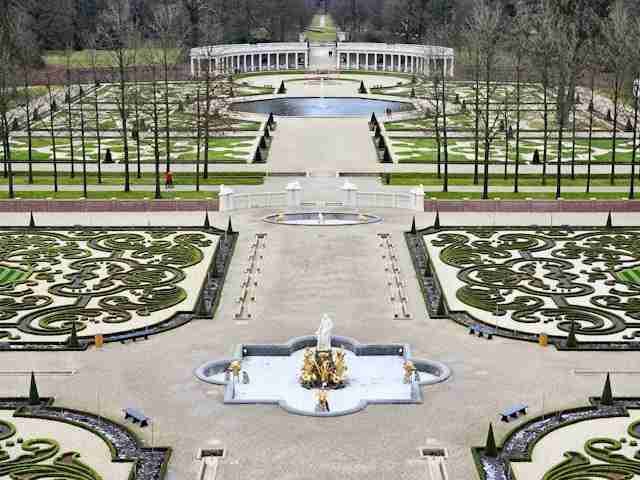
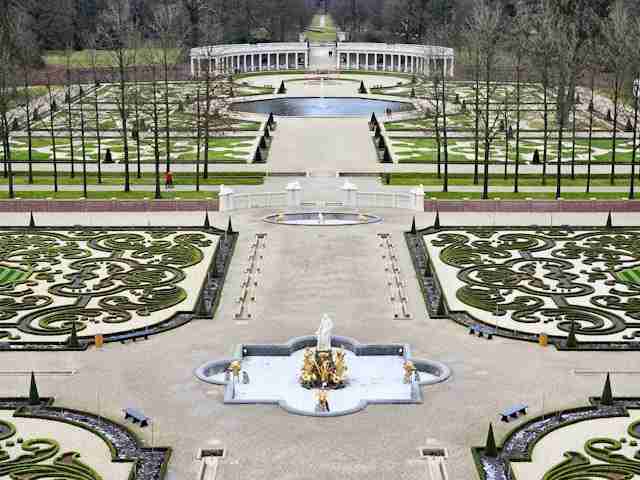
Located on the outskirts of Apeldoorn in the heart of the Netherlands, Paleis Het Loo is a masterpiece of Dutch Baroque architecture and formal garden design. Built in the late 17th century as a royal palace for the House of Orange-Nassau, it was inspired by the likes of Versailles but with a distinctly Dutch approach to proportion, order, and horticultural harmony. The palace itself is a striking example of restrained opulence, with symmetrical façades, brick and white stone detailing, and expansive courtyards. Its gardens, meticulously restored to their original Baroque layout, are among the finest in Europe—perfectly geometric, filled with fountains, topiary, and wide gravel alleys. Together, they create a regal setting ideal for architectural photography, aerial perspectives, and detailed composition work.
Best Photography Opportunities
• Formal Garden from the Upper Palace Terrace
: The elevated rear terrace of Paleis Het Loo provides the most commanding view of the Baroque gardens below. From this high vantage point, you can capture the sweeping axial symmetry of hedges, gravel paths, parterres, and fountains that radiate outward in perfect alignment from the palace façade. A wide-angle lens allows for immersive compositions that include the full garden structure, especially when framed by the ornate stone balustrades in the foreground. This viewpoint shines in the early morning when soft golden light enhances garden textures and creates shadows that emphasize the layout's precision. During summer, low sun illuminates the water features and adds warmth to the patterned lawns, while misty mornings in spring give the scene a soft, ethereal atmosphere.
• Frontal Courtyard with Architectural Symmetry
: At the front of the palace, the central courtyard offers a powerful viewpoint that emphasizes the building's balanced proportions and classical detailing. Brick façades, white-trimmed windows, and the central pediment form a composition of repeating elements that works beautifully with a centered or low-angle perspective. Shooting in late afternoon allows sunlight to rake across the façade, bringing out the warm tones of the brick and the crisp shadows of architectural reliefs. For more refined compositions, use a tilt-shift lens to correct vertical lines and preserve symmetry. In the rain or under overcast skies, the brickwork darkens and becomes richly textured, perfect for black-and-white studies.
• Fountain and Sculpture Close-Ups in the Lower Gardens
: The lower gardens are filled with ornate fountains, mythological sculptures, and carved basins—all offering rich detail for tighter, more focused compositions. These decorative elements are not only beautiful in isolation, but they also reflect the palace's wider aesthetic of controlled grandeur. Use a mid-range zoom or prime lens to isolate flowing water, sculpted stone, or golden accents against blurred backgrounds of hedge or sky. Shoot in soft morning or diffused afternoon light to avoid harsh highlights on wet surfaces. Including water spray or reflection elements can introduce a sense of movement and contrast to otherwise static detail shots.
• Tree-Lined Alleys and Hedges for Leading Lines
: The palace grounds include long avenues flanked by rows of tightly clipped hedges and mature trees, which act as powerful leading lines in your compositions. These paths are ideal for vanishing point photography and convey a sense of scale and direction. During spring and summer, the tree canopies create archways of filtered light, while autumn paints the scene in golds and oranges. Use a 50mm or longer lens to compress the scene and emphasize rhythm and repetition. Composing with a single figure—such as a walker or cyclist—adds narrative and scale. These scenes are especially effective in low sun, when long shadows stretch across the gravel.
• Reflections and Patterns in Water Features
: The geometric layout of the gardens includes rectangular pools and fountains with mirror-like surfaces that reflect the palace and sky above. These reflections are best captured during calm, windless mornings or just after rainfall when the water is still and the light is low. A polarizing filter can help manage glare while enhancing the depth of reflection. Position yourself at the edges of the pools to incorporate foreground interest, like lily pads or stones, and experiment with vertical compositions that create symmetry between the palace and its reflection. At golden hour, the pools take on warm tones and subtle gradients of color, offering serene and painterly results.
Best Time to Visit
Spring and early summer are ideal for photographing Paleis Het Loo, particularly from April to June when the gardens are in full bloom and the parterres are at their most vibrant. Early mornings during this period often provide calm air, golden light, and minimal visitor traffic, making it the best window for shooting expansive views and reflective water surfaces without distractions.
Autumn also brings excellent opportunities, as the tree-lined alleys transform into corridors of orange, rust, and gold. The lower angle of the sun during October and November produces richer contrast and longer shadows, especially in the late afternoon. These months are perfect for capturing the palace in a warmer, more painterly palette.
Winter offers minimalist compositions of bare branches, frost-covered gardens, and dramatic skies. While the gardens are less lush, the stark outlines of hedges and fountain basins create graphic shapes that photograph beautifully in black and white or subdued color.
Midday in summer can be harsh and crowded, so it's best reserved for close-up detail work in shaded areas or interior architectural elements if accessible. The gardens are open seasonally, and operating hours can vary—checking in advance ensures you arrive with the best light and access.
How to Get There
Paleis Het Loo is located just northwest of the center of Apeldoorn, in Gelderland province. From Amsterdam or Utrecht, the site is easily accessible by train and local bus in under two hours. The Apeldoorn train station connects to bus lines that stop directly at the palace entrance.
If arriving by car, the palace is well-signposted from the A1 and A50 motorways. Ample paid parking is available near the visitor center. From there, it's a short walk through landscaped grounds to reach the main courtyard and ticketing area.
The gardens and palace grounds are open to the public during set hours and require an entrance ticket, which can be purchased in advance online or at the gate. Photographers are welcome throughout the exterior areas, and tripods are generally permitted in the gardens—though caution is advised during peak hours due to foot traffic.
Recommended Photography Gear
A wide-angle lens (16–35mm) is critical for capturing the full scope of the gardens and architectural symmetry. It allows you to frame expansive views from elevated terraces or align entire façades within a single composition.
A mid-range zoom (24–70mm) is the most versatile option on the property, especially for detail work with fountains, statues, and corridors of trees. It also lets you adapt quickly to changing light or scenes with people in motion.
A telephoto lens (70–200mm) is recommended for compressing long alleys, isolating architectural flourishes on the palace itself, or capturing subtle interplay between shadow and texture across hedgerows or brickwork.
A sturdy tripod is useful for early morning or dusk shots, particularly when you want to capture stillness, reflections, or long exposures of fountains. A circular polarizer can help deepen skies and manage reflections on water surfaces, especially when shooting in bright daylight.
Nearby Photography Locations
: Adjacent to the palace grounds, this royal forest features walking paths through dense woodlands, open glades, and deer sightings. Excellent for atmospheric nature shots and moody forest compositions at dawn.
: While it's primarily a zoo, Apenheul offers unique photo opportunities of free-roaming monkeys in naturalistic habitats. Telephoto lenses allow for close wildlife portraits without leaving Apeldoorn.
: A local amusement park with elevated views of the surrounding region. From nearby hills, you can photograph the wooded landscape with Paleis Het Loo peeking through in the distance.
: A 30-minute drive west, this monumental former radio transmitter is a brutalist architectural landmark set in open heathland. Ideal for abstract, architectural, and wide-open landscape shots.
: Slightly farther afield, this famous viewpoint offers sweeping vistas over heather-covered hills and layered forest. Best at sunrise when mist clings to the valleys and light paints the landscape.
Paleis Het Loo is a study in order, geometry, and regal restraint—its gardens and architecture offering a wealth of perspectives for photographers drawn to symmetry, historic detail, and carefully constructed landscapes. Whether you're capturing the play of shadow across a topiary hedge or the intricate curves of a mythological fountain, it's a location that rewards both precision and patience.
Comments
Loading comments…