
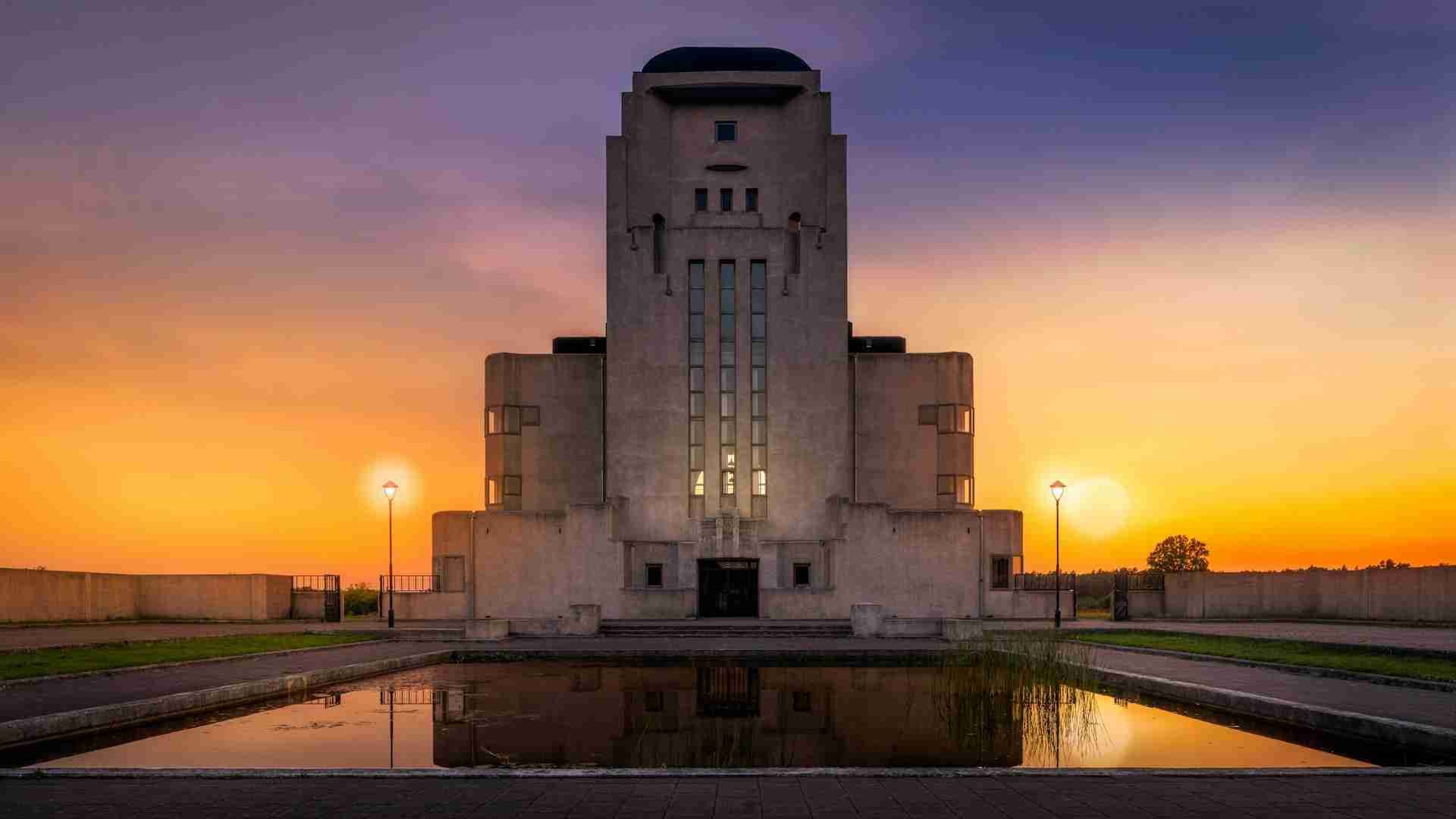
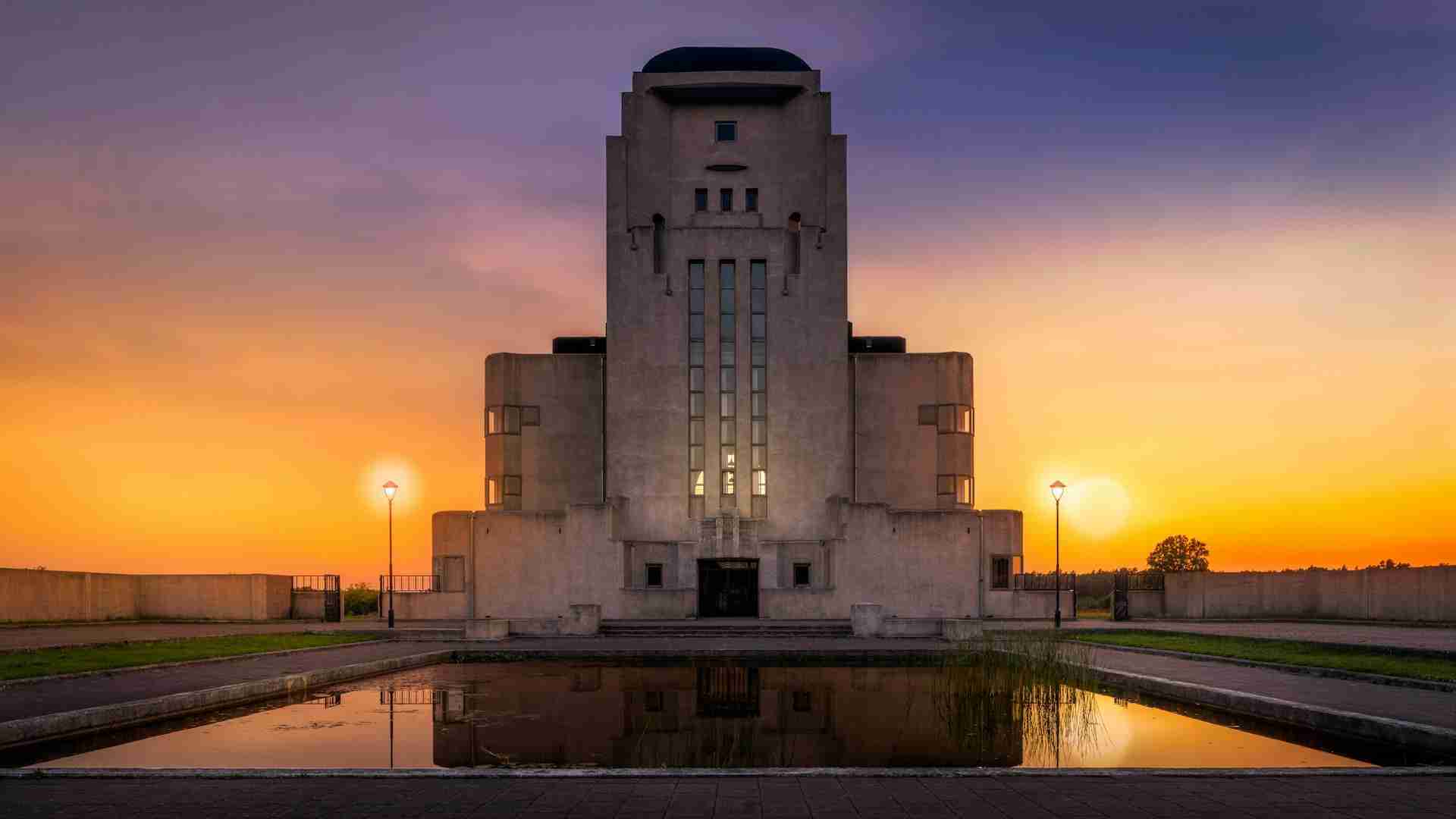
Rising from the vast, heather-covered expanse of the Dutch Veluwe, Radio Kootwijk is one of the most atmospheric architectural sites in the Netherlands. Originally constructed in the 1920s as a monumental shortwave radio station to facilitate communication between the Netherlands and its colonies, the structure—designed by Julius Maria Luthmann—is a rare example of interwar expressionist architecture in reinforced concrete. Towering, geometric, and surrounded by windswept plains and pine forest, the building feels as though it has been dropped from a dystopian film set. Today, it stands not just as a historic monument, but as a striking photographic subject rich in contrast, symmetry, and solitude.
Best Photography Opportunities
• Frontal Axis with Reflecting Pool Symmetry
: The most defining viewpoint of Radio Kootwijk lies directly in front of the structure, aligned with the long reflecting pool that stretches toward the building's imposing façade. This symmetrical setup is perfect for wide-angle compositions that highlight the central tower and its flanking wings, especially in early morning when soft light grazes the concrete surface and low winds leave the water undisturbed. The mirror effect is particularly striking under overcast skies or moments of golden hour illumination, lending a cinematic stillness to the image. Include elements like the pool edge or wild grasses in the foreground for layered depth that draws the eye toward the tower's central axis.
• Side Profile Framed by Veluwe Heath and Pines
: From the trails to the west and southwest of the building, you can photograph Radio Kootwijk as it appears to emerge from the surrounding heathland and sparse pine forest. This side profile reveals the tower's mass set against the textured landscape, with natural framing elements such as tall grasses, scattered trees, or patches of flowering heather depending on the season. Use a mid-range zoom to capture the interplay between built form and organic texture. This perspective works best during golden hour or just after rainfall, when wet surfaces darken the concrete and contrast with the pastel tones of the Veluwe landscape.
• Architectural Abstraction and Texture Studies
: The structure's raw concrete finish, angular stairwells, recessed windows, and sculptural tower top offer an abundance of detail-driven compositions. Move in close to isolate patterns, sharp corners, or negative spaces created by light and shadow. Afternoon side light casts dramatic shadows that accentuate the building's expressionist geometry, while cloudy days help reveal subtle tonal variations in the aged concrete. This approach is ideal for monochrome work or exploring the building's tactile qualities. A 70–200mm lens will help flatten perspective and simplify forms for impactful abstract visuals.
• Interior Volumes and Light Beams (when accessible)
: The cavernous central hall, if open to visitors, provides one of the most awe-inspiring interior spaces in the country. Tall vertical windows filter in shafts of natural light that highlight the building's cathedral-like proportions. On sunny days, dust in the air adds ethereal volume to the light beams, while overcast conditions allow for subtle, evenly lit compositions. Use a wide-angle lens to capture the sense of scale, or a 50mm for tighter compositions that emphasize the repetition of form in arches, balconies, and industrial detailing. Tripods are essential for stability in low light, and interior work shines when done slowly and deliberately.
• Elevated or Distant Viewpoints Across the Heath
: Step back from the building along the eastern or northern trails and you'll find numerous locations where the tower rises in stark contrast against the flat, wide-open landscape. These distant viewpoints are especially effective during foggy mornings or snowy conditions when the structure appears to float or emerge from mist. A telephoto lens compresses the space and reveals how isolated the building truly is within the Veluwe. These scenes excel when the sky adds drama—low-hanging clouds or golden breaks in stormy light create painterly backdrops that heighten the surreal quality of the site.
Best Time to Visit
Radio Kootwijk is photogenic year-round, but different seasons and times of day offer dramatically different moods. Spring and summer bring vibrant color to the surrounding heath and grasslands, with wildflowers adding visual softness to contrast the concrete mass. These months are best for capturing the building in a living, breathing context, especially during golden hour when the warm tones offset the gray façade.
Autumn is perhaps the most dramatic season, as mist and morning fog frequently settle across the Veluwe. In this weather, the structure appears to rise from an otherworldly void—perfect for atmospheric compositions, especially when shooting from a distance. The filtered light of overcast mornings or late dusk enhances the brutalist textures of the architecture.
Winter, though quieter, reveals the starkest contrasts. With bare trees, snow, or frost on the heath, the building becomes a minimalist sculpture against a monochrome landscape. Long shadows and low sun angles throughout the day are perfect for dramatic side lighting.
Because the area is relatively flat and open, sunrise and sunset provide excellent directional light. Early mornings also bring the highest chance of mist, especially in late summer and autumn. The site's remote location ensures minimal foot traffic during these hours, allowing for undisturbed shooting.
How to Get There
Radio Kootwijk is located in the municipality of Apeldoorn, in the province of Gelderland, within the Veluwe nature reserve. The site is accessible by car from Apeldoorn via the N344 and N310, followed by local roads leading to the hamlet of Radio Kootwijk. From there, signage will guide you to the visitor parking area just outside the heritage zone.
Access to the surrounding landscape is free year-round, and a network of trails and walkways offers excellent viewpoints around the site. The building itself is only open to the public during guided tours, special events, or private bookings. While exterior photography is always permitted, interior access requires advance planning.
Be aware that the area is protected and lies within a nature reserve—drones are not permitted without specific authorization. Check regulations before planning aerial shots.
Recommended Photography Gear
A wide-angle lens (16–35mm) is essential for capturing the full building from the reflecting pool and working within tighter forest clearings. It also helps exaggerate the height and volume of the structure, particularly when shooting low to the ground.
A mid-range zoom (24–70mm) offers flexibility for side views, architectural abstractions, and environmental portraits of the building against the Veluwe's natural backdrop. It's also helpful for interior work, should access be granted.
A telephoto lens (70–200mm) is ideal for isolating architectural details or compressing the building into the broader landscape. It's also your best tool for capturing distant views from the trails or elevated ground to the east.
A tripod is essential for low-light or long-exposure work, especially at twilight or when shooting inside. A polarizing filter enhances contrast in clouds and reduces reflections on wet concrete after rain. For misty conditions, bring weather protection and microfiber cloths—moisture in the air will quickly accumulate on lenses and gear.
Nearby Photography Locations
: Just west of the radio building lies one of the largest sand drifts in Europe, where you can photograph vast dunes, pine silhouettes, and wind-sculpted textures. Sunrise here is magical, especially when early fog settles over the dunes.
: A short drive east, this park features rolling hills, dense forests, and purple heather fields in late summer. The Posbank viewpoint is famous for its layered vistas and sweeping light.
: Located in Apeldoorn, this Baroque palace offers immaculate gardens, symmetrical architecture, and sculptural water features—an elegant counterpoint to the severity of Radio Kootwijk.
: A lesser-visited nature area with wide open landscapes and herds of red deer. Excellent for wildlife photography and misty morning scenes with layered forest edges.
: Tucked in the forests east of the Veluwe, these gentle cascades offer an unexpected photographic subject for long exposures in a densely wooded setting.
Radio Kootwijk is more than a relic of radio history—it's a monument to human ambition and expressive form, set against one of the Netherlands' most haunting natural backdrops. Whether captured in minimalist symmetry, atmospheric fog, or dramatic shadow, it offers a cinematic, architectural depth that rewards patience and creative curiosity.
Comments
Loading comments…