
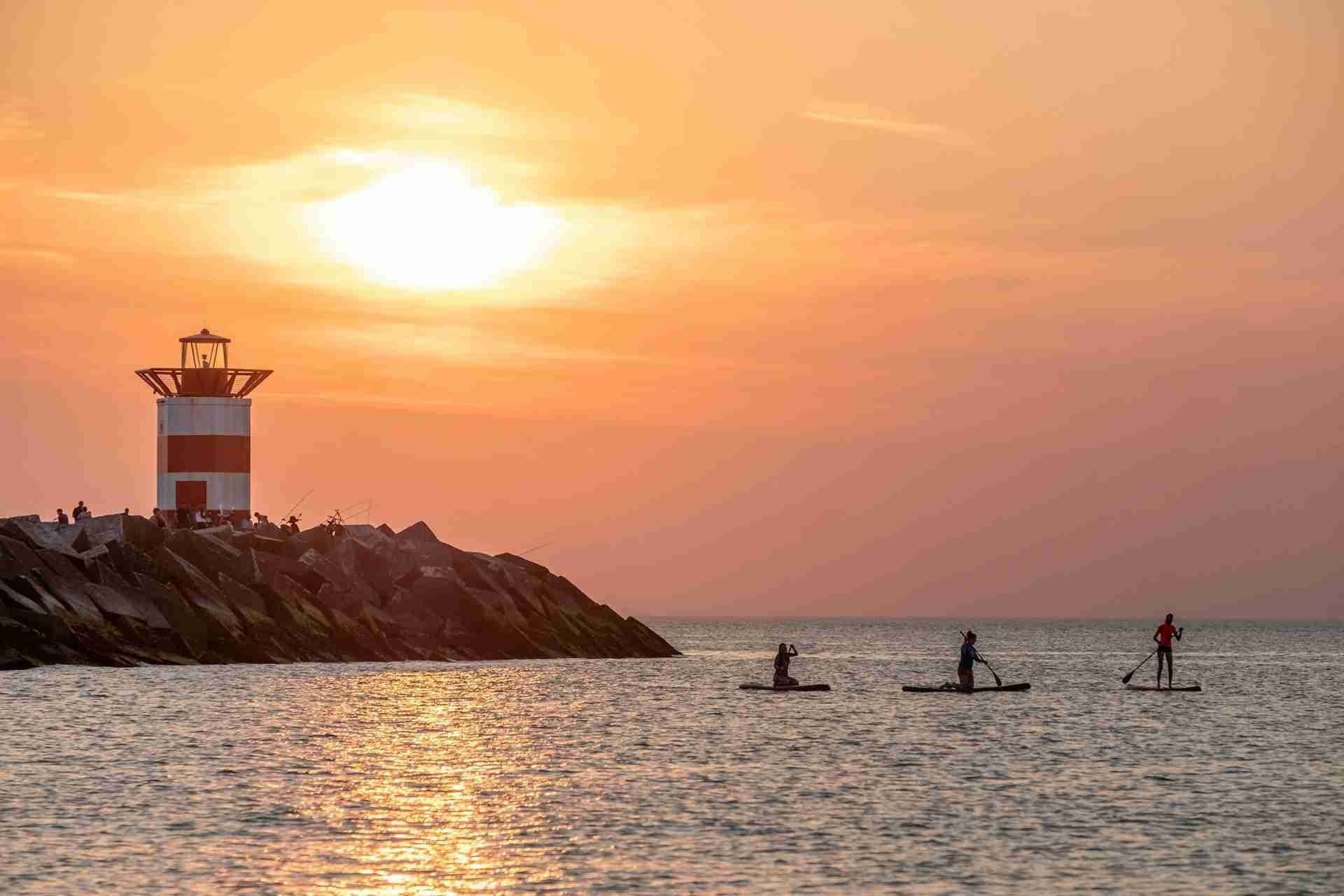
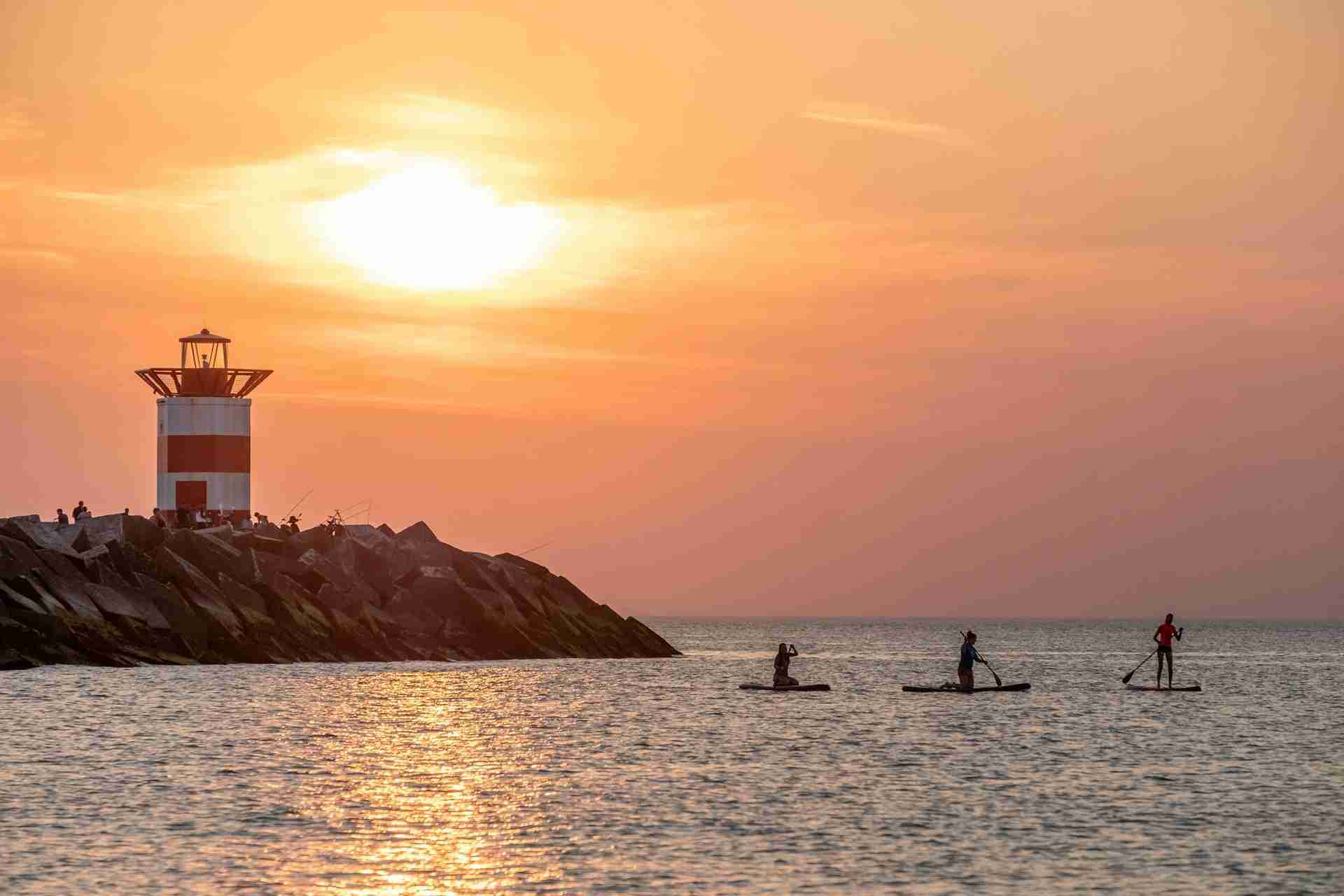
Stretching out into the North Sea from the modern seaside district of The Hague, Scheveningen Strand and its Northern Pier offer a striking mix of linear architecture, ocean light, and lively beach culture. From the bold outline of the Northern Pier, marked by its small red and white lighthouse, to the wide stretch of sand filled with kite surfers and lined with seaside cafés, this location offers a rich variety of coastal scenes to photograph. The mix of man-made structure and ever-changing sea gives photographers a chance to capture strong lines, interesting textures, and movement along one of the Netherlands' most lively stretches of coast. Whether you're focused on long exposure seascapes, architectural studies, or abstract compositions in sand and surf, this urban shoreline has plenty to offer.
Best Photography Opportunities
• Leading Lines from the Northern Pier
: The pier stretches out into the sea, and walking along it creates strong visual lines that lead the eye straight to the horizon. The even spacing of the pier's concrete edge and walking surface helps create clean, symmetrical compositions, especially in early morning or late afternoon when soft shadows stretch along its length. Standing low to the ground or using a wide-angle lens makes the perspective even more dramatic. Look for opportunities when a single person is walking along the pier or when birds fly across the vanishing point, these small elements add scale and interest to your frame. On clear days, you can include the coastline and sky to create layers of light and space.
• Telephoto Compression from the Sand
: Stand farther back along the beach and use a long lens to compress the pier into your frame. From this distance, the structure becomes a clean horizontal line across the water, with the red and white lighthouse as a focal point. A 100–400mm lens works especially well here, letting you flatten the scene and emphasize repeating patterns in the waves or silhouettes of beachgoers in the foreground. This perspective is especially effective on hazy afternoons or during golden hour when warm light adds depth and softens distant details. Include surfboards, birds, or kite surfers to add small dynamic elements against the steady shape of the pier.
• The Lighthouse at the End of the Pier
: The small red and white lighthouse at the far end of the Northern Pier is a great subject for both wide and close-up shots. From a distance, it adds a strong focal point to your pier compositions; from up close, its colors and shape stand out against the blue sea and sky. Use a mid-range zoom lens (like a 24–70mm) to frame it tightly or include it in a broader landscape. For longer exposures, use an ND filter to smooth out the waves and create a dreamy atmosphere. On cloudy days or in fog, the lighthouse takes on a more mysterious quality, especially when it fades slightly into the background mist.
• Beach Activity and Moving Subjects
: The beach near Scheveningen Pier is full of life, especially during warmer months. Kite surfers, joggers, and families provide opportunities to capture motion and energy. Try shooting with a fast shutter speed to freeze action, or use a slower one to blur moving subjects and show a sense of motion. Panning with a kite surfer or runner adds an artistic blur to the background. A longer lens (70–200mm) is useful for picking out individuals or catching candid moments from a distance. Shooting in the afternoon when the sun is low can help you catch silhouettes and long shadows, especially if you're shooting toward the light.
• Evening Light and Reflections in Wet Sand
: As the sun sets, the wet sand along the shoreline starts to reflect the colors of the sky. This creates a perfect setup for blue hour photography. Use a tripod to keep your camera steady for longer exposures, and look for areas where the sand is smooth and shiny. The lighthouse will glow softly against the fading sky, and the water may still hold traces of the day's light. Try composing your shot with the horizon in the upper third, leaving room for foreground reflections to take center stage. If there are a few people walking along the beach, they can add a human element without distracting from the overall mood.
Best Time to Visit
Scheveningen is a year-round location, but each season brings its own character to the pier and shoreline. Spring and autumn offer the most versatile light and more manageable crowds, with golden hour light stretching across the beach and adding depth to architectural forms. Mornings in these seasons often come with calm seas and pastel skies, ideal for clean, reflective shots. In summer, the beach is alive with activity, and while mid-day sun can be harsh, the lively energy and color provide opportunities for street-style photography with a coastal twist.
Winter sees fewer visitors, but the moodier light, stronger wind patterns, and brooding sea lend themselves to dramatic compositions. Long shadows and diffused skies provide excellent conditions for shooting the pier in isolation or focusing on the sculptural qualities of the structure. Stormy conditions can be especially rewarding, as waves crash against the concrete and clouds streak across the sky. For blue hour and night photography, visit in late autumn through early spring when sunset arrives earlier.
Avoid clear mid-day sun if you're looking for texture, subtle light, or long exposures. Early mornings and late evenings remain the most favorable windows for control over contrast and color.
How to Get There
Scheveningen Strand and the Northern Pier are easily accessed from The Hague city center by public transit, bicycle, or car. Trams 1 and 9 provide direct service from Den Haag Centraal to Kurhaus or Zwarte Pad stations, both of which are just a short walk from the beach. Buses and taxis also serve the area, and the beachfront is well-connected with cycle paths for those arriving by bike.
For those driving, several paid parking garages are located close to the beach, including Parking Strand, Parking Kurhaus, and Parking Scheveningen Bad. From any of these garages, it's a five to ten minute walk to the pier. There is no entrance fee to access the pier or the beach itself, and photography is unrestricted on public areas of the promenade and sand.
The beach is accessible and well-lit, with paved paths and ramps that make it easy to carry gear. For sunrise or night photography, arrive early or stay late when the crowds thin and light conditions are at their best. Coastal winds are frequent, so be prepared for sudden gusts when setting up near the water or on the pier itself.
Recommended Kit for Capturing the Scene at Its Best
Photographing Scheveningen's pier and strand calls for a versatile kit that can handle changing weather, variable light, and both static and kinetic subjects. A full-frame mirrorless or DSLR body with good weather sealing is ideal, as windblown sand and salt air are constants. A wide-angle lens (14–30mm) is essential for shooting under the pier or along the promenade where space can be tight and lines need exaggeration. This focal range also excels in golden hour and blue hour landscapes when reflections and depth are key.
A mid-range zoom (24–70mm) covers nearly all general compositions, from balanced architectural shots to medium-distance activity. If you're aiming to capture movement on the beach or isolate surfers and kite lines, a 70–200mm lens provides excellent reach and compression. Consider a fast aperture version if you're working into the evening or under cloudy skies.
A sturdy tripod is necessary for long exposures, especially during blue hour or stormy conditions. Make sure it has leg locks that hold up against wind, and bring a tripod bag or sandbag to weigh it down if you're working on the open beach. Neutral density filters (6- or 10-stop) and a circular polarizer will give you full creative control over exposure and glare. A lens cloth is a must—mist and sea spray are frequent near the pier, particularly when winds shift onshore.
A compact rain cover, microfiber towel, and protective filter help guard your gear from moisture. Gloves and a beanie are smart additions in winter or during cold offshore winds. For night shooting, a small LED panel or flashlight can help illuminate your setup without disturbing ambient light balance in your frame.
Nearby Photography Locations
This grand historic hotel overlooks the beach just south of the pier. Its ornate façade and neoclassical domes are especially striking when lit at night or photographed against the first light of dawn. Architectural detail work and symmetry-focused compositions are especially rewarding here.
: A short walk southwest leads to the working harbor, where fishing boats, warehouses, and seafood stalls offer a completely different coastal aesthetic. The textures of rust, rope, and weathered wood contrast beautifully with the sleek lines of the main beach.
: One of The Hague's largest dune reserves, this area offers wild grasslands, wooded paths, and elevated views of the coastline. Sunrise from the top of the dunes provides a sweeping perspective of Scheveningen and the North Sea, especially when early fog lingers over the grass.
: Just north of the main pier, this stretch of sand is less crowded and more natural. Ideal for minimalist seascapes, dune textures, and quiet portraits framed by sky and water. Visit during the off-season or early morning to catch its calmest moods.
: For a city contrast, head into central The Hague where you can photograph the historic government buildings reflected in the Hofvijver pond. The site is especially photogenic at twilight, when the warm lights of the old parliament complex glow above the still water.
Comments
Loading comments…