
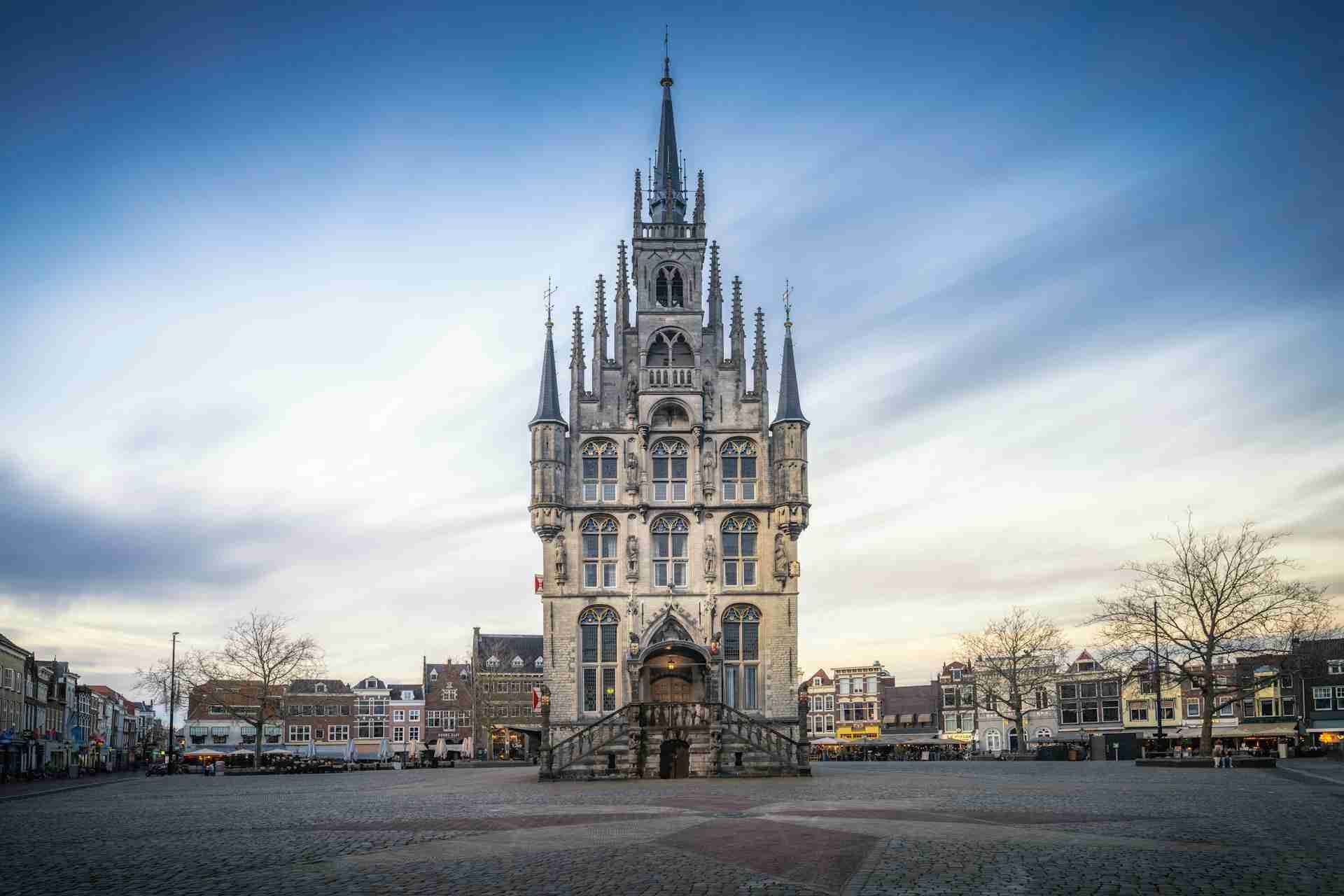
![The Stadhuis van Gouda, located in the heart of Gouda’s main square, is one of the oldest Gothic town halls […]](https://storage.googleapis.com/pixeo-blog.firebasestorage.app/article-images/wp-import/featured-132857.jpg)
In the heart of Gouda's historic market square, the Stadhuis van Gouda rises like a storybook structure against the open Dutch sky. Built in the mid-15th century, this town hall is one of the oldest Gothic city halls in the Netherlands and remains a standout photographic subject thanks to its slender shape, pointed turrets, and free-standing position surrounded by cobblestones. Unlike many town halls that blend into a row of buildings, Gouda's stadhuis stands alone, allowing photographers to walk entirely around it and capture its detailed stonework, tall windows, and dramatic spire from multiple angles.
The building offers a perfect balance of intricate architectural detail and clean open space. Throughout the day, light moves across its façade, changing how the textures and carvings appear. Whether framed tightly to focus on windows and ornaments or photographed wide to show its placement within the market square, the Stadhuis offers variety without overwhelming complexity. It also serves as a visual anchor within the larger setting of Gouda's old town, where canals, market stalls, and churches surround it and complete the scene.
Best Photography Opportunities
• Front façade at sunrise
The building's eastern front receives early light directly. In the quiet of morning, the square is often empty, letting you frame the entire structure cleanly against soft light. A wide-angle lens from a centered position emphasizes the height of the spire and the orderly pattern of windows and red shutters. The texture of the stone is most pronounced at this time, especially when long shadows stretch across the square.
• Side elevations with daily activity
The southern and northern sides of the Stadhuis are best during mid-morning through afternoon. On market days, these elevations are lively, filled with vendor stalls and foot traffic. Including people or stalls in your frame shows the scale of the building and connects its historical presence to the everyday life of the city. Look for juxtapositions between modern activity and the building's historic details.
• Carvings, turrets, and ornamentation
A closer look reveals sculpted stonework, corner spires, wrought iron railings, and leaded windows. These smaller features benefit from sidelight, which adds shape and dimensionality. A telephoto lens helps you isolate details high on the façade, especially around the staircases and balconies. Photographing these elements later in the day brings out their form and texture as the sun moves west.
• Reflections after rain
Because of the square's flat paving stones, puddles often form after rain. These shallow pools create clear reflections of the Stadhuis, especially during golden hour or early evening. Crouch low with a wide lens to make the most of these reflective surfaces, turning the building into a vertical mirror image with balanced light above and below.
• Blue hour symmetry from across the square
As the sky deepens into twilight, the building's interior lights and exterior lamps begin to glow. Blue hour offers one of the best chances to photograph the entire building lit evenly against a darkening sky. A tripod is essential here to control exposure and keep your image sharp. Use a small aperture to maintain clarity across the frame and avoid clipping the highlights from the lamps.
Best Time to Visit
Spring and early fall are the most favorable seasons to photograph the Stadhuis van Gouda. During these times, the days are long enough to allow early and late light, and the weather offers a mix of sunny skies and dramatic cloud formations. Morning sessions in April or September are especially good for capturing the clean eastern light on the building's front and the calm, empty square.
Summer provides longer shooting windows, but the square can become busy by mid-morning. If you are looking to capture the town hall with fewer people, arrive early or return after sunset. Thursdays and Saturdays feature Gouda's traditional market, adding context and visual texture to your compositions but limiting your ability to shoot clean architectural lines.
In winter, the building remains photogenic. Low sun angles all day long offer warm side lighting on clear afternoons. During December, festive lights and decorations give the square a different visual identity. Snow, if it falls, creates new contrast between the pale stone and surrounding ground, though you should plan for shorter shooting windows and frequent cloud cover.
How to Get There
Gouda is located in South Holland and is well connected by public transportation. From Amsterdam, Rotterdam, or Utrecht, direct trains run to Gouda Station throughout the day. Once you arrive, the Stadhuis is an easy ten-minute walk through the city center. Follow signs to "Markt" or simply walk toward the tall spire visible from several blocks away.
If traveling by car, parking garages such as Bolwerk or Q-Park Nieuwe Markt offer convenient access within a few minutes' walk. The square itself is pedestrian-only, allowing you to move freely with a tripod or camera bag without worrying about traffic. There is no entry fee to photograph the building or the surrounding area. The entire square is accessible at all hours, giving you the flexibility to shoot at sunrise, sunset, or well into blue hour.
Recommended Photography Gear
Bring a wide-angle lens for full-building shots. A 16–35mm or 24mm prime will help you capture the entire structure from edge to edge, even when standing close. A mid-range zoom such as a 24–70mm is useful for tighter architectural framing, especially when photographing windows, doorways, or the staircases in detail.
A telephoto lens in the 70–200mm range lets you isolate the carvings and upper structures, particularly useful in golden hour side light. A tripod is essential for evening and blue hour sessions. It also helps with low compositions when framing puddle reflections or shooting from waist height.
A circular polarizer is useful on sunny days to reduce glare from the stone and deepen the tone of the sky. A microfiber cloth helps keep your lens clean after rain or mist. If you're visiting during colder months, pack light gloves and a weather-sealed cover for your camera in case of snow or damp conditions.
Nearby Photography Locations
is located just behind the Stadhuis and is famous for its tall structure and long stained-glass windows. Inside, colored light floods the aisles in the morning. Outside, the church provides good contrast to the town hall when framed from the connecting side streets.
• Gouda's canals
are scattered throughout the town and offer calm water for reflections of bridges and brick buildings. Early morning is best for still water. Streets like Turfmarkt and Hoge Gouwe have particularly photogenic views.
• The Waag
, directly opposite the town hall, adds mass and architectural variation to your market square compositions. Its stone base and rooflines contrast nicely with the vertical style of the Stadhuis.
• Achter de Kerk
is a quiet lane that curves behind Sint Janskerk. It features ivy-covered walls, archways, and soft afternoon light filtering between buildings. These intimate spaces give a quieter balance to the larger open square.
, just a few minutes' walk away, has exterior courtyards and traditional Dutch façades that offer solid subjects even without going inside. The surrounding streets often hold shadow and light patterns ideal for street photography.
The Stadhuis van Gouda is more than a historical building. It is the heart of the town's visual rhythm. Whether lit by early sun, surrounded by market activity, or glowing quietly in the evening, it holds its shape and character in every kind of light. With patience, planning, and time to walk the full square, photographers can build a complete, varied portfolio from just this one structure.
Comments
Loading comments…