
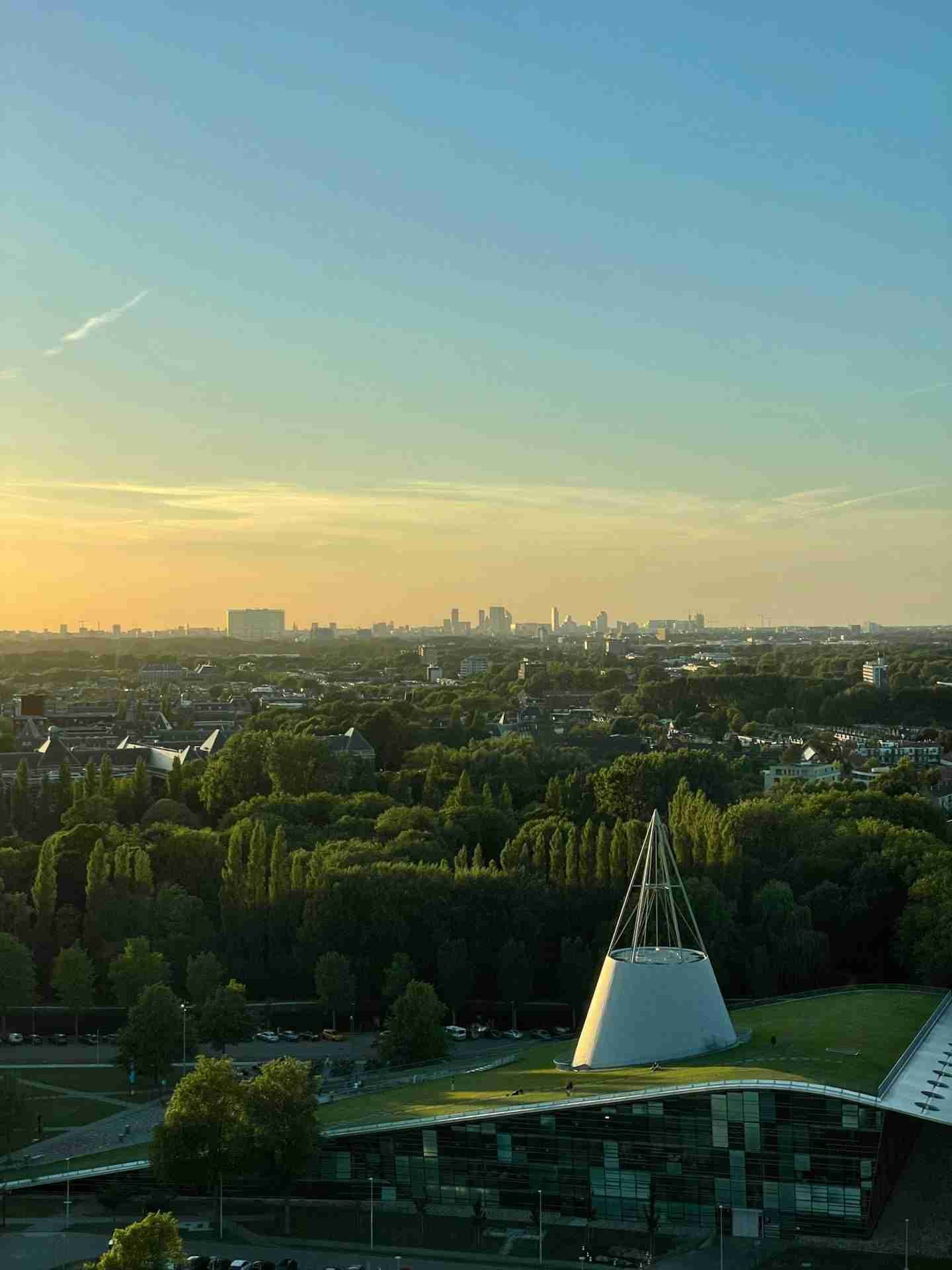
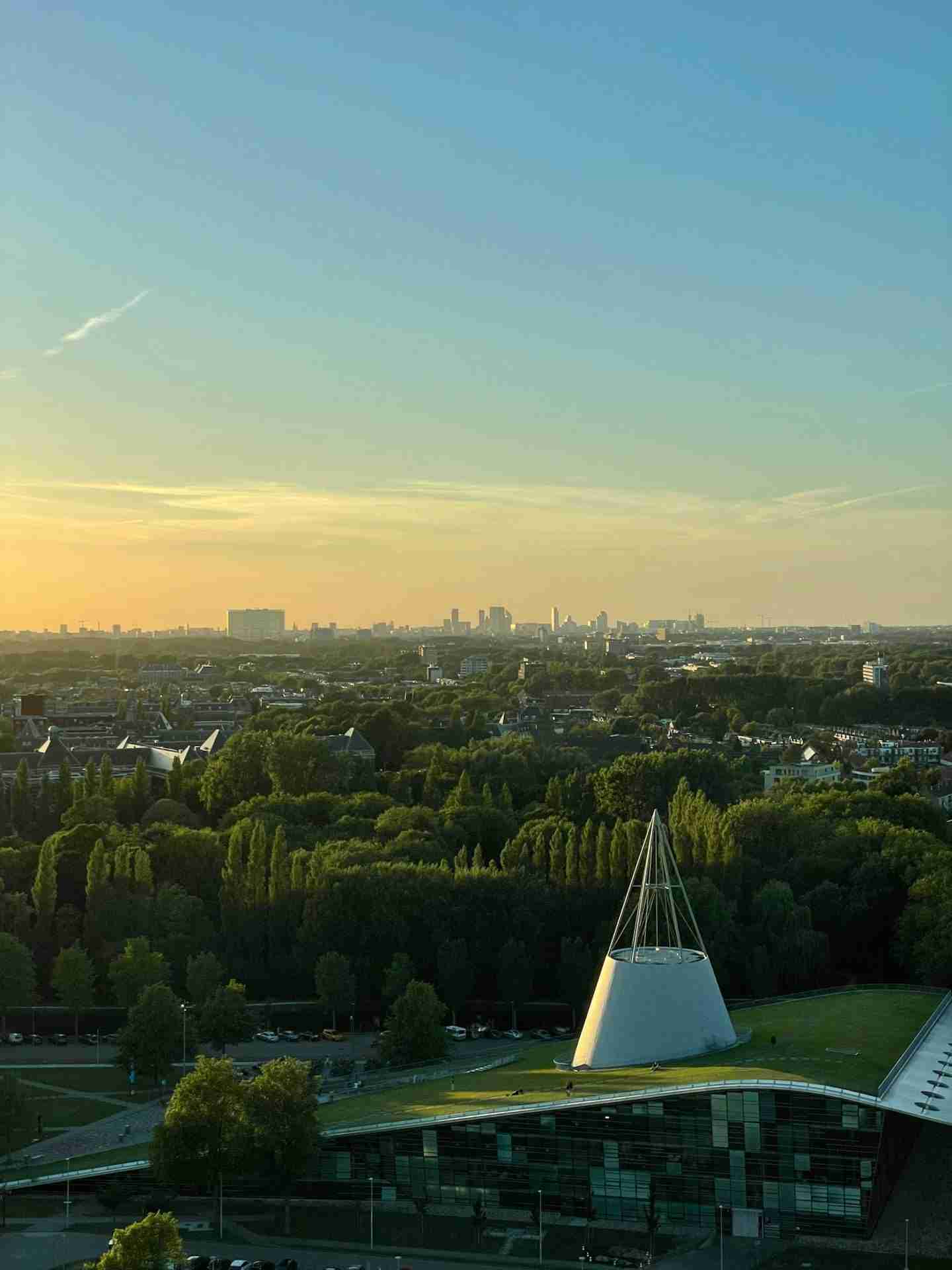
The TU Delft Library is one of the most distinctive architectural spaces on the Delft University of Technology campus. Built in 1997 and designed by Mecanoo Architects, the building is known for its sloped grass roof that rises from ground level to a steel cone, giving the structure a sculptural, landscape-integrated form. Photographers are drawn here for the way geometry, surface texture, and light interact across the library's clean lines and materials. From wide contextual frames to detail studies of glass, metal, and turf, this location allows for work that feels modern, minimal, and intentional. Its open setting, balanced with sharp architectural contrast, makes it an ideal subject for building precise compositions.
Best Photography Opportunities
• Wide Front View with Green Roof and Cone
From the paved plaza in front of the building, you can frame the sloped roof as it rises to the central cone, using the grass and surrounding walkway lines to anchor the base of the composition. A wide-angle lens helps exaggerate the slope and scale while pulling in the cone's clean vertical. Shoot in early morning or late afternoon for low-angle light that enhances the form and texture of the grass, or under overcast skies to flatten contrast and work in a high-key palette. This angle is best approached from low to ground level for maximum perspective.
• Side Elevation with Lines and Surface Contrast
From either side of the structure, the shift between earth-covered roof and industrial cone becomes more pronounced. These views allow for compositions that balance nature and structure — turf and steel, curve and edge. Use a mid-range lens to keep distortion minimal and maintain straight lines along the frame. This side-light works especially well in the late day, when shadows add structure without overwhelming the surface detail.
• Abstract Framing of the Cone and Sky
The central cone can be isolated against the sky from various positions around the base, allowing for simple graphic compositions with strong contrast between metal and cloud. A short telephoto lens is useful for removing clutter and compressing the background, while a circular polarizer can deepen the sky and increase edge separation on clear days. These abstract frames benefit from time spent moving around the site to find angles where tree lines or nearby structures are kept out of frame.
• Interior Detail Through the Glass Curtain Wall
Though access depends on opening hours and campus policy, the large glass façade on the south side offers opportunities for shooting inside. From the exterior, reflections and interior lighting combine in complex layers, which can be used to frame silhouettes, bookshelves, or architectural features. Use a standard or short telephoto lens and aim to shoot just after sunset, when interior lights are active but the sky still holds some ambient color. Work carefully with reflection angles to balance exterior surfaces with visible interior lines.
• Contextual Compositions with Campus Elements
Surrounding buildings and walkways on the TU Delft campus provide context for the library's design. From the far corners of the green, you can shoot wider scenes that place the cone against nearby structures or include passing students for scale. These wider frames work best during golden hour when the low sun pulls color and contrast from both sky and building surfaces. Positioning is key here — a small shift in angle can change the entire relationship between structure and surroundings.
Best Time to Visit
The TU Delft Library can be photographed year-round, but spring through autumn offers the most dynamic surface conditions. In spring, the grass roof is freshly green, and in autumn it takes on warm tones that contrast well with the steel cone and concrete. Summer gives consistent light, though midday sun can create harsh contrast across the façade and reduce texture in the grass.
Golden hour, especially in the evening, produces the most useful side lighting across the slope and cone. Morning sessions can be productive as well, but shadows are shorter, and the area is often more active with students. Overcast days are excellent for architectural detail and abstraction, as they reduce contrast and allow even exposure across the structure. Blue hour also works well, especially when interior lighting is visible through the large windows.
How to Get There
The TU Delft Library is located within the main Delft University of Technology campus in Delft, South Holland. It is easily accessible by train and tram from major Dutch cities like Rotterdam and The Hague. From Delft's central station, it is roughly a 20-minute walk or a short bike ride. Biking is the most efficient way to reach and explore the campus area, with bike racks located near the library entrance.
Public access to the library's exterior is unrestricted, and the surrounding plaza and walkways are open at all hours. Interior access is generally allowed during university hours, but photography inside may be limited during exam periods or events. Tripods can be used outdoors without issue, but indoor tripod use may require permission. There are no fees to enter or photograph the area, and the open campus setting makes it easy to move around for changing light and perspective.
Recommended Photography Gear
A 16–35mm wide-angle lens is essential for capturing the scale and geometric form of the building from close distances. A 24–70mm zoom lens provides versatility when moving between wide shots and tighter architectural details. A 70–200mm lens is useful for compressing abstract angles of the cone and for isolating design elements from a distance.
Bring a tripod for low light sessions and long exposures during blue hour. A circular polarizer can help reduce reflections on the glass façade and deepen sky tones when shooting abstract angles. Consider a graduated ND filter if working with bright skies and shaded foregrounds. A microfiber cloth is helpful for keeping glass and lenses clean, particularly on damp or misty mornings.
Nearby Photography Locations
The green space running through the center of the TU Delft campus offers long sight lines, geometric walkways, and strong lines for urban compositions. It's a good place for wide context shots and candid street-style work with students and cyclists.
Located just north of the library, this repurposed building mixes old and new materials, providing a contrast in form and surface that pairs well with the modern shapes of the library. Strong light from above and interior design features make it a good stop for architectural details.
Just beyond the campus, the historic core of Delft offers canals, brick bridges, and classic Dutch architecture. It's a visual contrast to the TU campus and gives photographers a full spectrum of old and new forms within walking distance.
A few minutes away on foot, this public-facing building showcases interactive exhibits and offers modern design elements with a focus on material use and light. The exterior is photographable throughout the day with minimal foot traffic.
• Royal Delft Pottery
Located slightly southwest of campus, this site offers colorful tiles, decorative elements, and textured scenes in a heritage setting. It is a useful complement to the minimalist structure of the library for photographers looking to expand their visual range.
The TU Delft Library is one of those rare architectural subjects that offers both sculptural simplicity and long-term photographic interest. Whether you are working with sharp sunlight, soft overcast conditions, or the color shift of golden hour, this building responds with angles, contrast, and clarity that reward careful observation and clean framing.
Comments
Loading comments…