
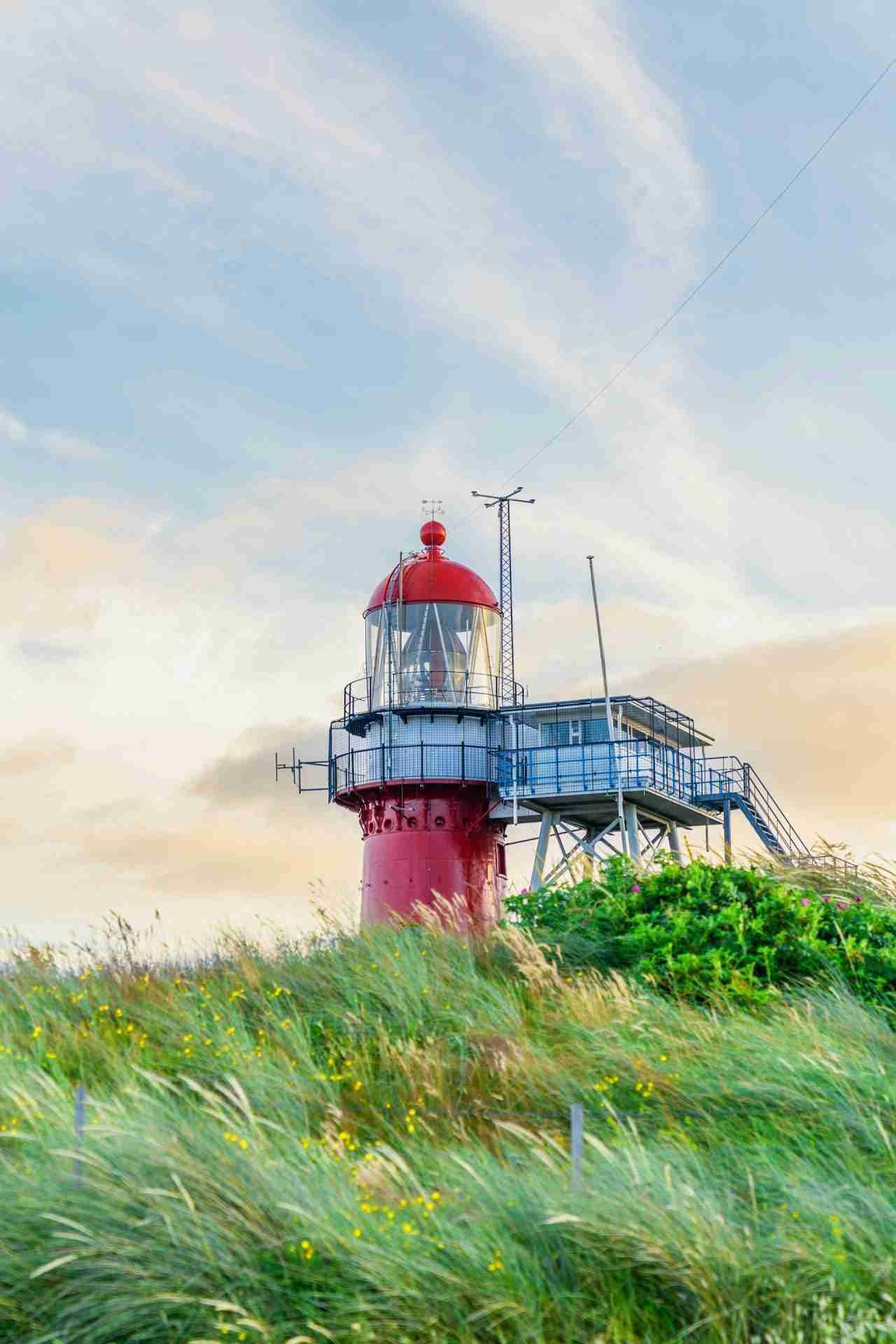
Perched on a low dune above the Wadden Sea, the Vlieland Lighthouse stands out with its vivid red tower and simple, clean lines. Though one of the smallest active lighthouses in the Netherlands, it holds a strong place in the landscape thanks to its hilltop position above Oost-Vlieland and its contrast with the surrounding dune grasses and shifting skies. The island of Vlieland is mostly car-free and quiet, giving photographers the space to slow down and work without distraction. Light and air move freely here, changing the color and mood of the landscape hour by hour. Whether you are drawn to wide angles of sea and sky or prefer working with texture and shadow up close, this is a location that rewards careful observation over time.
Best Photography Opportunities
• Wide Angles from the Southern Approach Trail
As you walk the trail leading up to the lighthouse, you'll pass through low dunes and pine trees that open gradually into full views of the tower. From this southern angle, the red lighthouse rises against the sky, often framed by wind-shaped grasses or low shrubs. A wide-angle lens works well here, especially in the early morning when light comes from behind or across the trail. The curves in the path give a natural lead into the frame, and you can include foreground texture to balance the open sky. This scene works well in both soft overcast conditions and warm golden hour light.
• Views Across Oost-Vlieland and the Wadden Sea
Once you reach the lighthouse itself, turn around and shoot outward toward the southeast. From this small elevation, you get a clean view across the rooftops of Oost-Vlieland with the flat water of the Wadden Sea beyond. A short telephoto lens helps compress the elements into a layered composition that connects the town, the sea, and the open sky. This angle is strongest in the morning when the town is quiet and the light is low. Mist or fog sometimes lingers over the water, adding softness and subtle separation between the layers of the frame.
• Close-Up Details of Color and Surface
The lighthouse may be small, but it holds a lot of visual interest in its surface. Paint chips, rusted bolts, and the contrast between red, white, and gray all make for strong tight compositions. Shoot with a standard or short telephoto lens to isolate sections of the tower, especially where shadows add contrast around steps, fixtures, or handrails. Flat light helps here, allowing you to capture surface detail without distracting hotspots. A wide aperture can blur the background grasses or sky for a more focused frame.
• Silhouettes and Sky Just After Sunset
The shape of the tower is distinct enough to hold its own after the light fades. From the south or east, you can position yourself to shoot the lighthouse as a silhouette against the remaining color in the sky. This works especially well during late summer evenings when the sky holds a soft gradient for several minutes after sunset. Use a tripod for longer exposures and keep your composition simple. Avoid adding too much foreground, and let the tower anchor the scene with clean lines and clear contrast.
• Framing Through Grasses and Trees
Along the walking trails below the lighthouse, there are several places where dune grasses or tree branches form a partial frame. These can be used to guide the viewer's eye or add a sense of depth to the image. Use a longer focal length to compress the distance between foreground and subject, or shoot wide and low to bring the grasses up into the lower third of the frame. These shots are strongest in the morning or on slightly windy days when movement in the grass adds life to the still structure.
Best Time to Visit
Vlieland Lighthouse can be photographed throughout the year, but each season brings a different set of conditions. Spring and early summer offer long days, clean air, and soft green tones in the surrounding dunes. Early morning is usually calm, with light mist over the sea and a soft breeze through the grass. The sun rises over the Wadden Sea, casting warm light across the land and directly onto the face of the lighthouse.
Autumn brings lower light, cooler tones, and occasional fog that moves through quickly. This season works well for moodier images and subtle color shifts. Winter can be cold and windy, but the low sun offers excellent side light all day long. The lighthouse stands out sharply against bare trees and overcast skies, creating strong contrast and clean, minimal compositions. Summer sunsets are long and soft, with the sky holding color long after the sun drops behind the horizon.
For the best experience, visit during the first or last few hours of daylight, when the trails are quiet and the light is at its most dynamic. The island's low elevation and open sky mean you have full control over your background, with plenty of time to adjust your position as the conditions shift.
How to Get There
Vlieland is only accessible by ferry, with service departing regularly from the town of Harlingen. The trip takes about 90 minutes. Once you arrive, you'll dock in the village of Oost-Vlieland, the only town on the island. From the ferry terminal, it's about a 20-minute walk uphill to the lighthouse via paved and gravel paths. Bikes can also be rented near the harbor if you prefer a faster approach.
Motor vehicles are restricted for most visitors, which makes the island quiet and easy to explore on foot or by bike. There are no entry fees for the lighthouse area, though the structure itself is closed to interior visits. The surrounding hill and walking paths are open year-round and accessible from sunrise to sunset. Benches, signs, and light trail infrastructure make it easy to work at your own pace without needing special equipment or permissions.
Recommended Photography Gear
A 24–70mm zoom lens is the most useful tool here, allowing you to frame wide landscapes, mid-range views, and close-up sections of the lighthouse without switching constantly. A 16–35mm wide-angle lens is helpful for working along the trails or including more of the surrounding dunes and sky. For layered compositions or shooting across the rooftops of Oost-Vlieland, bring a 70–200mm lens to compress distance and isolate shape.
A tripod is essential for shooting sunrise, sunset, or blue hour silhouettes. It also helps when working with longer exposures in changing light. A circular polarizer can help manage glare in the sky and deepen color in both the grasses and painted surfaces. If you plan to shoot during windy conditions, bring a lens cloth to manage sand or salt buildup, and consider using a weather-sealed camera or a simple rain cover for added protection.
Nearby Photography Locations
Known as the Sahara of the North, this wide, flat beach stretches across the western half of Vlieland. It is excellent for minimal compositions, long exposure work, and abstract studies of sand, sea, and sky. Sunset here offers uninterrupted light and room to explore.
The narrow lanes and historic houses in Oost-Vlieland provide a strong secondary subject. Look for warm morning light on brick facades, shadows falling across bike-lined streets, and simple color contrast between shutters and stucco.
Along the eastern edge of the island, tidal flats and low water create layered compositions with subtle reflection and color shift. Early morning light brings out texture in the sand and gentle tone variation in the sky.
• Bunker Dunes and Forest Edge
Just north of the lighthouse, you'll find scattered dunes and low bunkers left from World War II. These structures add a secondary subject for long lens work and sit well within wide, open frames that blend natural and historical elements.
West of the village, this wetland area is ideal for wildlife photography, especially birds, and offers seasonal variation in plant color and water level. Early spring and late autumn are particularly strong times for quiet shooting and subtle natural color.
Vlieland Lighthouse does not dominate the landscape, but that's part of its strength. It sits in balance with its surroundings, offering clean lines, saturated color, and quiet structure that works in all types of light. For photographers who are more interested in form, light, and mood than dramatic scale, this small red tower on the edge of the dunes has everything you need.
Comments
Loading comments…