
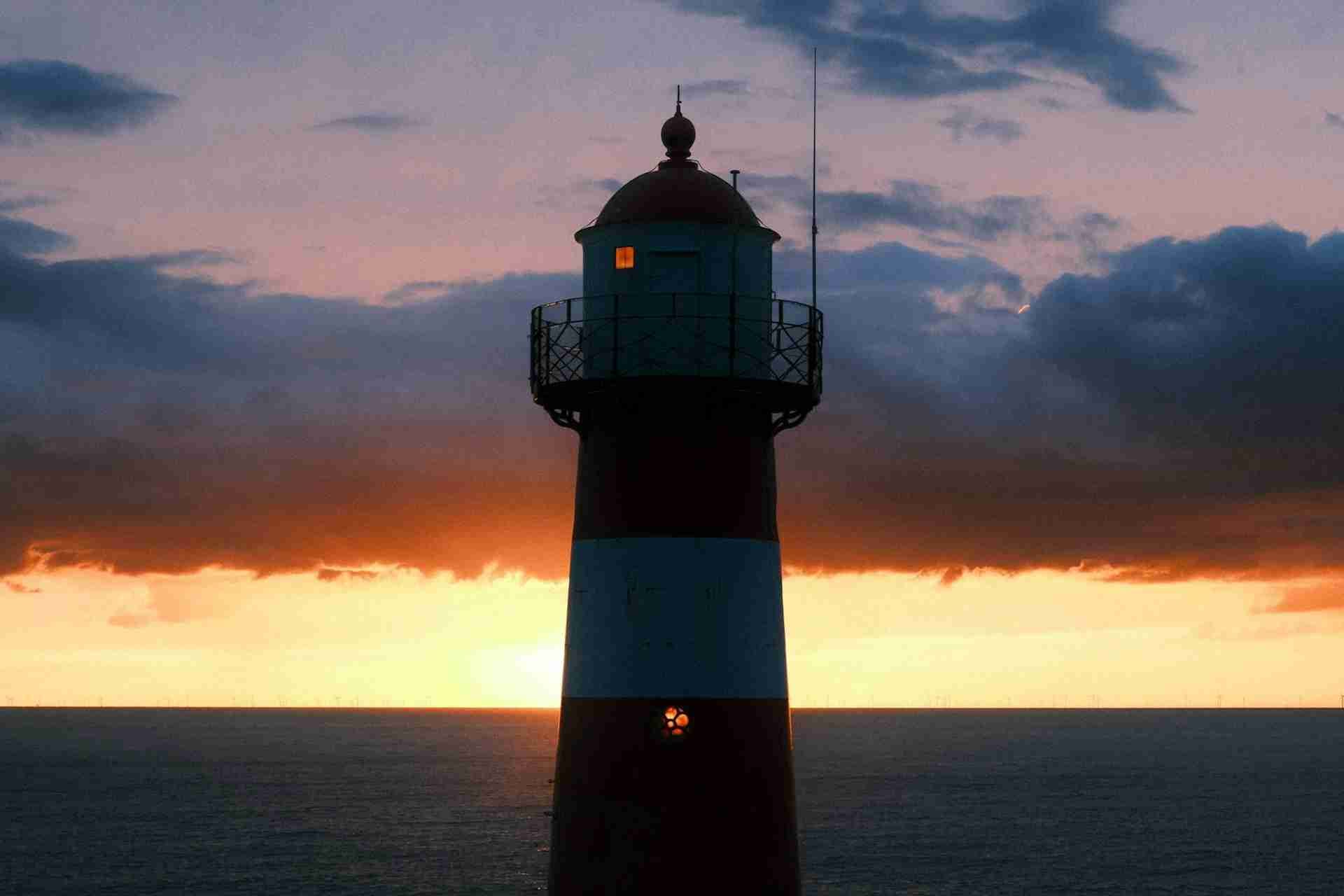
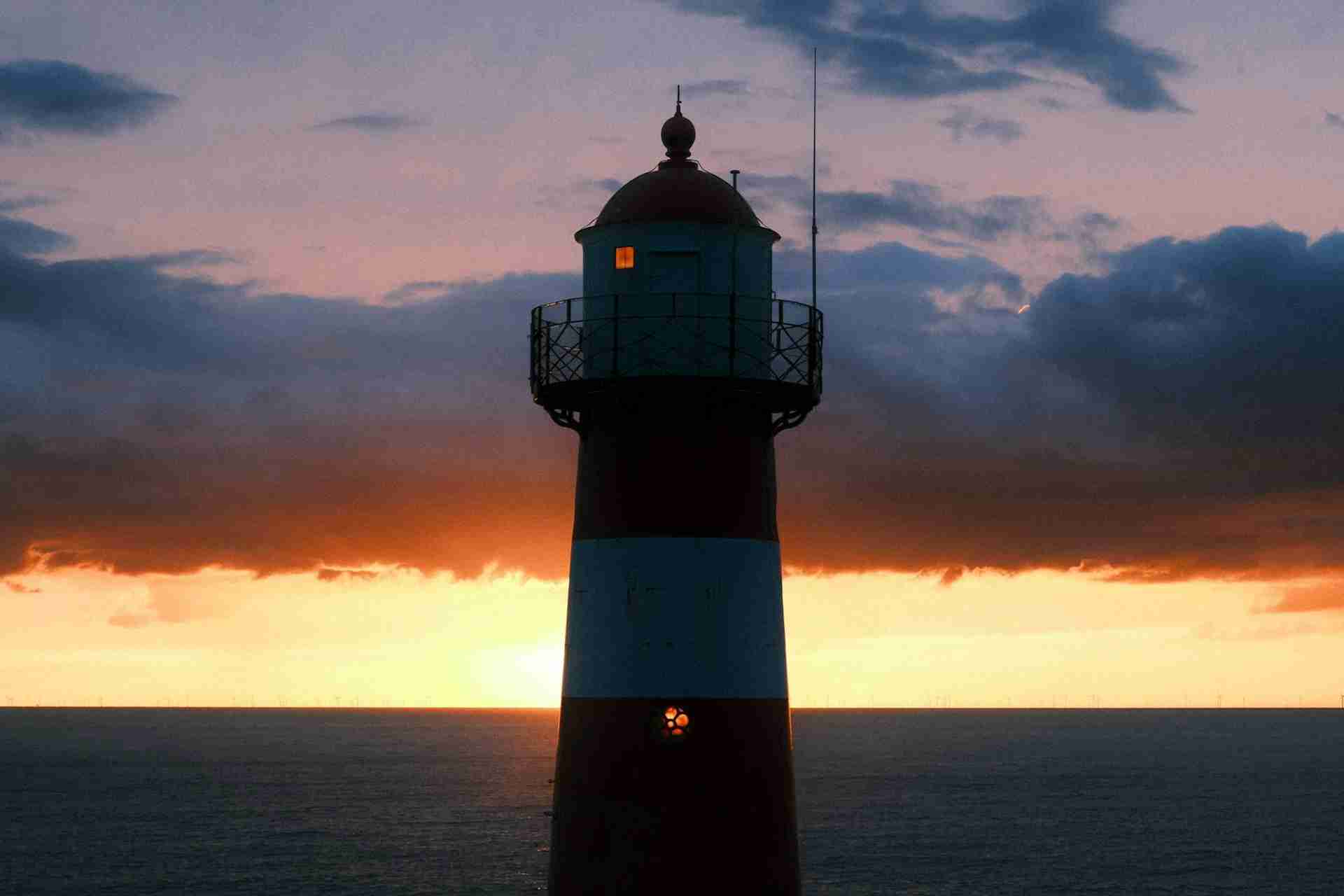
Perched at the westernmost edge of Walcheren in the province of Zeeland, Vuurtoren Noorderhoofd stands as a compact yet striking red-and-white lighthouse facing the North Sea. Also known as the Westkapelle Low Light, it is positioned uniquely close to the sea wall, not on a cliff or headland but right beside a narrow road that curves along the dike. Its squat cylindrical shape, horizontal stripes, and alignment with the horizon make it a strong visual anchor in minimalist and seascape photography. The surrounding landscape, with its grassy dunes, exposed sea defenses, and long lines of sky and road, offers a wealth of compositional possibilities. Photographers drawn to clean geometry, maritime weather, and bold contrast will find Vuurtoren Noorderhoofd a rewarding subject at any time of year.
Best Photography Opportunities
• Lighthouse and Road Leading Lines
The small road that curves around the dike near the lighthouse creates a natural leading line for compositions that draw the eye directly to Vuurtoren Noorderhoofd. Shooting from a low angle along the road accentuates its curve and guides the viewer through the frame. Use a wide-angle lens to include sky, road, and structure in one frame, especially in the soft light of morning or evening. Positioning the lighthouse slightly off-center allows the road's arc to balance the negative space, and long shadows during golden hour emphasize the lighthouse's shape. This simple yet striking setup works well in both color and black and white.
• Stormy Skies and North Sea Backdrop
This part of the Dutch coast is known for changeable weather, and stormy conditions often bring dramatic skies and crashing waves. From the seawall, you can position the lighthouse against turbulent skies, using fast shutter speeds to freeze wave spray or slower speeds to add motion to water and clouds. Use a telephoto lens to compress the scene and place the lighthouse tightly within a swirling backdrop. Neutral tones of the sea and sky contrast beautifully with the bold red of the tower. Be prepared for wind and shifting light, and bring weather protection for your gear to shoot comfortably in unpredictable conditions.
• Twilight and Blue Hour Long Exposures
The lighthouse remains illuminated after sunset, casting a steady beam out to sea and creating a soft glow around the structure. Set up before twilight to catch the shift from natural to artificial light. A tripod is essential here, and exposures of ten to thirty seconds allow you to blur the water and bring out warm tones from the lamp. The sky at this hour often retains soft gradients of blue and pink, which reflect subtly off the sea wall and wet pavement. Framing low to the ground with wet textures or puddles in the foreground adds depth and mood to the scene.
• Minimalist Detail Studies
Vuurtoren Noorderhoofd's clean lines and bold patterning lend themselves well to minimalist or abstract compositions. Close-up shots of the tower's stripes, lantern room, or railing create strong graphic images. A telephoto lens allows you to isolate elements without distortion, while a macro or standard zoom can focus on textures in the painted metal or weathered base. Look for opportunities to contrast the lighthouse with open sky, adjacent fencing, or even small human figures passing by. Foggy or overcast days reduce distractions and enhance the simplicity of these studies.
• High Tide and Reflections at the Base
During high tide or after rain, shallow pools may form near the base of the lighthouse or along the adjacent pavement. These puddles provide excellent opportunities for symmetrical reflection shots. Shoot from ground level with a wide-angle lens to maximize the reflected shape of the tower. Late afternoon or early morning is best when wind is low and water surfaces remain smooth. These conditions create calm, mirrored images with vibrant color and graphic clarity. Watch for passing cyclists or walkers, whose reflections can add a subtle narrative to the otherwise solitary scene.
Best Time to Visit
The most compelling conditions for photographing Vuurtoren Noorderhoofd are found during the transitional times of day and year. Sunrise and sunset provide warm directional light that wraps around the cylindrical tower, highlighting its texture and bold stripes. Sunset is particularly dramatic when shooting out to sea, especially on partly cloudy days when light breaks through in streaks or beams.
Spring and autumn offer the best mix of weather variation and manageable temperatures. These seasons also bring textured skies that elevate compositions without obscuring the horizon. Summer tends to be calmer and busier, but its longer golden hours and frequent calm seas allow for precise long exposure work.
Winter can be harsh but rewarding, especially when photographing under strong coastal winds, dramatic clouds, or early darkness. Snow is rare but occasional, adding a stark contrast to the red and white tower. Blue hour lasts longer during winter months, giving photographers more flexibility for low-light or night compositions.
Always check tide schedules before planning to photograph near the base, as the difference in tide height significantly alters foreground accessibility. Calm wind conditions favor reflections and long exposures, while breezy days suit motion-heavy images with dramatic skies and sea spray. Cloud coverage moves quickly in this region, so prepare for rapidly changing conditions and be ready to adapt your composition as the light evolves.
How to Get There
Vuurtoren Noorderhoofd is located on the west coast of Walcheren in Westkapelle, Netherlands. It is easily accessed by car or bicycle via the N288, which leads into the village. From the center of Westkapelle, follow signs to the seawall, then continue along the narrow road that leads directly to the lighthouse.
There is a small parking area nearby, with additional street parking available in the village. The lighthouse sits next to a narrow road used by both cars and bikes, so exercise caution when setting up gear close to the path. The surrounding sea wall is accessible on foot and offers stable footing for tripods and equipment.
Public transport is available to Westkapelle via regional buses from Middelburg, with stops in the town center followed by a short walk to the lighthouse. There are no fees to access the site, and the surrounding area is open year-round. Tripods are permitted, and there are no restrictions on still photography, though drone use should follow local airspace regulations due to its proximity to the coastline and village.
Recommended Photography Gear
A wide-angle lens in the 14 to 24 millimeter range is ideal for capturing the full lighthouse with foreground elements such as the road or puddles. A standard zoom lens like a 24 to 70 millimeter is helpful for general views and mid-range compositions, particularly when working with framing and background detail.
A 70 to 200 millimeter telephoto lens will help isolate details of the tower, compress weather layers in the background, or focus on passing birds and figures along the dike. A tripod is essential for long exposures, blue hour, and twilight shots, especially when shooting with narrow apertures for depth of field.
A polarizing filter is useful for enhancing sky contrast and managing reflections in puddles or wet pavement. Neutral density filters are strongly recommended for daytime long exposures, particularly to smooth the sea or blur moving clouds. A lens hood and cloth are essential due to wind-blown spray and salt air that may coat your front element.
Comfortable, wind-resistant clothing is advisable, and waterproof boots can help when working near wet or puddled areas. Spare batteries and memory cards are also recommended, as coastal conditions may require more shooting flexibility and longer setup times.
Nearby Photography Locations
Also located in Westkapelle, this taller brick lighthouse is further inland and offers a very different look with its more traditional design. It can be framed with nearby rooftops or set against open skies for contrast with the low light.
A short drive south along the coast, the dunes near Zoutelande provide elevated views of the North Sea and long beaches, perfect for sunset or backlit scenes with wide skies and simple landscapes.
To the northeast, Domburg offers a mix of beach architecture, breakwaters, and broader coastal views. The wooden poles that line the beach are ideal for long exposures during high tide.
• Westkapelle Sea Wall and War Memorial
Beyond the lighthouse, the expansive sea wall includes WWII-era bunkers, cannons, and a war memorial. These elements provide historical context and strong shapes for inclusion in wide compositions or detail work.
• Zeelandbrug
Further east, the Zeeland Bridge offers a long, linear structure across open water. It is especially effective in foggy conditions or minimalist compositions that emphasize repetition and scale.
Vuurtoren Noorderhoofd rewards attention to line, contrast, and changing light. Its compact form, set against a vast and often restless horizon, makes it a place where simplicity becomes strength and every change in the weather tells a new story. Whether you are after bold geometry or subtle shifts in mood, this small lighthouse at the edge of Westkapelle offers a distinctly Dutch coastal perspective worth returning to again and again.
Comments
Loading comments…