
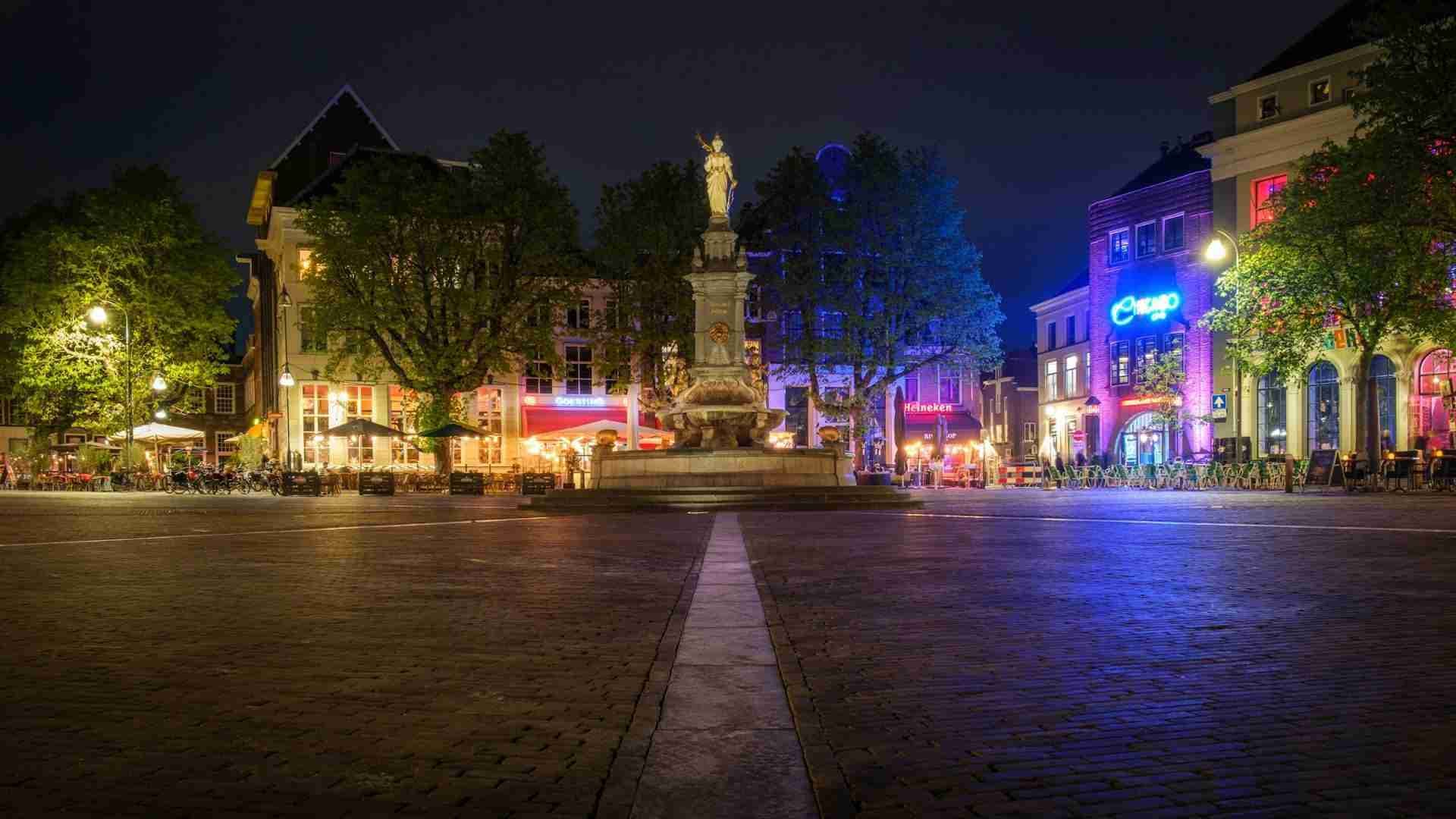
Wilhelminafontein, located in Brink Square in the heart of Deventer's old town, is a richly ornamented 19th century fountain dedicated to Queen Wilhelmina. Surrounded by a mix of traditional Dutch architecture, cafés, and museums, the fountain stands out as a compact but refined subject for urban and architectural photography. Its stone lions, classical motifs, and symmetrical base give photographers a lot to work with, especially in soft natural light. The surrounding cobblestone plaza opens up cleanly in all directions, which allows for balanced compositions from a range of perspectives. It is especially rewarding in the early morning or late afternoon when the square is quieter, the light warms up, and long shadows start to form across the paving stones. The setting is easy to access on foot and makes for a convenient but meaningful stop while exploring Deventer's photogenic city center.
Best Photography Opportunities
• Stone Carvings and Decorative Detail
The most immediately rewarding part of Wilhelminafontein is the detail in the stonework. The fountain includes sculptures, curved edging, classical columns, and carved basins that hold up well in close compositions. Photographers can work with a short telephoto or macro lens to isolate textures, capture the interplay of light and shadow on the curves, and bring attention to surface wear that adds character. Morning light brings subtle contrast across these features without overwhelming the scene. Overcast days are also excellent for detail work because the soft light helps reveal fine textures without harsh shadow edges.
• Full Fountain Compositions with Surrounding Architecture
A wide or standard lens lets you frame the fountain against the facades that border Brink Square. These background buildings, with their stepped gables and brick patterns, give structure and contrast to the clean lines of the fountain. From the south side of the square, you can place the fountain against the lighter facades and get a good sense of depth. Shooting from the northern end lets you bring in darker brick backgrounds that frame the lighter stone in the fountain more clearly. This works best during golden hour, when the warm light glows off the bricks and adds dimension to both subject and setting.
• Symmetrical and Centered Framing
The design of Wilhelminafontein invites centered compositions. Its vertical symmetry, especially when photographed head on, helps build balanced images that are well suited to portrait orientation or square frames. Try shooting at a moderate distance to avoid distortion, keeping the base, column, and lantern aligned cleanly in frame. If you are shooting on a cloudy day, the lack of shadow allows you to emphasize shape without distraction. For a different look, place the fountain off center and use the curve of the plaza or background structures to lead the eye through the frame.
• Street Scenes
Brink Square is a public space with a steady rhythm of foot traffic, passing bikes, and quiet activity. These elements can add life and motion to your composition, especially if you are working with a moderate shutter speed or capturing candid scenes. A 35 or 50 millimeter lens works well to keep the fountain in frame while also allowing you to frame in human presence. In the afternoon, light spills across the square from the western edge, casting soft shadows behind pedestrians and giving extra shape to the surface of the stone. If you want the fountain without crowds, early morning is the best time.
• Blue Hour and Night Photography
After sunset, the plaza remains softly lit by the warm glow of streetlamps and nearby businesses. The fountain holds its form well in this light and reflects warm tones from surrounding surfaces. This is a good time for long exposures using a tripod, with just enough contrast between the light on the stone and the cooling tones in the sky. You can position yourself to capture the fountain alone or include shop windows and nearby cafés to introduce more narrative. Reflections on the pavement after rain are a nice bonus that adds depth to compositions during blue hour.
Best Time to Visit
Wilhelminafontein is best photographed early in the morning or later in the day when the square is quieter and the light is lower. In the morning, soft eastern light moves across the plaza, giving gentle definition to the fountain's carved surfaces. Foot traffic is minimal before local shops and cafés open, which makes it easy to shoot uninterrupted. Late afternoon brings warmer tones and longer shadows that work well for street scenes and ambient compositions.
Overcast conditions are also useful, especially for architectural shots and detail work. The flat light helps keep textures visible without creating high contrast. During the colder months, the square remains photogenic, though conditions can be damp. After rain, the cobblestones darken and reflect the light around the square, which adds extra atmosphere, especially when shooting in low light or during twilight.
How to Get There
Wilhelminafontein is located in Brink Square, one of the most central and accessible parts of Deventer's historic city center. If you are arriving by train, it is about a 10-minute walk from Deventer Station.
The entire area is a pedestrian zone. You can easily explore on foot, and the square is paved and flat throughout. If you are arriving by car, public parking is available nearby at Stadhuisgarage or Centrumgarage Stadspoort, both within a short walking distance. There are no entrance fees, photography restrictions, or permit requirements. The square is open at all hours and has cafés, benches, and covered areas where you can pause between shooting sessions.
Recommended Photography Gear
Bring a standard zoom lens such as a 24 to 70 millimeter to cover the full structure of the fountain and the immediate surroundings. A short telephoto or 85 millimeter prime is helpful for isolating the carved details or pulling in tighter compositions without background distraction. If you like working close to the subject, a macro lens allows you to focus on decorative textures, water-worn stone, or carved inscriptions.
A tripod is useful during early morning, evening, or blue hour sessions, especially when shooting long exposures in low light. A polarizing filter can help deepen sky tones or reduce glare off the stone, though it is optional depending on the weather. Be prepared for mild wind or rain, so a lens cloth or weather-resistant gear is a good idea. Comfortable walking shoes are recommended, as you will likely move between nearby locations on foot.
Nearby Photography Locations
Right next to the fountain, Museum De Waag anchors the square with its stepped gables and strong lines. The facades around Brink are full of character and make great backgrounds for street scenes and wide compositions. Early light works best here for building contrast across the brickwork.
Just a short walk uphill from the square, Bergkerk and the surrounding neighborhood offer classic Dutch rooftops, narrow streets, and older stone textures. It is quieter than the square and works well for black and white compositions or foggy conditions.
• IJssel Riverbank and Ferry Pier
Walk east through the city center to reach the riverbank, where you will find open views across the IJssel, reflections in the water, and layers of boats, skyline, and sky. This area is ideal for wide shots and works best in the evening when the sun sets behind the town.
• Grote Kerk and Lebuinusplein
A few minutes west of Brink, the large church tower and plaza give you vertical scale and open space. Use a wide lens to include pedestrians, or step back to frame the tower between surrounding buildings in a tighter street view.
• Noorderbergkwartier Residential Area
North of the square, this quiet neighborhood features curved alleys, ivy-covered walls, and traditional Dutch homes. It is a strong option for slower-paced walking photography and small detail studies, especially in soft afternoon light.
Wilhelminafontein is not a large subject, but it offers a lot of control and potential for building clean, composed urban images. Its central placement, strong visual form, and surrounding textures make it ideal for photographers who enjoy working with light, line, and balance. Whether you are spending a few hours or a full day in Deventer, this fountain is a rewarding place to start or end your shoot.
Comments
Loading comments…