
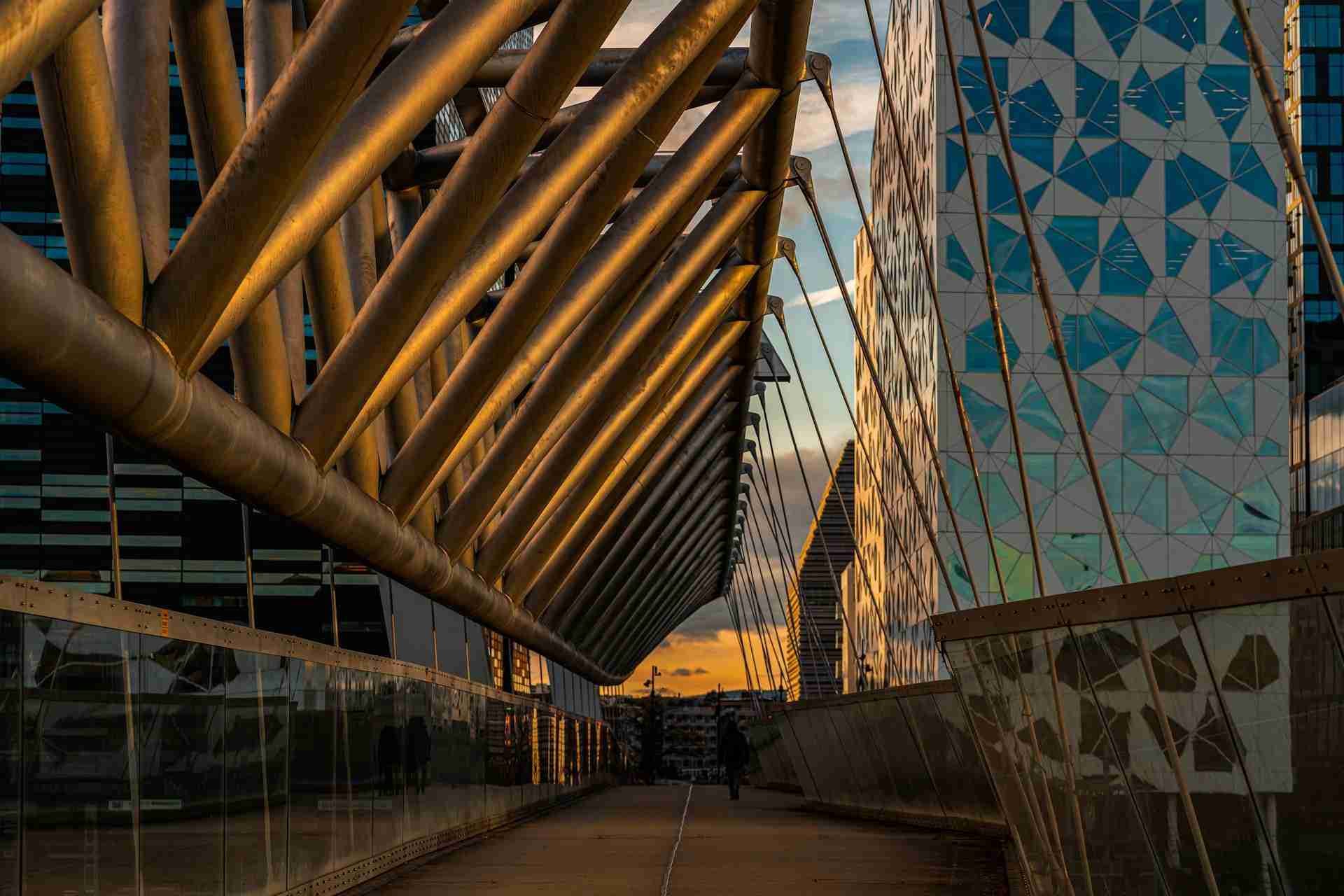
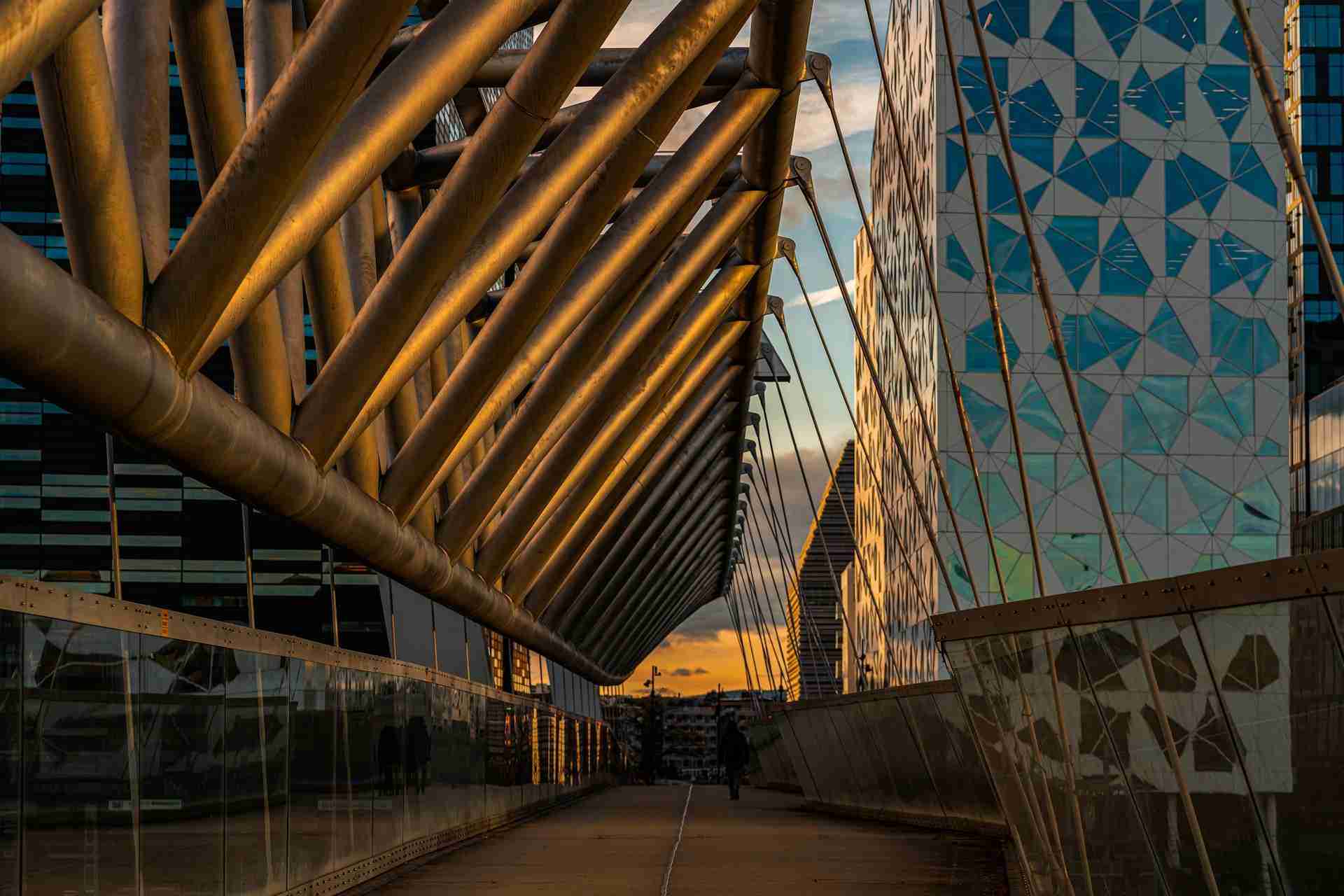
Cutting across the maze of rail tracks outside Oslo Central Station, Akrobaten Bru is a pedestrian bridge that stands out with its steel precision and rhythmic geometry. Unlike traditional footbridges, it is designed with photography in mind, both consciously and incidentally. The repeating crisscross of steel beams and tension cables forms an elegant tunnel of patterns, perfect for working with symmetry, compression, and vanishing points. As Oslo evolves around it, the bridge remains one of the city's most rewarding subjects for architectural and urban photographers. Whether you are interested in daylight minimalism, after-dark long exposures, or dramatic perspectives from below, Akrobaten Bru delivers reliable visual impact across seasons and lighting conditions.
Best Photography Opportunities
• Geometric symmetry from within the bridge
Stepping onto Akrobaten Bru, the first thing you notice is the intense linear repetition of its support structure. Looking straight down the walkway, the steel diagonals and white trusses form a tight, tunnel-like composition that draws the eye to a distant vanishing point. Shooting with a wide-angle lens exaggerates the convergence of lines and allows for perfect symmetry when centered on the path. This is especially effective when the bridge is quiet early in the morning or during twilight, giving a clear view without visual clutter. Slight variations in light, fog, or sky conditions will shift the mood, allowing for multiple interpretations of the same framing.
• Under-bridge patterns and steel structure
The bridge's support system below is equally interesting, especially when viewed from the platforms at Oslo Central Station or the sidewalks below. Here, the angled beams and triangular trusses become more abstract, offering a completely different visual language from the orderly interior. A telephoto lens helps isolate parts of the structure and flatten layers for strong graphical impact. Including a train in the frame introduces motion and adds scale, while long exposures during blue hour help smooth traffic and create a glowing contrast with the cold steel. These compositions are best taken from elevated positions for a cleaner view of the underside geometry.
• Twilight and night photography with urban glow
At night, Akrobaten Bru lights up with soft internal lighting that illuminates its walkways and beams without overpowering the scene. The bridge glows gently, reflecting off the glass panels and nearby surfaces, making it an ideal subject for low-light and long exposure photography. Using a tripod, you can take advantage of both pedestrian motion blur and vehicle light trails in the surrounding area. This is especially effective during the blue hour when the ambient sky adds contrast to the warm light of the bridge. Framing the bridge in context with surrounding high-rises or reflections in nearby puddles expands your composition options.
• Human scale and motion through space
The design of the bridge invites human movement, and including pedestrians in your frame adds both motion and scale. A lone figure walking down the center can balance the composition perfectly, drawing attention to the vanishing point. Silhouettes work well in backlit situations during sunrise or sunset, particularly in winter when the sun sits low on the horizon. Using a mid-range zoom lens allows you to compress space and isolate motion in a very controlled way. You can also experiment with shutter speed to either freeze or blur the subject depending on the look you're after.
• Surrounding architecture as framing elements
The areas at both ends of the bridge are surrounded by modern architecture, especially in the Barcode district. These buildings feature mirrored surfaces, irregular shapes, and strong vertical lines that echo the design of the bridge. Using these structures as foreground or background elements adds context and a layered sense of place. Compositions that incorporate the tops of these towers or their reflections in water or glass help situate the bridge within the broader Oslo cityscape. These shots are particularly effective in overcast conditions that soften contrast and reveal more surface detail.
Best Time to Visit
Akrobaten Bru photographs well throughout the year, but seasonal conditions affect mood, light, and accessibility. Spring and autumn are especially favorable, offering low-angle sunlight that cuts across the bridge and enhances the contrast in its repeating lines. These seasons also bring variable skies that can add drama and texture to the background. In summer, the bridge benefits from long golden hours in the evening, but you may need to wait for foot traffic to lessen for cleaner compositions. Early mornings remain the most reliable for peaceful shooting.
Winter introduces a stark and minimal atmosphere. Snow on the ground and the metal beams creates a high-contrast environment with simplified color palettes, ideal for black and white work or low-saturation digital editing. Twilight and blue hour sessions in winter are particularly rewarding, with city lights appearing earlier in the day and reflections on ice or wet pavement adding depth. Rain is common year-round in Oslo, but even brief showers can enhance the surface texture and create reflective opportunities along the walkway.
How to Get There
Akrobaten Bru connects the busy Oslo Central Station (Oslo S) area to the newer Bjørvika and Barcode districts. It is easily accessed from both sides on foot and is located just outside the southern exit of the station. If arriving by public transport, nearly every regional train, metro, and tram line serves Oslo S, making it one of the most convenient photography locations in the city. Simply exit the station toward Dronning Eufemias gate and follow the signs toward the pedestrian bridge.
For those arriving by car, there are paid parking garages nearby, though they can be costly and limited during peak hours. The bridge itself is fully accessible at all times of day and night, with a wide walkway that accommodates tripods without issue. There are no entrance fees or restrictions, though interior photography of surrounding offices or private buildings is not permitted. Street-level views of the underside of the bridge are accessible from platform areas and sidewalks.
Recommended Photography Gear
A wide-angle lens between 14 and 24 millimeters is essential for photographing the interior of the bridge, especially when composing shots from directly inside the walkway. A mid-range zoom lens in the 24 to 70 millimeter range provides flexibility for portraits, street-style shots, and tighter architectural framing. For abstract compositions or street-level views of the bridge from a distance, a 70 to 200 millimeter lens works well to compress lines and isolate structural elements.
A sturdy tripod is critical for long exposure work, particularly after dark or in low-light winter conditions. A shutter release or two-second timer ensures clean exposures when capturing motion blur or city light. A circular polarizer can be helpful in controlling reflections in the glass panels, especially in wet conditions. Consider bringing a microfiber cloth or lens cleaning kit, as the environment is often damp and smudges or condensation are common. Weather-resistant clothing and gloves are advisable in colder months, as you may be standing in the same position for extended periods while waiting for optimal light or a quiet moment.
Nearby Photography Locations
A few steps from the southern end of the bridge, this row of striking high-rise buildings features contrasting shapes, colors, and reflections that lend themselves to modern architectural photography. The narrow passages between the buildings are excellent for vertical compositions and abstract shadow work.
Located a ten-minute walk from the bridge, the opera house rises out of the water with its walkable marble roof and angled design. It is ideal for shooting sunrises over the fjord or minimalist wide shots that combine water, sky, and stone.
Further east of the Opera House, this pedestrian pier extends into the Oslofjord and offers panoramic views back toward the city. It's especially photogenic at sunset or during blue hour when the water and sky blend with the city lights.
• Oslo Central Station Platforms
Beneath the bridge, the platforms offer a gritty, motion-filled environment where passing trains, signage, and the bridge structure itself can be composed into dynamic urban scenes. This area is particularly strong in low light with fast lenses and high ISO work.
This recently developed harborfront area offers glassy reflections, colorful facades, and open space to frame Oslo's modern skyline. It is best approached in the late afternoon or early evening, when city lights begin to warm the scene and the harbor remains still.
Akrobaten Bru rewards patience and precision. Whether you're isolating patterns, working with motion blur, or layering architecture with human presence, the bridge offers endless visual combinations in a single location. Its clean lines, shifting light, and urban energy make it one of Oslo's most reliable subjects for photographers looking to explore structure and movement with clarity and depth.
Comments
Loading comments…