
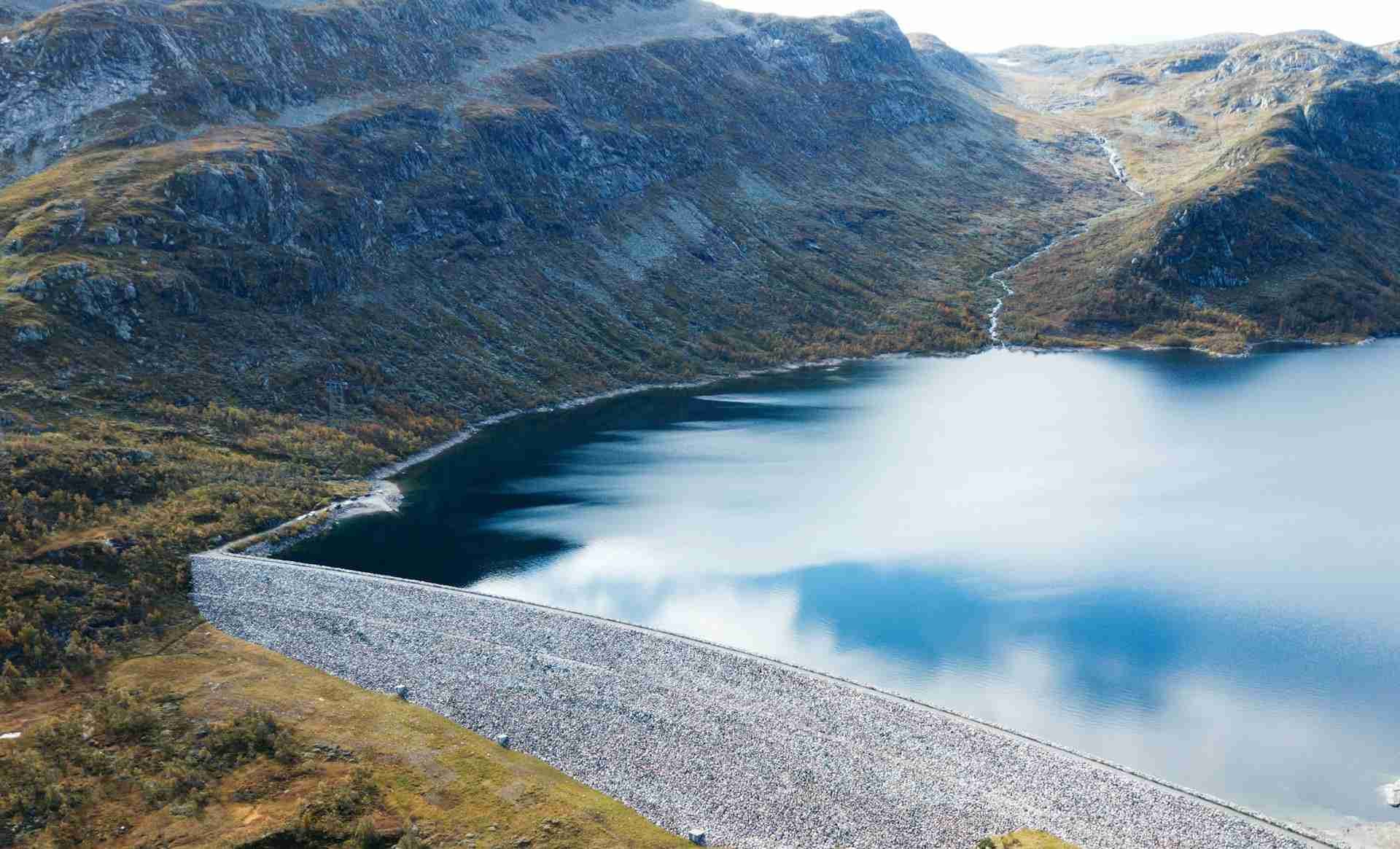
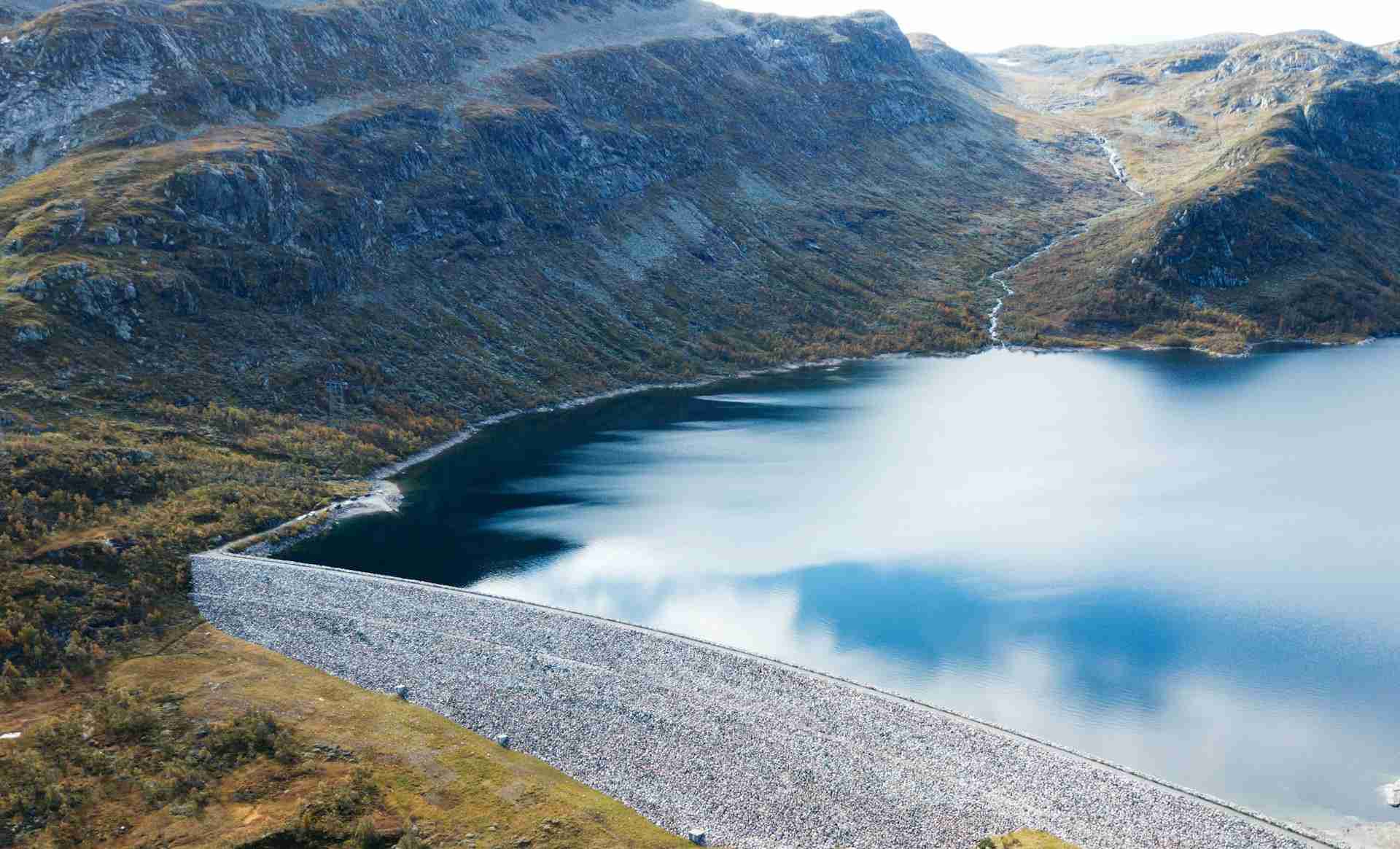
Bitdalsvatnet is a long, narrow lake in the uplands west of Rauland, surrounded by a stark landscape of stone, clean ridgelines, and scattered birch forest. It sits at the base of steep hills and ends in a wide rockfill dam that curves gently across the valley floor. The lake's remote feel, still water, and minimal visual noise make it an excellent choice for photographers who want to work with structure, reflection, and light without distraction. From bold wide angle scenes to simple studies of shape and tone, Bitdalsvatnet delivers strong compositions without requiring much effort to access. Whether you are shooting across the water at low cloud, isolating patterns on the shoreline, or working with the engineered symmetry of the dam itself, this is a location that offers quiet flexibility across a full day's light.
Best Photography Opportunities
• Reflections Across Still Water
Bitdalsvatnet often lies calm in the morning, with long sections of undisturbed surface that reflect both the sky and the surrounding terrain. The far shoreline runs clean across the frame, and the steep slopes above it mirror clearly when the air is still. These conditions are most common just after sunrise and can last well into mid morning depending on wind. The long shape of the lake allows for compression and depth when using a longer lens, or you can work with near-symmetry in wide-angle frames. Overcast skies also work well here, giving you soft tones and muted color reflected across the surface without harsh contrast.
• Granite Foregrounds and Edge Detail
The lake's shoreline is a mix of smooth granite slabs, glacial erratics, and scattered brush. These features are easy to work into foregrounds without clutter, especially when shooting wide across the water. Shallow water near the edge often reveals underlying stone and subtle gradients in color that build strong foreground interest. In early morning sidelight, the grooves and lichen patterns on the rocks become more pronounced and help separate the layers in frame. These compositions are simple to build and respond well to soft light, allowing you to work even under cloudy skies.
• Rockfill Dam as a Textural Element
Unlike concrete dams with clean lines and uniform surfaces, Bitdalsvatnet's rockfill dam is a dense slope of crushed stone that arcs across the base of the lake. Its texture adds a rough but deliberate element to the landscape and works well in both wide and detailed compositions. From above, it becomes a curved line through the terrain, leading toward the lake and mountains beyond. From lower angles, its scale dominates the foreground and provides contrast with the smoothness of the water. Shooting from the sides or slightly elevated viewpoints gives better control of its shape and makes it easier to include in layered frames.
• Minimalist Compositions
This location suits quiet, stripped back frames that focus on shape and spacing. Isolated boulders along the shoreline, a curve in the waterline, or a small inlet on the far side of the lake all work well when separated with a telephoto lens. These scenes are best in soft light and calm conditions when shadows and highlights are minimal. The openness of the landscape allows for clean negative space and compositions that hold together even when the subject is simple. This is a good place to slow down and work with subtle changes in light and alignment.
• Views Across the Valley from the Access Road
The gravel road leading to the lake gains gentle elevation and offers several places to pull off and shoot across the valley. From these spots, you can see the full length of the lake, the dam, and the rise of the surrounding mountains in one broad frame. These compositions are strongest in the late afternoon when side light creates separation between the layers of terrain. The line of the dam becomes a helpful visual anchor in these wider scenes, especially when framed from slightly above.
Best Time to Visit
The best season to photograph Bitdalsvatnet is between late June and early October, when the gravel access road is open and conditions are stable. In early summer, snow patches often remain on the higher slopes, adding contrast to the darker rock and helping reflect light back onto the lake. These weeks also bring long daylight hours and frequent calm mornings, ideal for working with reflections and slow exposures. By August, the surrounding vegetation begins to shift toward autumn color, especially in the birch trees along the lower hills. September brings colder nights and the possibility of frost on the rocks near sunrise, which adds texture to foregrounds. Because the lake sits below steep hillsides, direct sunlight is limited to certain hours. The best light for most compositions comes in the morning for reflections and in the late afternoon for sidelight on the dam and valley walls. The location holds up well in overcast weather, with the surface of the lake staying calm and the surrounding forms remaining clearly defined.
How to Get There
Bitdalsvatnet is located west of Rauland in Telemark and is accessed by a gravel road branching off of Kråmvikvegen. From central Rauland, follow signs toward Kråmvik and Møsvatn. After turning onto Kråmvikvegen, look for a small gravel road that leads directly to the lake and dam. The road is well maintained during the summer months and ends at a flat parking area beside the lake. No hike is required to reach the shoreline or the dam structure. There are no access fees to enter the area, though local authorities may post seasonal notices or maintenance updates. The approach is short and straightforward, but weather in the uplands can shift quickly, so it is worth checking local forecasts before heading up.
Recommended Photography Gear
Bitdalsvatnet is best approached with a kit that balances simplicity with control. A wide angle lens helps make use of the foreground granite and long lake shape, while a medium telephoto is essential for compressed frames and isolating smaller shoreline features. A solid tripod is useful for reflection work, long exposures, and careful framing, especially when working at low angles or waiting through changing light. A circular polarizer helps manage surface glare and can also darken water slightly to bring out submerged rocks or shoreline definition. The stone shoreline can be slick when wet, so wear sturdy boots with good grip. Waterproof layers and a dry pack for gear are important even in summer, as showers pass quickly but often. If you're planning to shoot elevated views of the dam or fly a drone, bring extra batteries and avoid flying in strong wind, which is common in the afternoon. This is a remote location with no services, so plan accordingly with food, water, and charged navigation tools.
Nearby Photography Locations
• Møsvatn
This large lake to the north offers expansive views with islands, cabins, and long reflections that stretch into the distance. Its size allows for variation in composition, and early morning light often creates strong layers across the hills on the far shore. In winter and late fall, ice and mist add another level of texture for landscape work.
The edge of Hardangervidda is just north of Bitdalsvatnet and gives access to a range of plateau landscapes, including smaller lakes, glacial terrain, and alpine wetlands. Light moves slowly across the open ground, which makes it ideal for building deliberate frames. The area is suited to both wide angle and drone photography.
• Rauland Village and Hills
The area surrounding Rauland includes traditional cabins, small pastures, and open forest that shift into autumn color early. These low elevation scenes contrast well with the starkness of Bitdalsvatnet, especially in morning fog or after rain. Many of the best views can be captured right from the roadside or a short walk into the trees.
• Totak Lake
South of Rauland, Totak has a deeper basin and steep sides that create strong shapes for long lens work or moody wide frames. The lake's shoreline is more rugged and works well for high contrast black and white studies, particularly in early morning or just before sunset.
• Skinnarbu Region and Møsvassbu Trailhead
Near the entrance to Hardangervidda National Park, this area offers access to higher elevation lakes and wide valley views with fewer visitors. The terrain here has more vertical relief and works well in side light, especially in late summer. The trailhead also offers drone friendly open space with good signal and clear lines of sight.
Bitdalsvatnet is a location that favors focus over speed and offers just enough variation in shape, surface, and structure to build a solid set of images over a single session. Its easy access, quiet surroundings, and reliable conditions make it a strong option for photographers who want to work with minimal gear and plenty of time. Whether you are shooting reflections, terrain detail, or clean geometric frames, this lake holds together across a full day of changing light.
Comments
Loading comments…