
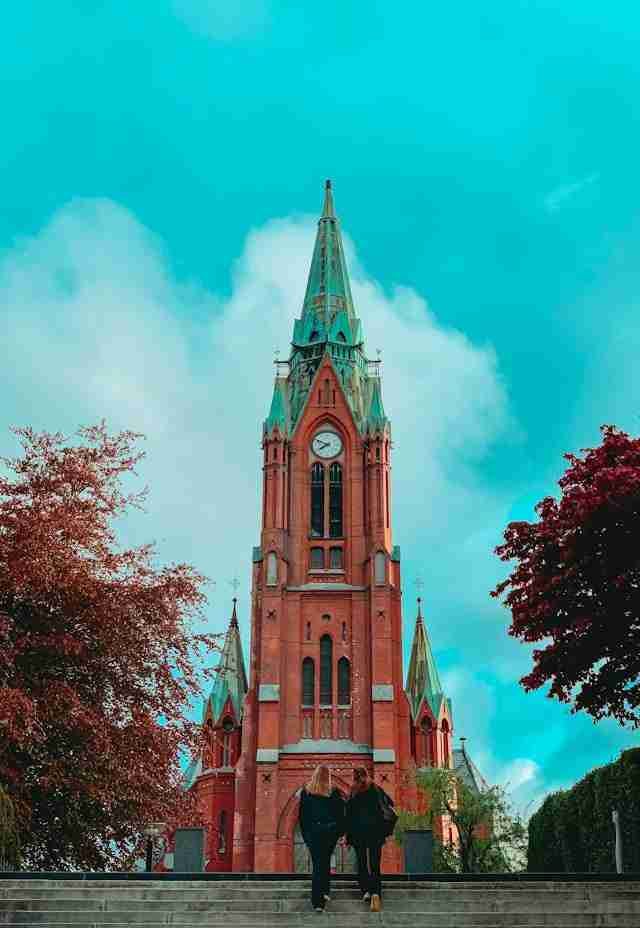
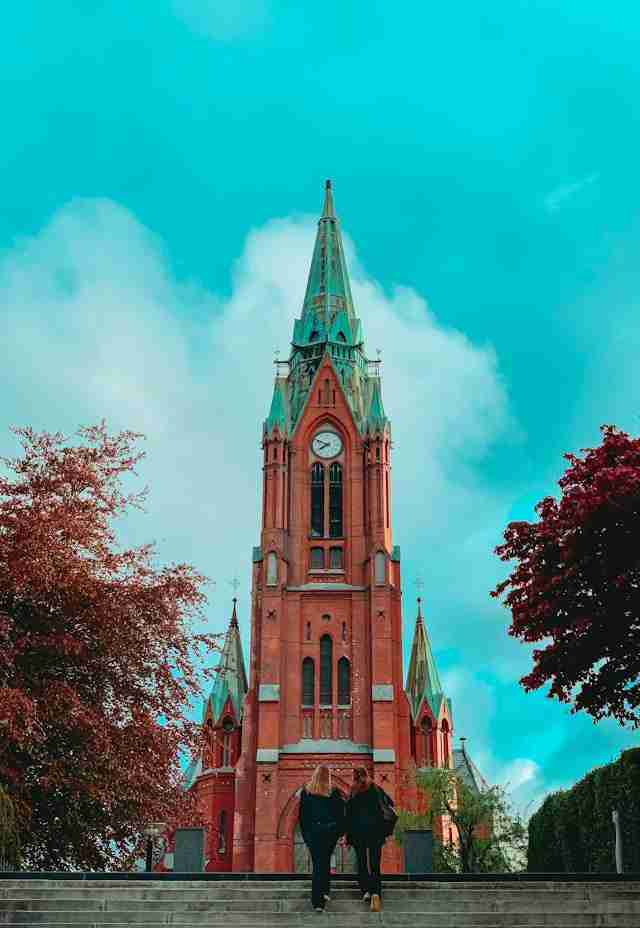
Johanneskirken rises from the center of Bergen with a red brick spire that draws the eye above the city's layered rooftops. Surrounded by narrow streets, stone staircases, and close-set buildings, this church offers strong compositional potential from multiple elevations and angles. The Neo-Gothic architecture stands in contrast to the weathered surfaces and soft coastal light that define the surrounding area. Photographers will find the location useful in changing weather, especially when low clouds shift over the ridge behind the city or break to allow brief windows of sun across the church façade. Whether working from the nearby hills or setting up at street level with tight framing, this is a location where structure, scale, and atmosphere come together naturally.
Best Photography Opportunities
Framing from the Steps of Nygårdshøyden
From the hillside steps leading down through Nygårdshøyden, Johanneskirken appears between the older rooftops, centered and clear against the surrounding streets. A mid-range zoom between 35 and 70 millimeters allows you to isolate the church while still including texture from the sloped roofs and narrow streets. Early morning offers side light that shapes the brickwork and gives depth to the windows and tower. During low clouds or overcast conditions, this frame works well in muted tones or black and white. These stairs also provide enough space to set up a tripod without obstructing pedestrians.
Side Elevation from Sydneshaugen Park
This small green space sits just west of the church and offers a view of the full side elevation, including the main structure, steeple, and attached chapels. A wide-angle lens helps capture the whole structure without distortion if you keep the camera level and avoid tilting. In the late afternoon, warm light brushes the edges of the tower and adds depth to the layered brickwork. Use foreground branches or fence lines to add scale and framing. Even in flat light, the texture and line work of the architecture make this a dependable option for quiet, balanced compositions.
Tight Detail Work on the Spire and Upper Windows
From street level, especially along Sydnesplassen, the tall central spire can be isolated using a telephoto lens between 100 and 200 millimeters. These frames benefit from early golden hour light or moments after rainfall when the brick takes on deeper color and the windows reflect softened sky. Watch for clean lines and small framing opportunities between nearby buildings. When shot in vertical orientation, this angle emphasizes the height and narrow form of the church and can be used to contrast the dense city structures below. Long exposures are not needed here, but a tripod helps maintain consistency during shifting light.
Elevated View from Fløyen Access Trail
If you follow the trail leading toward Mount Fløyen, there are a few places where the church becomes visible between buildings, with the harbor and bay beyond. These shots require planning and a longer lens to compress the scene and balance the foreground detail. Evening light from the west often gives depth to the scene and reflects across rooftops in the lower half of the frame. Weather can shift quickly, so be prepared to adjust shutter speed or exposure as clouds roll across the ridge. These views also support layered compositions that include the church as part of a larger urban landscape.
Night Photography from Parkveien and Adjacent Streets
The church is illuminated after dark and stands out against the darker buildings surrounding it. From Parkveien and connecting lanes, you can frame the tower using natural leading lines from the street, tram lines, or fences. Long exposures balance the warm lights of the church with the cooler tones of the streetlights and sky. A 24 to 70 millimeter lens works well here, giving you enough range to move between wide context and isolated structure. Traffic is light enough in the area that exposures of ten to twenty seconds are possible without too much motion interference.
Best Time to Visit
Bergen's weather is often unpredictable, but this works in favor of photographers who know how to adapt to quick changes in light and sky. Spring and autumn offer the best balance of color, cloud cover, and soft contrast. Morning is often calm, with openings in the clouds that allow for focused directional light across the church face. Evening provides warmth from the west, especially in early autumn when the sun hangs low and draws long shadows across the brick and rooftops.
Summer offers the most daylight, making it easier to plan long sessions with flexibility around golden hour or evening blue hour. Rain is frequent but brief, and wet surfaces help add contrast and texture to both the church and surrounding streets. Winter scenes benefit from strong air clarity and limited daylight, which brings quick transitions in mood and light. Snow is possible but not always reliable. Plan to arrive early or wait for cloud breaks, as the strongest compositions often happen during short moments of shifting weather.
How to Get There
Johanneskirken is centrally located in Bergen and easy to reach on foot from most points in the city. From the train station or Bryggen waterfront area, the walk takes around ten to fifteen minutes. The church sits just above the main level of the city, so expect a short incline along paved roads or staircases, depending on your route.
Public transport stops within a few blocks of the site, and taxis or rideshares can drop off nearby. There are no fees to access the grounds, and the surrounding streets and parks are all open to the public. Tripods are allowed outside, though interior access may be limited depending on the day and event schedule. Most compositions can be completed from public sidewalks or nearby terraces without any obstruction.
Recommended Photography Gear
A 24 to 70 millimeter zoom lens is the most useful tool at this location, offering enough range to work with both environmental context and isolated architectural detail. A 70 to 200 millimeter lens adds reach for upper tower framing and distant views from nearby hills. A wide-angle between 16 and 35 millimeters is helpful for side elevation work or for capturing the church in tight urban spaces.
Use a tripod during early morning, twilight, or night photography to hold composition steady as exposure times increase. A circular polarizer helps reduce reflection on wet streets and enhances contrast in the brick under partial sun. Rain is common, so bring a lens cloth and weather protection for both your camera and bag. Waterproof shoes or covers help when working near puddles or on damp paths.
Dress in layers and be prepared to pause and restart, as light changes rapidly in Bergen and weather conditions often shift without warning. A lightweight bag allows for quick movement between streets and stairways without restricting access to gear.
Nearby Photography Locations
Take the Fløibanen funicular or hike up for wide panoramic views over Bergen, with city texture, harbor light, and weather-shifted skies that are especially photogenic in the early evening.
This historic row of wooden buildings along the harbor provides strong linear compositions and vibrant color under overcast skies. Reflections appear in puddles or calm harbor water during still conditions.
These open squares give space for street photography and environmental detail shots with soft ambient light. Useful in early morning before crowds begin to build.
Another detailed religious structure with strong stone features, located closer to the waterfront. It provides a good contrast in material and tone to Johanneskirken's red brick.
A calm body of water with city reflections, seasonal foliage, and clean sightlines that work well during golden hour or after rainfall when the surface is smooth.
Johanneskirken offers a balance of form, weather, and position that supports multiple visits and a range of photographic approaches. Whether working with light breaking through coastal clouds or focusing on quiet detail in the rain, the church holds its shape and color through shifting conditions. For photographers building a study of Bergen's layered character, this structure provides a steady anchor in both light and composition.
Comments
Loading comments…