
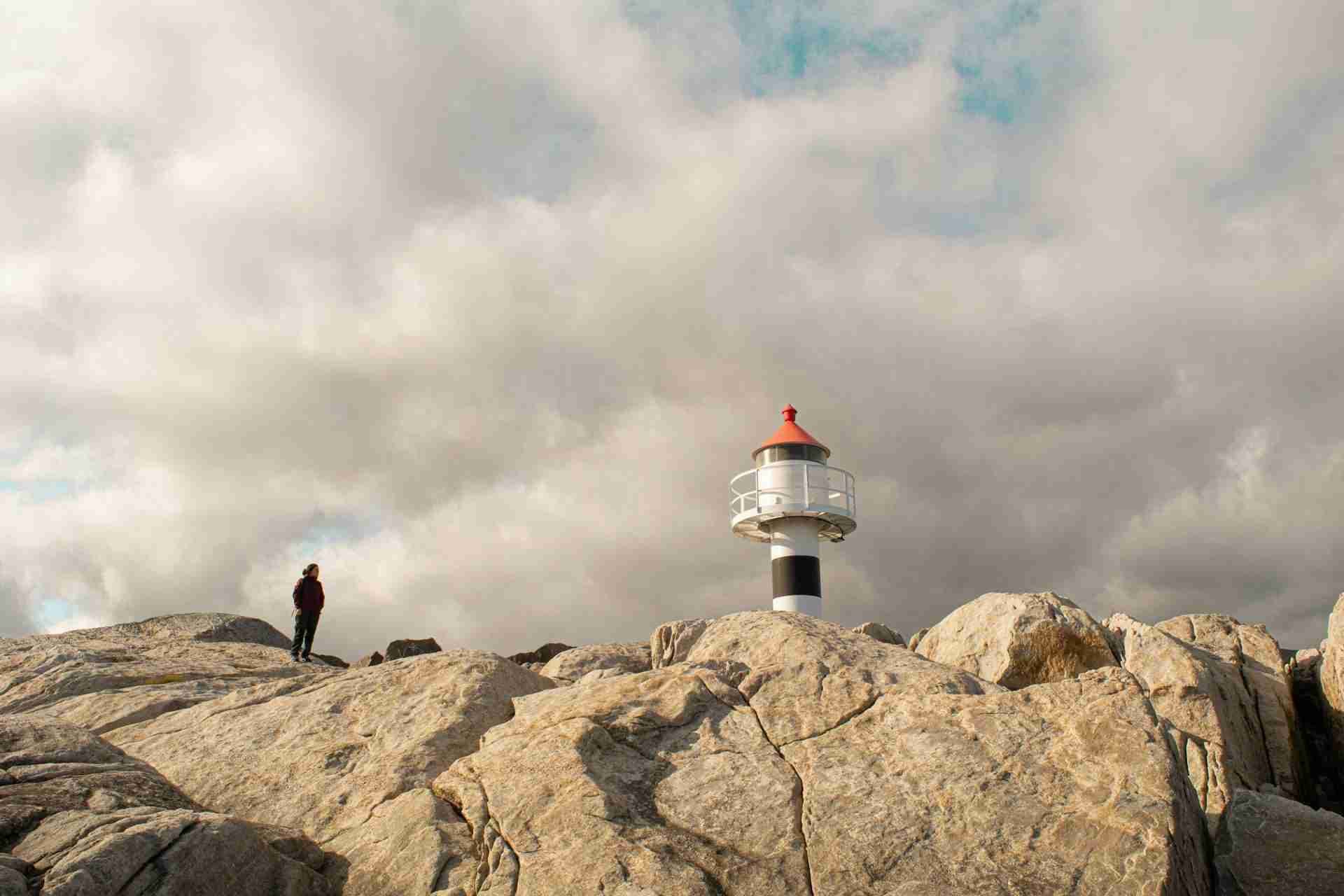
Kabelvåg Molo, a breakwater capped with a small lighthouse, stretches quietly into the sea from the harbor of Kabelvåg in Norway's Lofoten Islands. Surrounded by the wild northern coast and backed by steep mountains, this modest structure offers a subtle but compelling subject for photographers who are drawn to quiet coastal scenes and shifting light. The molo acts as a dividing line between calm harbor waters and the unpredictable Norwegian Sea, creating a natural tension that plays well in both calm and stormy conditions. Though less crowded than nearby Lofoten hotspots, Kabelvåg rewards those who spend time walking its edges and studying how weather and water shape its rugged outline. For photographers who prefer stripped down, elemental scenes, this spot holds lasting visual interest.
Best Photography Opportunities
• Breakwater Leading Lines
The breakwater extends from the harbor directly toward the open sea, forming a perfect leading line for wide angle compositions. Shooting from the inland side during calm weather allows for balanced, symmetrical images with the lighthouse placed near the vanishing point. When the wind picks up, waves crash against the rocks and add motion to the frame. This location is especially effective for long exposures that smooth out the water and pull attention to the texture of the stones and the simple silhouette of the lighthouse. Overcast skies tend to work best here, giving you soft, even light that emphasizes form rather than contrast.
• The Lighthouse
The lighthouse may be small, but it has visual presence when placed within the surrounding elements. Using a medium telephoto lens, you can frame it against the backdrop of the peaks across Austvågøya or the line of the breakwater itself. This gives a sense of scale and isolation, particularly when weather rolls in off the sea. The color of the water and the sky changes constantly, from flat gray to deep blue depending on the light and wind, giving you room to revisit the scene multiple times with very different results. Sunset often lights the mountains behind the lighthouse while the structure itself remains in softer shadow, offering a nice contrast for layered compositions.
• Drone Perspectives
From above, the subtle curve of the breakwater becomes more obvious, bending slightly as it pushes into the sea. A top down shot reveals the textures of rock, moss, and tide-washed concrete, while the surrounding water shifts from dark blue to seafoam green in the shallows. Flying slightly inland gives you a full view of Kabelvåg's harbor and the shape of the village, while turning the drone out to sea gives you clean, open frames with distant islands fading into the haze. This is a location where altitude matters; small changes in perspective completely alter the geometry of your composition. Keep an eye on seabirds and sudden wind gusts, both of which are common here.
• Long Exposures and the Northern Lights
In winter, the breakwater becomes a solid foreground for northern lights photography. With the lighthouse acting as a static reference point, the molo helps anchor your frame while the sky shifts above it. Reflections are often possible in the shallow pools that form along the rocks during low tide or after rainfall. For the best results, scout during blue hour to lock in your composition and exposure settings. The aurora here often arcs over the sea, making this one of the few places in Lofoten where you can shoot aurora to the north without foreground clutter or mountain silhouettes cutting into the sky.
• Harbor and Mountain Layers from the Hillside
A short walk up the hillside behind Kabelvåg reveals a layered view of the harbor, the village, and the molo reaching into the sea. From this slightly elevated angle, you can place the lighthouse as a focal point within a much larger scene that includes fishing boats, open water, and distant peaks. This perspective works well in early morning when the light touches the mountain ridge first and slowly works its way down toward the harbor. A polarizer helps bring out detail in the water while cutting glare from boat hulls and rooftops. This angle is also useful when the breakwater itself is inaccessible due to sea conditions.
Best Time to Visit
Summer brings the most stable light and the longest shooting windows, with soft evening sun lasting well past midnight in June and July. This is the best season for walking out along the breakwater and experimenting with foreground and horizon placement. Autumn arrives with shorter days but much more dramatic skies, and frequent low pressure systems bring powerful waves and fast moving clouds that add texture to every shot. Winter is cold and unpredictable, but also rewarding for northern lights and stark contrast between snow and sea. The lighthouse can often be seen glowing against a backdrop of deep blue during twilight. Spring offers a clean, quiet transition between seasons, with fresh snow lines still on the peaks and increasing sun each day. No matter when you visit, pack waterproof gear and stay flexible, as weather can shift several times within the same hour.
How to Get There
Kabelvåg sits along the E10 highway and is just ten minutes by car from Svolvær, the main town in the Lofoten Islands. Once in Kabelvåg, head toward the marina area and follow signs for the harbor. The breakwater starts near the edge of the port and is easily accessible by foot. There is a small parking area nearby, and no fee or permit is required to walk the molo or photograph the lighthouse. Be aware that the stones can be wet or icy depending on the season, so use caution and proper footwear. This is not a location that requires a long hike or any physical strain, but conditions on the breakwater can be slippery, especially during rain or winter weather.
Recommended Photography Gear
A solid tripod is essential here, both for long exposures and for night work. Wide angle lenses work well for compositions along the breakwater or close to the lighthouse, while a telephoto is helpful for compressing distant mountains and isolating features along the shoreline. A mid range zoom can handle most scenes if you prefer to keep your kit lightweight. Circular polarizers and neutral density filters are useful for managing reflections and smoothing water, especially during bright midday hours. A remote shutter or timer is helpful for minimizing shake during long exposures. If you plan to use a drone, bring a weather sealed unit and monitor local conditions closely, as the sea breeze can shift without warning. Spare batteries are important year round but especially in winter, when cold drains power quickly.
Nearby Photography Locations
One of Lofoten's most popular villages, Henningsvær is known for its football pitch and island layout. It offers a variety of angles from above and from the water, with traditional buildings, drying racks, and views out to sea. The mix of small town life and raw coastal scenery makes it a great spot for both landscape and documentary photography.
• Svolvær
Just a short drive away, Svolvær offers access to mountain hikes like Fløya and Djevelporten as well as a working harbor that lights up beautifully during blue hour. This is a good place for mixed content, with boats, cranes, and natural elements all visible in a single frame. The town also makes a reliable base for charging batteries and checking weather.
Reachable by ferry from Svolvær, Skrova is a quieter option for photographers who want big views without crowds. It has white sand beaches, open trails, and clean views back toward the Lofoten wall. From the top of the island, you can see multiple peaks and channels, especially during early morning light.
Just minutes outside Kabelvåg, this church stands out as one of the largest wooden churches in Norway. Its position near the coast and its warm wooden tones make it an easy subject to photograph against overcast skies or snow. Framing it with the surrounding terrain works well from ground level or slightly uphill.
West of Kabelvåg, Gimsøya has a flatter terrain and more open beaches. This is a good location for clean horizons, wave studies, and sunset reflections. Birdlife is also common here, making it worth a stop if you have a long lens or are interested in wildlife photography.
Kabelvåg molo may be a small piece of infrastructure, but it offers a focused and flexible location for photographers who know how to work with weather, shape, and light. It is a place where the sea meets structure, where subtle shifts in tide and cloud can completely change the frame. Whether you visit in stillness or in storm, the reward lies in watching patiently and shooting with intent.
Comments
Loading comments…