
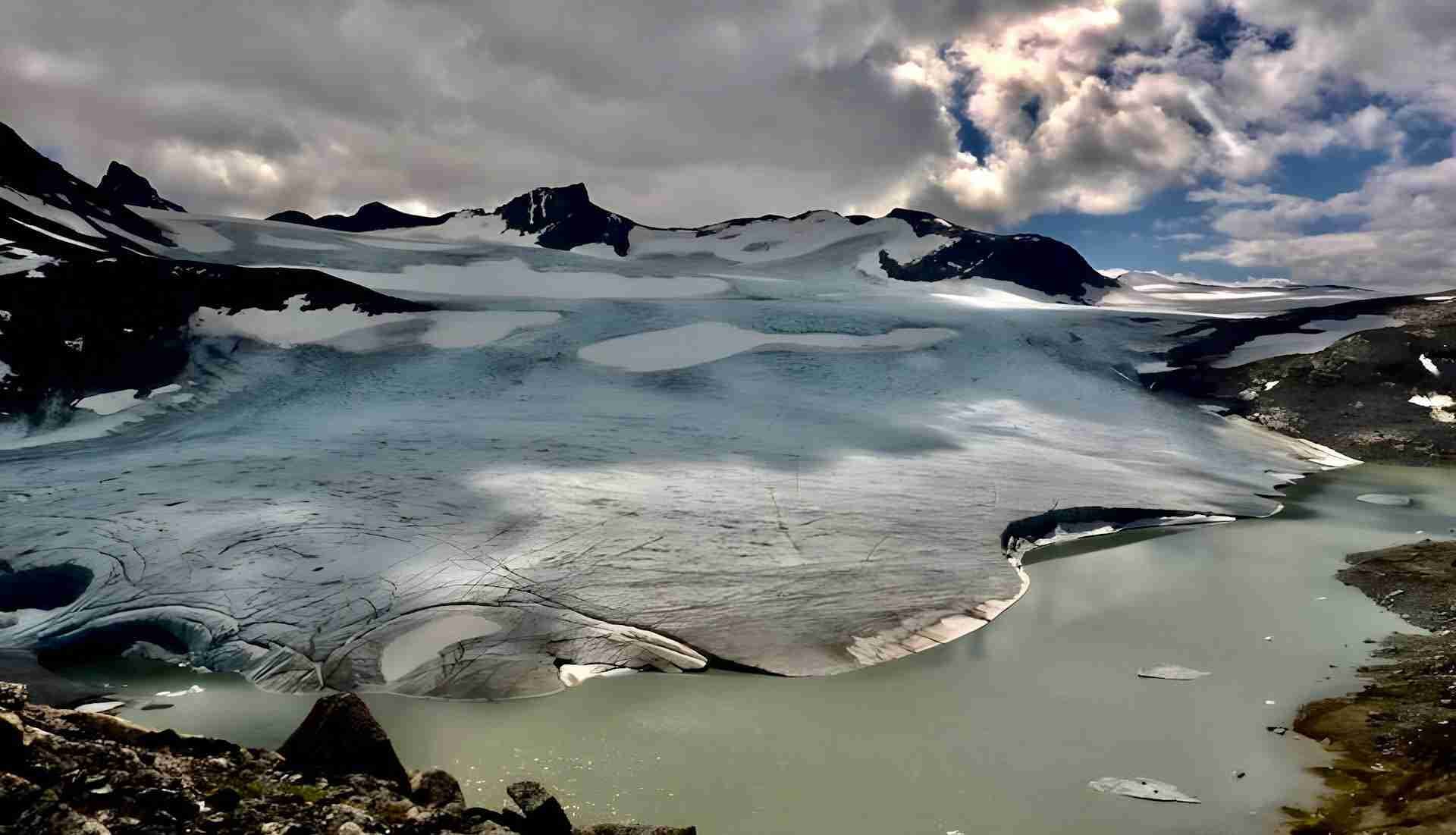
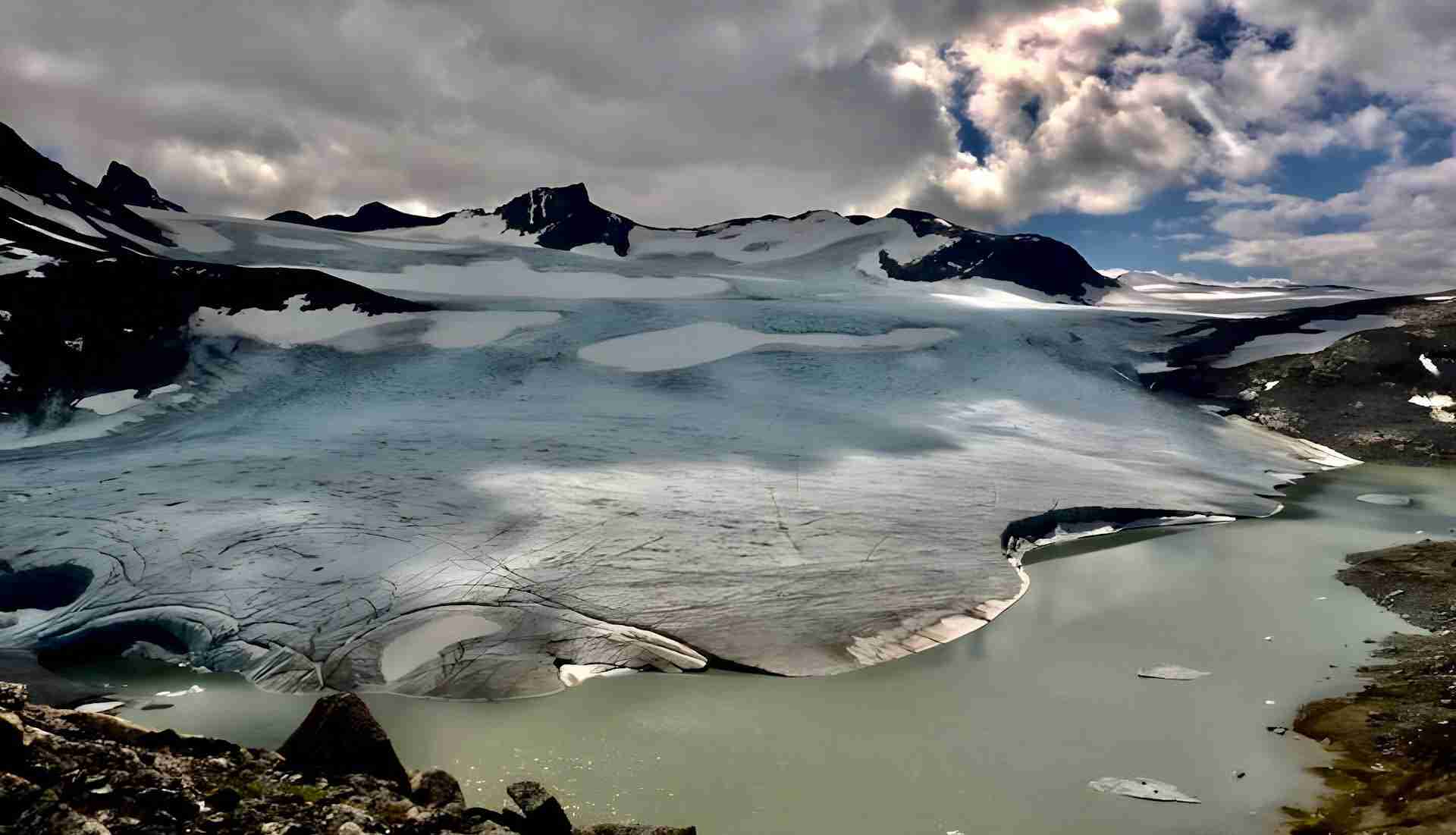
Tucked within the dramatic interior of Norway's Jotunheimen National Park, Leirbreen is a high-alpine glacier that descends from the base of Kyrkja and the Høgvagltindane range, near the Leirvassbu mountain station. Though smaller and less well-known than the park's larger glaciers, Leirbreen presents photographers with a pristine and intensely sculptural icefield nestled in a sweeping valley of granite peaks, meltwater tarns, and lichen-covered scree. It is a landscape defined by stark contrasts—smooth ice against jagged rock, turquoise melt pools against shadowed crevasses—and one that rewards those seeking glacial abstraction, moody mountain light, and the raw forms of a slowly retreating Arctic terrain.
Best Photography Opportunities
• Foreground Melt Pools and Ice Textures
In late summer, as meltwater gathers along the base of the glacier, photographers can find pools of glowing blue water with embedded chunks of ice, often streaked with air bubbles or dirt sediment. These features provide brilliant leading lines into the glacier itself. Use a wide-angle lens at low angles to incorporate ripples, rocks, or floating ice in the foreground, anchoring the frame with the mass of Leirbreen in the midground. Overcast conditions enhance the glacier's color and reduce glare for subtle tonal gradation across the ice.
• Side Profile from Moraines and Ridgelines
The lateral moraines and low ridges surrounding Leirbreen offer high viewpoints that reveal the full flow structure of the glacier—its crevasses, compression zones, and snowfield origins. From these angles, a mid-telephoto lens compresses the topography, allowing for detail-rich studies of glacial movement and contour. Shooting during low-angle morning or evening light creates raking shadows across the ice, emphasizing texture and form in a way midday sun does not.
• Abstract Details of Glacial Ice
Up close, Leirbreen reveals a micro-landscape of crystalline formations, melt channels, and wind-sculpted surfaces. These details are ideal for tight, minimalist compositions using a macro or short telephoto lens. Look for stratified layers, embedded rock fragments, and variations in ice color—from deep glacial blue to translucent grey. Long exposures (1–3 seconds) smooth out meltwater flow, while fast shutter speeds freeze splashes and drip patterns.
• Mountain Backdrop with Kyrkja and Høgvagltindane
The glacier sits beneath a series of sharp peaks, including the distinctive pyramid of Kyrkja. Including these in the background adds grandeur and orientation to your glacier shots. Wide compositions from the east side of the valley work well to balance ice, rock, and sky—especially at dawn when the peaks catch the first light while the glacier remains in shadow, creating a natural contrast between warm and cool tones.
• Moody Weather and Cloud Interplay
As with much of Jotunheimen, Leirbreen frequently experiences fast-moving clouds, fog, and shifting light. These conditions are not obstacles—they're essential to the glacier's character. When mist drapes the ice or low clouds drift across the valley, compositions take on an otherworldly, minimal aesthetic. Use a tripod and bracket exposures to handle the contrast between dark rock and illuminated mist, or embrace flat light for monochrome interpretations focused on tone and shape.
Best Time to Visit
The optimal window for photographing Leirbreen is from mid-July to mid-September, when snow has melted back enough to expose the glacier's form and the surrounding trails are accessible without technical mountaineering. Late July and August offer the most active meltwater features, along with warm tones in the surrounding tundra grasses and mosses. These months also provide relatively stable weather, especially in the morning hours before convective cloud buildup.
In early September, the first snows may return, lightly dusting the surrounding peaks while leaving the glacier exposed—a visually rich contrast that works well in both color and black and white. Autumn also brings quieter trails and colder nights, making sunrise sessions crisper and more solitary.
Avoid visiting in June, when deep snow can obscure both the glacier and access routes. Winter and early spring are viable only for experienced ski tourers or those traveling with mountain guides—Leirbreen becomes part of a vast snowfield and is no longer visibly distinct as a separate subject.
Low-angle light is best for photography, making early morning (6:00–8:30 a.m.) and late afternoon (5:00–8:00 p.m. depending on season) the ideal shooting windows. Midday sun can wash out detail and flatten textures, though fog or cloud cover may compensate by softening contrast.
How to Get There
Leirbreen is accessed via Leirvassbu, a high-altitude mountain lodge located in the heart of Jotunheimen National Park. From the village of Lom, drive west toward Jotunheimvegen, then follow the private toll road leading to Leirvassbu (toll payable on-site). The lodge serves as a base for numerous day hikes and photography excursions in the region.
From Leirvassbu, the glacier is reached via an easy-to-moderate hike along the valley toward Kyrkja and Høgvagltindane. The trail is unmarked but well-traveled and intuitive, following the basin floor west and gradually ascending alongside Leirbreen's southern edge. It takes approximately 1.5 to 2 hours to reach the lower glacier viewpoint, depending on pace and gear weight. The terrain is rocky and uneven—good boots and trekking poles are recommended.
The glacier itself is not safe to walk on without technical gear and experience. All photography should be done from the moraine or adjacent trails unless accompanied by a qualified glacier guide. There are no facilities along the trail beyond Leirvassbu, so bring sufficient food, water, and weather gear. Mobile signal is unreliable; download maps and GPS tracks in advance.
Recommended Photography Gear
Leirbreen demands a lightweight but capable alpine kit. A full-frame mirrorless or DSLR body with high resolution and good dynamic range is ideal, especially for capturing the intricate details in glacial structure. A wide-angle zoom (16–35mm) is essential for dramatic landscapes and compositions that include foreground meltwater or ice features. A mid-range zoom (24–70mm) covers general use and allows you to frame mountain backdrops with flexibility. A 70–200mm or lightweight telephoto is excellent for isolating details in the glacier face, layering distant ridgelines, or capturing light and cloud transitions across the peaks.
A carbon fiber tripod is necessary for long exposures, especially when working near water or in low light. Use spiked feet or a weighted center hook for stability in wind. Circular polarizers help cut reflections and deepen sky contrast, but use with care—polarization can unevenly affect alpine skies. Neutral density filters (6–10 stop) are useful for smoothing water flow in melt streams and pools.
Bring microfiber cloths, a waterproof camera sleeve, and a durable pack with rain protection. The glacier environment is cold, damp, and windy even on mild days. Gloves, a warm mid-layer, and a windproof shell are essential, as are extra batteries and memory cards stored in dry, insulated pouches. A headlamp is recommended if you plan to hike before sunrise or stay for late light.
Nearby Photography Locations
Just south of Leirbreen, the pyramid-shaped Kyrkja is one of the most photogenic peaks in Jotunheimen. A steep but non-technical hike leads to its summit, offering a dramatic overlook of Leirbreen from above, as well as sweeping views across the Smørstabbtindane and Høgvagltindane ranges. Best shot at sunrise or under fast-moving clouds for depth and contrast.
• Høgvagltindane Ridge and Lakes
The high trail toward Høgvagltindane passes multiple alpine tarns and glacial outwash streams. These features create leading lines and reflection opportunities, particularly in low wind and morning light. The area is less traveled, making it ideal for minimalist landscape studies and solitude.
• Leirvassbu Valley and River Delta
Just below the lodge, braided streams and moss-covered boulders stretch across the valley floor. Early morning mist often hovers here, and backlight transforms the scene into a luminous study of water and texture. Excellent for wide compositions or intimate water detail work.
A longer journey eastward brings you to the turquoise waters of Lake Gjende and the dramatic Besseggen Ridge. This is a more populated route, but the contrast between glacial lakes, steep cliffs, and distant peaks offers strong visual drama—especially in afternoon sidelight.
Leirbreen may not boast the scale of Norway's larger glaciers, but its visual potency lies in intimacy, texture, and alpine atmosphere. In the silent hours beneath towering ridges and wind-carved ice, it offers a setting where light is fleeting, forms are raw, and every frame feels like it's been carved by the land itself.
Comments
Loading comments…