
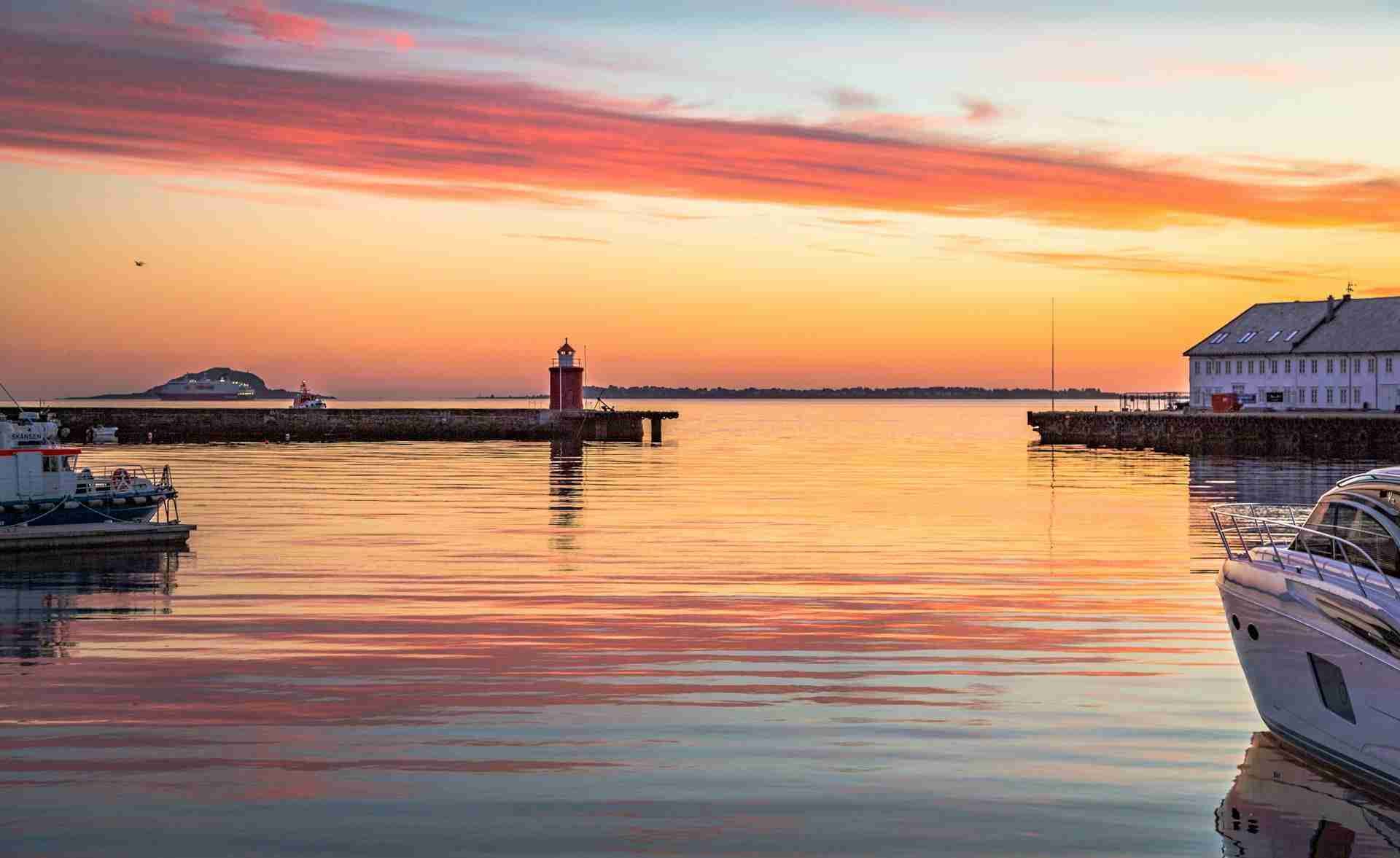
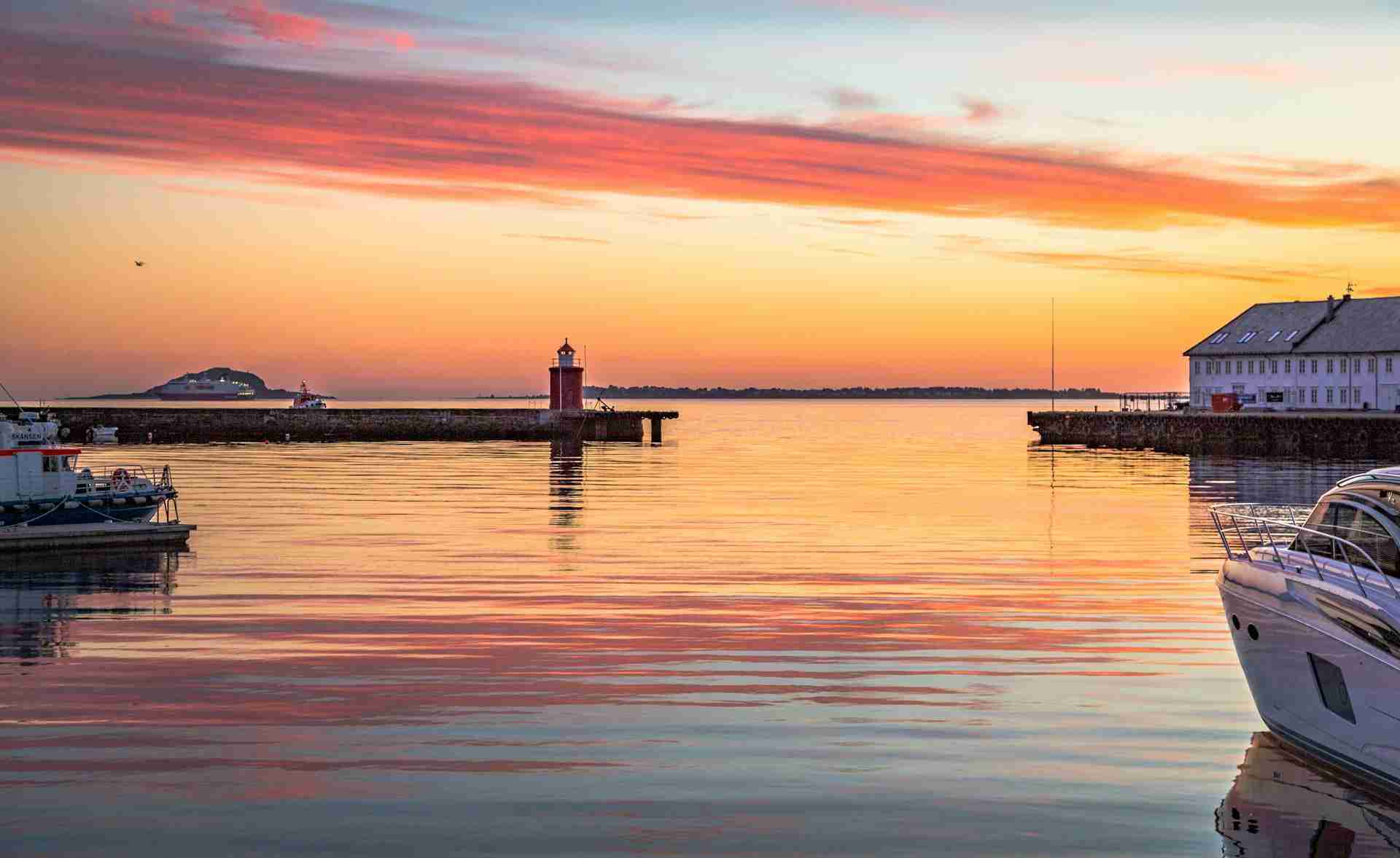
Molja Fyr is a petite, cylindrical lighthouse perched at the end of a stone pier in the harbor town of Ålesund, Norway. With its red cast-iron tower standing just over 10 meters tall, Molja Fyr may be modest in scale, but it delivers a uniquely quiet and visually balanced subject for photographers who appreciate maritime minimalism. Set against a backdrop of modern harbor buildings and steep mountain slopes, this working lighthouse has become both a navigational aid and a creative anchor point for coastal compositions. In all seasons, the interplay between built structure, reflective water, and shifting Nordic light makes Molja Fyr a compelling subject for photographers who know how to work with subtlety, tone, and geometry.
Best Photography Opportunities
• Long Exposure of the Lighthouse and Pier at Blue Hour
Molja Fyr is particularly striking in the blue hour just before sunrise or after sunset. Using a tripod and a neutral density filter, you can flatten the water surrounding the stone pier, allowing the lighthouse's strong form to stand against a glassy surface and soft sky. Composing from the harbor side lets you include the curved breakwater leading to the tower, creating a visual path that guides the eye. Because the lighthouse is lit at night, exposures taken during twilight will often feature a glowing beacon, adding a small but powerful highlight in an otherwise calm frame. The color balance between the red tower and the cool surroundings makes this setup ideal for fine art prints.
• Symmetrical Compositions from the Harbor Wall
From the stone walkway that leads out to the lighthouse, symmetrical compositions are easy to achieve. Shooting straight down the length of the pier with a standard or short telephoto lens compresses the scene, keeping the lighthouse centered with the vanishing lines of the walkway drawing directly to it. This perspective works especially well in overcast or snowy conditions, when the color palette is naturally limited and the shapes of the harbor structures become more pronounced. The symmetry gives the lighthouse a sense of permanence and calm within the busy port surroundings.
• Minimalist Detail Shots in Harsh or Foggy Weather
When storms roll in or sea fog drapes the harbor, the atmosphere around Molja Fyr changes completely. These conditions are perfect for isolating small details like the textures of the weathered metal, the cracks in the stone jetty, or the soft glow of the beacon through mist. Use a fast lens and shallow depth of field to separate details from the background. Fog eliminates visual clutter, and the lighthouse becomes an abstract form in space. These types of shots lend themselves well to monochrome processing, emphasizing form, light, and tone over color.
• Night Photography with Reflections Across the Harbor
The waterfront buildings of Ålesund create a luminous backdrop when photographed from across the harbor. Frame Molja Fyr in the foreground and let the urban lights and reflections dance in the water behind it. On still nights, you can capture mirror-like surfaces that double the visual interest of the scene. Timing is key, start your exposures after the streetlights have turned on but before the sky goes completely black. The lighthouse often serves as a crisp counterpoint to the more diffuse lights of the town, grounding the frame with a focal point of simple geometry and strong color.
• Wide-Angle Storytelling with City, Water, and Sky
Using a wide-angle lens from further back on the breakwater allows you to include not just the lighthouse, but the adjacent marina, open sea, and surrounding hills. This more expansive perspective tells the story of Molja Fyr's place within the working harbor. In the right conditions, you may catch fishing boats gliding past, birds hovering overhead, or ripples reflecting sunset colors across the surface of the water. It is a dynamic environment with plenty of layering opportunities, particularly during transitional weather when clouds break and shafts of light sweep the harbor.
Best Time to Visit
Molja Fyr offers different photographic opportunities depending on the season, and knowing how the conditions change throughout the year will help you get the most from your visit. Winter months, especially December through February, are perfect for photographers seeking moody, low-light scenes. Short daylight hours mean extended periods of twilight and blue hour, and the frequent overcast skies create diffuse lighting that's ideal for minimalist and monochrome work. Snowfall adds visual contrast and a sense of stillness that plays well with long exposures and architectural compositions.
Spring and autumn are transitional periods that provide more variable light and weather conditions. March through May brings slightly longer days and the possibility of dramatic cloud formations over the surrounding mountains. The harbor begins to thaw, and boats return to the marina, offering added elements to include in your compositions. September through early November often delivers soft, angled light that reflects beautifully across the water in the late afternoon. Autumn storms can create atmospheric conditions with mist and intermittent sunlight that highlight the red tower in unexpected ways.
Summer, while brighter and busier, presents unique challenges and rewards. From late May through July, you will encounter the long golden hours of Nordic light, which stretch well into the night. If you plan your shoot for after 10 p.m., you can capture scenes where the lighthouse glows in cool shadow while the surrounding sky still carries soft color. Sunrise is early, sometimes before 4 a.m., but mornings tend to be calm and quiet, perfect for water reflections and architectural symmetry. Expect more foot traffic during summer months, so arrive early or work from across the harbor if you prefer uninterrupted compositions.
Regardless of the season, weather is a constant factor. Pack for wind, mist, and cold even in warmer months. The light changes quickly, and being able to shoot during passing storms or between cloud breaks can lead to your best images. The quality of light in Ålesund is clean and crisp, often with a slightly cool cast, which suits both color and black-and-white interpretations of the harbor's textures.
How to Get There
Molja Fyr is located at the western tip of Ålesund's central harbor, within walking distance from most accommodations in the city center. Ålesund is accessible via Ålesund Airport (AES), which is served by flights from Oslo and other major Norwegian cities. From the airport, it's about a 20-minute drive into town, or you can take the airport express bus directly to the city center. Once in Ålesund, the lighthouse can be reached on foot by following the harbor promenade west past the terminal buildings and marina. The walkway leading to the lighthouse is public and accessible year-round, although caution is advised during icy or stormy conditions.
There is no admission fee to access the pier or photograph the lighthouse. However, the structure itself has been converted into a one-room suite operated by Hotel Brosundet, which means that at times it may be occupied. If the interior light is on, you'll need to work your compositions around it. For night photography, this can actually be a visual asset. If you want to avoid any signs of habitation, plan to shoot early in the morning or on days when the room is unoccupied. There are no specific permits or restrictions for using tripods along the walkway, but be considerate of foot traffic, especially during peak tourist hours.
Recommended Photography Gear
Given the conditions at Molja Fyr, having a kit that can handle wind, moisture, and changing light is essential. A sturdy tripod is one of the most important tools here, especially for long exposures during blue hour or night sessions. Choose one that holds steady on stone surfaces and can be weighted if necessary. The pier can be slippery in cold or wet conditions, so avoid tripods with spiked feet unless you're setting up in a non-paved area nearby.
For lenses, a wide-angle zoom in the 16 to 35 millimeter range will let you capture the lighthouse in context with its surroundings, including the pier, harbor, and sky. This is your go-to lens for establishing shots and environmental storytelling. A standard zoom (24 to 70 millimeters) is useful for tighter compositions and framing the lighthouse with elements of the marina or background buildings. A short telephoto lens, such as a 70 to 200 millimeter, can help isolate details across the harbor or compress layers for compositions with the city in the background.
Neutral density filters are highly recommended, especially if you want to blur water or soften clouds in long exposure work. A six-stop ND filter is a good baseline for most blue hour and overcast shooting scenarios. Circular polarizers are less critical here than at higher latitudes with stronger reflections, but they can help reduce glare on the wet pier stones or enhance contrast in cloud-heavy skies. A lens hood is essential to prevent flare from streetlights and the lighthouse itself when shooting at night.
Because the weather changes quickly, rain protection is a must. Bring a dedicated rain cover for your camera body and a few microfiber cloths to deal with sea spray or mist. Gloves, a waterproof bag, and a compact headlamp will make early morning and night sessions much easier. If you shoot handheld, prioritize a camera with good low-light performance and image stabilization. Also, bring a spare battery, as cold weather will drain power faster than expected. Lastly, a remote shutter release or interval timer will help maintain sharpness during long exposures, especially in windy conditions where even light touch can blur your shot.
Nearby Photography Locations
Rising above the city, Aksla Viewpoint provides a commanding perspective of Ålesund's Art Nouveau architecture, its scattered islands, and the entrance to the fjord system beyond. From the top, you can frame the full curve of the harbor with Molja Fyr visible at the edge, especially effective during sunrise when light rolls over the rooftops and water below. The viewpoint is accessible by stairs from the town center or by road and is a perfect counterpoint to the close-up work at the lighthouse.
Just a short walk from Molja Fyr, the Brosundet canal runs through the heart of Ålesund and is lined with early twentieth-century warehouses and residences painted in soft pastels. Reflections here are nearly perfect on calm mornings, making it ideal for architectural photography or frame-in-frame compositions with moored boats. At night, the canal lights add warmth and depth to street-level scenes.
Located on the island of Godøya, about 30 minutes from Ålesund by car, Alnes Lighthouse is a classic coastal structure overlooking the open Atlantic. It sits on grassy cliffs and is surrounded by rocky shorelines that offer strong foreground elements for landscape work. Sunset sessions here are particularly productive, as the coastline faces west and catches golden light directly.
Giske is connected to Ålesund by an underwater tunnel and bridge and is a good location for wide seascapes with mountain backgrounds. The flat coastal landscape, shallow beaches, and small harbor make it a flexible spot for drone work, long exposure photography, or shooting during transitions in weather. The area is also rich in birdlife, especially during migration periods.
For a change of pace and photographic subject matter, visit the open-air Sunnmøre Museum located on the outskirts of Ålesund. The preserved wooden buildings, traditional boats, and grassy paths provide opportunities for quiet detail work and environmental portraiture. Morning light filtering through the trees or fog settling between structures can give your frames a timeless quality.
Molja Fyr is a place of stillness and structure, especially suited to photographers who are drawn to quiet compositions and the contrast between built form and the coastal environment. It is not a grand destination in scale, but it rewards careful observation, good timing, and a deliberate approach to framing. Whether you spend a short session chasing reflections or return across multiple days to explore changing conditions, Molja Fyr proves that even the smallest lighthouses can anchor some of the strongest photographic work.
Comments
Loading comments…