
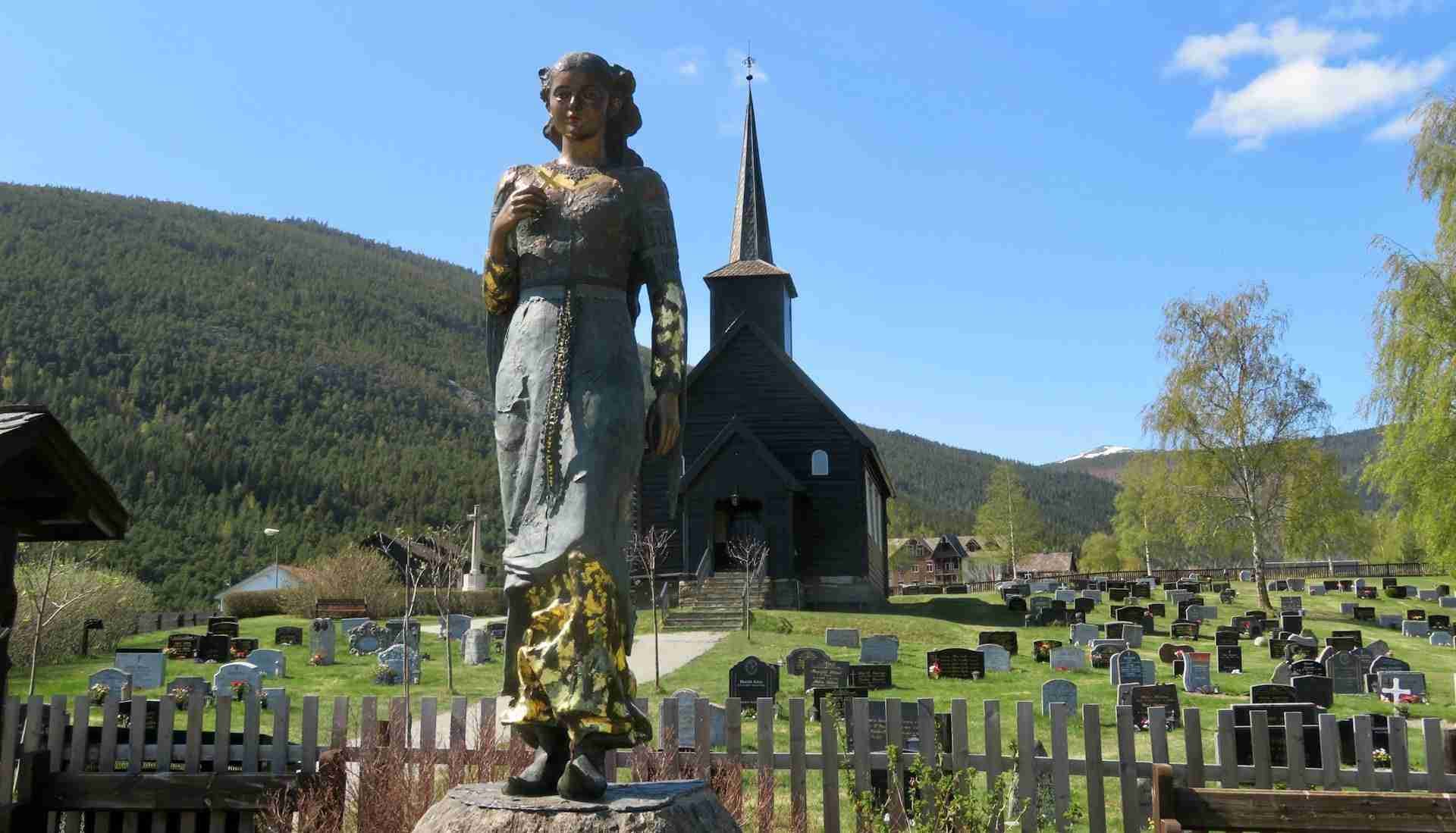
Perched along the shores of the Gudbrandsdalslågen River, with the Jotunheimen mountain range as its stoic backdrop, Nord‑Sel kyrkje offers a rich tapestry of architecture, nature, and storytelling through photography. This charming wooden church, built in traditional Norwegian style, is surrounded by lush meadows, rugged peaks, and flowing waters that change character with the seasons. Its serene setting allows photographers to create compositions that celebrate light, texture, and timeless spiritual presence in harmony with landscape beauty.
Best Photography Opportunities
• Nord‑Sel kyrkje at Dawn in Winter:
In the cold, clear mornings of January and February, the entire landscape becomes a canvas of blues and violets before the sun crests the horizon. The church glows gently in these moments, with frost clinging to its timber walls and icicles hanging from its eaves. Snow on the roof creates graphic contrasts, while nearby bare trees add structural elements that echo the vertical lines of the steeple. A wide-angle lens can help you place the church in context with the surrounding valley, while a telephoto shot from across the river emphasizes the geometry of its architecture.
• Spring Reflections by the River:
As ice recedes and riverbanks begin to bloom with early green, the Gudbrandsdalslågen River becomes an excellent mirror for the church. The red paint of the wooden walls stands out against the pale green of new birch leaves and the gray tones of lingering snow patches on the mountains. Set your tripod low to the waterline to capture the full reflection, and use a circular polarizer to control glare and manage exposure. This is a great time to photograph the transition between seasons, especially in the early morning when mists hover over the water.
• Summer Golden Hour with Flowers:
The long days of summer offer photographers extended windows of soft light. Wildflowers bloom across the meadows around the church, especially in June and July. Consider incorporating foregrounds of native flora—lupines, daisies, or buttercups—to frame the structure. The low angle of the evening sun enhances the grain of the wooden walls and illuminates the steeple with a golden glow. Shooting during this period allows ample time for experimentation with framing and composition. Explore both horizontal and vertical formats to find the ideal balance between church, flora, and mountain ridges in the background.
• Autumn Mists and Mood:
In late September and early October, the mornings in Sel often arrive wrapped in fog. These conditions lend a dreamlike atmosphere to the scene, with the church appearing to rise from a veil of white. As the sun breaks through, the red of the church deepens and the golden and orange leaves of nearby trees provide vibrant, saturated color. This is an excellent opportunity for mood-rich imagery. Try bracketing exposures or blending multiple frames to retain both sky detail and foreground shadows. This time of year also offers quieter surroundings, making it ideal for slow, deliberate composition.
• Night Sky with Milky Way and Aurora:
On clear nights, particularly from September through March, the dark skies around Nord‑Sel kyrkje make it a prime location for night photography. With minimal light pollution and high northern latitude, the site is well positioned for capturing the Milky Way or aurora borealis. Place the church in the foreground as a fixed element beneath the sky's movement. Use a wide-angle fast lens, set your focus to infinity manually, and experiment with 15–25 second exposures to balance light gathering with star sharpness. During aurora events, increase your ISO modestly and watch for dynamic changes in light color and pattern.
Best Time to Visit
The timing of your visit to Nord‑Sel kyrkje can significantly influence the photographic mood and possibilities. In winter, the landscape is transformed into a snow-covered realm of high contrast and clean lines. The air is crisp and clear, particularly in January and February, offering excellent visibility and ideal conditions for sunrise and nighttime shooting. The blue hour stretches longer in these months, providing extended opportunities to work with soft pre-dawn and post-sunset light.
Spring introduces fluid transitions in both landscape and light. From late April to May, the snowmelt feeds the river and morning mist often cloaks the valley, diffusing the early light. These conditions make for ethereal compositions, particularly when the first foliage appears on the trees. The ground can be wet, so waterproof footwear is recommended when shooting along the riverbanks.
Summer is characterized by long daylight hours and lush greenery. From June through early August, golden hour can last up to two hours, and there's little need to rush. This season is ideal for working with color-rich compositions, including wildflowers and vivid sky palettes. The tradeoff is more visitors, so early morning or late evening sessions offer the most tranquil conditions.
Autumn, from late September into early October, is arguably the most visually dynamic season at Nord‑Sel kyrkje. The changing leaves, combined with shifting weather, create varied and rich photographic opportunities from one hour to the next. Early morning fog, midday clarity, and pastel dusk light all occur within a single day. For those seeking atmospheric storytelling and contrast-rich color, this is the time to go.
How to Get There
Nord‑Sel kyrkje is located approximately 4 kilometers north of the town of Otta, in Sel municipality. By car, take the E6 highway northbound from Otta and exit at Nord‑Sel, following local signs toward the church. The access road is paved and maintained year-round. There is a small parking area adjacent to the churchyard, which is typically open and free of charge.
For those traveling by public transport, regional buses from Otta occasionally stop near the church entrance, but it's best to check schedules in advance. Walking from Otta is possible but not recommended unless you are well-prepared for a 45-minute uphill walk, particularly in winter conditions.
The churchyard is accessible at all times, and there is no fee for visiting or photographing the exterior. The interior may be closed outside of service hours, though access is sometimes granted for events or by arrangement with the parish. In summer months, the area is well-lit during evening hours, and in winter, the soft glow from the church's external lights creates opportunities for long exposures with natural contrast.
Essential Gear for Magical Northern Scenes
Photographing Nord‑Sel kyrkje requires a gear setup that can adapt to both sweeping landscapes and intimate architectural details. Start with a wide-angle lens in the 14–24mm or 16–35mm range to capture the full church along with its river and mountain surroundings. This is especially useful for dawn and dusk compositions where you want to include a large portion of sky and foreground.
A standard zoom (24–70mm) provides flexibility for more focused scenes, including capturing the church framed by trees, flowers, or architectural close-ups. A 70–200mm telephoto lens is invaluable if you're composing across the river, shooting through mist, or isolating structural elements against the background.
A tripod is essential for dawn, dusk, and nighttime work. Choose one that is stable in cold conditions and easy to adjust when wearing gloves. A remote shutter release or intervalometer helps reduce vibration, especially during longer exposures. ND and graduated ND filters are helpful for controlling dynamic range during sunrise and sunset sessions, and a polarizer will bring out the richness of water reflections and autumn foliage.
If you're photographing in winter, extra batteries are a must, as cold temperatures drain power quickly. Carry lens cloths to remove condensation or light snowfall, and pack your gear in a weather-resistant bag with padded inserts. A headlamp with red light mode allows for setup in the dark without disrupting your vision or compositions. Hand warmers and waterproof boots make shooting more comfortable when spending extended time outside during colder months.
Nearby Photography Locations
• Sjoa River Gorge:
East of Nord‑Sel, the Sjoa River carves dramatic gorges through forested hills, providing excellent opportunities for long-exposure photography. Shoot from footbridges or shoreline boulders using ND filters to capture silky water movement framed by moss-covered rocks and autumn foliage.
A short drive northwest, Heidal is one of Norway's most picturesque traditional communities. The village features turf-roofed farm buildings, centuries-old log cabins, and stone fences. Early morning light filters through the valley and lights up the rustic structures with golden tones, ideal for environmental portraiture and documentary-style shooting.
• Rondane National Park Viewpoints:
About 20 minutes north by car, this alpine region features dramatic peaks, glacier-fed lakes, and tundra vegetation. Trailheads and roadside pullouts offer elevated views, especially in the fall when low sun angles add depth and texture. Wildlife, including reindeer and moose, is sometimes visible in the early morning.
• Otta Falls (Otta Voss):
Found west of town, this set of cascading waterfalls is particularly photogenic in spring and after rainfall. The falls can be shot from both side angles and elevated viewpoints, with nearby conifer forests offering opportunities for framing. In winter, the ice formations create a stark, graphic beauty.
• Ruste Church Ruins:
South of Nord‑Sel, these medieval ruins sit atop a forested hill and offer a moody, historical contrast to the pristine condition of Nord‑Sel kyrkje. Visit in late afternoon for golden side light, or after a light snowfall for a hauntingly peaceful composition.
Whether you are capturing the church as a beacon of cultural continuity, or setting it against the dynamic forces of Norway's seasons, Nord‑Sel kyrkje provides both beauty and variety.
Comments
Loading comments…