
Photographing Ørnesvingen Viewpoint
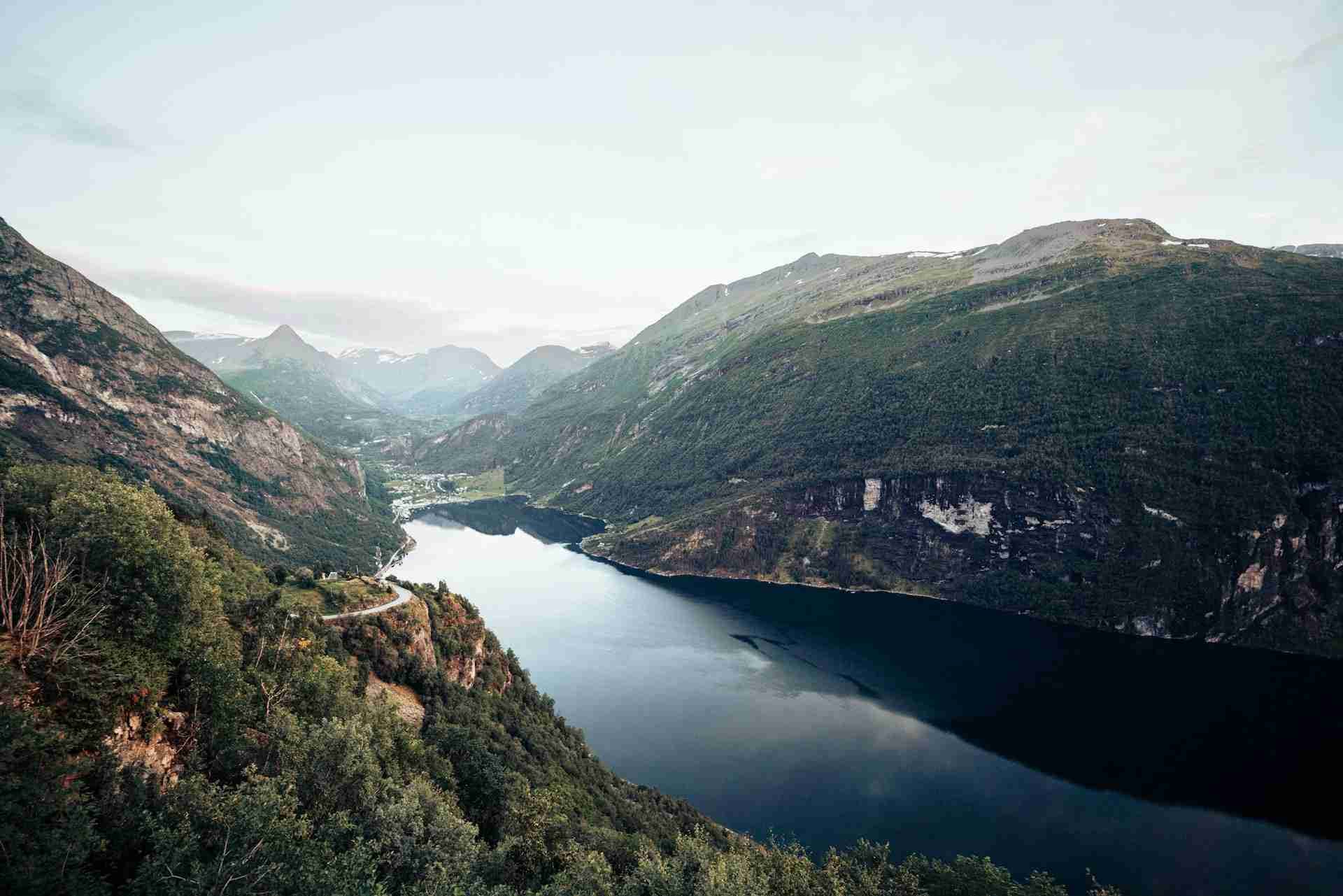
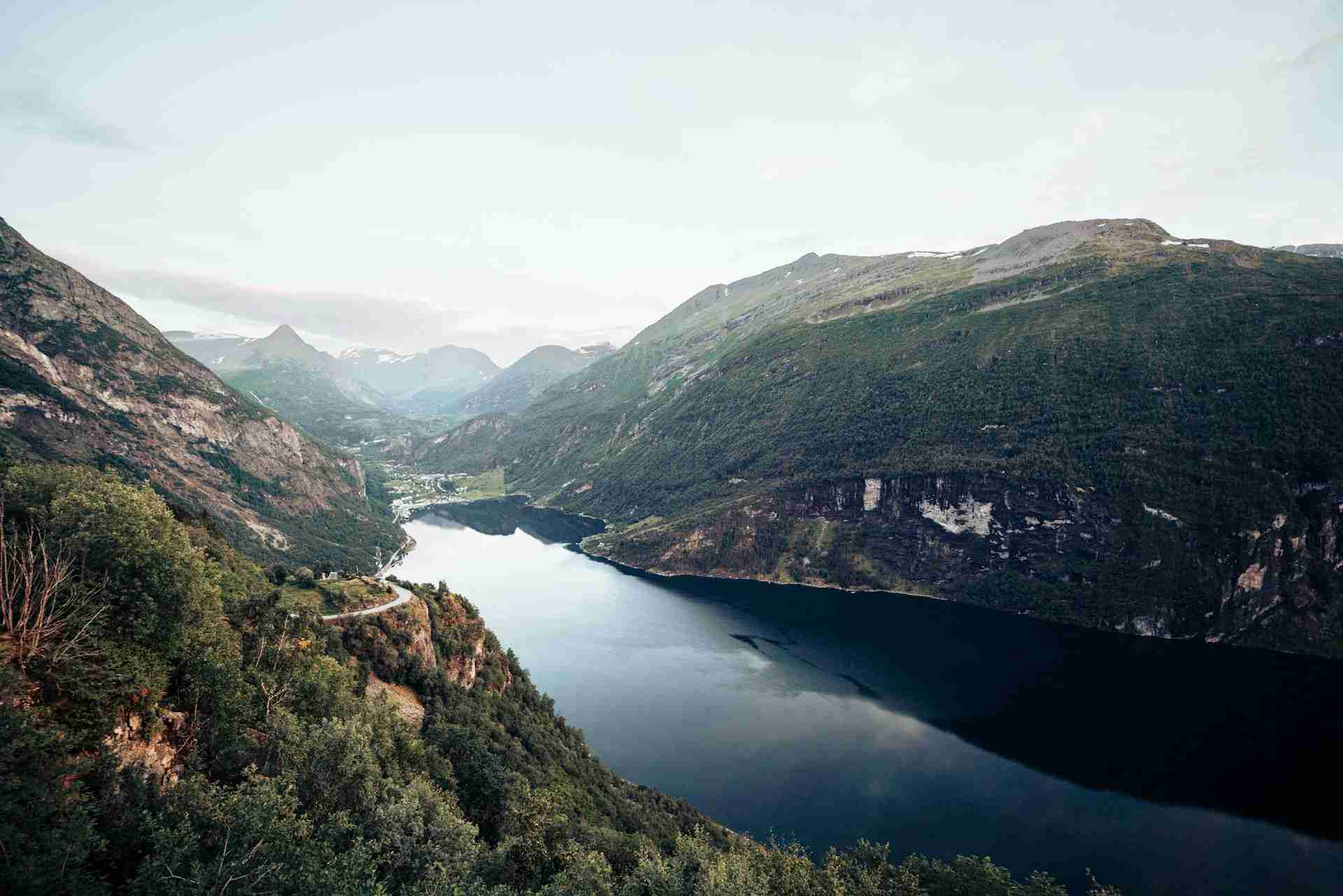
Above the winding waters of Geirangerfjord, Ørnesvingen Viewpoint presents one of western Norway's most visually rich overlooks. This elevated platform provides a commanding view of the fjord's sharp curves, vertical cliffs, and deep valleys. Light changes rapidly in this landscape, shifting across peaks and drawing contrast along the water's surface. Mist rolls through the valley and sunlight breaks through heavy cloud in fleeting, dramatic moments. For photographers, Ørnesvingen is a place to explore both expansive landscapes and tightly composed studies of terrain, weather, and scale.
Best Photography Opportunities
Sweeping Panoramas of Geirangerfjord
From the viewing platform, the full sweep of the fjord unfolds below, with the small village of Geiranger nestled at the water's end and cliffs rising sharply on either side. A wide-angle lens works well here, especially when you position the foreground railing or nearby rocks to draw the eye into the frame. Early or late in the day, angled light casts deep shadows across the ridgelines and adds definition to the water's surface. Overcast skies bring out subtle tonal shifts in rock and vegetation, making this view rewarding even without strong sunlight. Stitched panoramas help preserve the fjord's depth and curvature without distortion.
Telephoto Layers of Water, Rock, and Light
A longer lens opens up an entirely different approach at Ørnesvingen. Use a 70 to 200 millimeter focal length to pull in the Seven Sisters waterfall across the fjord or to isolate horizontal bands of color and form where mountain meets water. When low clouds pass through the valley, they add atmospheric depth and visual separation between layers. This technique is particularly effective during midday when full-scene contrast can be challenging. Look for repeated shapes or shadow patterns that reinforce the fjord's vertical and horizontal structure.
Road Curves and Elevation Study
Looking down from Ørnesvingen, the Eagle Road cuts across the green slope in a series of switchbacks that read like contour lines drawn into the earth. These curves are ideal for building structured compositions that show how the human path winds through a dramatic natural space. Wait for a passing car or cyclist to provide scale and motion. Use a mid-telephoto lens to isolate specific sections of the road or frame the full set of curves within the larger landscape. This view is especially effective in soft afternoon light when long shadows add definition without high contrast.
Changing Weather Across the Valley
The fjord landscape rarely stays still. Clouds move fast, light breaks suddenly across the cliffs, and fog drifts through the valley with no warning. These conditions reward photographers who are patient and reactive. Use a graduated neutral density filter to balance bright skies with darker foregrounds. When sunlight breaks through cloud cover, be ready to capture highlights that trace the ridgelines or fall in columns across the water. Shooting in sequences or returning to the same composition under different light helps build a diverse body of work in a single location.
Twilight and Blue Hour Above Geiranger
Although Geirangerfjord opens eastward, the elevation at Ørnesvingen allows late sunlight to reach the surrounding peaks during golden hour. As twilight deepens, the artificial lights from the village below begin to glow, casting warm tones against the cool backdrop of the fjord. A tripod is essential for these moments. Compose with water in the foreground and sky above to create reflective symmetry. Long exposures smooth out the water and enhance the softness of the color transitions. This is also the time to capture subtle cloud movement and the shift from natural to artificial light.
Best Time to Visit
The most reliable window for photographing Ørnesvingen falls between late May and early October. During this time, the Eagle Road is open, and the viewing platform is free of snow. In early summer, snow still clings to the high peaks while the valley below fills with fresh green growth. Autumn brings cooler air, stronger skies, and golden tones in the surrounding birch forests. Both seasons offer long golden hours and extended twilight, particularly in June and July when the sun sits low for hours before setting.
Morning fog is common during late spring and early autumn and often adds softness and mood. Even during cloudy or rainy days, the location retains strong photographic potential, especially when working with texture and subdued contrast. Midday light is less forgiving for wide scenes, but still usable for telephoto studies and detail compositions. Winter access is generally not possible, as the road is closed due to snow and ice.
How to Get There
Ørnesvingen Viewpoint is located just outside the village of Geiranger along County Road 63, known locally as the Eagle Road. From the village, the road climbs steeply in a series of sharp switchbacks that open into panoramic views even before reaching the official viewpoint. Ørnesvingen itself is clearly marked, with a parking area adjacent to the platform.
There are no fees or permits required to access the site, and parking is free. The ground is flat and stable, making it easy to set up a tripod. Public transportation options are limited, so a rental car provides the most flexibility. If visiting via cruise ship, some local tours include Ørnesvingen as part of a scenic drive. For those driving independently, arriving early in the morning or after dinner offers a quieter experience, with less traffic and softer light.
Recommended Photography Gear
A wide-angle lens is essential to capture the full width of the fjord from the platform, especially when including foreground elements like railings or stone. A 24 to 70 millimeter zoom is highly useful for flexible composition, while a 70 to 200 millimeter telephoto lens allows for isolation of waterfalls, road details, and distant ridgelines. This range is particularly effective when working with layering and compression in changing weather.
A sturdy tripod is recommended for twilight, long exposures, and consistent framing in variable light. Graduated ND filters help control dynamic range between sky and land, while a polarizing filter assists in cutting glare from water and improving contrast in cloud-heavy skies. A lens cloth or cleaning kit is useful, as mist and drizzle are frequent. Weather-sealed gear is ideal, but with proper precautions, any kit can be used successfully here. Warm clothing and waterproof protection will allow for longer sessions during wind or rain.
Nearby Photography Locations
South of Geiranger, this cliffside overlook provides an excellent angle of the fjord framed by rock ledges and pine forest. The location is quieter than Ørnesvingen and offers clean views at both sunrise and sunset. The drop-off allows for dramatic scale, especially when ships or kayaks move through the frame below.
Accessible via a separate toll road, the Skywalk rises above 1,500 meters and gives one of the highest accessible views over Geiranger and the surrounding mountains. The vast landscape is ideal for ultra-wide lenses and panoramic work, particularly on days with strong visibility and patchy light moving across the terrain.
Geiranger Harbor and Shoreline
At water level, the harbor in Geiranger provides reflections, small boat traffic, and a quiet place to work during early morning or evening. Framing the cliffs from below gives a different angle on the same landscape and works well for handheld photography with simpler gear.
A hike from Vesterås Farm leads to this distinctive waterfall that you can walk behind. Use a wide lens to shoot through the curtain of falling water or focus on the cliff textures and vegetation around the falls. The hike itself offers multiple smaller compositions along the way.
Eagle Road Hairpin Pull-Offs
The road leading up to Ørnesvingen includes several informal pull-offs where the full set of switchbacks becomes visible from above. These curves are ideal for structural compositions, especially with vehicles adding scale. Late afternoon provides directional light and good separation between elements.
Ørnesvingen is not a location for rushing. The fjord below does not move quickly, but the weather, light, and air change constantly. Every shift reveals a new composition. Whether you are building a series of atmospheric images over time or capturing a single clean panorama under perfect light, this viewpoint offers both scale and subtlety. It invites return visits, careful framing, and a quiet attention to detail. For photographers seeking more than just a dramatic backdrop, Ørnesvingen remains one of Norway's most rewarding highland vantage points.
Comments
Loading comments…