
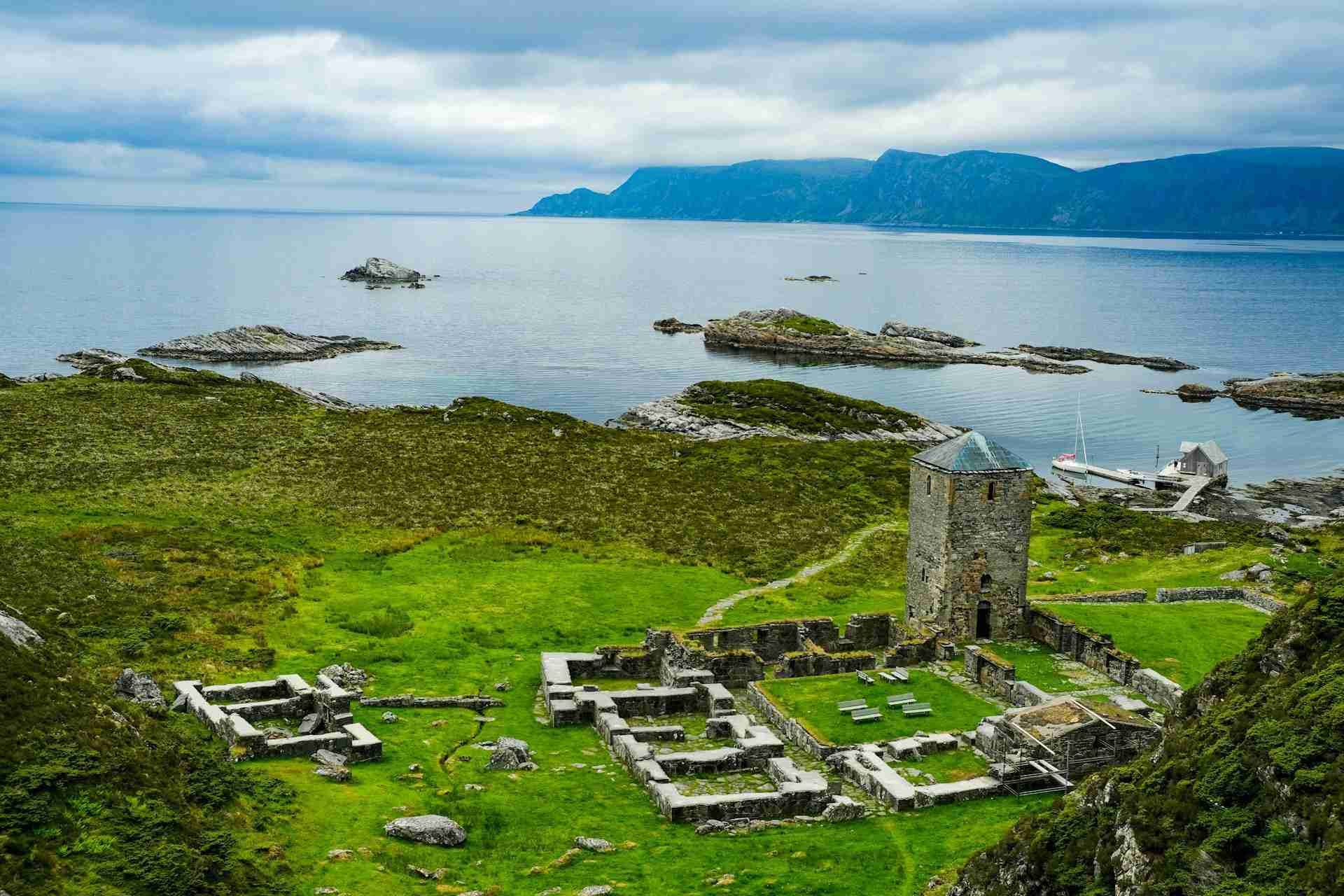
Set on the weathered island of Selja just off the northwestern coast of Norway, Selje Kloster is a place where history, landscape, and silence blend together seamlessly. The ruins of this Benedictine monastery, built in the twelfth century, rise from the green slopes above the sea like a stone memory. Backed by cliffs and fronted by the open waters of the Stadthavet, the monastery's crumbling arches, moss-covered walls, and half-intact tower create a subject that rewards both wide, dramatic landscapes and detailed architectural studies. Whether shrouded in mist or glowing in golden light, Selje Kloster is a location that inspires slower, more deliberate photography. The play between ruin and nature is what makes it a compelling destination for anyone seeking beauty on the edge of Europe.
Best Photography Opportunities
• Seaward Facade and Stormy Skies
The western edge of the ruins faces the sea, offering a rugged composition of weathered stone silhouetted against an often turbulent sky. This side of the site is ideal for moody, high-contrast images that emphasize the drama of location. A wide-angle lens between 16 and 24 millimeters helps frame the entire ruin within the surrounding cliffs and open sea. Overcast skies or fast-moving coastal weather add to the visual weight of the scene, creating an intense atmosphere that suits both color and black-and-white treatments.
• Interior Arches and Stone Detail
Inside the remaining walls, arched doorways and partially standing columns allow for rich texture work and more intimate architectural compositions. These details are often partially overgrown with moss or set against the contrast of windblown grass and sky. Use a standard zoom or short telephoto lens to isolate forms such as keystones, carved edges, and stonework patterns that have eroded over centuries. Low side light in the morning or evening brings out the relief in the stone, casting shadows that reveal depth and age.
• Elevated View from the Cliff Path
A short climb above the monastery site reveals a panoramic view looking down over the ruins and out across the water. This is the best position to show the full context of Selje Kloster's placement in the landscape. A 24 to 70 millimeter lens allows you to compress the scene slightly and draw the eye from the monastery across the sea to the distant horizon. The higher perspective also works well during sunrise and sunset when the light streaks across the fjord and reflects in the grass and stone below.
• Sunset Light through Ruined Windows
The remaining arched windows on the southern wall become dramatic framing devices at the end of the day. As the sun lowers over the sea, warm light pours through the stone openings and casts shadows across the monastery floor. Compose your shot with the sun aligned through an arch or just out of frame to create flares and glowing halos around the structure. A tripod is useful here to balance exposure between the lit and shadowed areas. Use aperture values around f/11 to create sunstars and maintain depth of field across foreground stone and background sea.
• Long Exposures of the Water and Walls
The nearby shoreline and small inlets surrounding the site provide excellent opportunities for minimalist compositions using long exposures. With the ruins set against a dynamic sky and calm or crashing water, slower shutter speeds—between 10 and 30 seconds—smooth the sea and emphasize the static permanence of the stone. A neutral density filter and tripod are essential here, particularly during brighter parts of the day. These compositions are most effective in changeable weather when clouds and light shift rapidly across the scene.
Best Time to Visit
The photographic experience at Selje Kloster is shaped entirely by light, weather, and sea conditions. Summer, from June through early September, offers the best combination of access, mild temperatures, and extended golden hour light. During these months, the long evenings allow for photography well past typical sunset, and the grass surrounding the ruins is lush and green, adding color and softness to the stark stone structures.
Spring and early autumn bring more varied skies and a higher chance of mist or rain, which can lend a dramatic, somber tone to the site. These seasons also see fewer visitors, giving photographers more time and space to work without interruption. Morning sessions in autumn are especially moody, with low light catching on wet stone and sea spray.
Winter is not ideal for visiting due to limited boat access, unpredictable storms, and short daylight hours. However, for those who do reach the island during the off-season, the ruins under snow or heavy sky offer an austere and powerful photographic subject.
Regardless of season, the best light arrives in the first hour after sunrise and the two hours leading into sunset. These times provide directional light that enhances the shape and relief of the ruins and adds dimension to the surrounding landscape. Midday sun tends to flatten the scene, especially under clear skies.
How to Get There
Selje Kloster is located on the uninhabited island of Selja, off the coast of Stadlandet in western Norway. The nearest town is Selje, which can be reached by car or bus from larger towns such as Måløy or Ålesund. From Selje harbor, regular passenger boat service runs to the island during the summer season, with trips lasting around ten minutes. Outside the main season, you may need to arrange private transport or boat hire in advance.
Once on the island, a marked trail leads from the small pier to the monastery site in less than fifteen minutes. The path is uneven and can be muddy or slippery after rain, so sturdy footwear is recommended. There is no entrance fee to access Selje Kloster, and the ruins are open to the public throughout the day. However, visitors should be respectful of the historical site, avoiding unstable structures and staying on marked paths where possible.
There are no facilities on the island, including restrooms or shelter, so come prepared with water, snacks, and appropriate weather protection. Photography gear should be carried in a waterproof pack, as sea spray and sudden rain are common even in good weather. Drones are permitted in the area but should be flown responsibly and without disturbing wildlife or visitors.
Recommended Photography Gear
Photographing Selje Kloster requires flexibility and weather-readiness. A wide-angle lens in the 16 to 35 millimeter range is essential for capturing the full monastery within its dramatic coastal surroundings. A mid-range zoom, such as a 24 to 70 millimeter lens, allows for tighter compositions of arches, stonework, and architectural detail while still providing room to frame environmental context.
For long-exposure work, especially of the sea and clouds, bring a set of neutral density filters along with a reliable tripod. A remote shutter release or interval timer helps prevent camera shake during longer exposures. A circular polarizer can help cut glare on wet stone and deepen the tones of stormy skies.
Protective gear is just as important as optical tools. A weather-sealed backpack, lens cloths for sea spray, and a lens hood to block direct light are all useful additions. Extra batteries are recommended, as cold and damp conditions can reduce performance. If you plan to use a drone, bring extra propellers and charge onshore before arrival, as there is no power available on the island.
Nearby Photography Locations
• Selje Beach and Harborfront
Back on the mainland, Selje itself offers coastal views, fishing boats, and gentle dunes. The beach just outside the town is excellent for sunset compositions with layered waves and distant islands, and the harbor creates opportunities for detail work with boats, nets, and docks under shifting light.
• Ervik Beach and the Church by the Sea
A short drive from Selje, Ervik Beach is a long, sandy stretch backed by cliffs and overlooked by a small chapel near the water's edge. The contrast between wide open sand, low sun, and solitary architecture makes this an outstanding location for evening shoots and minimalist compositions.
For high vantage points and vast seascapes, drive or hike to Vestkapp, the westernmost point of mainland Norway. From the top, you can photograph ocean panoramas, dramatic cliffs, and expansive skies, especially during stormy weather. Telephoto lenses help compress the sea against layered rock formations.
Inland from Selje, this ancient mountain pass is historically significant and photographically rewarding, with cairns, wooden crosses, and distant sea views framed by moorland and exposed rock. Best photographed in soft light or late afternoon when shadows stretch across the slopes and mist gathers in the valleys.
Selje Kloster is more than a ruin. It is a place where time, nature, and history converge to create a scene of quiet power. For the photographer, it offers a sense of discovery—a subject that reveals itself slowly through changing weather, shifting light, and the rhythm of sea and stone. Whether you stand alone beneath its empty windows or trace the shoreline with a camera in hand, Selje Kloster invites you to see the past not as static, but as something still alive in the light.
Comments
Loading comments…