
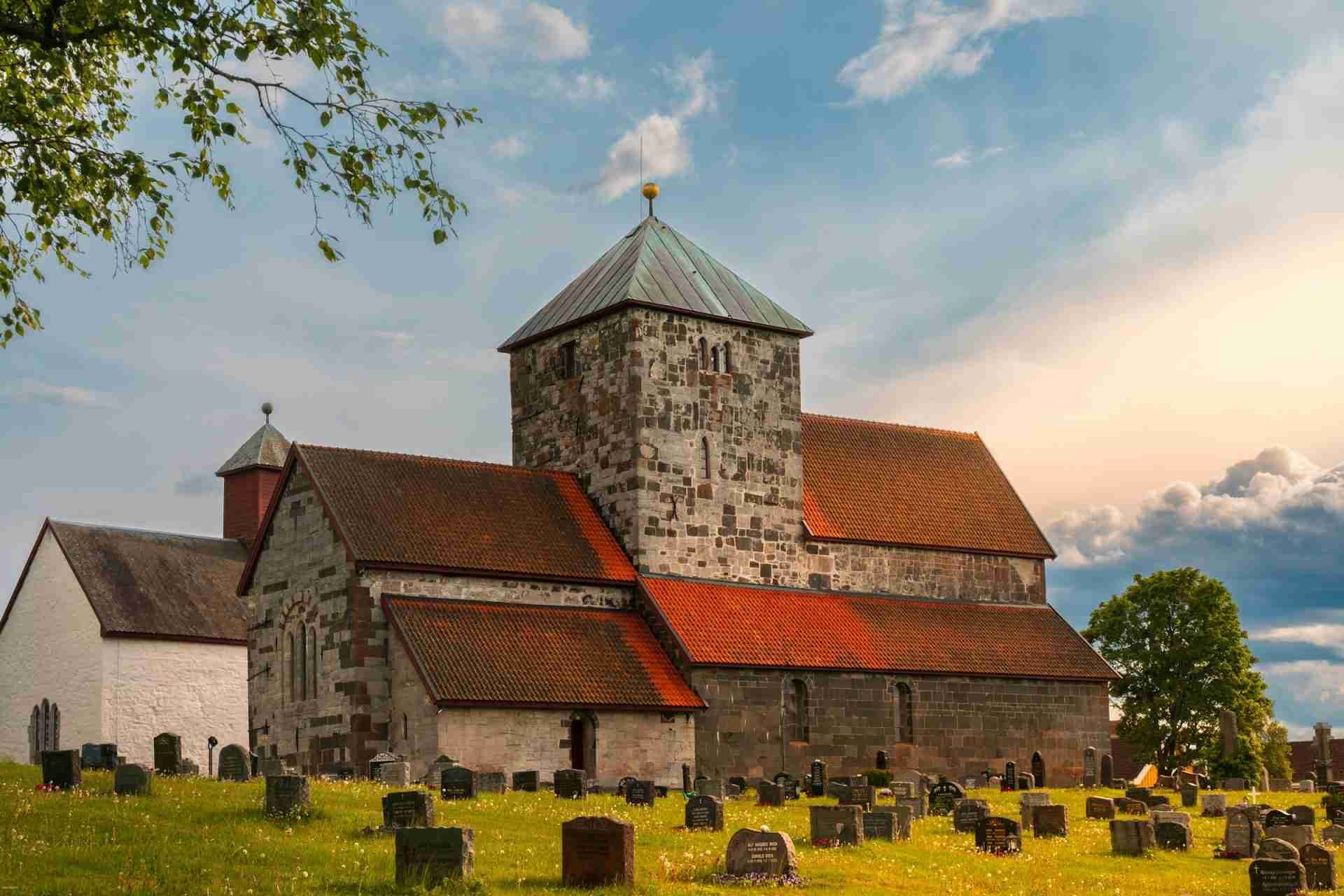
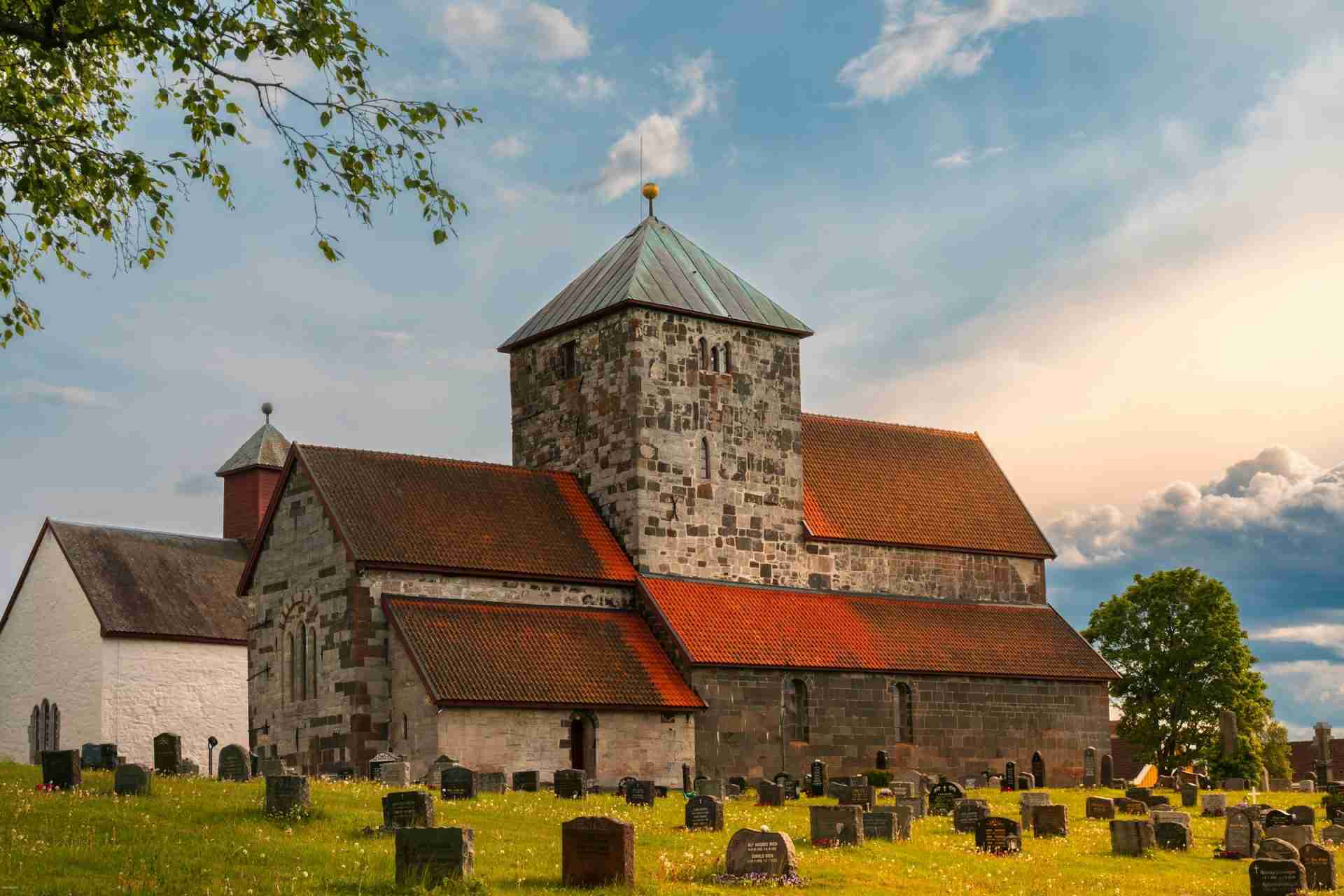
In the countryside of Gran, Norway, the Sister Churches of Granavollen (St. Mary's Church and St. Nicholas' Church) stand just a few steps apart, surrounded by farmland and quiet hills. Built in the 12th century, these two Romanesque stone churches have weathered centuries of use, repair, and tradition, yet they remain remarkably intact. The setting is peaceful, with open fields, stone walls, and soft light that suits both wide landscapes and architectural detail work. Their simple, solid forms and slightly different sizes make them ideal for pairing in the frame, and the area offers plenty of room to walk around and explore different angles. It's a slow paced location, perfect for thoughtful photography built around shape, texture, and seasonal light.
Best Photography Opportunities
• Framing Both Churches Together
One of the most natural ways to photograph the Sister Churches is by including both in a single frame. From slightly downhill or across the field, you can fit both buildings side by side and show how they relate to each other in scale and structure. This angle works especially well in morning or late afternoon when light moves across the stone and casts long, soft shadows. Including a piece of the stone fence, a patch of snow, or blooming wildflowers depending on the season gives extra depth to the image. A standard zoom lens gives you enough flexibility to shift your framing without needing to reposition too far.
• Textures and Detail on the Stone Walls
Up close, the churches offer a lot of small textures worth exploring. The rough hewn stone blocks, moss covered corners, and small arched windows all photograph well with soft directional light. These are best shot during overcast weather or in early morning when shadows are gentle. Look for carvings, doorways, or weathered surfaces that show the age of the buildings without needing dramatic light. A short telephoto lens works well here for isolating details without distortion.
• Sunrise or Sunset
The wide open farmland around the churches means you can shoot from a distance and include dramatic skies behind them during sunrise or sunset. Silhouetting the buildings against color in the sky gives a clean, graphic look that emphasizes their shapes and towers. This is easiest when you scout in advance and pick a spot with a clear view of the horizon behind the churches. Bring a tripod and arrive early enough to catch the first or last light as it moves across the fields. In winter, this also gives you a chance to work with frosted ground or snow for a more muted palette.
• Shooting Through the Cemetery and Stone Wall
The old cemetery that surrounds the churches adds a sense of place without overwhelming the scene. Framing the churches through the cemetery fence or using a low angle that includes stone markers in the foreground helps show the history of the site without needing to shoot head on. These compositions work well during golden hour when the light hits both the stones and the walls of the churches. Keep your background clean and pay attention to where the lines of the wall lead through the frame. This is also a good place to shoot during fog or low cloud, which softens the background and keeps the focus on the structures.
• Seasonal Changes
Spring wildflowers, autumn leaves, or winter snow all bring out different sides of the churches. Even if you've photographed the buildings before, returning during a different season changes the colors, tones, and atmosphere of the location. Summer gives green fields and golden light late into the evening, while winter shortens the day but adds subtle color to the sky and ground. These shots work well from slightly elevated angles or back across the fields, especially if the light is moving across the landscape. A polarising filter can help manage reflections on wet stone and deepen the contrast between the churches and the sky.
Best Time to Visit
The best time to photograph the Sister Churches depends on the kind of image you want. Early morning and late afternoon give the most flattering light, especially if you're hoping to shoot both buildings with directional shadows and gentle color. Sunrise works particularly well if you want to capture clean silhouettes or soft fog in the fields, while sunset often gives warmer side light and long shadows across the cemetery.
Spring and early summer bring soft greens and flowers around the site, which work well for color contrast and framing. Autumn gives golden tones and sometimes misty mornings, while winter adds snow and lower sun angles for a different feel. Overcast days are useful if you're focused on textures or close up work, since the flat light helps avoid harsh shadows. The site is quiet year-round and rarely crowded, making it easy to take your time and return to the same angles under changing light.
How to Get There
The Sister Churches of Granavollen are located just outside the village of Gran in Innlandet County, Norway. From Oslo, it's about a 90 minute drive north via Route E16, with signs guiding you through the local roads to the site. The churches sit near the top of a small hill, with parking available just below them. The area is well marked and easy to walk, with stone paths and open fields surrounding the buildings.
There are no entry fees for photographing the churches from outside, and the grounds are open all year. If you're interested in interior photography, check local opening hours or arrange a visit in advance, as access to the inside may be limited depending on the season. The site has restrooms and a small visitor center nearby, and there are cafes and shops in Gran if you're planning a longer stay or waiting for better light.
Recommended Photography Gear
Bring a wide angle lens in the 16 to 35mm range for capturing both churches together or working in tight spaces around the stone wall. A 24 to 70mm zoom is also useful for general coverage, especially when switching between wider compositions and isolated architectural elements. For details, textures, or shooting from a distance across the fields, a short telephoto lens like a 70 to 200mm gives you added reach without needing to move far.
A tripod is helpful during sunrise, sunset, or low-light weather, especially if you're shooting long exposures or working with narrow apertures for depth of field. A polariser can help with reflections on stone or deepening the sky on clear days. Conditions are usually mild, but bring weather protection if you're visiting in winter or expecting light rain. Footwear with good grip is useful on wet grass or uneven stone paths.
Nearby Photography Locations
Just a few minutes away, this open-air museum includes traditional Norwegian wooden buildings, farmhouses, and local history exhibits. It's a great location for photographing wood textures, sloped rooftops, and cultural details in soft, natural light.
One of Norway's largest lakes lies just west of Gran and offers wide views, calm water, and peaceful light in the early morning. The lake is a good place to shoot reflections or mist on the water, especially during sunrise or after rain.
About 30 minutes from the churches, Lygna is a popular year round hiking and skiing area. In summer, the trails open up to wide views across the region, while in winter, the snow covered trees and cross-country paths offer clean, minimal scenes for nature and landscape photography.
• Brandbu Village and Fields
A short drive from Gran, Brandbu offers rural views of barns, rolling hills, and quiet back roads that photograph well in low light. Early morning and golden hour here can be especially nice if you're looking for open countryside with soft light and gentle color.
Comments
Loading comments…