
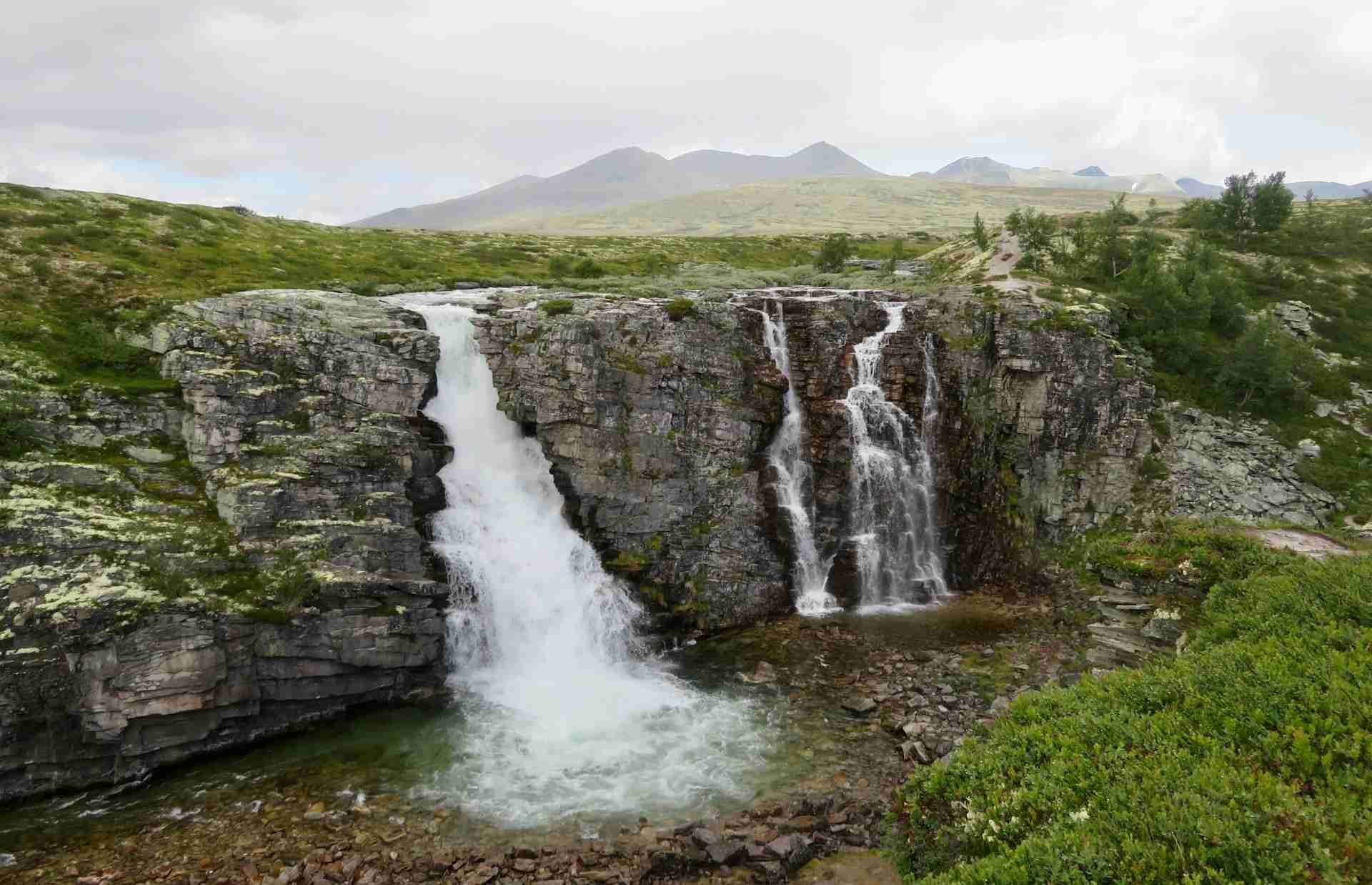
Tucked into the remote edge of Rondane National Park near the village of Mysusæter, Storulfossen is one of Norway's most dramatic and photogenic highland waterfalls. Dropping over 20 meters into a deep canyon carved by glacial meltwater, the falls are framed by rugged rock formations, alpine vegetation, and the expansive tundra of the Rondane plateau. Storulfossen may not match the scale of Norway's giant fjord waterfalls, but it offers something more intimate and raw—powerful energy in a tightly framed natural amphitheater. Its moody light, textured geology, and layered scenery make it a rewarding location for landscape photographers seeking a wilder, less-traveled subject in Norway's mountainous heartland.
Best Photography Opportunities
• Head-on View from the Primary Lookout
: The most dramatic and accessible vantage point lies directly across from the waterfall, where a rocky outcrop faces the full curtain of water as it plunges into the canyon. This location allows for a symmetrical composition that emphasizes the vertical drop, the plunge pool's turbulence, and the moss-covered canyon walls that rise on either side. A wide-angle lens (16–24mm) captures the entirety of the scene, while long exposures (2–5 seconds) render the falling water as a silky thread, contrasting with the hard texture of the surrounding rock. Mist often hovers at the base of the falls, especially in the morning, adding an ethereal layer that softens the background. This spot is particularly rewarding during the thaw, when snowmelt boosts flow volume and the sound reverberates through the gorge.
• Side Profile from the Upper Slope
: A short branch from the main trail curves up and around to the right side of the falls, offering a slightly elevated, three-quarter profile of the cascade. From this perspective, you can see the stream feeding into the fall and trace its descent into the narrow gorge below. This angle highlights the surrounding topography—the way the tundra gives way abruptly to dark, fractured stone. Use a mid-range zoom (24–70mm) to compress the stream and cliff together, or shoot wider to include windswept grasses or mountain birch in the foreground. This view is particularly striking in late summer, when warm light enhances the gold tones of vegetation and contrasts with the cool color of the water. A fast shutter speed (1/500s and above) works well here to freeze water texture, capturing its energy as it hits rock ledges and scatters into mist.
• Lower Canyon and Boulder Foreground
: The area just downstream from the plunge pool offers a series of scattered boulders, smaller rapids, and quiet eddies where the river winds away from the base of the falls. This location is ideal for constructing layered compositions using foreground elements like moss-covered rocks or driftwood, which lead the eye back toward the fall itself. A wide-angle lens (16–35mm) allows you to exaggerate the scale difference between these foreground anchors and the waterfall in the background. Overcast conditions or early evening light enhance the greens and browns in the moss and tundra grass, creating a color palette that's subdued yet deeply textured. For an added atmospheric touch, use a long exposure to turn the river surface into a soft ribbon threading through the rocks.
• Cliff Edge Abstracts and Rock Texture
: The cliffs surrounding Storulfossen offer rich potential for close-up and abstract work. Layers of volcanic stone, mineral streaks, patches of vivid green lichen, and damp, shining rock faces all serve as textured canvases for more intimate studies. Use a short telephoto (85–135mm) to isolate patterns in the stone or to frame a segment of the cliff intersected by mist or water seepage. This is especially effective in low-contrast conditions such as fog or light rain, where tonal variations are subtle and soft. Some compositions may focus purely on geological patterns, while others might include small pockets of alpine flora or even sections of the waterfall itself cascading along the edge of the frame. These detailed shots make excellent black-and-white conversions, allowing texture and form to dominate.
• Winter Freeze and Ice Formations
: During early winter and late spring cold snaps, parts of Storulfossen become encased in ice, with giant icicles, crusted snow, and glazed rock faces transforming the falls into a frozen sculpture. These conditions create stark, high-contrast scenes where light bounces off clear ice and softens across snow-covered ledges. From the main viewpoint or the side trail, use a medium telephoto (70–200mm) to capture detailed sections of frozen cascade, or go wide to contrast the whiteness of the ice with the dark cliffs and distant tundra. Sunrise during winter often brings a faint pink or orange glow to the landscape, casting warm hues across the blue-toned ice. Just be cautious: trail access can be treacherous in icy conditions, and weather changes quickly in the highlands—always prioritize safety over proximity.
Best Time to Visit
The photographic potential of Storulfossen changes with the seasons and the time of day, offering different moods and lighting conditions depending on your approach. The most favorable months for visiting are from late May through September, when trails are clear, vegetation is lush, and water flow is fed by snowmelt and mountain streams.
Early mornings (6:00–9:00) are ideal for capturing soft light on the face of the falls. The waterfall flows eastward, so the first light of day gradually illuminates the cliff walls, revealing layers of stone and catching mist in golden tones. Morning also brings quieter trails, making it easier to set up long exposures without interruption.
Overcast days are excellent for minimizing contrast and glare, especially when photographing from inside the gorge or working with moss, rock texture, and water reflections. These conditions allow for more accurate color rendering and even lighting on wet surfaces—ideal for both wide compositions and detail shots.
Late afternoon light can be more dramatic, with raking sunlight catching the edge of the canyon and casting shadows that enhance the three-dimensionality of the scene. During this time, side angles of the waterfall and the surrounding plateau can be particularly expressive, especially with clouds moving across the sky to add dynamic elements to the background.
Autumn, while colder and less predictable, brings a shift in vegetation—from greens to golden browns and russet tones—which adds a new layer of color and texture to compositions. Early snow can appear by late September, creating a rare but stunning contrast between white drifts and the dark, water-slicked rock faces.
How to Get There
Storulfossen is located within Rondane National Park, just outside the mountain village of Mysusæter in Norway's Innlandet region. From the nearby town of Otta, follow County Road 437 east toward Mysusæter—a scenic alpine drive of about 25 minutes. Once in Mysusæter, continue to the Spranget parking area, which serves as a main trailhead for several routes into the park.
The trail to Storulfossen begins at Spranget and is clearly signposted. It's a well-maintained 3 km hike (approximately 1.5 km each way), with modest elevation gain and varied terrain that includes gravel paths and tundra boardwalks. The walk takes 30–40 minutes each way depending on your pace and photographic stops.
The trail is generally open from May through early October, although lingering snow may limit access earlier in the season. There is no fee for access or photography, though this is a protected national park, and all visitors are expected to stay on trails and respect the alpine vegetation. Tripods and photography gear are permitted, but be mindful of weather shifts and rapidly changing trail conditions.
Recommended Photography Gear
A wide-angle zoom (16–35mm) is essential for capturing the waterfall within its canyon environment, especially when working close to the rim or incorporating boulders and foreground flora. For mid-distance compositions and environmental portraits of the landscape, a standard zoom (24–70mm) provides flexibility without distortion.
A sturdy, lightweight tripod is crucial for long exposures and for stability on uneven or rocky ground. Use a 6- or 10-stop ND filter to allow for shutter speeds of 2–8 seconds, which smooth water flow and add motion contrast to the fixed geometry of the cliffs. A circular polarizer is helpful for removing reflections from wet rocks and enhancing color saturation under cloudy skies.
Weather-sealed equipment is highly recommended, as mist from the waterfall is constant and alpine weather changes quickly. Waterproof boots and a rain cover for your camera bag are essential, particularly if shooting in late spring when trails can be muddy or snow patches remain. A microfiber cloth and lens hood will help manage spray and protect your lens during close-up sessions near the gorge edge.
Nearby Photography Locations
• Rondane Plateau and Bjørnhollia Trail
: Just beyond Storulfossen, this trail leads into higher terrain dotted with alpine lakes and sweeping views of the Rondane massif. Best captured during golden hour or under broken cloud, this area provides a dramatic shift from the intimacy of the waterfall to wide, open tundra.
: A relatively easy peak near Mysusæter, Formokampen offers panoramic views of the Rondane peaks and surrounding valleys. Best photographed at sunrise or sunset, when light grazes the land and the horizon glows in pink and blue alpine tones.
• Ula River Gorge
: Downstream from the falls, the Ula River winds through a series of smaller gorges and open meadows, perfect for slower, contemplative compositions of flowing water, boulders, and vegetation. A quieter alternative with excellent long exposure opportunities.
: Located along National Tourist Route Rondane, this architectural viewing platform offers a framed perspective of the national park's high peaks above Lake Atnsjøen. Ideal for grand landscape photography, particularly at dawn with morning mist over the lake.
• Otta Valley and Gudbrandsdalen Overlooks
: On the drive back from Mysusæter to Otta, several roadside turnouts offer layered views of forested hills, farmland, and winding rivers—perfect for compressed telephoto landscapes under shifting light or fog.
Storulfossen is a waterfall that rewards more than a casual visit—it asks photographers to slow down, explore its angles, and work with light and weather in tandem. Whether captured in flowing motion or frozen in mist, it offers an authentic, elemental slice of Norway's highland beauty.
Comments
Loading comments…