
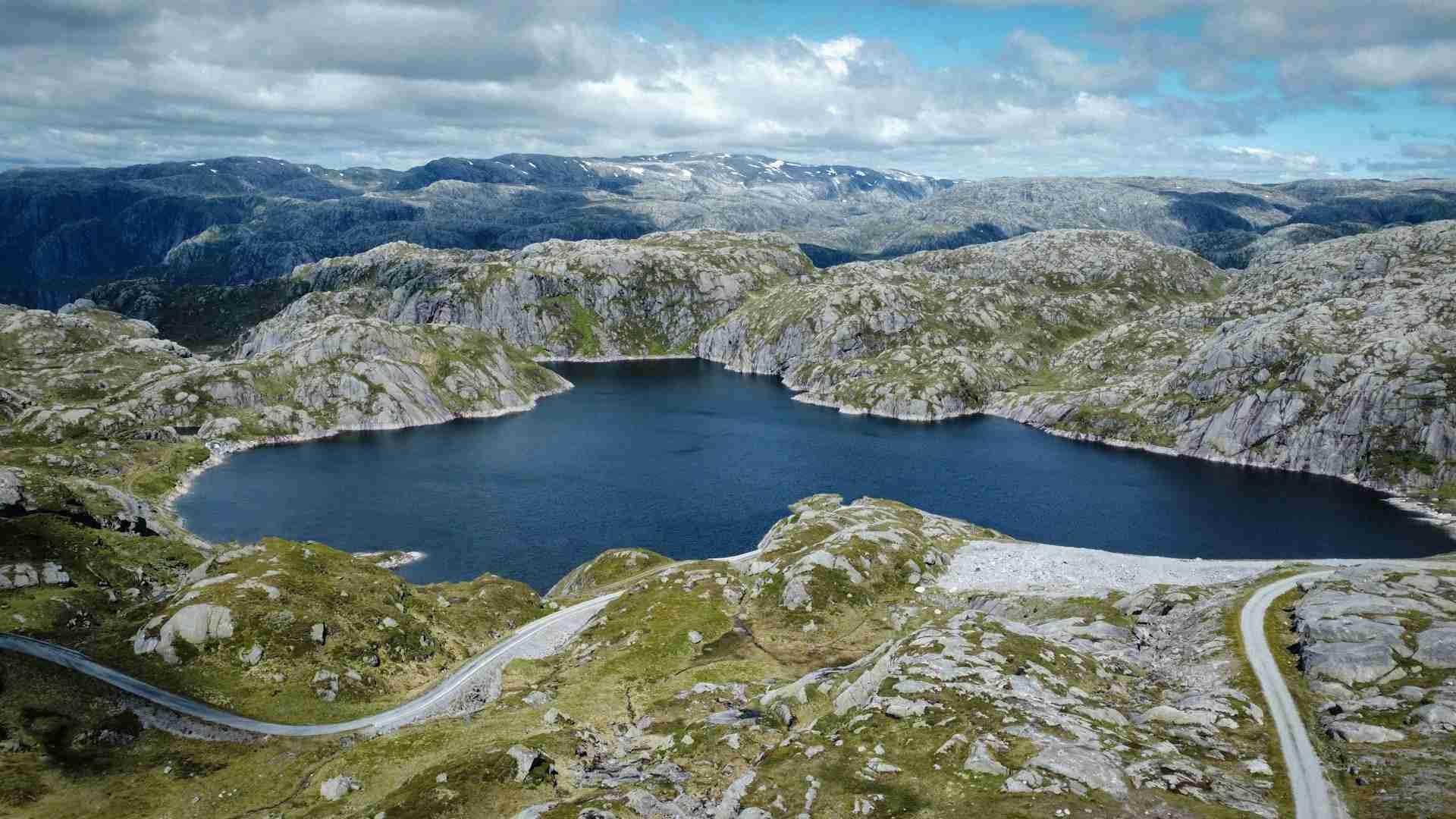
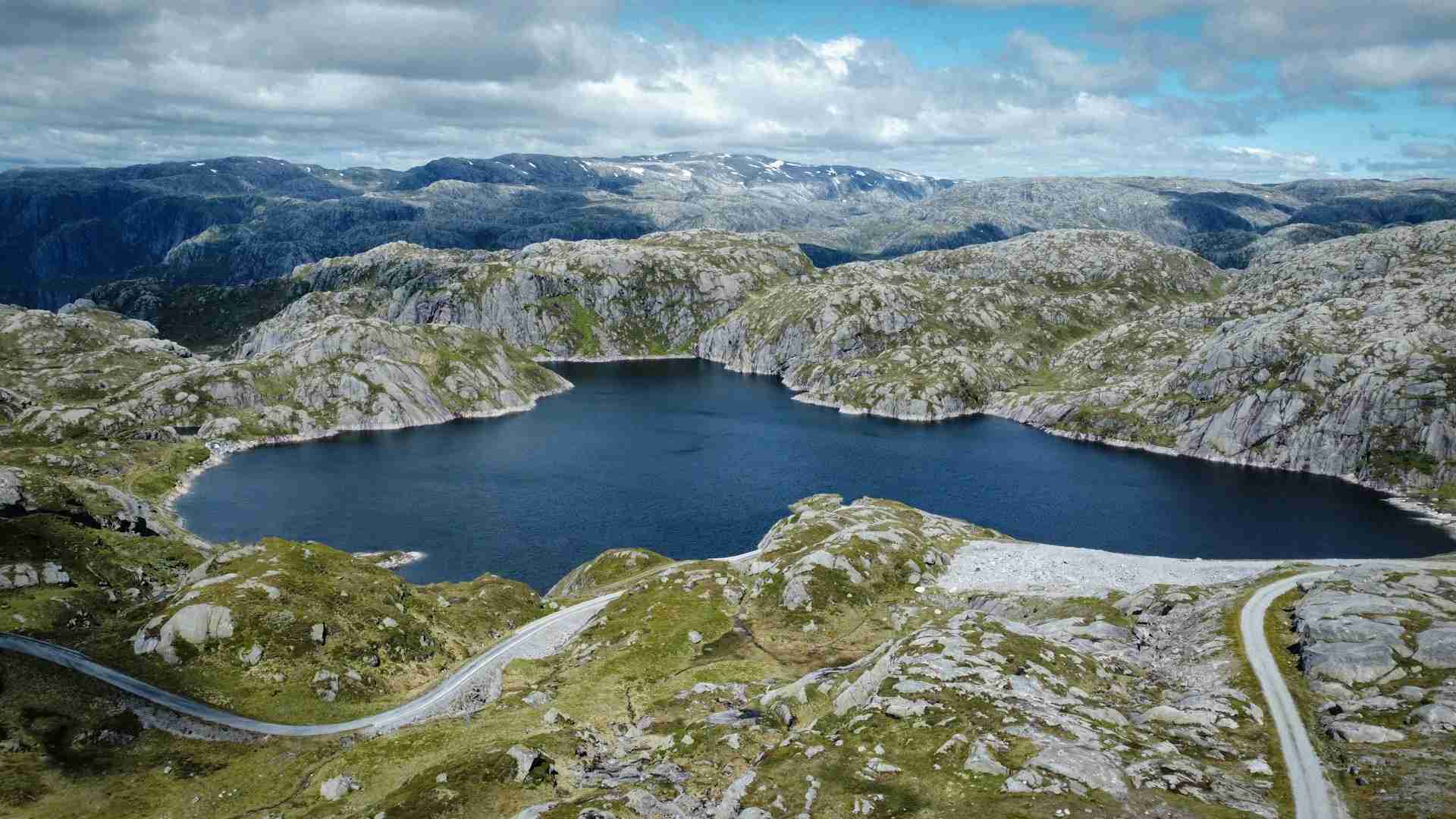
Tjodanpollen is a high mountain lake that sits in an open granite landscape where the lack of trees and structures gives photographers full control over composition. Calm water is common, especially in the morning, making reflections a dependable feature rather than a lucky accident. Weather moves quickly across the plateau, bringing cloud layers, shifting light, and subtle changes that keep the scene visually active throughout the day. Tjodanpollen is appealing because it gives you time and space to work a scene properly, refining compositions as conditions change instead of rushing to the next viewpoint.
Best Photography Opportunities
• Calm Water Reflections
When wind is low, the surface of Tjodanpollen turns glassy and reflects the surrounding cliffs, slopes, and sky with near perfect clarity. This happens most reliably at sunrise when temperatures are cool and the air is still. These conditions make it easy to build symmetrical compositions using shoreline elements, distant rock formations, or low clouds as anchors. Because the light is often soft during these hours, subtle tones and gradients become the main tools in the frame. It is a good opportunity to slow down, lock in your framing on a tripod, and wait for the best light or cloud movement to finish the image.
• Boulder Fields and Layered Foregrounds
The granite landscape around the lake is scattered with large boulders that help create depth and structure in wide compositions. These rocks give you foreground options without having to move far from the shore, which is useful when light is changing quickly. Shooting with the boulders close to the lens allows for separation between near and far elements, giving your images scale and balance. In low light or cloudy conditions, their surface texture adds contrast that stands out against smooth water or distant slopes. This is a place where using a wide lens thoughtfully pays off, especially when paired with slow, careful camera placement.
• Cloud Movement and Light Shifts
Because of the lake's elevation, conditions often change several times in a single hour. Low cloud banks sweep across the terrain, light breaks through briefly, then disappears again. These moments are ideal for shooting with strong contrast between lit and shaded areas. Waiting just five or ten minutes can completely change the mood of the scene. This location is well suited to photographers who are willing to sit through less ideal conditions and work the scene as light develops rather than chasing something more obvious. Whether you are shooting wide or isolating details with a longer lens, the shifting light adds energy without making the composition feel busy.
• Minimalist Landscapes
Tjodanpollen is a great place for working with simple, clean compositions. The open terrain, calm water, and limited vegetation create scenes where very few elements compete for attention. A single rock, a reflection, or a curve in the shoreline can become enough to build a strong image. These kinds of frames benefit from flat light, such as overcast mornings or soft evening haze, when edges are muted and tone takes priority over contrast. A longer focal length helps isolate subjects and remove clutter from the frame, allowing the shape and balance of the image to carry more weight than detail alone.
• Aerial Views of the Lake and Plateau
From the air, the shapes and colors of Tjodanpollen stand out in new ways. The dark water creates a natural contrast with the pale rock around it, and meltwater streams or access roads add lines that can lead the viewer's eye through the frame. Morning flights tend to offer the best results, especially when shadows from the terrain are long and help define structure across the landscape. The plateau's lack of dense forest makes it easy to maintain visual separation between layers. Drone pilots should be prepared for quick changes in wind and be sure to follow all local regulations, particularly during bird nesting seasons.
Best Time to Visit
The best time to photograph Tjodanpollen is between late June and early September. In early summer, snow often remains on parts of the surrounding plateau, which adds bright contrast and texture against the bare granite. The light during this period is long and often soft, giving you flexibility to shoot throughout the day rather than relying only on golden hour. July brings more stable conditions, but still frequent shifts in weather that can improve a scene quickly. By August, the air tends to be clearer and the mornings colder, which improves reflections and brings sharper contrast to the waterline and rocks. Early September is often quieter, and while temperatures can drop quickly, the clarity and lighting conditions remain strong. Since the lake sits at elevation, direct light can be short lived and often filtered through fast moving clouds, so it is worth staying in one spot and watching how the scene develops. Tjodanpollen works well under a range of conditions, but calm mornings and soft light offer the most control.
How to Get There
Tjodanpollen is located on the mountain plateau above Lysebotn, directly beside Fv4224, a small paved road that connects to Fv500 (Lysevegen). The lake is easy to reach by car when the Lysevegen road is open, typically from late spring through early autumn depending on snow conditions. There is a designated parking area right next to the lake, requiring no hike or special access. From the parking area, you can walk along the shoreline or explore nearby boulders and rock formations within just a few minutes. There are no fees to access the lake itself, though a seasonal parking fee may apply. This is not a technical or remote approach, but weather can change fast, and fog is common, so it is worth planning for slower driving conditions.
Recommended Photography Gear
Tjodanpollen rewards photographers who bring a well rounded kit built for control and flexibility. A wide angle lens is essential for building compositions with strong foreground structure, while a standard zoom or short telephoto helps isolate cloud movement, ridgelines, and minimalist subjects. A tripod is critical, especially when shooting in low light or framing long exposures while waiting for reflections. A polarizing filter is useful for managing surface glare, though it should be used with care to avoid uneven tones across the water. Weatherproofing is important. Waterproof boots, a reliable rain shell, and dry storage for your camera gear are musts, even in summer. If you plan to fly a drone, bring extra batteries and expect to wait for calm conditions. Signal is generally reliable near the lake, but always preplan your flight path and keep line of sight. For longer sessions, a sit pad or small packable stool can make it easier to wait through changing light.
Nearby Photography Locations
South of Tjodanpollen, the Kjerag area offers expansive views over Lysefjorden and wide open terrain that works well for both panoramic and detail shots. While most visitors head for the boulder wedged between cliffs, the surrounding plateau has large open spaces and cliffs that catch side light beautifully in the late afternoon. Long exposures and high vantage points give a different perspective than what you will find down by the fjord.
• Flørli
Flørli sits along the edge of Lysefjorden and is best known for its 4,444 step wooden staircase that climbs the steep hillside from the water's edge. The stairs create a strong visual line in frame and lead up to high overlooks with clear views of the fjord. The industrial remains of the old power station add unique foreground options that contrast with the natural landscape.
Månafossen is one of the tallest waterfalls in the region and is easily accessed from the Frafjord area. A short walk brings you to a natural rock platform that offers a direct, stable shooting position. Morning light often hits the cliff walls at a clean angle, and water levels vary throughout the season, which helps keep the scene fresh across multiple visits.
• Hunnedalen
Hunnedalen is a wide, open valley east of Tjodanpollen with small lakes, ridges, and scattered cabins. It offers a softer and more layered terrain than the stark granite near the lake, which makes it useful for balancing out a trip with more variety. Light tends to sweep across the hillsides in late afternoon, creating well defined shadows without harsh contrast.
• Øygardstølen and Lysevegen Switchbacks
The upper portion of Lysevegen, just above Lysebotn, offers a steep series of switchbacks that can be photographed from several roadside pullouts. The curves of the road become the subject, especially when combined with early morning mist or long exposures that capture car lights. Nearby trails lead to elevated viewpoints for a broader view of the valley and surrounding peaks.
Tjodanpollen is the kind of location that grows stronger the longer you stay with it. It is not a place for quick snapshots or fast movement, but for deliberate choices and slow shifts in light. With easy access and a landscape that responds well to patience, it offers a practical and rewarding spot for photographers who want room to focus on the fundamentals.
Comments
Loading comments…