
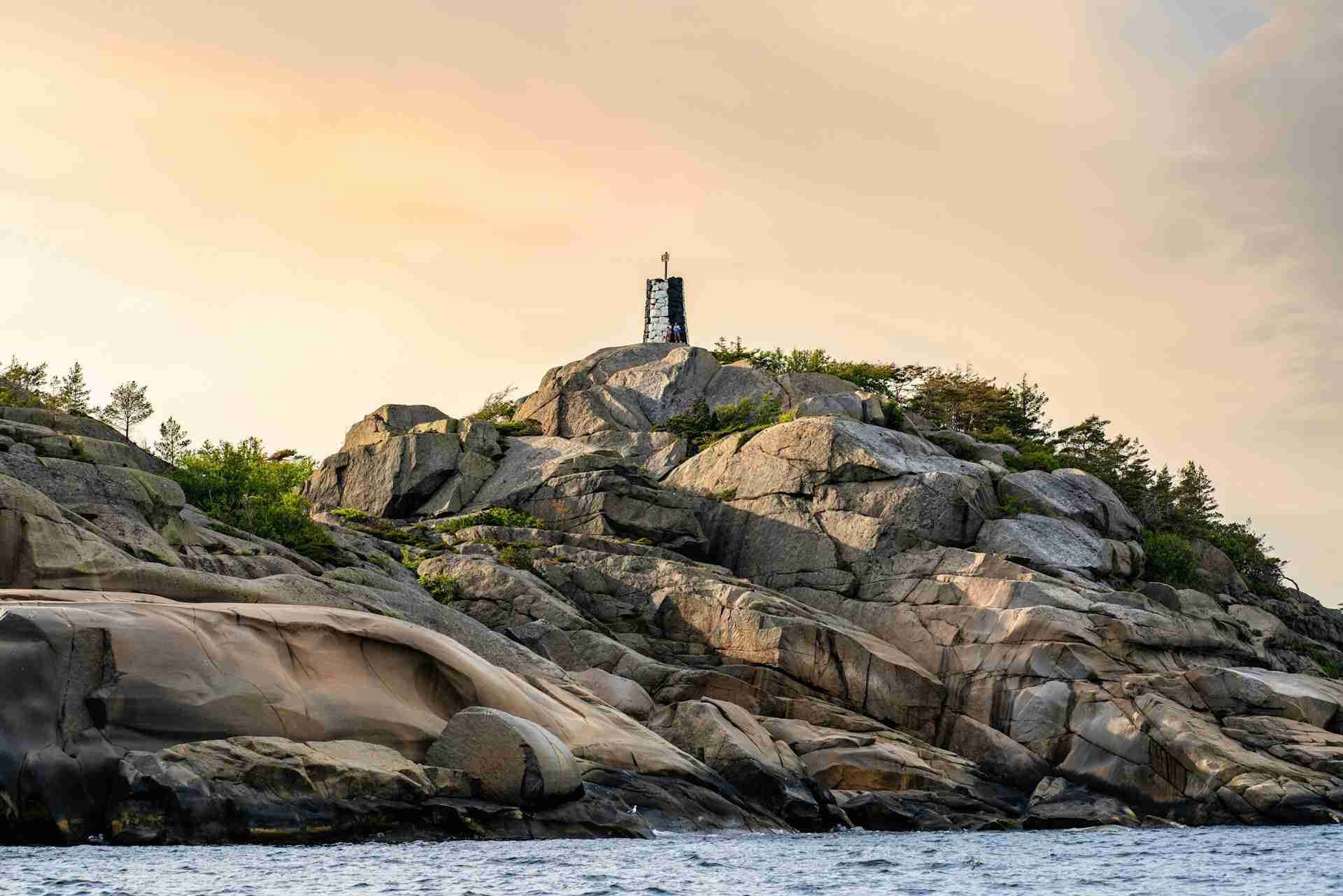
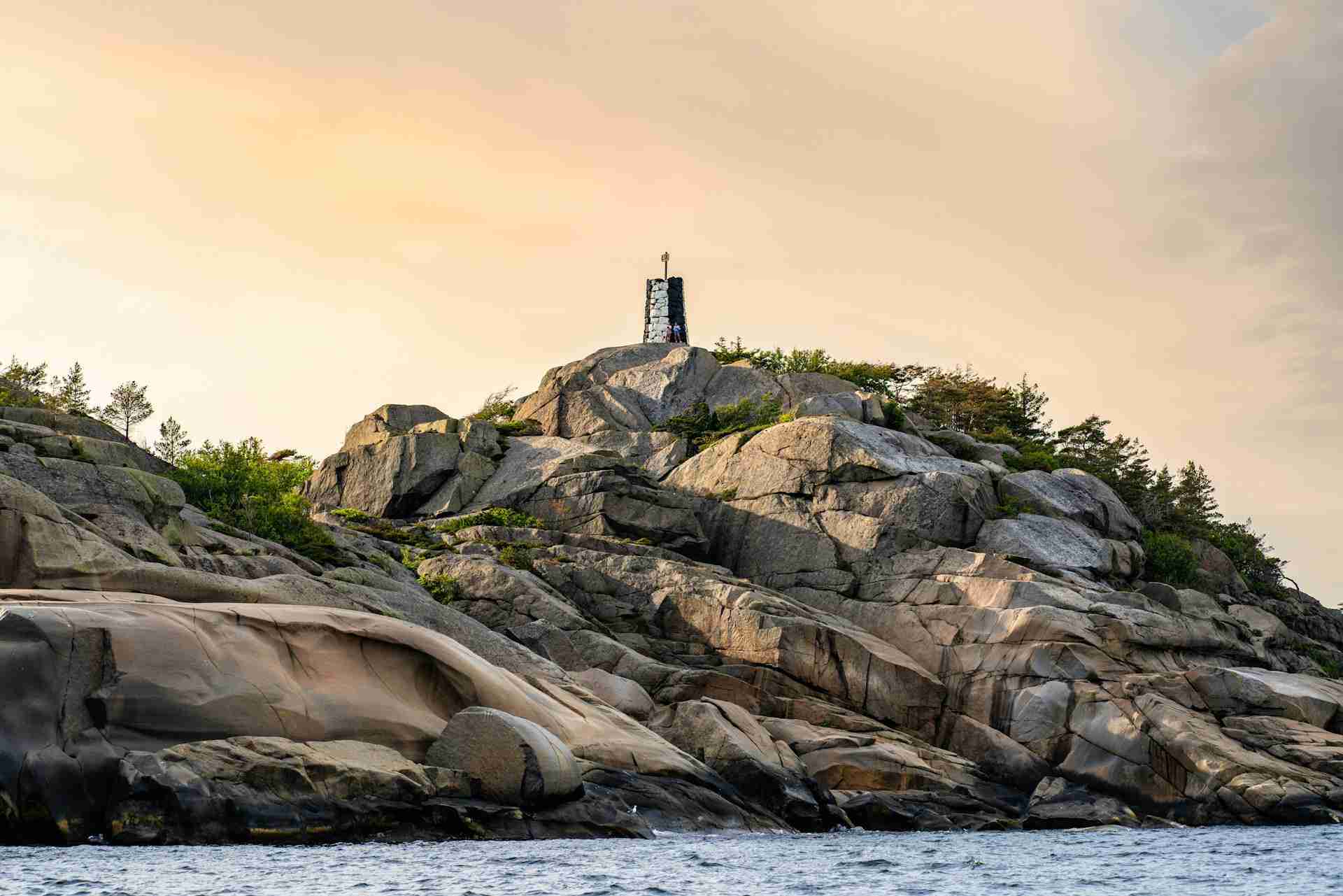
Tønsberg Tønne is a cylindrical stone sea mark built atop the rocky coast at the southern tip of Østerøya, just outside Sandefjord. Though its form is simple, it stands in a dramatic location surrounded by open sea, exposed granite, and steady wind. The marker's stacked stone construction, capped with a directional wooden signal, is both a historic reference point and a striking focal subject for photographers. Getting there requires a short walk through a quiet stretch of coastal woodland, ending with a scramble over smooth, weathered rock. Once at the top, the landscape opens wide in every direction, with views across the Skagerrak and back toward the Norwegian mainland.
Best Photography Opportunities
Views from below
Photographing from a lower position along the slope gives the sea mark a stronger presence in the frame, with the rock surface leading the eye upward. This angle also lets you work with lines and texture in the foreground, especially if you shoot during late afternoon when the low sun skims across the granite. A wide angle lens helps capture the full environment while maintaining focus on the marker. Depending on the cloud cover, the structure can appear either softly lit or silhouetted against dramatic skies. Moving slightly left or right allows you to separate the marker from background elements and get a cleaner frame.
Close up details
Up close, the construction of the sea mark reveals differences in the color and shape of the stones, along with signs of age and weather. These details photograph well in overcast light, which keeps contrast low and preserves surface tone. The directional signal on top of the structure works well as a simple subject framed against the sky. A standard zoom lens lets you move between tight detail and mid range compositions without switching gear. Shadows are often soft at this site, making it a good location for natural black and white conversions. Framing the top of the structure with the horizon low in the background emphasizes its role as a navigation point.
Wide views from the top
Turning away from the marker, the open rock face leads toward the sea and a long view across the Skagerrak. The scene is open and minimal, with smooth rock, sea, and sky as the three main elements. This is a strong setup for long exposure work, especially when the sea has light movement and the sky shows layered clouds. Using a neutral density filter allows for extended shutter speeds that flatten wave texture and add softness to the light. A tripod is essential here, but the rock surface is stable and offers plenty of level ground. These images are strongest during calm or overcast conditions when color and contrast are subtle.
Trail through the coastal woods
The walk out to the sea mark includes stretches of forest trail and occasional glimpses of water through the trees. These areas provide chances to build a photo sequence that includes the experience of arrival, not just the final viewpoint. Trail signs, worn paths, and light filtering through the pine canopy can all be part of a visual narrative. Morning is the best time to shoot along the path, when light is still directional and color is warm. A short telephoto is helpful for isolating trail features and compressing the space between the trees.
Silhouette and sky at sunset
The open setting makes this a reliable place for backlit compositions and silhouettes. The stone marker becomes a clean, graphic shape against the sky once the sun begins to set. Shooting from a low angle with the marker offcenter creates a balanced image with room for sky color and gradient. If the cloud cover is broken, the scene benefits from glowing light near the horizon and long shadows across the rocks. A longer lens helps compress the scene and bring more attention to the shape of the sea mark. Sunset sessions here often work best in early autumn when the sun sits lower over the sea.
Best Time to Visit
Late spring through early autumn is the most favorable time to visit, with clear paths, stable weather, and long daylight hours. The site is fully exposed, so weather has a strong effect on both light and shooting conditions. Summer evenings provide excellent golden hour light that moves across the granite and highlights the texture in the stonework. In the morning, softer light from the east creates balanced exposure across the site and tends to bring a calm, quiet tone to the surroundings.
Autumn adds variation to the forest trail, with color in the brush and cooler light on the coast. Cloudy days often produce the most consistent results at this location, particularly when working with low contrast scenes or longer exposures. The area is not crowded, even in peak season, but weekends may bring a few hikers. Winter is possible for experienced photographers, though ice and wet rock make the final climb more difficult. There are no gates or closing times, making sunrise and sunset visits easy to plan.
How to Get There
Tønsberg Tønne is located at the southern end of the Østerøya peninsula in Sandefjord, Norway. From the town center, drive south along Østerøyveien, following signs for the Tønsberg Tønne trailhead. Public parking is available near the forest edge, where a marked trail begins. The trail is about one kilometer and includes a mix of packed earth, gravel, and exposed granite.
The final stretch climbs across sloped rock, which can be slippery in wet weather. Good footwear is recommended, and those carrying gear should allow extra time to move carefully. The trail is open access with no entry fees or restrictions. Facilities are minimal, so bring water and prepare for the full session before setting out. The site remains open year-round and is accessible at any time of day.
Recommended Photography Gear
A wide angle lens is key for capturing the structure in its landscape context, especially when including the foreground rock. A standard zoom will handle most of the trail and summit work, giving you flexibility to switch between detail and broader views. A short telephoto adds reach for isolating subjects like the sea mark or distant layers in the sky.
A tripod is necessary for long exposures and evening shooting, and the granite surface provides solid footing in most conditions. A circular polarizer is useful for controlling sky tone and removing reflections from wet stone, while a neutral density filter supports slower shutter work at mid-day. Weather protection for your camera is important here due to frequent wind and fast-changing conditions.
Pack light, but bring everything needed for a few hours without services. A lens cloth, extra battery, and lightweight bag are all essential. The site rewards patience and planning, so having the right tools allows you to wait for the best possible light.
Nearby Photography Locations
This coastal fort offers a mix of exposed bunkers, open sea, and stone structures scattered among low pine and coastal terrain. It is a great location for working with texture, shadow, and angles. The fort's layered layout allows for multiple compositions in a small area.
Vøra Beach
A quieter beach west of Sandefjord with clear water, smooth sand, and a good westward view. Sunset light here can be intense, and the rock forms near the water provide useful foreground structure. It is easy to reach and works well after a visit to Tønsberg Tønne.
The central harbor area offers reflections, boats, and color, especially in the morning when the water is still. The mix of industrial elements and smaller sailboats creates a flexible setting for street and marine photography. Reflected light on calm days adds interest to the scene.
Yxney at Mølen
Farther down the coast, this natural area includes long stone beaches, smooth granite outcrops, and wide views over the sea. It is a stronger location for abstract compositions and long exposure work. The terrain is open and allows for movement along the shoreline.
Located inland, this Viking-era site sits in an open field and is surrounded by low hills and farmland. It is a quiet place for studying form and light without distraction. A single tree or sky element can be enough to shape the composition.
Tønsberg Tønne is one of those places where simple elements come together in just the right way. The stone, sea, and sky form a setting that responds well to time and patience. With minimal structures and wide space, it leaves room for interpretation and rewards photographers who are willing to slow down and wait for the right light.
Comments
Loading comments…