
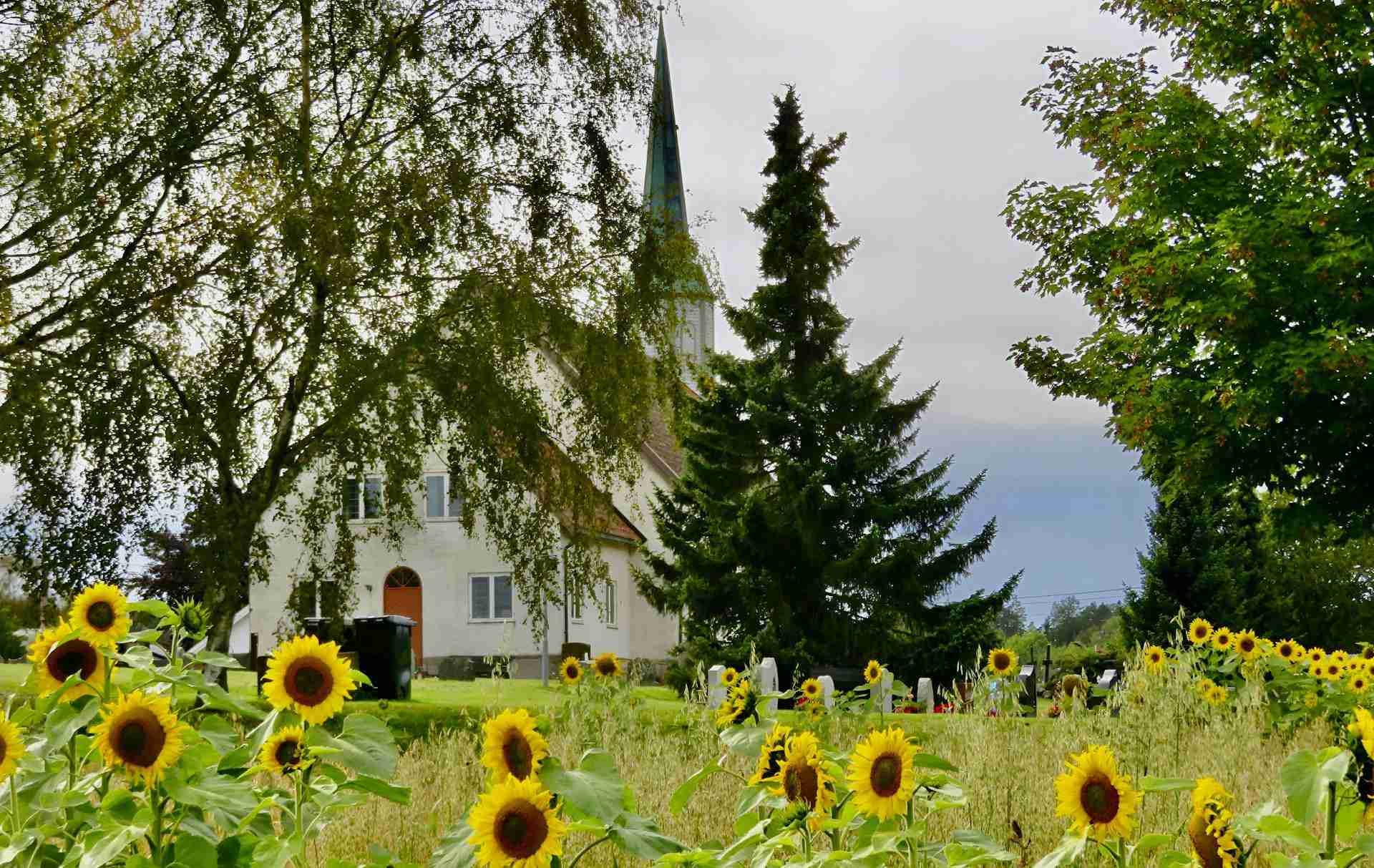
Torsnes Kirke is a small countryside church located just outside the historic town of Gamle Fredrikstad in southeastern Norway. Built in the 12th century, this Romanesque stone church stands quietly in the landscape, surrounded by rolling farmland, mature trees, and an old cemetery. The thick stone walls, modest wooden bell tower, and simple layout make it a strong subject for photographers who prefer working with texture, clean lines, and natural light. The setting is peaceful and consistent, offering scenes that change gently with the weather and time of day. Whether you are capturing soft morning light across the stonework or focusing on close-up details of aged grave markers, this site offers a calm, focused space to shoot without distraction.
Best Photography Opportunities
• Wide Exteriors Framed by Landscape
The church sits slightly elevated on a gentle rise, which allows for wide-angle compositions that include surrounding farmland, trees, and sky. Standing just outside the low stone wall that borders the cemetery, you can frame the entire structure within its rural context. A wide-angle lens helps emphasize the open space and gentle curves of the landscape. Early morning is best for this angle, especially when low sun warms the stone walls and casts long shadows across the grass. Cloudy or lightly overcast conditions also work well here, keeping tones soft and allowing surface detail to come through clearly.
• Centered Front View with Entry and Tower
From directly in front of the church, you can create a symmetrical composition that highlights the shape of the doorway, small windows, and wooden tower. The tower contrasts in color and material with the heavier stone walls, giving you a natural vertical accent in the frame. This view works best with a standard or short telephoto lens to avoid distortion while keeping the full height in the frame. Arrive early or late in the day when the light is directional and soft, which helps avoid the washed-out effect that direct midday light can create on the pale stone. Including a portion of the sky above the gable can help anchor the image and guide the eye upward.
• Gravestones and Textural Details in the Churchyard
The cemetery around the church contains a wide mix of headstones, iron crosses, and weathered markers that offer excellent detail shots. Many are covered in moss or lichen, with worn inscriptions that show their age clearly. A standard zoom or short telephoto lens allows you to isolate individual stones while maintaining shallow depth of field. Side light is especially helpful here, creating highlights and shadows that bring out the texture in both stone and ground. Look for compositions where a gravestone can be used as a foreground element, with the church rising subtly in the background.
• Seasonal Profiles from the Side Path
A footpath along the south side of the church provides a good angle to photograph the profile of the building against its seasonal surroundings. In spring and summer, the grass is lush and often scattered with wildflowers. In autumn, nearby birch and maple trees bring orange and yellow tones that pair naturally with the stone walls. In winter, snow simplifies the palette and outlines the structure more cleanly. Use a slightly longer lens to compress foreground and background, especially if you are working with color or light variation in the landscape. This angle is especially strong during the golden hour, when the sun falls low across the field.
• Interior Compositions in Soft Natural Light
If the church is open, the interior provides a quiet setting for subtle compositions. The space is small and minimally decorated, with whitewashed stone walls, wooden pews, and a central altar. Light enters through narrow windows and changes slowly throughout the day. A tripod is essential for working in the low light without raising ISO. Focus on simple frames that use symmetry or repetition, such as aligned pews or altar details. Avoid flash to maintain the soft and quiet atmosphere of the space, and be respectful of its function as an active place of worship.
Best Time to Visit
Torsnes Kirke can be photographed at any time of year, but different seasons bring different qualities of light and setting. Spring and early summer provide the richest green tones and longer hours of workable light. Mornings in these months offer low sun from the east, which highlights the front and eastern walls of the church while keeping the shadows soft. Summer sunsets fall over the western side, giving a warm backlight that works well for silhouettes and rim lighting on gravestones.
Autumn is ideal for those looking to capture natural color and atmosphere. The changing leaves on surrounding trees pair well with the stone textures, and the lower sun angle throughout the day gives longer shooting windows. Winter offers more minimal compositions, especially after fresh snowfall, when the church stands out cleanly against a soft white ground. Overcast skies during any season help to reduce glare on the light-colored stone and allow for evenly exposed detail shots.
How to Get There
Torsnes Kirke is located about twelve kilometers southeast of Fredrikstad in the Østfold region. From Gamle Fredrikstad, take Route 108 east and follow signs toward Torsnes. Once in the village, the church is easy to spot and sits just off the main road. There is a small gravel parking area beside the churchyard, with space for a few vehicles. From the parking area, the church and cemetery are only a short walk away along a well-maintained path.
There is no entrance fee to access the grounds, and the exterior can be photographed freely at any time. The church interior is usually only open during services or special events, but local visitor centers can provide more specific times if needed. Tripods are allowed outdoors and are useful for both wide and detail shots. If you plan to photograph during quiet hours, such as early morning or late evening, be respectful of nearby homes and any visitors in the cemetery.
Recommended Photography Gear
A flexible kit works best for this location. A 24–70mm lens gives you the range to shoot wide scenes and architectural details without needing to change lenses frequently. Pair this with a 16–35mm wide-angle lens if you plan to shoot from close to the building or want to emphasize sky and space in your compositions. For gravestone details, tree framing, or compressing landscape elements, a 70–200mm lens is useful and works especially well in lower contrast lighting.
Bring a lightweight tripod for use during early morning or evening shoots, or when working inside the church. A circular polarizer helps control reflections on windows and brings out color in surrounding grass and sky. If you are visiting during wet or cold months, carry a lens cloth and weather cover for your gear. Footwear with good traction is also recommended, especially when walking around the churchyard in winter or after rain, when the ground can become soft or slippery.
Nearby Photography Locations
Just a short drive northwest, this preserved 17th-century fortress town features cobblestone streets, stone ramparts, and historic wooden buildings. It is excellent for architectural and street photography, particularly in soft early morning light. The gates, bridges, and moats create strong lines and repeating patterns that frame well in both wide and compressed shots.
East of the old town, this smaller hilltop fort has wide views across Fredrikstad and the surrounding landscape. The stone walls and grassy terraces offer simple compositions that shift dramatically depending on light and season. It is usually quiet and easy to shoot with a tripod without much interference.
Located in the newer part of the city, this neo-Gothic cathedral contrasts with the rural simplicity of Torsnes Kirke. It is well-suited for vertical compositions and interior symmetry, especially during golden hour when the tall windows fill with soft color. The surrounding plaza also works well for detail shots and reflections after rain.
Set between the two branches of the Glomma River, this island has old boatyards, historic homes, and river views that are ideal for both landscape and documentary-style photography. Early morning or late afternoon are the best times to shoot, especially when fog or low light helps add softness to the scene.
About forty-five minutes to the south, this historic estate features gardens, forests, and a beautifully preserved manor house. The changing seasons make this an interesting secondary stop for more formal garden and architectural work, and it pairs well with the understated charm of Torsnes Kirke.
Torsnes Kirke is a quiet, well-balanced location that suits photographers looking for simplicity and space to work. It does not demand attention but rewards careful framing and thoughtful light. Whether you visit during a still winter morning or a golden summer evening, the textures, structure, and setting of this rural church offer a reliable foundation for strong, clean photography.
Comments
Loading comments…