
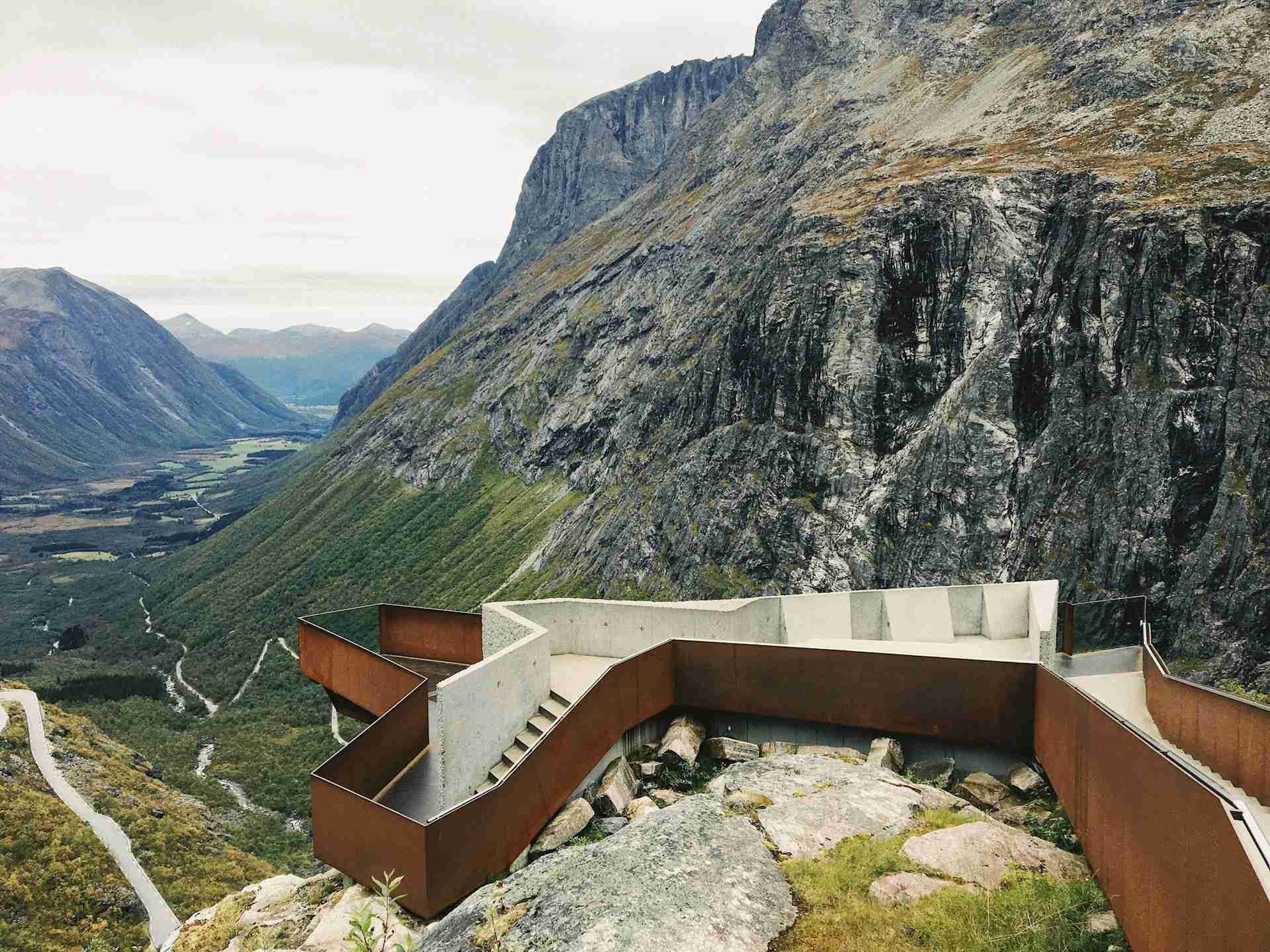
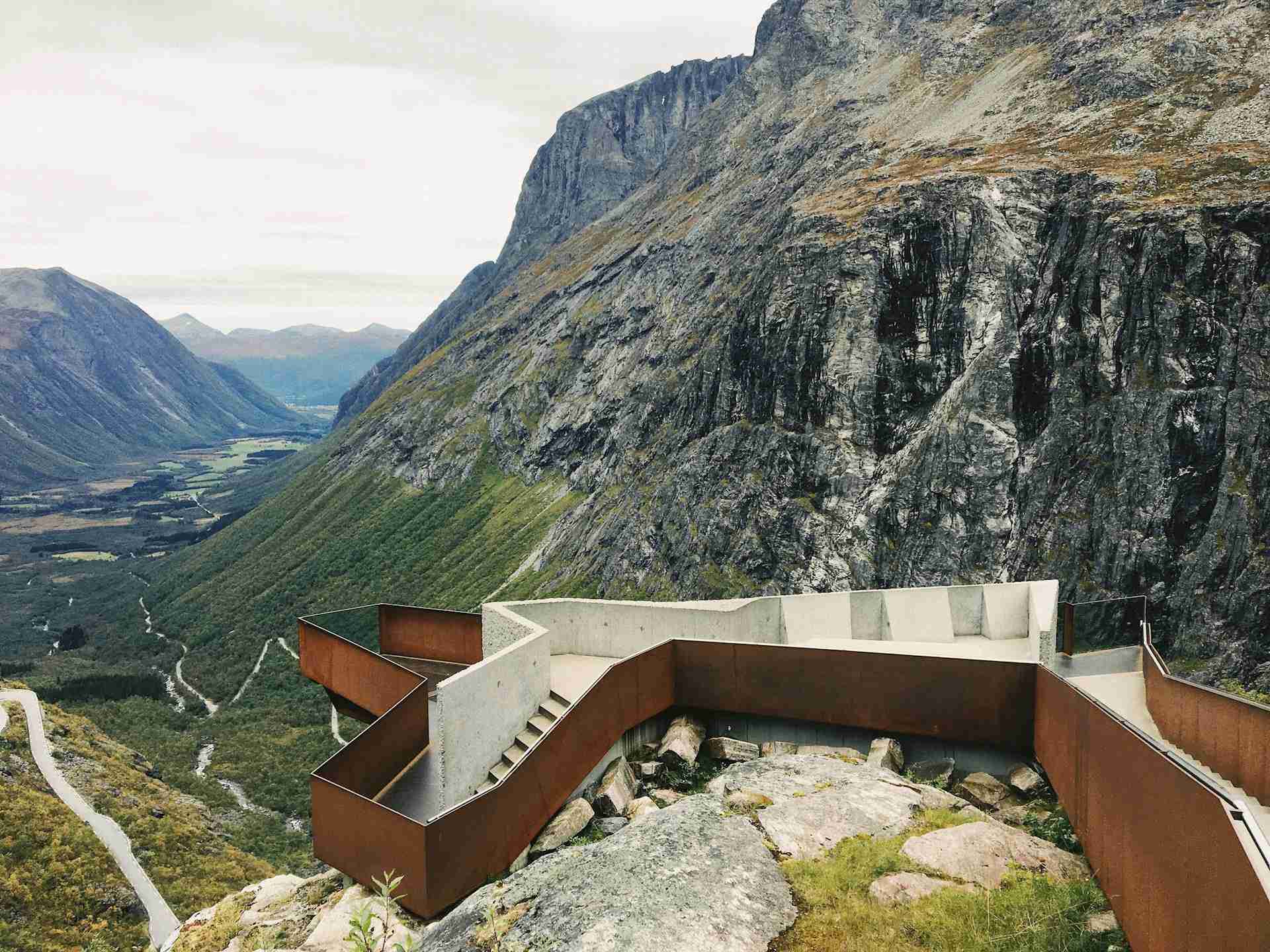
Trollstigen, known as the Troll's Path, is one of Norway's most visually compelling mountain routes. High above the valley floor, the Trollstigen Utsiktspunkt offers an exceptional vantage point over a dramatic series of hairpin turns, deep green valleys, and jagged cliffs. Located near Innfjorden in western Norway, this modern steel and concrete viewpoint extends over the edge of the mountain, placing photographers directly above one of the most dynamic alpine roadways in Europe. The landscape here is defined by movement and contrast—between the engineered curves of the road and the raw vertical drops of the surrounding peaks. Light, weather, and elevation all play significant roles, making this a location that rewards early starts, patience, and careful study of changing conditions.
Best Photography Opportunities
• Winding Road and Hairpin Curves
: The observation deck provides a clear view of the entire Trollstigen pass, with its tightly packed switchbacks climbing the mountainside in a serpentine rhythm. This is a rare opportunity to capture dynamic lines within a natural setting. A telephoto lens allows you to compress the curves and emphasize the pattern of the road, especially when small cars or motorcyclists are visible for scale. When low clouds drift through the valley, the road becomes partially obscured, creating a layered, atmospheric composition that feels both vast and intimate. Early or late light adds depth and long shadows that sculpt the contours of the terrain.
• Minimalist Compositions from the Platform
: The viewing platform itself is a study in contrast and modern design. Its angular, rust-toned surfaces cut into the surrounding rock in a way that offers strong graphic elements for minimalist photography. Using the structure as a framing tool, photographers can create simple, balanced compositions with clean lines and large areas of negative space. Overcast skies are particularly effective for this style, as they eliminate distractions and allow the textures of metal, stone, and sky to take center stage. Reflections on wet surfaces after a rainstorm further enhance the mood and reduce visual clutter.
• Early Morning Light over the Valley
: Arriving before sunrise offers the clearest light and the lowest foot traffic. As the sun rises behind the mountains, the light first touches the peaks before gradually illuminating the road and valley below. This progression of light creates a natural story across the frame, especially when photographed from a higher vantage or with a wide-angle lens that captures both the shadowed foreground and glowing horizon. Low morning clouds sometimes drift across the valley floor, catching the sun and dispersing soft light into the surrounding terrain. These moments, though brief, produce some of the most compelling compositions of the area.
• Waterfall and Cliff Texture
: Just below the viewpoint, a powerful waterfall rushes down the steep cliff face beside the road. This element introduces both motion and sound to the scene, making it a useful focal point for tighter compositions. A mid-range or telephoto lens works well here, allowing you to isolate sections of the waterfall as it flows over craggy rock and moss. Long exposures soften the movement of the water, turning it into streaks or ribbons that contrast with the sharp textures of the surrounding cliff. Shorter exposures freeze the water mid-motion, highlighting the force and scale of the descent. Both approaches benefit from diffused light or partial cloud cover.
• Twilight and Blue Hour Views
: After sunset, the valley often retains ambient light for longer than the peaks above it. This creates a perfect setting for blue hour photography. The serpentine road becomes a faint silver ribbon, and if there has been recent rain, the reflective surfaces enhance the remaining glow in the sky. A tripod is essential here, especially as exposure times increase and subtle color shifts become more visible. In summer, the long twilight allows for extended shooting windows, while cooler months bring faster transitions and deeper shadows. This period is especially well suited to moody, quiet compositions that highlight the balance of light and shadow in the landscape.
Best Time to Visit
Trollstigen is typically open from late May to early October, depending on weather conditions and road safety. The pass closes during the snowy season and may also be temporarily closed during periods of rockfall or heavy rainfall. The best time for photography is during late spring and early autumn, when the light is lower in the sky and the weather offers more variety. June and July provide extended daylight, making sunrise and sunset shoots easier to plan around.
For soft light and atmosphere, early mornings are best. This is when the valley often holds low clouds or mist, and the surrounding peaks are slowly revealed by the rising sun. Afternoons can be productive as well, especially on days with broken cloud cover that introduces directional light across the landscape. Be prepared for quickly changing conditions, as the mountain environment can shift from clear to overcast or rainy in a matter of minutes. Checking weather forecasts and road reports before your visit is essential.
How to Get There
Trollstigen Viewpoint is located in Innfjorden, in Møre og Romsdal County, and is accessed via Norwegian National Road 63. The road connects Åndalsnes in the south with Valldal in the north, and the viewpoint sits at the top of the Trollstigen pass. Driving from Åndalsnes takes about thirty minutes and includes several switchbacks and narrow stretches that should be approached cautiously. Along the way, you will pass multiple smaller viewpoints, but the main Utsiktspunkt is clearly signed near the summit.
Once at the top, there is a spacious parking area with access to a modern visitor center, restrooms, and paved walking paths. The observation platforms are a short walk from the lot and are fully accessible, though the wind can be intense along the exposed edges. There are no entrance fees to visit or photograph the area. For sunrise or blue hour shoots, consider staying overnight in Åndalsnes or bringing a camper vehicle to the upper lot, where overnight parking is permitted during the open season.
Recommended Photography Gear
Trollstigen demands a well-rounded kit that can handle both expansive views and detailed architectural or natural elements. A wide-angle zoom, such as a 16 to 35 millimeter lens, is essential for capturing the road's curves and the valley below. A 24 to 70 millimeter lens adds flexibility for tighter compositions and shots that incorporate the observation platform. A telephoto lens in the 70 to 200 millimeter range is useful for compressing curves in the road, isolating patterns in the landscape, or capturing weather changes across distant peaks.
A sturdy tripod is necessary for long exposures, especially during twilight and early morning sessions. Bring a six-stop or ten-stop neutral density filter if you plan to smooth water flow in the waterfall or soften cloud motion above the valley. A circular polarizer helps manage glare on wet surfaces and can deepen sky contrast on partially clear days. Weather protection is essential here, so carry a lens cloth, rain cover, and waterproof bag insert. Because the location is exposed, a jacket and gloves may be needed even in summer. A headlamp with red light mode is helpful if you arrive before dawn or stay into the evening.
Nearby Photography Locations
Above Åndalsnes, this dramatic hiking trail offers panoramic views of the Romsdal Alps and the town far below. It is ideal for sunrise photography and wide-angle mountain landscapes, especially when morning clouds cling to the peaks.
: North of Trollstigen along Road 63, this narrow canyon features powerful whitewater and sculpted rock walls. The modern footbridges provide stable platforms for both landscape and detail shots, particularly in low light or rain.
A few hours south, this world-famous fjord offers sheer cliffs, cascading waterfalls, and deep reflective water. Best photographed in early morning when the sun first touches the eastern ridge and the water remains undisturbed.
: Located near Åndalsnes, this vertical rock face is Europe's tallest. It is perfect for telephoto compositions and dramatic side lighting during late afternoon or after storms when cloud layers wrap around the wall.
: South of Åndalsnes, this glacial lake and towering waterfall offer strong contrasts in texture and scale. The area is especially productive in summer when snowmelt feeds the falls and windless days create near-perfect reflections.
Photographing Trollstigen is about exploring how human intervention meets untamed geology. From the platform's clean lines to the road's dramatic path through ancient mountains, the entire area presents visual tension and harmony in equal measure. With the right light and a deliberate approach, this is one of Norway's most rewarding locations for landscape photography.
Comments
Loading comments…