
Above the Rain and Light: Photographing Ulriken in Bergen
Ulriken, the tallest of Bergen's seven mountains, offers photographers a rare combination of elevation, drama, and constantly shifting weather. Rising over 600 meters above the city, its summit provides sweeping views over the fjords, Bergen's harbor, and the rugged inland mountains. Whether shrouded in fog or lit by late-evening sun, Ulriken's textures and tones shift by the hour, creating a landscape that feels alive and unpredictable. For landscape photographers who thrive in uncertain conditions and chase fleeting light, Ulriken is both a challenge and a gift. Its accessibility also makes it a practical destination for sunrise and sunset shoots without requiring a full day of hiking.
Best Photography Opportunities
• Summit Panorama at Golden Hour
From the top of Ulriken, you can capture expansive views of Bergen, the surrounding fjords, and the mountains that ripple eastward. During golden hour, warm light sweeps across the landscape, creating deep shadows and golden highlights on the mountain ridges. Use a wide-angle lens to emphasize scale and include foreground elements such as boulders or windswept grass to add depth. Shooting in late evening in summer gives you softer light and more time to fine-tune compositions. Positioning slightly below the summit on the western slopes can offer a stronger perspective toward the fjords and city.
• Misty Ridges and Low-Cloud Drama
Ulriken is famous for its fast-moving clouds and moody weather. Even on partially clear days, low clouds can sweep in and swirl through the ridges. These moments are ideal for dramatic black-and-white photography or high-contrast scenes that emphasize isolation and shape. A telephoto lens allows you to isolate mountain silhouettes as they disappear into the mist. Composing with the rule of thirds and using natural diagonals from the ridgeline can enhance the mood and lead the viewer's eye through the image.
• Cityscapes from Ulriksbanen Cable Car Station
The Ulriksbanen cable car offers a shortcut to elevated views and a strong platform for photographing Bergen's urban structure from above. From just outside the station, you can frame the city against the sea and often catch ships, cranes, and harbor activity in a single frame. These compositions benefit from a mid-range zoom for flexibility, allowing you to frame both wide and compressed city views. Early morning light from the east gives clarity and balance to the architecture. Blue hour is also excellent from this location, as the city lights begin to glow against the fading natural light.
• Foreground Texture and Mountain Trails
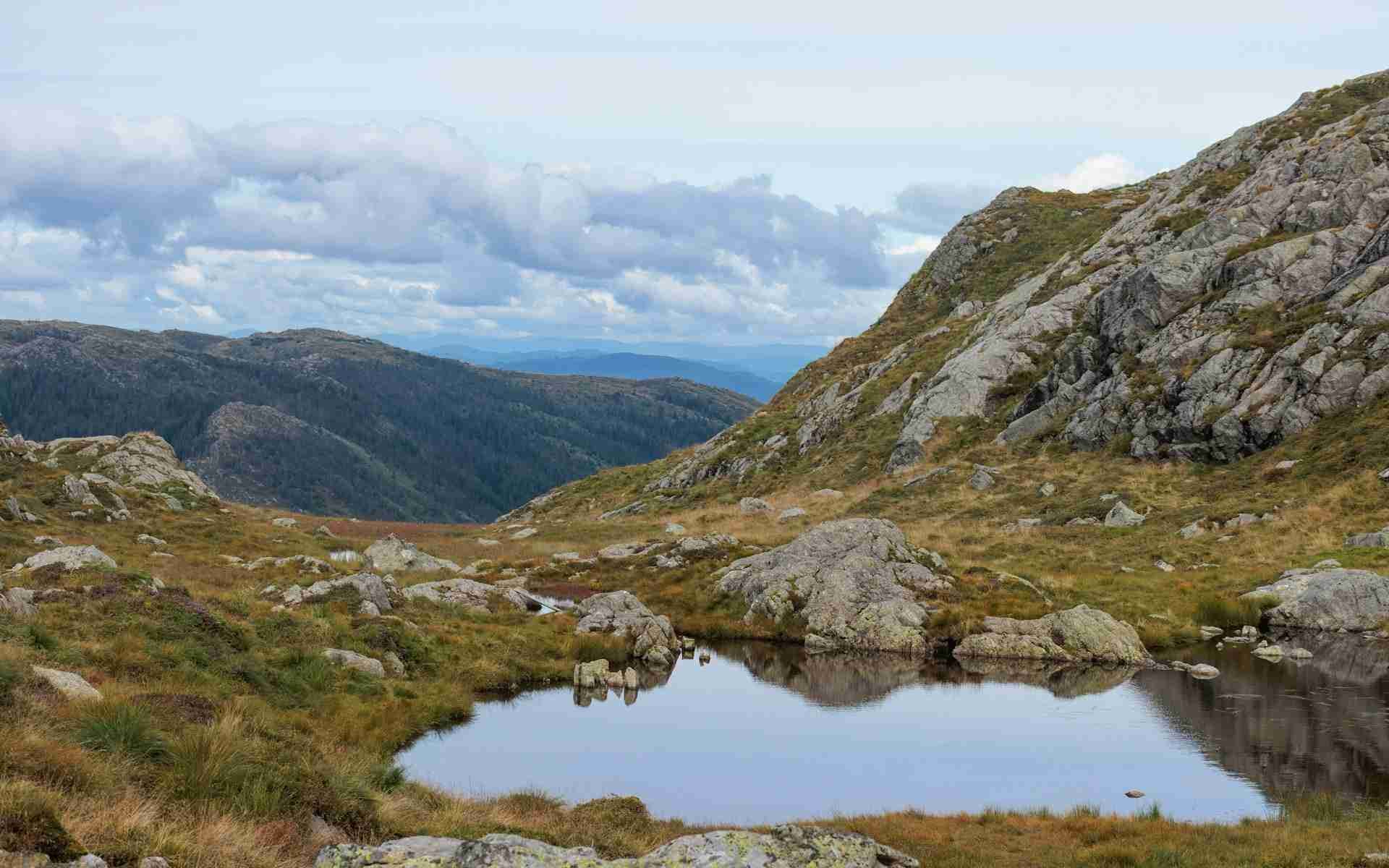
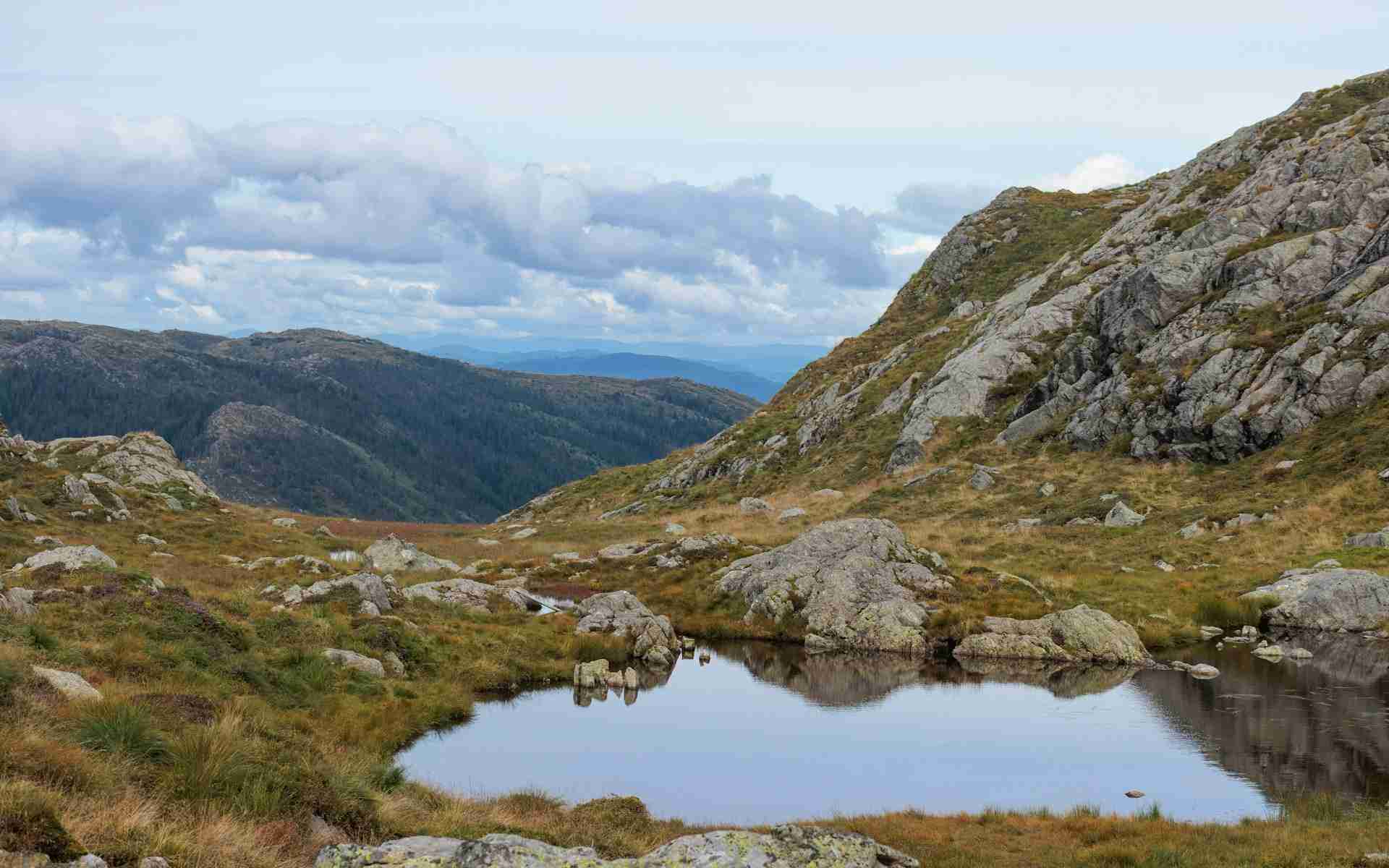
Once on the summit, you'll find a network of rocky paths and weather-beaten terrain that adds richness to foregrounds. Lichen-covered rocks, puddles reflecting the sky, and worn stone slabs all help anchor wide compositions. Using a small aperture (f/11 to f/16) will maximize depth of field and ensure sharpness from foreground to horizon. These shots work especially well in soft light, such as during overcast or post-storm conditions. Composing along the trails also allows you to naturally lead the eye toward distant peaks or cloudbanks.
• Sunset Above the Clouds
On rare clear evenings, when valley fog rolls in but the summit remains above the clouds, Ulriken becomes a dreamlike environment of glowing mist and pastel skies. This inversion condition is ideal for minimalist compositions and layering effects. Use a telephoto to compress the receding lines of peaks and clouds into a stack of glowing tones. Bracketing exposures is helpful in managing highlights from the sky while preserving detail in the clouds. These conditions are fleeting but produce some of the most memorable images possible from the mountain.
Best Time to Visit
The best time to photograph Ulriken is during the late spring through early autumn months when access is easiest and light conditions are most varied. May through September provides the longest days, allowing you to capture both sunrise and sunset with ample time for setup and exploration. In June and July, sunsets stretch late into the evening, giving golden light that often lingers on the ridgelines and city below.
Autumn brings more dramatic skies and faster-changing conditions, making it an excellent season for moody mountain scenes. Cloud movement is more pronounced and the surrounding forest begins to show color variation at lower elevations. Winter, while striking, presents challenges due to snow, reduced daylight, and cable car closures in inclement weather. However, for those prepared with proper gear, the snow-covered summit and low-angle light can yield high-contrast and minimalist compositions.
Weather on Ulriken changes rapidly. Cloud cover can shift within minutes and visibility can disappear quickly. Checking forecasts and arriving with flexible expectations is essential. Some of the best photographic moments occur just before or after a weather front passes, when light breaks through dramatic skies.
How to Get There
The easiest and most popular route to the summit is via the Ulriksbanen cable car, which departs from the base station in Haukeland. The ride takes only a few minutes and brings you directly to the summit area. From central Bergen, you can take a local bus or taxi to reach the cable car station. There is also a well-marked hiking trail that begins near Montana, taking approximately 90 minutes to reach the top, depending on pace and conditions.
There is no fee to access the summit on foot, but the cable car requires a ticket. During peak season, the cable car operates until late in the evening, making sunset photography more accessible. Tripods and camera gear are allowed, and there is a small café and shelter at the summit in case of sudden weather changes.
Recommended Photography Gear
A wide-angle lens (16–35mm) is essential for capturing expansive mountain views and layered cityscapes. A mid-range zoom (24–70mm) is ideal for walking compositions and framing architectural or environmental details from the summit. A telephoto lens (70–200mm or longer) is invaluable for compressing distant ridges, shooting through clouds, or isolating subjects below.
A tripod is highly recommended, especially for long exposure work or low light conditions at sunrise and sunset. A circular polarizing filter can help reduce glare on wet rocks and deepen contrast in the sky. Graduated ND filters are useful when balancing exposure between bright skies and darker terrain. A weather-sealed camera body or rain cover is advisable, as conditions can change rapidly and moisture is often in the air.
Sturdy footwear and a waterproof bag will improve mobility and protect gear when moving across wet rocks or uneven ground. Extra layers and gloves are a good idea even in summer, as wind chill can be significant at elevation. Always check cable car hours and trail conditions before setting out.
Nearby Photography Locations
Located on another of Bergen's surrounding peaks, Fløyen offers slightly lower elevation and a broader view of the harbor and city center. It's accessible by funicular and is ideal for sunrise or twilight photography with city lights and reflections.
• Grieg Hall and Festplassen
In the heart of Bergen, this area offers bold architecture, fountains, and strong reflections, especially in the early morning when the water is still. The surrounding streets are also excellent for capturing city life and architectural contrast.
This UNESCO-listed area features colorful wooden buildings and narrow alleys that are full of texture and shadow. It's especially photogenic in soft overcast light or during the early blue hour when lights begin to shine in the windows.
• Gamlehaugen and Lake Nordåsvannet
A small castle-like residence set by a peaceful lake, Gamlehaugen offers formal gardens, mirrored water scenes, and a quiet setting that's ideal for contemplative compositions.
This urban lake near the city center is excellent for long exposure work, especially during sunset when the surrounding hills and city lights reflect off the water. Wide walkways allow flexibility for framing and movement.
Ulriken rewards photographers who embrace the unexpected. From sweeping vistas to sudden mists, from golden light to cold cloud cover, it is a place where planning meets improvisation. The mountain's shifting mood challenges you to adapt quickly and look closely, offering images that change with every visit and every shift in light.
Comments
Loading comments…