
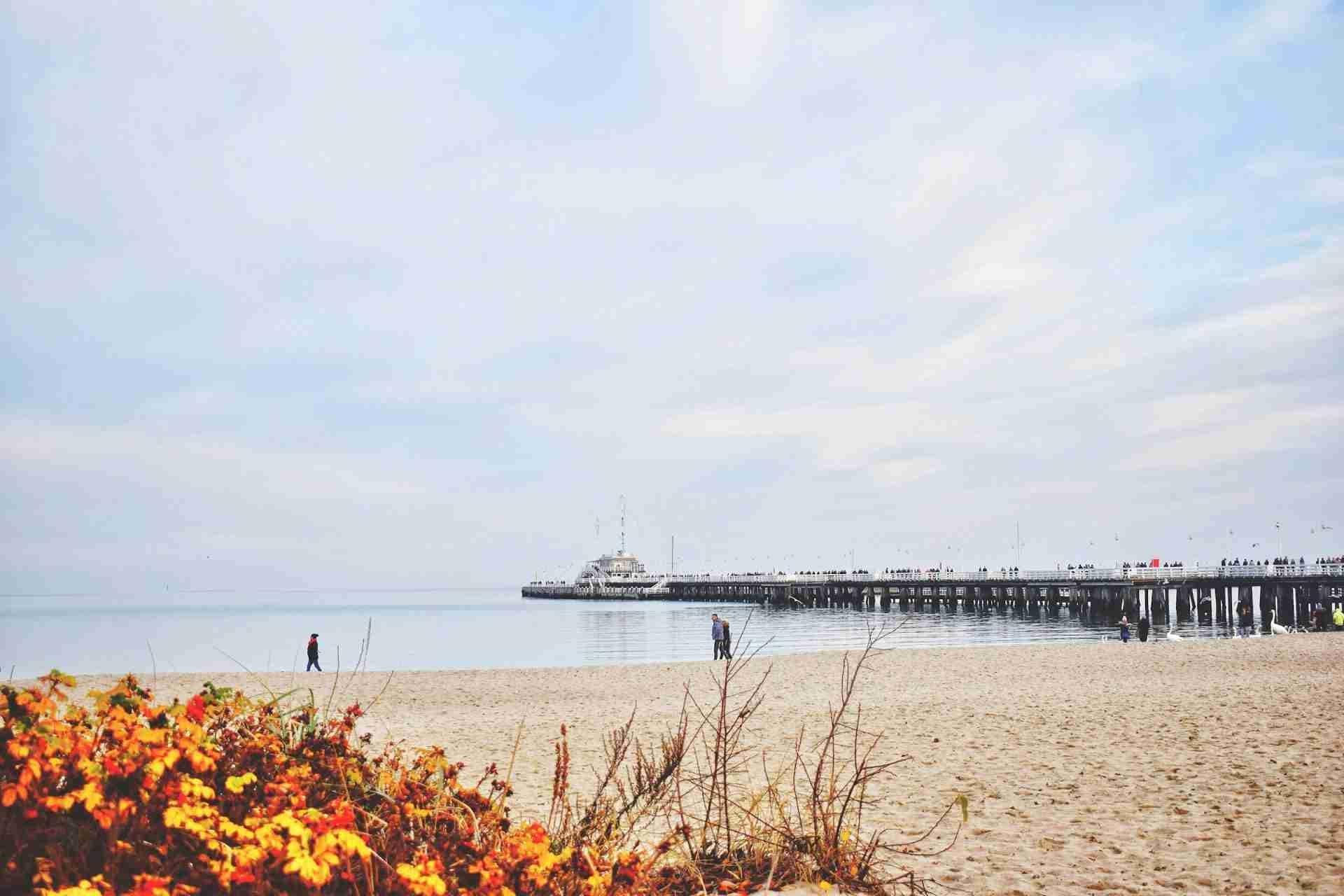
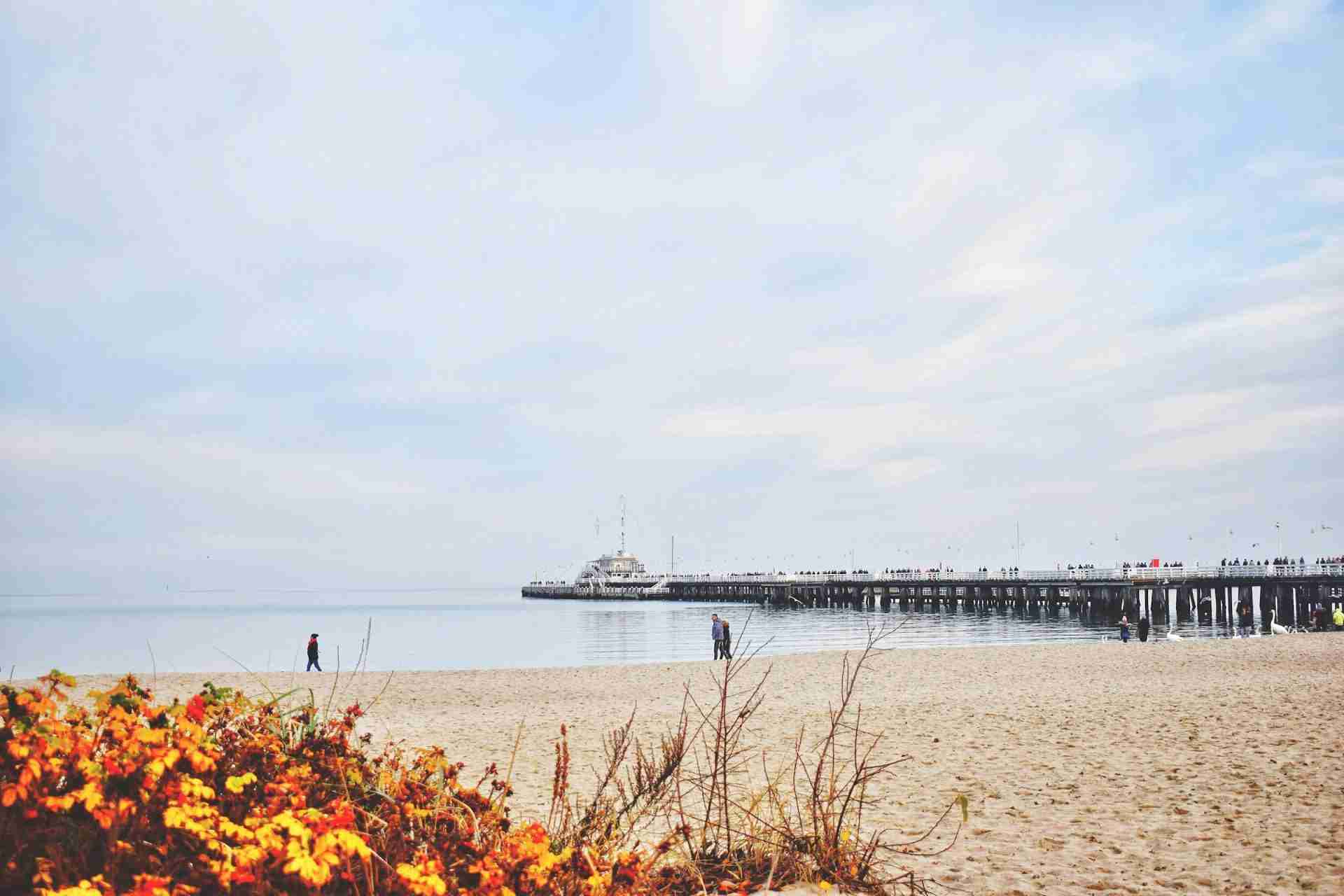
The Sopot Pier (Molo w Sopocie) stretches over 500 meters into the Bay of Gdańsk and is one of the longest wooden piers in Europe. Built for leisure rather than function, the pier is designed with open space, symmetry, and visual simplicity that lends itself beautifully to photography. The low railings, long planks, and repeating lamp posts lead your eye naturally toward the horizon, while the soft light from the Baltic Sea offers gentle contrast for both color and black and white work. Whether you're shooting early morning solitude, long exposures over calm water, or sunset silhouettes, the pier provides a range of possibilities in a single, accessible location.
Best Photography Opportunities
• Leading Lines and Symmetry
The most straightforward and satisfying composition comes from shooting straight down the center of the pier. The wooden planks, railings, and lamp posts form strong leading lines that guide the viewer's eye all the way to the end platform. Early morning or late afternoon light creates gentle shadows that help define these elements without overpowering the scene. You can shoot wide to emphasize space or zoom in to compress the lines and add depth. On overcast days, the clean lines against a grey sky give the pier a calm, minimalist feel.
• Long Exposures Over the Baltic
From the sides of the pier, you can shoot out over the water to capture long exposures that smooth out the sea and emphasize the stillness of the horizon. The breakwater and moored boats provide useful focal points for balancing composition, especially during twilight or after sunset. A tripod is essential here, and neutral density filters help extend exposure time. Reflections from the pier's lights or the sky often add a subtle glow to the water. This is one of the best ways to make simple, elegant images that emphasize shape and tone.
• Sunset and Silhouettes
The pier faces west over the bay, making it a strong sunset location. As the sun lowers, silhouettes of walkers, lamp posts, and railings stand out crisply against the glowing sky. This is a good time to switch to handheld shooting, working quickly to capture fleeting moments as people pass in and out of the frame. The atmosphere is lively but not chaotic, and there's enough space to isolate subjects or work with the crowd. On clear evenings, the sky turns soft orange and pink, which reflects off the water and wood for warm toned compositions.
• Details in Wood and Weather
The pier's construction gives you plenty of small elements to work with. From the texture of the weathered planks to the iron fixtures, benches, and lighting, you can create a full series of detail shots. After rain, the wood darkens and reflects light, adding mood and tonal range to even simple compositions. These moments are best captured with a standard lens or short telephoto, especially when the foot traffic is light. Abstracts and textures work especially well in black and white, emphasizing grain and shadow.
• Views Back Toward Sopot and the Beach
Turning your camera inland from the end of the pier gives you a view of the beach, the Grand Hotel, and the town of Sopot framed by trees and low buildings. This reverse angle provides a wider sense of place and works well in golden light or during busy summer evenings when the shoreline is active. You can include the curve of the pier itself in the composition or isolate architectural elements from the background. This scene shifts with the seasons, offering warm tones in summer and more subdued palettes in colder months.
Best Time to Visit
The pier is open year round, and each season offers something different. Summer brings long hours, warm light, and lively crowds, making it ideal for energetic street photography or golden hour silhouettes. Spring and autumn are quieter and often deliver softer light and more interesting skies. Winter can be cold and windy but offers excellent conditions for minimalist work, especially when snow or frost appears along the structure.
Light is best in the early morning or late afternoon, depending on the direction you're shooting. Morning offers peace and less foot traffic, while evening light warms the wood and adds character to the water. Overcast skies can produce very usable light here, giving you a clean background to highlight the lines and tones of the pier.
How to Get There
The Sopot Pier is located in the center of Sopot and is easy to reach on foot from anywhere in town. The main entrance is just off the central square, a short walk from the Sopot railway station, which is served by frequent trains from Gdańsk and Gdynia. The entire area is pedestrian friendly, with beach access, cafes, and public spaces nearby. There is a small seasonal entrance fee to walk onto the pier during the warmer months, but photography is allowed without restriction. The surface is flat and accessible, with benches and plenty of space to set up a tripod or work handheld without feeling rushed.
Recommended Photography Gear
A wide angle lens is key for emphasizing leading lines and capturing full scenes along the pier. A standard zoom helps with detail work and managing the ever changing light. For long exposures, bring a tripod and neutral density filters, especially if you plan to shoot over the water during twilight. A circular polarizer can help manage reflections off the water and wet wood, particularly after rain. Because the weather can shift quickly on the coast, a lens cloth and light rain cover are helpful to have on hand.
Nearby Photography Locations
Just off the pier, the beach offers clean sand, calm waves, and a good horizon line. Early morning and sunset are ideal for minimalist seascapes or capturing soft, directional light.
This historic building near the pier adds an elegant backdrop for architectural or environmental portraits. The contrast between its classical design and the open beach makes it a strong subject.
• Sopot Marina
Located at the end of the pier, the marina includes a variety of boats and reflections that change with the light and weather. It's a good place for detail shots and quiet compositions, especially during golden hour.
A short walk inland takes you into wooded park areas with trails, bridges, and filtered light. These offer a quiet break from the open beach and strong contrast between sun and shade.
Sopot's main pedestrian street is lined with shops, cafes, and activity. It offers a lively contrast to the calm of the pier and is a good place for street photography and color work, especially in late afternoon light.
The Sopot Pier offers photographers a simple but deeply flexible canvas. Its length, materials, and changing light allow for everything from classic long exposures to small detail studies. Whether you prefer working in broad scenic compositions or capturing quiet moments as the sun drops behind the Baltic, this wooden path into the sea remains one of the region's most rewarding locations.
Comments
Loading comments…