
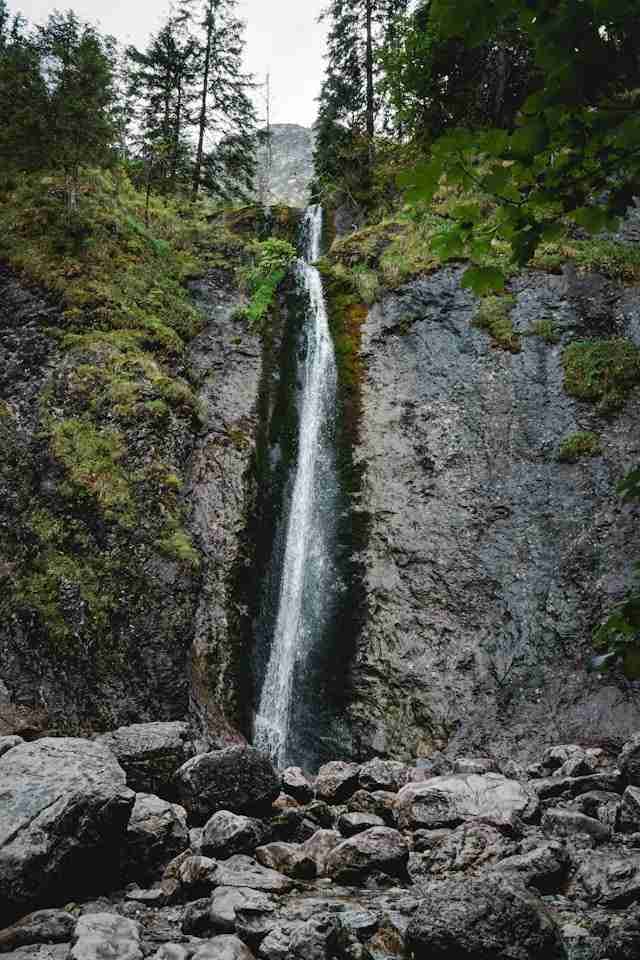
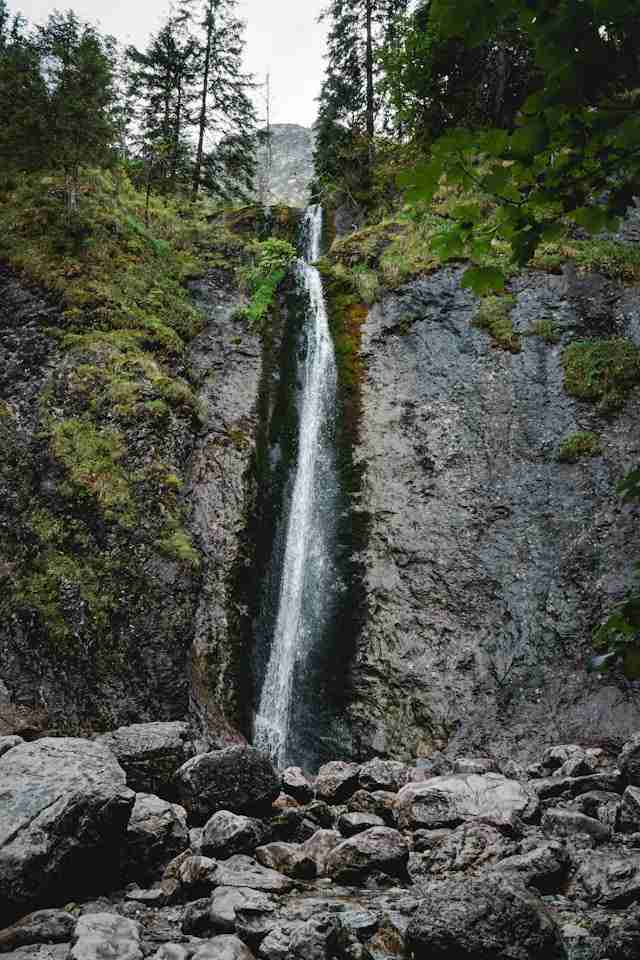
Tucked into the narrow upper reaches of the Strążyska Valley just outside Zakopane, Siklawica Waterfall rewards patient photographers willing to work with limited light and changing conditions. The falls are relatively compact in height but sit in a narrow stone cleft surrounded by dense forest and high cliffs. The setting feels more intimate than grand, offering a chance to focus on texture, movement, and detail rather than sweeping views. The water descends in two distinct tiers along a rugged rock face, and its pace shifts depending on the season and recent rainfall. With moss-covered stones, shaded trails, and soft sounds of water echoing through the gorge, the area invites a slower, more focused photographic approach.
Best Photography Opportunities
• Framing the Waterfall with Foreground Elements
Because of the compact nature of Siklawica, foreground interest becomes essential. Use rocks, fallen branches, or ferns at the base of the falls to help anchor the composition and lead the eye upward through the two cascades. A tripod and wide-angle lens will help control the depth of field and keep sharpness across the frame, even in lower light. Morning is the best time to catch the area before foot traffic arrives, giving you room to work cleanly without people in the frame. Overcast skies are ideal here since the high cliffs often throw the area into shadow, making contrast difficult to manage in full sun. Be mindful of water spray on the lens, especially in spring when flow is strongest.
• Using Long Exposure to Capture Water Flow
This location is perfect for long exposure work. The falls are not especially powerful, so longer shutter speeds smooth the flow and create graceful ribbons of water along the vertical stone. Bracket exposures if needed, especially if the background rock is catching stray light. A neutral density filter is useful during brighter hours, though early morning and late afternoon generally allow for slower shutter speeds naturally. Keep your tripod stable on uneven ground using a wide stance, and check level often, as compositions can tilt easily on the sloped terrain. Framing just the lower cascade with a tight lens gives a more abstract study of movement and texture.
• Detail Studies of Rock and Moss
The rocks around Siklawica are covered in green moss and often glisten with water, creating rich texture and color when viewed up close. Bring a macro or short telephoto lens to isolate small scenes within the larger landscape. These details are ideal in soft, diffused light and can make strong companion images to the wider waterfall shots. Watch for patterns in the flow across the rocks or small pools collecting at the base of the falls. These studies work especially well in vertical orientation and can be composed to emphasize texture, light, or line.
• Capturing Seasonal Changes in Color and Flow
Siklawica changes significantly with the seasons. In spring, runoff increases the volume and speed of the water, adding drama and mist that affect both exposure and composition. In summer, the flow slows, allowing more visibility of the rocks and finer details in the water path. Autumn adds bursts of yellow and orange leaves around the trail and stones, while winter sometimes brings icicles and a partial freeze, creating completely different photographic challenges. Shoot repeat visits from the same positions to create a seasonal series that showcases the variation.
• Working the Trail for Contextual Shots
The walk up the Strążyska Valley toward Siklawica provides opportunities to capture environmental context and lead-in compositions. Use the wooden bridges, creek crossings, and forested switchbacks as framing devices. Wide lenses help place the subject within its broader setting and can create narrative flow between the journey and the final destination. Morning fog or mist often lingers in the valley and can create a moody atmosphere that contrasts nicely with the motion of the water once you reach the falls. Including the trail in a frame gives a sense of place and adds storytelling depth to your set.
Best Time to Visit
The best light for photographing Siklawica comes in the morning before the sun reaches over the high cliffs and creates harsh highlights. The falls are located in a narrow section of the valley, which means even midday light can be challenging to balance. Overcast conditions are ideal, offering soft, even light that enhances the texture of the rocks and the color of the moss without introducing contrast that is hard to manage.
Seasonally, spring and early summer provide the highest water levels. The increased flow adds power to the scene and enhances motion in long exposures. Autumn is another excellent time to visit, with colorful leaves scattered across the rocks and trails adding a subtle warm contrast to the cool stone. Winter visits are possible but require caution, as the trail can be icy and the falls themselves may be partially frozen.
Avoid midday in high summer unless you are strictly working in shadow, and plan to arrive early to beat the flow of hikers. The area is popular with tourists and can become crowded quickly, especially on weekends.
How to Get There
Siklawica Waterfall is located in Tatra National Park, just outside of Zakopane in southern Poland. The starting point for the hike is the Strążyska Valley trailhead, which begins at the end of Strążyska Street. There is paid parking available nearby, though it fills up quickly during the high season.
The hike to the waterfall is approximately 2 kilometers each way on a well-maintained gravel and dirt path. It is an easy walk suitable for carrying a small camera bag or tripod, with only slight elevation gain. The last few hundred meters require a short but slightly steeper ascent along a rocky trail that can become slippery in wet weather.
There is a small entrance fee required for Tatra National Park, which can be paid on-site or through official mobile apps. Facilities near the entrance include restrooms and a small snack kiosk. The trail is open year-round, but winter conditions may require microspikes or additional gear for safe footing.
Recommended Photography Gear
A sturdy but lightweight tripod is essential for long exposures and stable compositions on uneven terrain. A wide-angle lens, such as 16 to 35mm, is useful for shooting the full waterfall along with surrounding rock walls and trees. A mid-range zoom like 24 to 70mm helps with trail shots, framing the approach, and capturing seasonal elements along the path.
A neutral density filter is helpful for slowing shutter speeds in brighter conditions, and a circular polarizer will reduce glare on wet rocks and help bring out color in the foliage and moss. A lens cloth is critical here, as spray from the waterfall can reach your front element even from a distance. Consider a waterproof camera cover or dry bag if visiting during high flow or in rainy conditions.
Keep your gear pack light and weather-sealed if possible. The short hike does not require advanced footwear, but sturdy shoes with good traction will make it easier to navigate wet or rocky sections around the falls.
Nearby Photography Locations
The approach to the waterfall itself is filled with photographic potential. Small wooden bridges, quiet streams, and forest tunnels provide varied compositions and change dramatically with the seasons. Misty conditions in the early morning make this walk especially rewarding.
• Giewont Mountain Views
At points along the Strążyska trail, the rocky peak of Giewont appears through gaps in the trees. These views can be framed with natural elements for strong verticals or used as backdrops for more layered shots of the trail and valley.
A nearby valley trail with a more open riverbed and lighter tree cover. The rocks and clear water make excellent subjects for long exposure stream shots, and the trail is less crowded than Strążyska.
• Kalatówki Meadow
This open alpine meadow near the edge of the forest is a great place for wider landscape compositions, particularly in the early morning when fog still clings to the surrounding ridges.
For a completely different style of subject, head toward Zakopane's historic ski jump. Its towering form and surrounding infrastructure provide striking contrast to the forested trails and natural features around Siklawica.
Siklawica Waterfall is not a location for grand vistas or dramatic scale. Instead, it is a space to slow down and work with light, shape, and motion in a tight, textured environment. It invites photographers to refine their compositions, study their exposures carefully, and take time with each frame. Whether you are shooting close details, seasonal changes, or the movement of water itself, the site offers a rewarding and focused photographic experience.
Comments
Loading comments…