
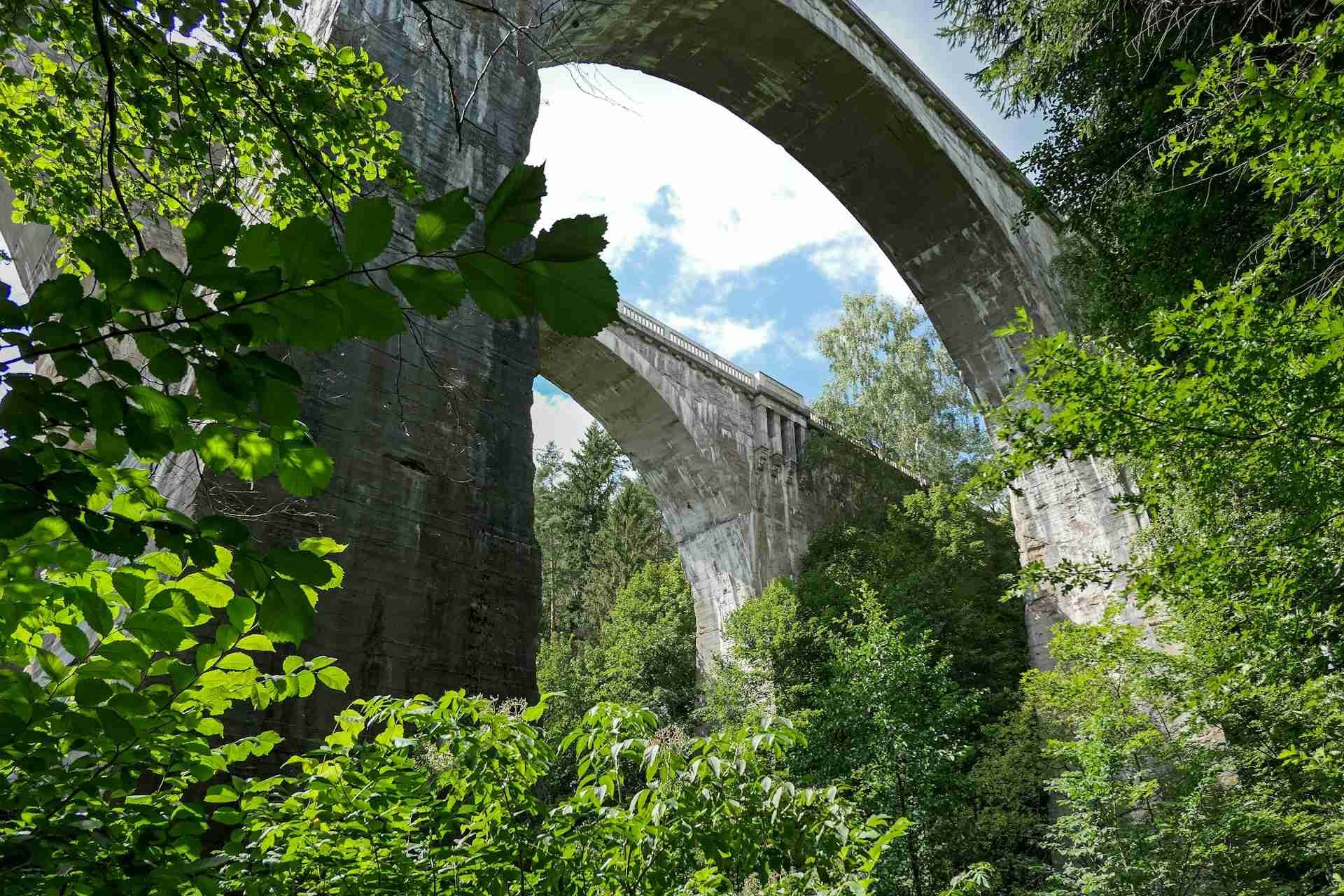
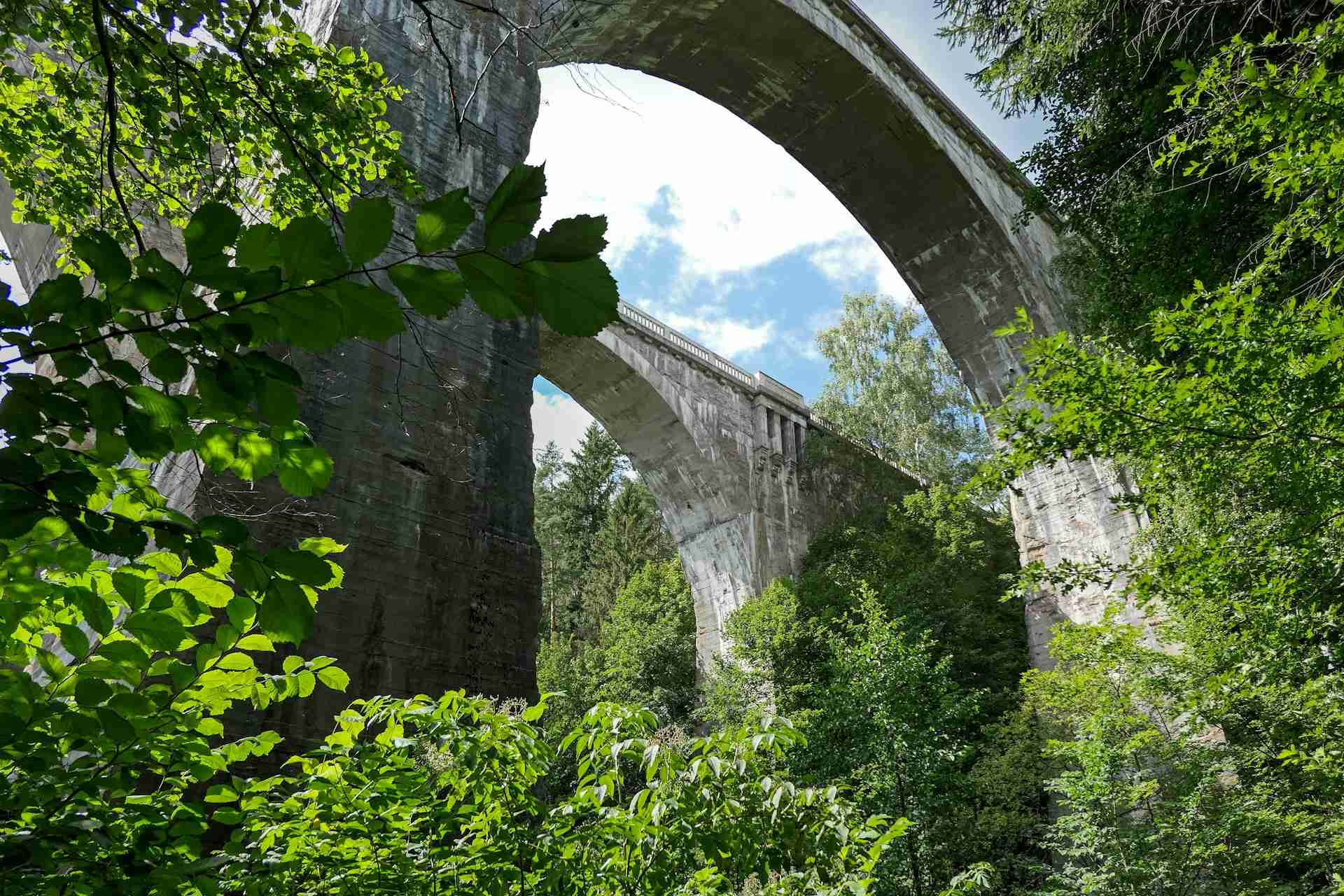
Tucked into the far northeastern corner of Poland, the Stańczyki Viaducts rise out of the forest like something from another era. These twin concrete railway bridges span a quiet valley near the border with Lithuania, their five massive arches soaring above the trees. Originally built in the early 20th century as part of a railway project that was never fully completed, they now stand unused but remarkably well preserved. For photographers, the Stańczyki Viaducts are a rewarding mix of symmetry, scale, and subtle color, surrounded by rolling hills and forest that change with the seasons. Whether you're shooting the full length of the bridges from below or walking across the top to capture views over the valley, this is a place where structure and landscape come together in a way that feels calm and cinematic.
Best Photography Opportunities
• Framing the Arches Through Trees
From the forested slopes leading up to the valley, you can frame the viaducts through tree trunks and branches for a more natural, layered composition. These angles work well to show the contrast between the hard lines of the bridge and the softer, shifting textures of the surrounding woods. Look for gaps in the canopy that allow you to position the arches cleanly within the frame. This works especially well in autumn when the trees add warm tones to the image or in winter when bare branches create a stark frame. A mid range zoom gives you the flexibility to adjust your framing without having to reposition too much on uneven ground.
• Bridge Top Views over the Forest
You can walk across the top of the eastern viaduct, which is open to visitors and offers wide views across the surrounding trees and countryside. Looking down from the top, you can photograph the opposite bridge from above or shoot along the tracks for strong leading lines that pull the eye toward the horizon. In autumn, the surrounding forest turns gold and orange, giving these shots a completely different look. A wide angle lens works well here to show the full length of the bridge and the drop into the valley below.
• Side Angles and Arched Geometry
From the slope along either side of the valley, you can photograph the viaducts from an angle that shows the repeating arches in profile. These compositions emphasize the symmetry and rhythm of the structure while including just enough of the landscape to place it in context. This angle works best in the late afternoon when warm light touches the concrete and casts shadows inside the arches. Shooting from a lower perspective allows the bridges to rise above the treeline and break into the sky for cleaner separation.
• Minimalist Frames with Texture and Detail
The concrete of the viaducts is weathered and slightly stained, which makes it a good subject for closer, detail oriented shots. Cracks, patterns in the surface, and the moss that grows on shaded sides offer texture that stands out well in soft or overcast light. You can also isolate individual arches and use the negative space of the sky or forest to build minimalist compositions that focus on form rather than scale. A short telephoto lens helps here to crop in without distortion.
• Winter Snow and Seasonal Contrast
In winter, the valley often fills with snow, and the bridges stand out even more clearly against the bare trees and white ground. Footprints in the snow can add leading lines, or you can wait for a fresh snowfall to keep the scene clean. Light fog or low cloud often hangs in the trees, softening the background and making the viaducts feel even more timeless. These conditions are great for black and white work or shooting with a muted, natural color palette that fits the colder light.
Best Time to Visit
The Stańczyki Viaducts photograph well in all seasons, but your choice of time will shape the look and feel of your images. The site is often quiet during the early mornings, making it easier to shoot without interruption. In the late afternoon, warm directional light adds texture to the arches and lights up the valley floor, especially in autumn when the trees catch golden hour tones.
Summer brings full green foliage, while spring adds softer color and more contrast between old stone and new growth. Autumn is a favorite among photographers for the changing trees and low angle light. Winter offers stark contrast and simplified compositions, especially after snow. Overcast days are excellent for detail shots and evenly lit scenes where you want to keep shadow and highlight under control.
How to Get There
Stańczyki is located in the Suwałki Region of Podlaskie Voivodeship, close to the Lithuanian border. The bridges are about a 40-minute drive north of Gołdap or two hours from Suwałki. The area is rural, and having your own vehicle is essential for reaching the site. Local roads are narrow but paved, and signs clearly mark the approach to the viaducts from nearby villages.
There is a small parking area near the entrance, along with a ticket booth for access to the top of the eastern bridge. Walking up to the viaducts is easy and only takes a few minutes. The trails along the river and up the valley sides are accessible but can be muddy after rain or slippery in winter. There are basic facilities during the high season, but fewer services in colder months, so plan accordingly if you're visiting outside of summer.
Recommended Photography Gear
A wide to standard zoom such as a 24 to 70mm lens will handle most compositions around the Stańczyki Viaducts. For large scale shots of the arches from the valley floor or wide views from the top, a 16 to 35mm lens gives you the flexibility to frame the full structure without stepping too far back. A 70 to 200mm lens is useful for compressing arches or isolating textures, especially when shooting across the valley or through mist.
A tripod is helpful for sunrise, sunset, or long exposures over the water. Bring a polarizing filter to cut glare on the river or deepen sky contrast on clear days. A lens cloth is essential in wet or foggy weather. If you're visiting in winter, cold temperatures will drain batteries quickly, so keep spares warm in your bag or coat pocket. Wear waterproof shoes if you're planning to move off trail for better angles near the river.
Nearby Photography Locations
• Błędzianka River Valley
The river that runs beneath the viaducts flows through a peaceful forested valley with mossy rocks, ferns, and occasional clearings. It's a good spot for long exposure work or quieter woodland shots that contrast with the strong lines of the bridge. Morning fog often hangs low here, especially in spring and autumn.
• Cisowa Góra Viewpoint
A small peak near the village of Smolniki offers panoramic views of the surrounding lakes and forests. From the top, you can shoot across rolling fields and patchy woodland, especially beautiful in early morning when mist fills the low areas between hills. It's an excellent place to visit before or after a session at the viaducts.
A short drive west, Lake Hańcza is Poland's deepest lake, with clear water and undeveloped shorelines. It's a strong location for wide landscape shots, water reflections, and natural textures. Visit during golden hour or on calm days for mirror like surfaces and soft light on the hillsides.
• Brama Rospuda Nature Trail
A peaceful walking trail through forest, meadows, and wetlands that runs through part of the Suwałki Landscape Park. The changing environments along the trail offer a range of subjects, including birdlife, old-growth trees, and still ponds that photograph well under soft light or mist.
Comments
Loading comments…