
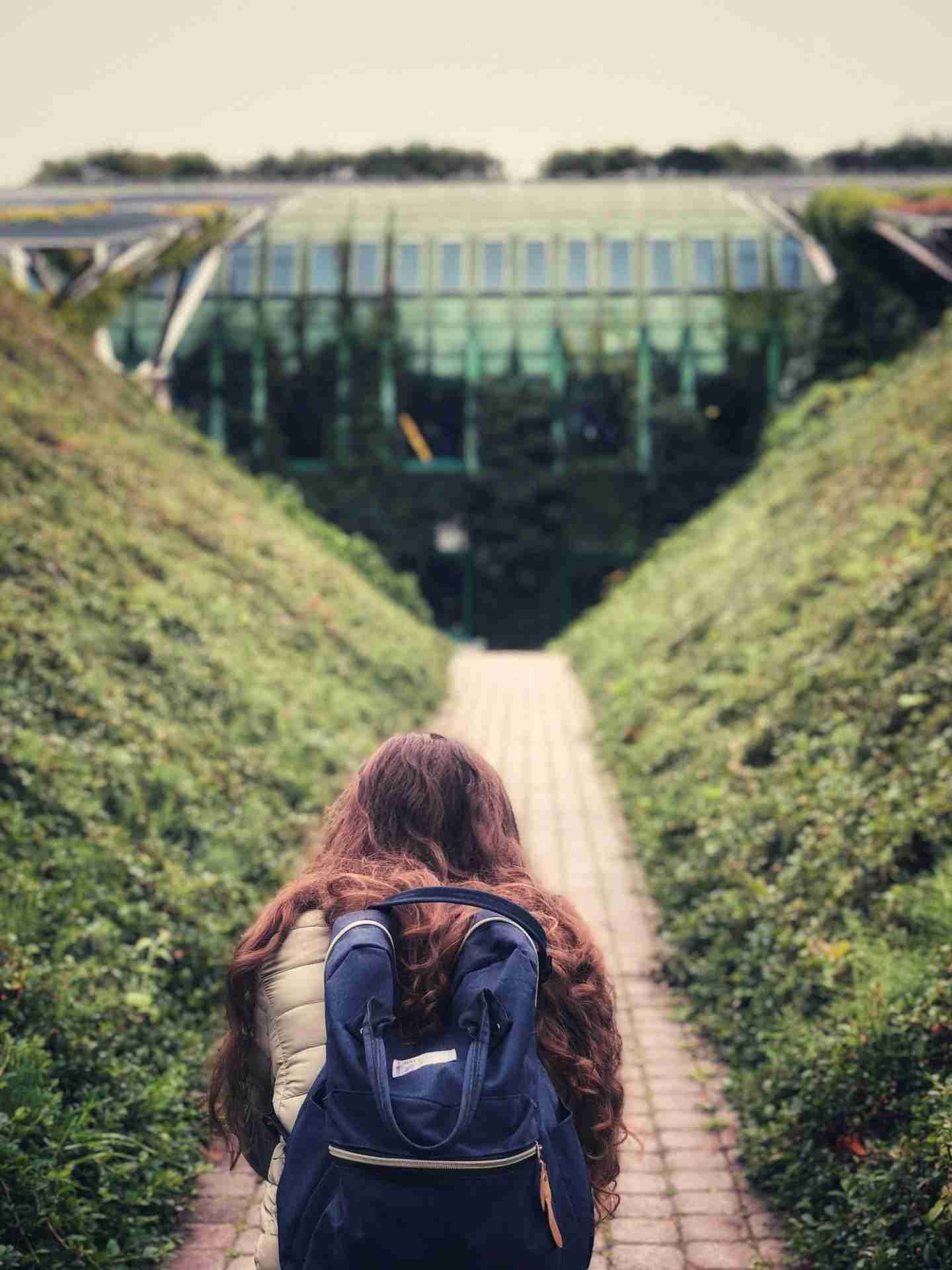
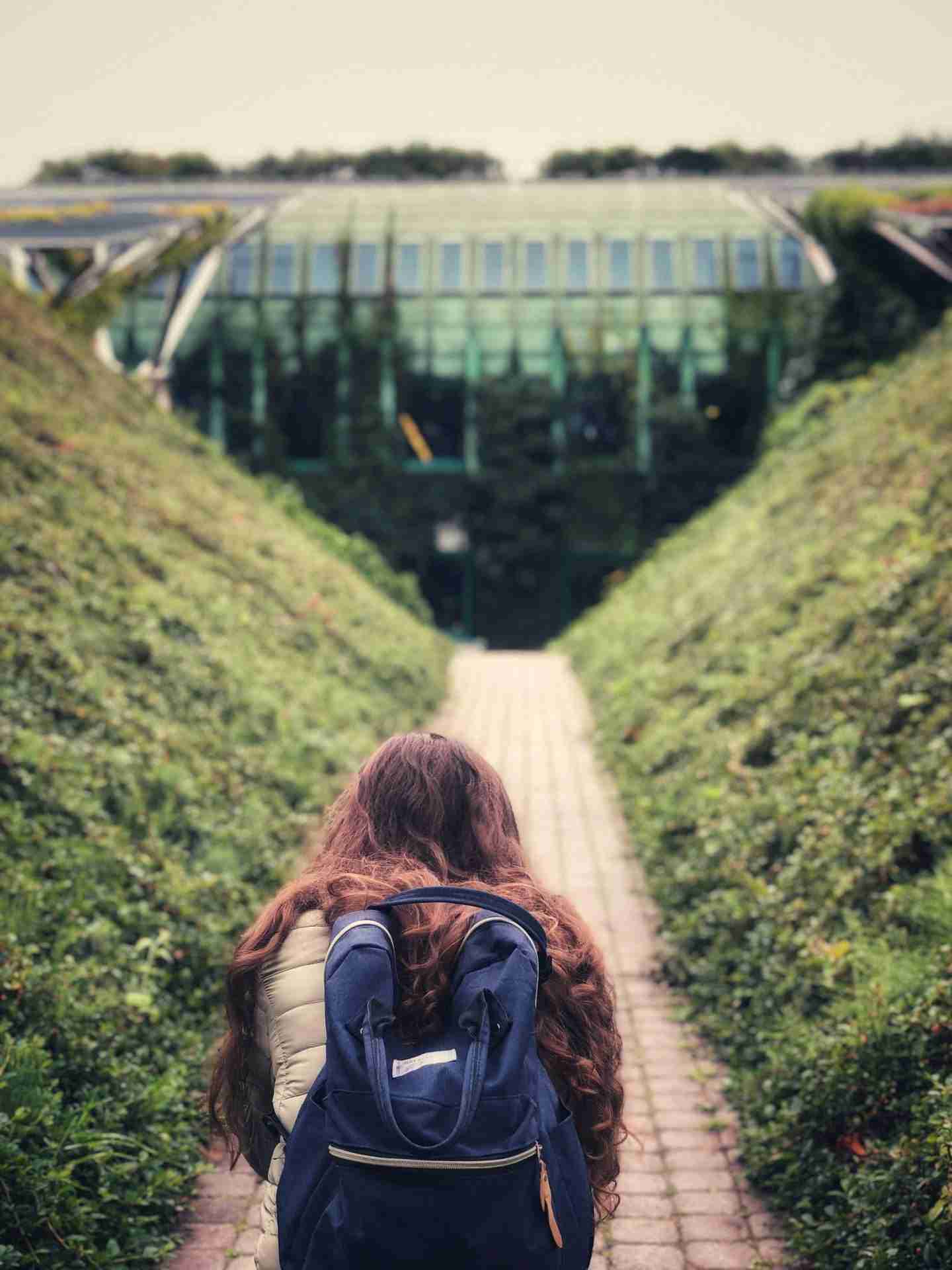
The Warsaw University Library Garden blends structured urban landscaping with natural textures, all set atop the roof of one of the city's most distinctive modern buildings. Open to the public and layered across two levels, the garden offers a mix of steel walkways, vine covered trellises, geometric glass domes, and open lawn areas that rise above the Vistula River. It's a unique location for architectural and nature photography, with clean lines, modern design, and changing light throughout the day. As one of the largest rooftop gardens in Europe, it allows photographers to explore both broad panoramas of Warsaw's skyline and tightly composed environmental details without leaving the city center.
Best Photography Opportunities
• Skyline views framed by rooftop architecture
From the upper terrace, the garden opens toward the east with clear views of the Vistula River and the skyline beyond. The green rooftop structures act as a foreground, often catching warm light in the early morning or late evening. Glass domes, steel supports, and sloping pathways create layered lines that lead naturally toward the horizon. These compositions benefit from a wide angle lens to take in the full breadth of the view while maintaining depth across the frame. Golden hour provides the most dynamic light, casting long shadows and warming the colors of the landscape and city beyond.
• Geometric compositions among walkways and domes
The garden's steel bridges, arched frames, and glass ceiling structures are ideal for architectural studies with strong compositional lines. Working with a standard or wide lens from slightly elevated angles allows for symmetry and rhythm within the frame. These subjects lend themselves well to overcast conditions, where soft lighting keeps contrast low and allows details in both the highlights and shadows. Clean framing is key, so look for intersections of light, shadow, and structure that create visual balance without overwhelming the scene.
• Botanical textures and seasonal change
The lower garden level features winding paths lined with plants that shift in character throughout the year. From early spring blooms to autumn's fading vines, this part of the rooftop offers chances for natural texture studies and close up detail shots. Morning light is best for photographing the plant life with minimal shadow interruption. A macro or short telephoto lens works well here, allowing you to isolate leaves, flowers, or water droplets on surfaces. These images provide contrast to the more angular, structured forms above, giving a well-rounded series from a single location.
• Reflections and layering through glass elements
Several of the greenhouse style roof structures reflect the garden environment and sky, creating opportunities for layered and abstract compositions. Shooting through or across these surfaces introduces subtle distortion, allowing for more interpretive imagery. These frames work best with side lighting, which brings contrast and shape to the reflected elements. Try composing with a standard lens and adjusting your position slightly to shift balance between transparency and reflection. This is also a good setting for experimenting with handheld exposures and changing depth of field.
• Evening transitions with light trails and city glow
As evening sets in, the upper terrace becomes a strong location for capturing long exposures of the city skyline. The garden closes later in the day during warmer months, allowing enough time for blue hour work with the lights of Warsaw starting to emerge. A tripod is essential for this type of shot, and a longer focal length helps compress the city into a cohesive background. The contrast between the garden's structured foreground and the illuminated skyline gives the frame depth and a sense of transition. This works especially well on days with a clear forecast and a slow sunset.
Best Time to Visit
The garden is best visited during spring, summer, and early autumn, when plants are thriving and access hours are longer. Light changes quickly throughout the day due to the varying angles of the walkways and trellises, so returning at different times can yield new results even from the same vantage point. Morning hours are typically the quietest and offer soft, usable light across both the upper and lower garden levels.
In summer, golden hour occurs late in the evening and casts warm light across the green roofs and into the eastern-facing skyline. Autumn brings shifting colors in the vegetation and long, angled light that highlights architectural surfaces. Overcast days are excellent for working with texture and structure without the distraction of harsh shadows. Winter access may be limited, and the garden loses much of its plant character during the colder months, though the geometric shapes remain photographable year-round.
How to Get There
The Warsaw University Library is located on Dobra Street in the Powiśle district, just south of the city center and close to the Vistula River. The rooftop garden entrance is accessible from street level via clearly marked signs and elevators within the library building. Public transit is reliable and convenient, with the nearest metro station being Centrum Nauki Kopernik, just a short walk away. Multiple bus and tram lines also serve the area.
No admission fee is required to access the garden, and hours vary by season, with extended access during warmer months. A paved pathway winds up from the lower garden to the upper levels, and all walkways are accessible on foot. Tripods are allowed and commonly used in the garden, especially during quieter periods. Photographers should keep in mind that the upper terraces can become busy in the evenings and on weekends, so early sessions are preferable for uninterrupted work.
Recommended Photography Gear
A wide angle lens is essential for capturing full rooftop scenes and including the skyline in the background. A standard zoom or short telephoto is ideal for isolating structures, frames, and pathways, especially when working with the geometric elements in the upper garden. A macro lens or extension tubes are helpful for exploring botanical details, especially when shooting plants or seasonal textures on the lower level.
A tripod is recommended for long exposure work, especially at blue hour or in low light. A polarizing filter can help manage reflections in the glass surfaces, though its effect is subtle depending on the angle. A neutral density filter can extend exposures to create smoother transitions in light and shadow when the sun is still above the horizon. The entire garden is paved or covered in firm walkway material, so a rolling camera bag or full kit is easy to manage on site. A lens cloth is useful for wiping away moisture if working early in the morning.
Because of the open layout and strong light variation, bringing a lens hood is also recommended to avoid glare when working directly into the sun. There is minimal shade in the upper section, so sun protection for yourself is also worth considering during longer daytime sessions.
Nearby Photography Locations
• Copernicus Science Centre and riverfront promenade
Just below the library, the modern forms of the Copernicus Centre offer clean lines and wide space along the water's edge. The promenade provides clear views across the Vistula with balanced light and room for long exposures or environmental portraits.
The stadium sits across the Vistula and can be framed from the upper library garden or the nearby boulevards. Best photographed during sunset or evening events, when it is often lit in bold colors and reflected in the river below.
North of the library, this formal garden space includes fountains, tree-lined walkways, and historical structures. It's ideal for structured compositions and quiet morning sessions with good light control.
A short walk through the city brings you to Warsaw's most photographed historic areas, filled with color, texture, and irregular urban geometry. These are busiest in the afternoon but still offer strong architectural detail and atmospheric side streets.
The bridge just south of the library offers dynamic views up and down the Vistula, and strong leading lines for symmetrical compositions. It's especially productive during sunrise when light comes from the east across the water and into the city.
The Warsaw University Library Garden isn't just a rooftop—it's an elevated landscape that merges architecture and nature, all with a view. With thoughtful design and constant change in light and season, it's a location that suits both slow, meditative photography and quick, spontaneous composition.
Comments
Loading comments…