
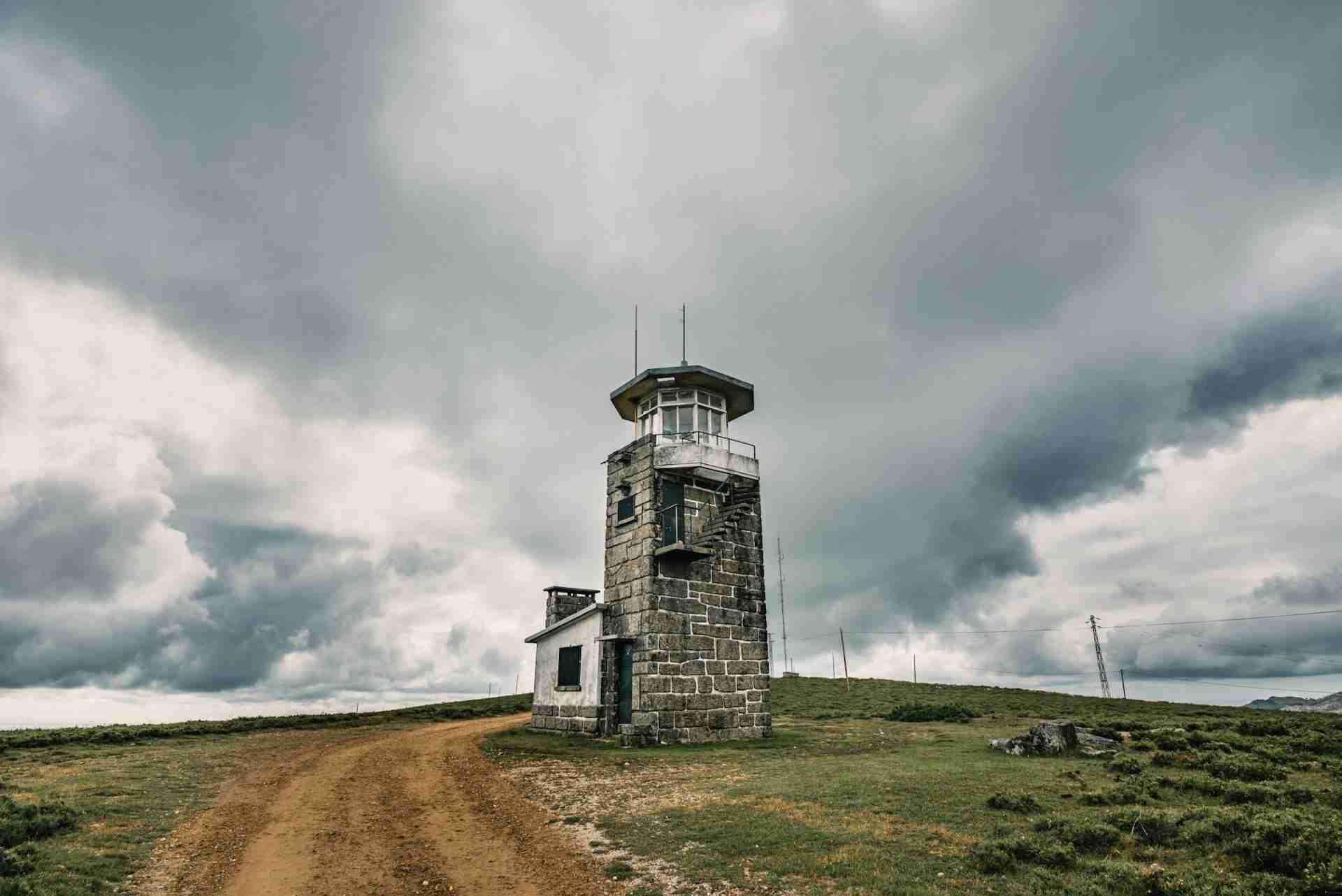
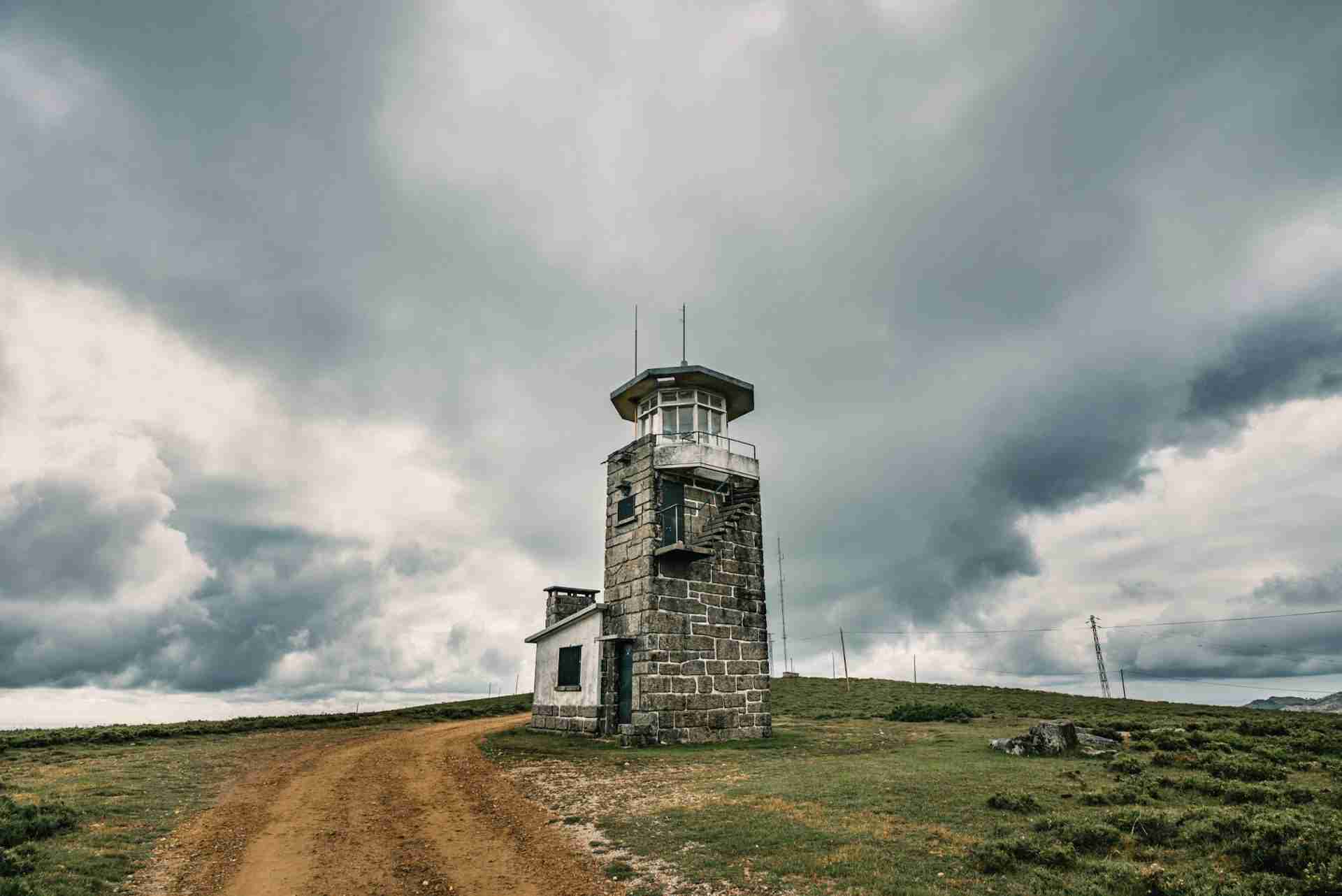
At the top of Serra da Freita in northern Portugal, an old meteorological station rises above the plateau in quiet isolation. The tower is built from large stone blocks and topped with an octagonal glass room, once used for observation. Though no longer in use, the building remains intact and visible from a distance, set against open sky and wide hills. Wind turbines dot the surrounding ridge lines, their slow rotation adding motion to an otherwise still setting. This is not a dramatic or complicated location, but it gives photographers room to work with shape, space, and changing light without distraction.
Best Photography Opportunities
• Framing the Tower Against the Sky
The most direct and reliable composition is to shoot the stone tower against the sky. Whether under cloud or in clear conditions, the tower's lines and small windows give structure and contrast to the scene. Side light helps pull out the depth of the stonework, while overcast light smooths exposure and softens the shadows. Framing low allows the shape of the tower to dominate, especially with foreground texture like dirt tracks or grass pulled into the base of the frame. A standard zoom covers most of what you need for this setup.
• Detail Work in Stone and Metal
The building is full of small features that reward slower, closer work. The stairs wrapping the tower, metal railings, antennas, and the seams between stone blocks all make strong subjects in soft or flat light. These are best captured with a tighter lens, where you can isolate one or two elements against sky or wall. Because the site is quiet and access is open, you can take time to experiment with framing from different angles. These shots work well in black and white or with subdued color profiles.
• Wide Frames with Turbines
The turbines spread across the surrounding hills give the area its visual rhythm. These can be included in wider compositions of the station or shot as separate subjects entirely. From certain angles, you can use a long lens to layer the tower and turbines in one frame, pulling in sky and ridgeline behind them. In high wind, blade movement can create blur if your shutter speed is too slow, but that can be turned into an advantage with long exposures. The turbines also help establish scale, making the landscape feel larger and more active.
• Low Cloud and Shifting Light Across the Plateau
Serra da Freita is known for fast changing conditions, and the most compelling images often come when light breaks through low cloud or fog rolls through the area. These moments reduce the landscape to simple layers and shapes. When the station emerges from partial mist or sits under a dramatic sky, it takes on more presence without needing compositional complexity. Use a polarizer carefully here to manage contrast without over darkening the cloud. These are strong frames to make with a minimal approach.
• Twilight and Blue Hour Geometry
There is no lighting on the building itself, but if you stay through twilight, the remaining ambient light holds enough exposure for clean architectural shots. The stone takes on cooler tones, and the windows reflect whatever color is left in the sky. Shooting just before full darkness allows for longer exposures with balanced tones and less contrast. Bring a tripod for these frames and keep an eye on cloud movement to add soft motion to the background.
Best Time to Visit
Serra da Freita works best in early morning or late afternoon when the sun runs low across the plateau and gives shape to the tower and turbines. On clear days, you'll get hard shadows and clean separation between light and dark areas. In spring and autumn, the light tends to stay softer for longer, and morning fog is more common. Winter brings fast moving weather, with low cloud and cold wind shaping how much time you can comfortably spend on location. Midday is the least productive period unless you are shooting detail or working under overcast conditions. The site is fully exposed, so wind and sudden weather shifts are common.
How to Get There
The meteorological station is located on the upper plateau of Serra da Freita, within the Arouca Geopark in northern Portugal. It is accessible by paved road, and no serious hike is required. The final stretch may involve a short walk on uneven ground depending on where you park, but the structure is visible from the road and easy to reach on foot. The area is open, unfenced, and free to access year round. Though remote, there is mobile signal through most of the area, and signage in the park helps with orientation.
Recommended Photography Gear
A standard zoom lens will cover almost all compositions here, from wide frames of the station to tighter work with details and structure. A short telephoto can help isolate turbines or compress ridgelines in the distance. A tripod is strongly recommended for twilight or long exposure work, and should be stable enough to handle wind. A polarizing filter is useful in mixed light but should be used cautiously to avoid uneven gradients in the sky. Bring a neutral density filter if you plan to work with turbine motion or cloud blur. Weather can shift quickly, so pack a lens cloth, a rain cover, and gloves in cooler seasons.
Nearby Photography Locations
A dramatic waterfall just a short drive away that works well in spring or after rainfall. The viewpoint sits high, giving a clean angle on the fall and the cliffs around it. It's best shot in soft light or during overcast conditions to control highlights in the water.
This unique rock formation offers rare textures where embedded stones separate from their host material over time. It's a strong subject for macro or pattern based work and can be shot in almost any light.
An open viewpoint with ridgeline access and strong horizontal compositions. It offers clean views to the west and works well at sunset, especially when clouds catch color above the slope.
A nearby village made of traditional stone buildings and narrow lanes. It's a good contrast to the open landscape above and provides opportunities for detail shots, architecture, and color work during golden hour.
A longer hiking trail with shifting terrain and exposure. It's best for those interested in pairing their landscape work with trail photography or broader documentary style coverage of the region.
The old station in Serra da Freita is a simple place to work, with no crowds, no restrictions, and plenty of room to move. It doesn't rely on dramatic features or famous landmarks, which makes it a good location for photographers who prefer to build a composition slowly. When the light is right or the weather shifts, there's more than enough to hold your attention. It's a spot that rewards patience and gives you the freedom to shoot without pressure.
Comments
Loading comments…