
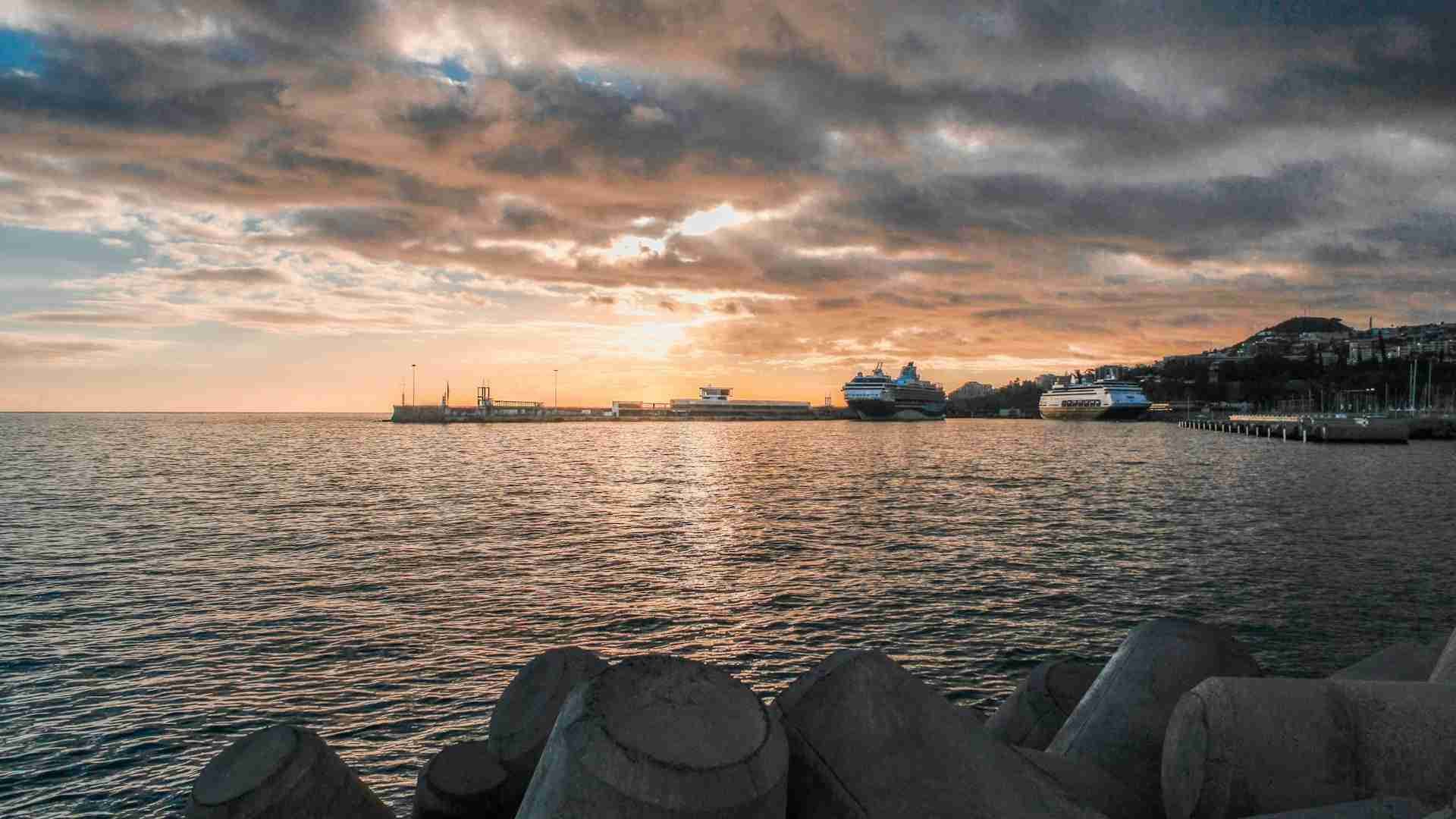
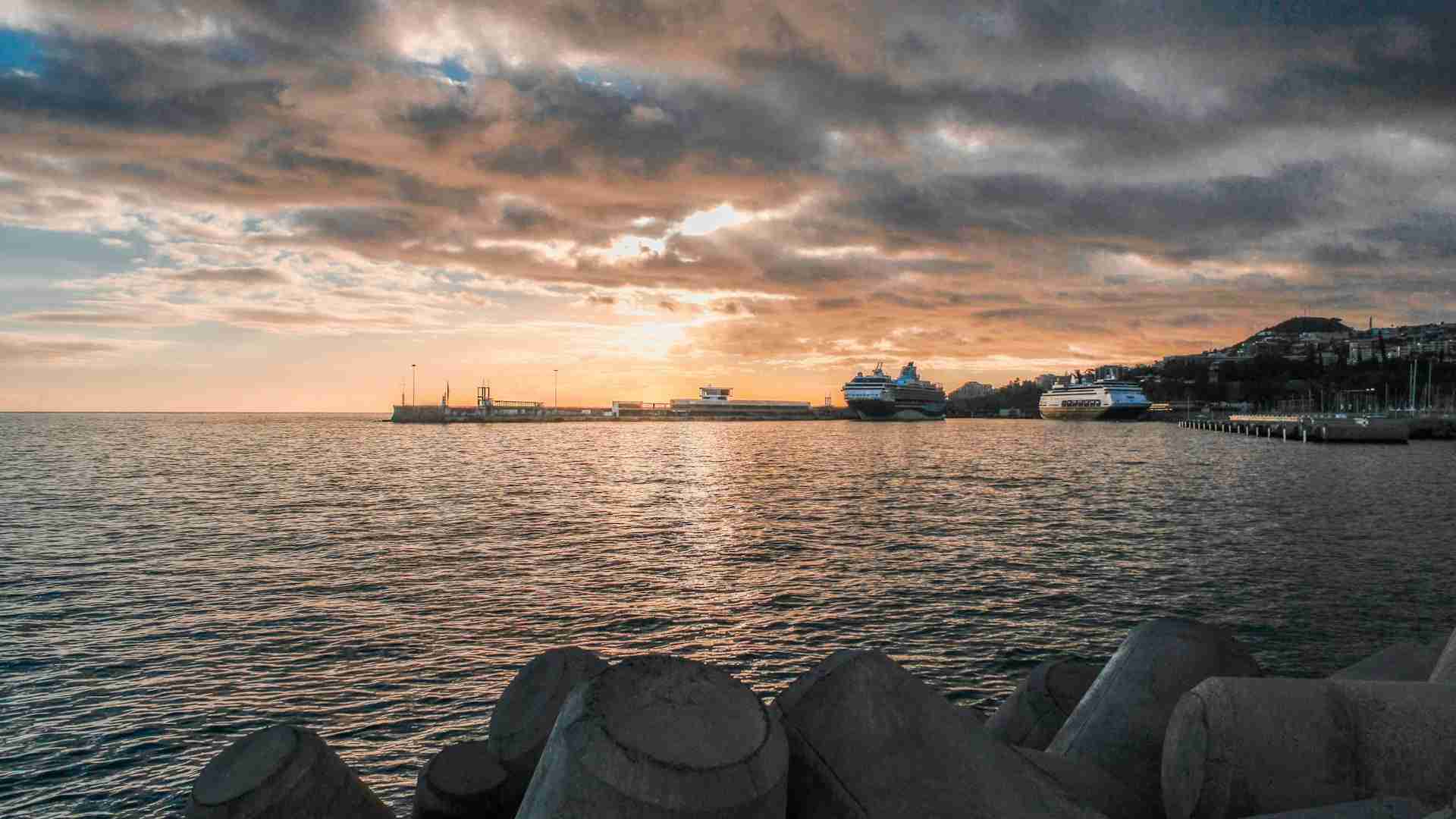
Cais do Funchal, along with the adjacent Marina do Funchal, sits at the edge of Madeira's capital where the deep Atlantic meets centuries of maritime history. The waterfront is framed by dramatic coastal cliffs, a mountain backdrop, and the modern sweep of sailboats and cruise ships anchored along the curved harbor wall. This is not a wild or remote landscape, but a vibrant convergence of natural light, ocean movement, and urban rhythm. For photographers, it offers a range of subjects from dynamic seascapes and long exposures of moored vessels to intimate street scenes, reflections in the marina, and architectural lines blending tradition with tourism. With Madeira's famously changeable weather and golden coastal light, Cais do Funchal rewards patience, repeat visits, and a fluid approach to composition.
Best Photography Opportunities
• Golden Hour Along the Marina Wall
: The curve of the breakwater provides a clean line that leads the eye toward the sea, especially when the sun begins to dip behind the cliffs to the west. At golden hour, the warm light wraps around the docked boats, casting long shadows and highlighting rigging and hulls in sharp contrast. With calm water, the reflections of masts ripple slightly, offering subtle movement to mirror-like compositions. Wide-angle lenses work well here to emphasize the curvature of the harbor and the changing cloud formations over the open ocean. This is also a prime time for handheld shooting at low ISOs with fast lenses, capturing the atmosphere of evening life along the promenade.
• Reflections and Details Inside the Marina
: Within the marina basin, the water remains relatively still, allowing for precise compositions using the reflections of sailboats, masts, and the surrounding buildings. Telephoto lenses are ideal here for isolating graphic patterns, whether in the crisscrossing ropes, hull textures, or abstract distortions of light on water. Shooting during blue hour enhances the contrast between the cool tones of the water and the artificial lights beginning to glow along the pier. Early morning provides similar calm but with softer, pinker skies and fewer pedestrians, making it easier to set up tripod shots without interference.
• Cais do Funchal Promenade and Waterfront Life
: The promenade along the pier is active but visually clean, offering a range of human-focused compositions. Street musicians, early joggers, anglers, and tourists all pass through this space, framed by open views of the sea or backdropped by the hills behind the city. A mid-range lens is effective for documentary-style shooting here, keeping context in the frame without overwhelming the subject. In softer light, you can use silhouettes of figures against the sea or cruise liners docked just offshore. During cruise season, there's a constant shift in ship traffic that offers fresh angles each day, especially when photographing from the lighthouse end of the pier.
• Long Exposures of the Breakwater and Cruise Terminal
: From the far end of Cais do Funchal, you can capture the movement of waves breaking against the outer wall or trace the light trails of incoming and outgoing vessels during longer exposures. Using ND filters, you can smooth the sea and capture dramatic skies, particularly during transitional weather, which is common even in fair seasons. The mix of old stonework, modern moorings, and industrial elements like cranes and ship rigging creates compositions that contrast human engineering with open sea and sky. Sunset and twilight are especially productive for this style of shooting.
• Elevated Views from the Rooftop Bar or Nearby Hotels
: Several nearby buildings offer rooftop access, either from public terraces or hotel bars, providing a higher vantage point over the marina and Cais do Funchal. This angle flattens the water and makes the geometric layout of the marina stand out, especially in early or late light when shadows define the walkways and boat slips. This is also the best place to shoot the larger topography of the city rising inland, with layers of terraced buildings climbing toward the peaks. Using a tripod and remote shutter release will allow for longer, steadier exposures, especially once city lights come on and contrast with the fading natural light.
Best Time to Visit
Funchal's coastal light is strongest in the early morning and late afternoon, but its shifting skies mean the best photographic conditions can arrive unexpectedly. Morning shoots offer the calmest conditions inside the marina, with cleaner reflections and fewer people moving through the frame. From roughly November to March, the low winter sun produces long sidelight even at midday, softening the white buildings and casting rich shadows across the promenade. In summer, sunrise comes early and brings a clearer, crisper light, while sunset shifts westward and intensifies the golden hues on the water.
Seasonally, winter can bring dramatic skies and heavier surf beyond the breakwater, offering more dynamic compositions along the edge of the harbor wall. Summer is busier with foot traffic and cruise activity but offers longer shooting windows and more color in the skies during both golden and blue hour. Spring and autumn balance both weather and crowd levels, giving more flexibility in planning. Regardless of the season, cloud cover and quick shifts in light are common in Madeira, so having time to wait or return to the same spot later in the day often leads to better results. Shooting during twilight or at night is also productive, especially with the marina lights, lighthouse beacon, and cruise ships providing ambient illumination.
How to Get There
Cais do Funchal and the Marina are located directly in the city center of Funchal and are easy to reach on foot from almost anywhere within the old town or hotel zones. If arriving by car, paid parking is available at the Marina Shopping Center or in several nearby underground lots, all within walking distance of the waterfront. For those staying farther out, Funchal's local bus network is efficient and stops directly along Avenida do Mar, just steps from the marina entrance. Cruise passengers disembarking at the port will find themselves within a few hundred meters of the Cais, and pedestrian access is clear and well-marked. There are no fees to access the pier or marina walkway areas, and tripods are permitted throughout, though care should be taken not to block footpaths during busy periods. Rooftop locations typically require access through cafes, hotels, or restaurants, and some may require a purchase to remain on the premises.
Recommended Photography Gear
Photographing Cais do Funchal and the Marina benefits from a compact yet versatile gear setup, especially if you plan to work during multiple lighting conditions or move between street-level and rooftop perspectives. A full-frame mirrorless or DSLR body with good dynamic range will allow you to capture the subtle interplay of highlights and shadows that are common in marina environments. A wide-angle lens in the 16 to 35 millimeter range is essential for including architectural lines, sweeping reflections, and the expansive layout of the harbor. This lens is particularly valuable at sunrise or sunset when the sky dominates the frame and light wraps around the curvature of the waterfront.
A mid-range zoom such as a 24 to 70 millimeter lens offers the flexibility needed for shooting from both street level and elevated vantage points, balancing foreground context with urban detail. For more isolated compositions—such as close-ups of rigging, architectural textures, or distant boats on the water—a 70 to 200 millimeter telephoto lens will allow you to compress layers and frame subjects discreetly. This lens also works well for abstract or minimalist shooting, especially during calm, overcast mornings.
A lightweight but sturdy travel tripod is important for long exposures along the pier or from rooftops. Since you may be shooting near water and stone surfaces, a tripod with rubber feet or stabilizing hooks can provide security without causing damage. ND filters are highly recommended, especially six-stop and ten-stop varieties for smoothing water and capturing the flow of clouds during longer exposures. A polarizer is useful for managing reflections on the water's surface and enhancing color saturation during midday light. A remote shutter release or intervalometer is helpful for time-lapse sequences, especially at night when cruise ships dock and lights animate the marina.
Carry a protective camera wrap or dry bag, as unexpected spray or rain showers can occur even during calm weather. Microfiber cloths are essential for cleaning salt residue or moisture off your lens throughout the day. If you plan to shoot from rooftops or terraces, a compact gear profile is ideal so you can move comfortably without drawing attention or disrupting other guests. Footwear should provide traction for walking on wet stone or smooth tiles, particularly during early morning sessions when dew or ocean mist may be present.
Nearby Photography Locations
• Zona Velha (Old Town Funchal)
: Just east of the marina, the narrow streets of the old town offer colorful doors, painted shutters, and intimate alleyways that are ideal for documentary-style shooting. Early morning brings soft light filtering between buildings, while evenings are vibrant with lantern-lit restaurants and local nightlife. This area pairs well with prime lenses for more immersive composition.
• CR7 Promenade and Praia Formosa Trail
: Head west from the marina along the coastal promenade past the CR7 Museum and continue toward Praia Formosa. This walk provides excellent perspectives of the shoreline and layered cliffs, especially during sunset. Long lenses allow for distant shots of swimmers, surfers, and boats, while wide-angle options frame the dynamic coastline against Funchal's rising terrain.
: This 17th-century yellow fort overlooks the water on the eastern edge of Funchal and serves as a powerful subject or compositional anchor from various points along the promenade. Its historic character contrasts with the surrounding modernity and is especially strong in backlight during late afternoon.
: Elevated just above the cable car station, this small park offers views over the marina and Cais do Funchal, particularly in the early evening when light begins to reflect off the harbor. It is a quiet place for setting up longer shots with less foot traffic.
: A short drive or taxi ride uphill, this viewpoint gives a commanding overlook of the entire city, coastline, and marina. It is particularly suited to sunset panoramas or blue hour cityscapes, and it provides context for the geography that defines Funchal's unique relationship with the Atlantic.
Whether you are working along the waterline or shooting from above, Cais do Funchal and its marina offer a layered environment full of contrast, movement, and light. With the Atlantic always shifting in color and energy, and the built environment evolving throughout the day, this part of Madeira invites you to slow down, observe carefully, and build compositions that capture both the rhythm and detail of coastal life.
Comments
Loading comments…