
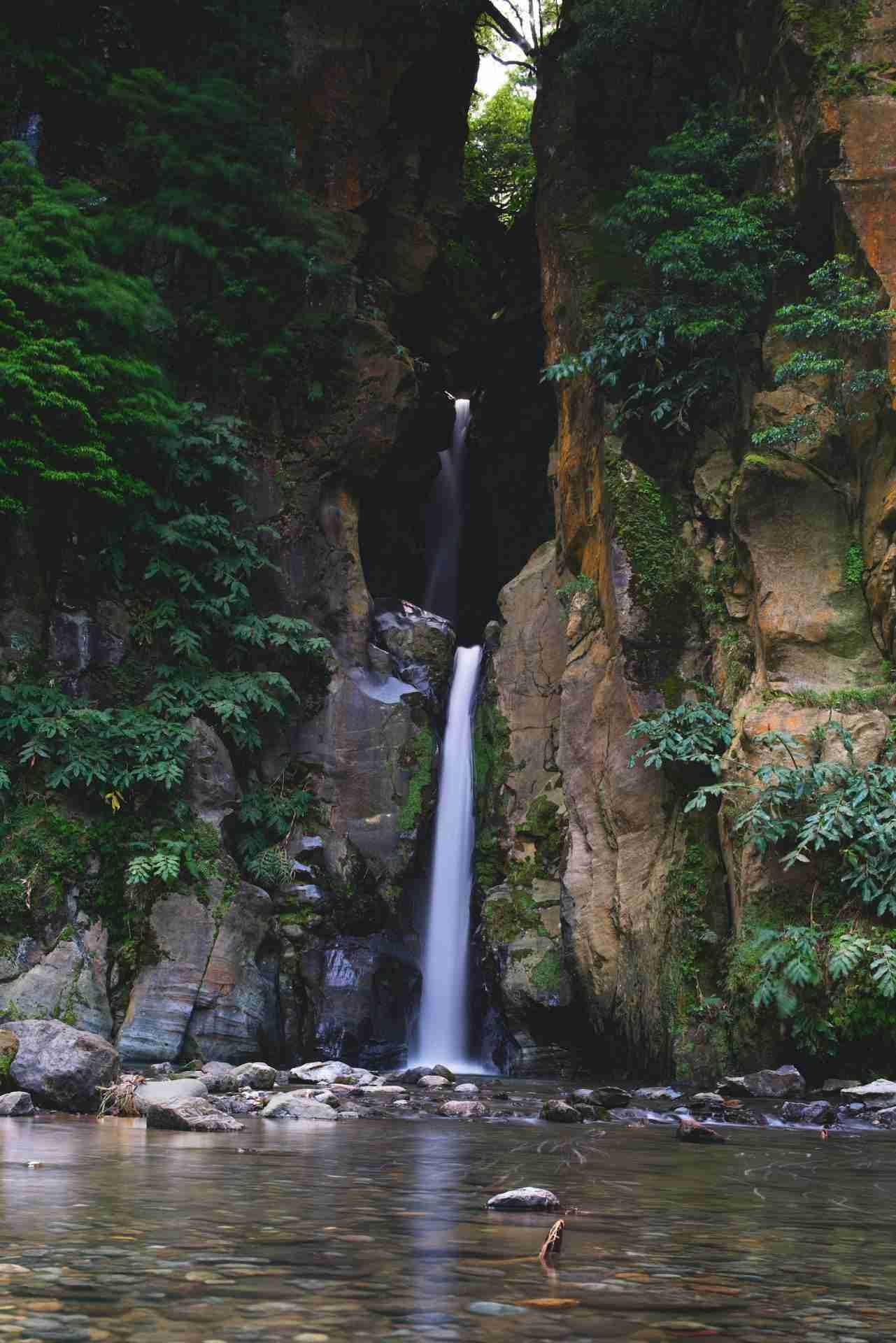
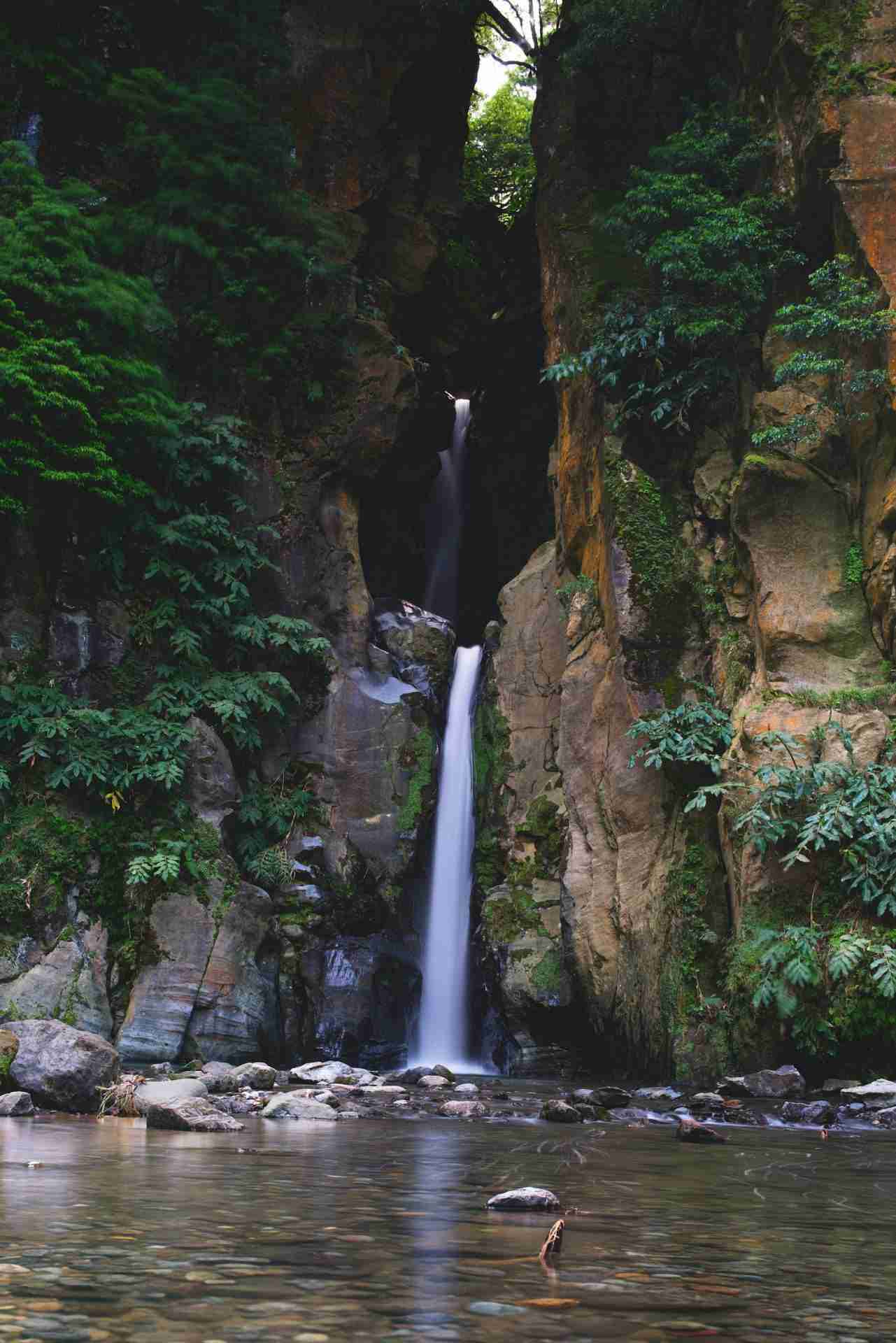
Tucked deep into the hills near Ribeira Grande on São Miguel Island in the Azores, Cascata do Salto do Cabrito is a compact waterfall that feels more like a secret found than a destination reached. Surrounded by dense vegetation, soaring rock, and remnants of an old hydroelectric system, the falls drop into a narrow canyon of stone and fern. Salto do Cabrito gives photographers a layered environment rich in texture, motion, and contrast. The sound of rushing water echoes off the stone walls, and the path to the falls itself offers compelling visual moments before you even reach the main cascade. For those willing to navigate the terrain and wait for the right light, this spot delivers images that balance wild energy with quiet structure.
Best Photography Opportunities
• Main Waterfall from the Pool Edge
The primary view of the waterfall is from the base, where water plunges in a clean vertical line into a shallow, reflective pool. Shooting wide from this position lets you capture the entire drop, the color gradient in the pool, and the textured cliffs rising on either side. Morning is best, when light reaches the canyon floor at an angle and highlights the mist. Bring a tripod and use a slow shutter speed to blur the water and create contrast with the static rock. Including surrounding ferns or overhanging branches in the frame helps frame the fall naturally and adds a sense of enclosure.
• Cliffside Walkway and Industrial Details
To the right of the falls, a metal walkway and staircase lead up the cliff, remnants of the old hydroelectric plant that still operates nearby. These structures create compelling lines for composition, especially in side or backlight when shadows stretch across the stone. Use a mid range focal length to isolate the walkway or include it in a wide shot for scale. The contrast between metal and moss-covered rock offers a strong textural counterpoint to the flowing water, giving a slightly surreal balance between nature and human made elements.
• Upper Viewpoint with Flowing Stream
From above the falls, a hiking trail follows the stream that feeds Salto do Cabrito. Shooting upstream or downstream from the higher elevation allows you to create layered compositions with the water weaving through volcanic terrain. Small cascades and boulder formations offer opportunities for tighter frames or long exposure studies. Look for areas where light hits the surface of the water while the surrounding forest remains in shade. These moments create depth and mood without relying on dramatic skies or wide views.
• Abstracts in Stone and Water Texture
The walls of the canyon around Salto do Cabrito are lined with jagged volcanic rock and coated with moss, vines, and layered mineral deposits. These surfaces photograph beautifully in soft light or even during light rain, when colors become saturated and the textures stand out. Focus in on small scenes where water threads through the stone, or where rust from old infrastructure creates color shifts in the rock. These abstract studies work especially well with a polarizer to cut glare and isolate surface detail.
• Reflections and Mist at the Water's Edge
At certain times, especially after rain or during still mornings, the base of the waterfall produces fine mist that hovers over the surface of the pool. This mist, combined with reflections of the cliffs and foliage, can create ethereal compositions that feel almost out of time. Use a low shooting position near the waterline and a wide aperture to soften background elements and give a painterly feel to the scene. A slower shutter speed can emphasize movement in the mist, adding atmosphere to an otherwise static composition.
Best Time to Visit
The best time to photograph Cascata do Salto do Cabrito is in the morning, before the sun climbs too high and begins to flatten the scene with harsh light. Early light filters through the trees and highlights mist and water flow, creating depth and separation in the canyon. The Azores receive regular rainfall year round, which keeps the vegetation lush and the waterfall flowing steadily, but it also means you'll often be working with overcast skies or intermittent rain. These conditions are actually ideal for waterfall photography, reducing contrast and eliminating distracting highlights. Spring and autumn offer the most consistent light and the fewest visitors. In summer, the trail can be busier, and midday sun tends to wash out the contrast on the canyon walls. Even during light rain, the scene becomes more vibrant, so don't rule out wet conditions.
How to Get There
Cascata do Salto do Cabrito is located near the town of Ribeira Grande on the north coast of São Miguel, about a 25-minute drive from Ponta Delgada. From Ribeira Grande, follow signs for Caldeiras and take the road toward the Termas das Caldeiras hot springs. The route is paved but narrows significantly as it climbs into the hills. There is a small parking area near the hydroelectric station, where the trailhead begins. From there, it's about a 10 to 15-minute hike down a dirt and stone path to the base of the falls. The trail can be muddy and slippery in places, particularly after rain, so sturdy shoes are recommended. There is no entrance fee, and photography is allowed freely throughout the area. Tripod use is possible at the base of the falls, but space is limited, especially if visitors are present. Plan to arrive early or later in the day to avoid crowding and secure the best angles.
Recommended Photography Gear
A wide angle lens is essential for capturing the full height of the waterfall from close range, as well as for making the most of tight canyon spaces. A mid range zoom is useful for framing industrial elements or tighter scenes along the stream and walkway. Bring a sturdy tripod for long exposures and precise composition in low light, especially in the morning when shutter speeds will be slower. A circular polarizer is highly recommended for managing reflections on wet rock and enhancing the color of the foliage and water. Waterproof covers or weather sealed gear are helpful in case of mist, rain, or spray from the waterfall. A lens cloth is necessary to keep the front element clear when working close to the water. If you plan to shoot while hiking, a light, compact setup will make the trail easier to manage.
Nearby Photography Locations
Just a few minutes uphill from Salto do Cabrito, Caldeira Velha is a lush thermal area with waterfalls, hot springs, and tropical vegetation. Though more managed and often busier, it offers great opportunities for photographing steam rising from the forest floor, water cascading over mossy rocks, and the interaction of heat, mist, and color. Early morning is best to avoid crowds.
A high altitude crater lake located about 20 minutes away, Lagoa do Fogo provides sweeping views of turquoise water surrounded by rugged volcanic slopes. The light here changes quickly, and fog often rolls in without warning, making it a dramatic spot for moody, large scale compositions. Bring a telephoto to isolate ridgelines or details on the lake's surface.
The historic center of Ribeira Grande has photogenic cobblestone streets, traditional Azorean architecture, and small bridges crossing over the Ribeira. It's ideal for quiet street photography and architectural detail work, particularly in soft early evening light. Local life here moves slowly, offering chances for candid, context-rich images.
Just north of Ribeira Grande, this long black sand beach is known for its surf and dramatic Atlantic light. It's especially photogenic at sunset, when the sky reflects across the wet sand and waves crash in rhythmic patterns. Use a wide lens for low-angle compositions or a telephoto for compressing water and cliffs.
A sweeping cliffside viewpoint overlooking the northern coastline, this spot is perfect for panoramic images of the Atlantic and the patchwork farmland of São Miguel. Visit during golden hour for warm light across the ocean and sharp detail in the coastal ridges. It pairs well with a drive back from Salto do Cabrito toward the island's eastern edge.
Cascata do Salto do Cabrito is not a grand waterfall in size, but its setting, energy, and detail make it deeply photogenic. It asks photographers to look closely, to work slowly, and to explore not just the falls but the entire environment around them. Between the water, stone, forest, and traces of machinery, it offers a complete visual story waiting to be told one image at a time.
Comments
Loading comments…