
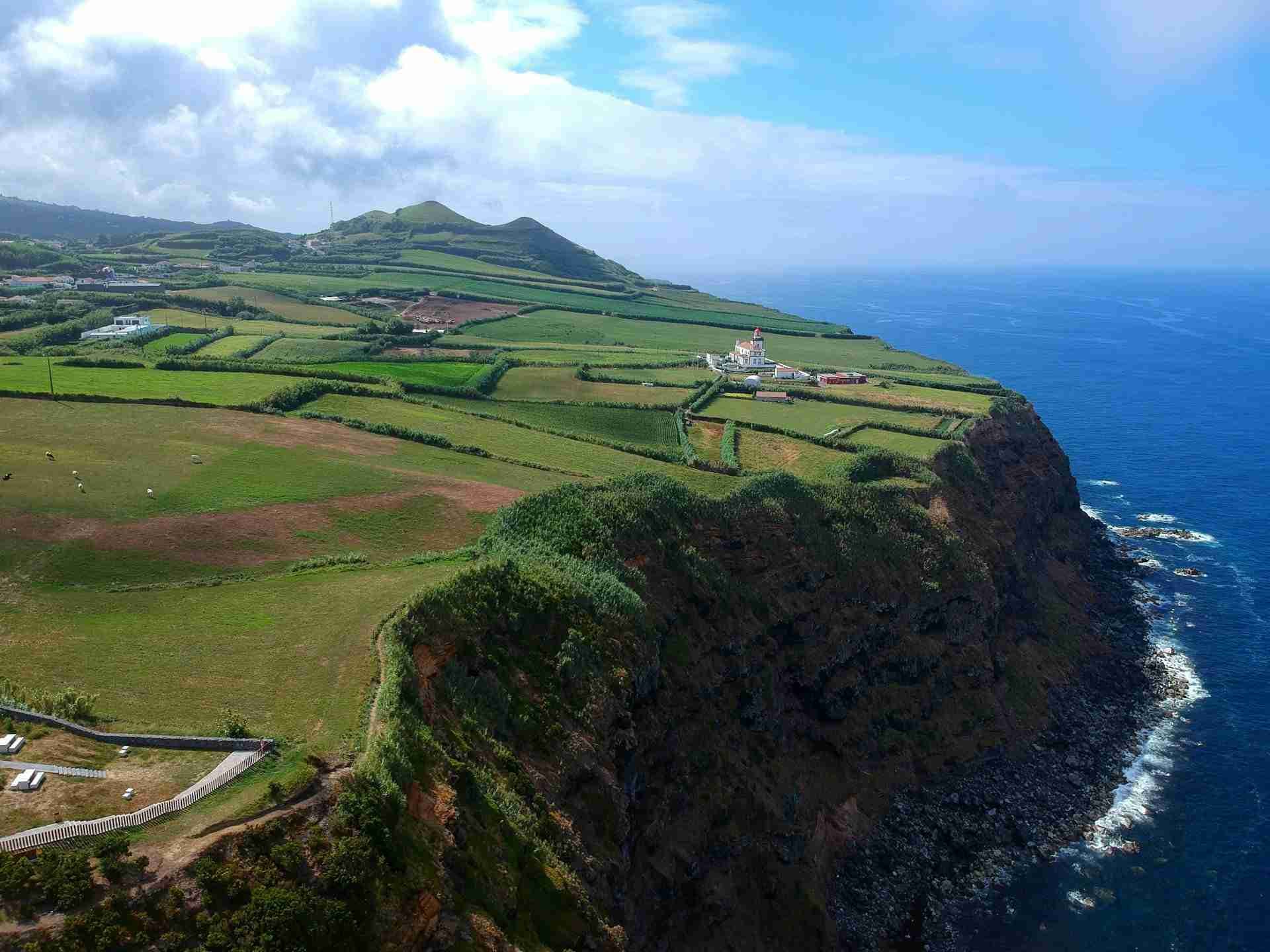
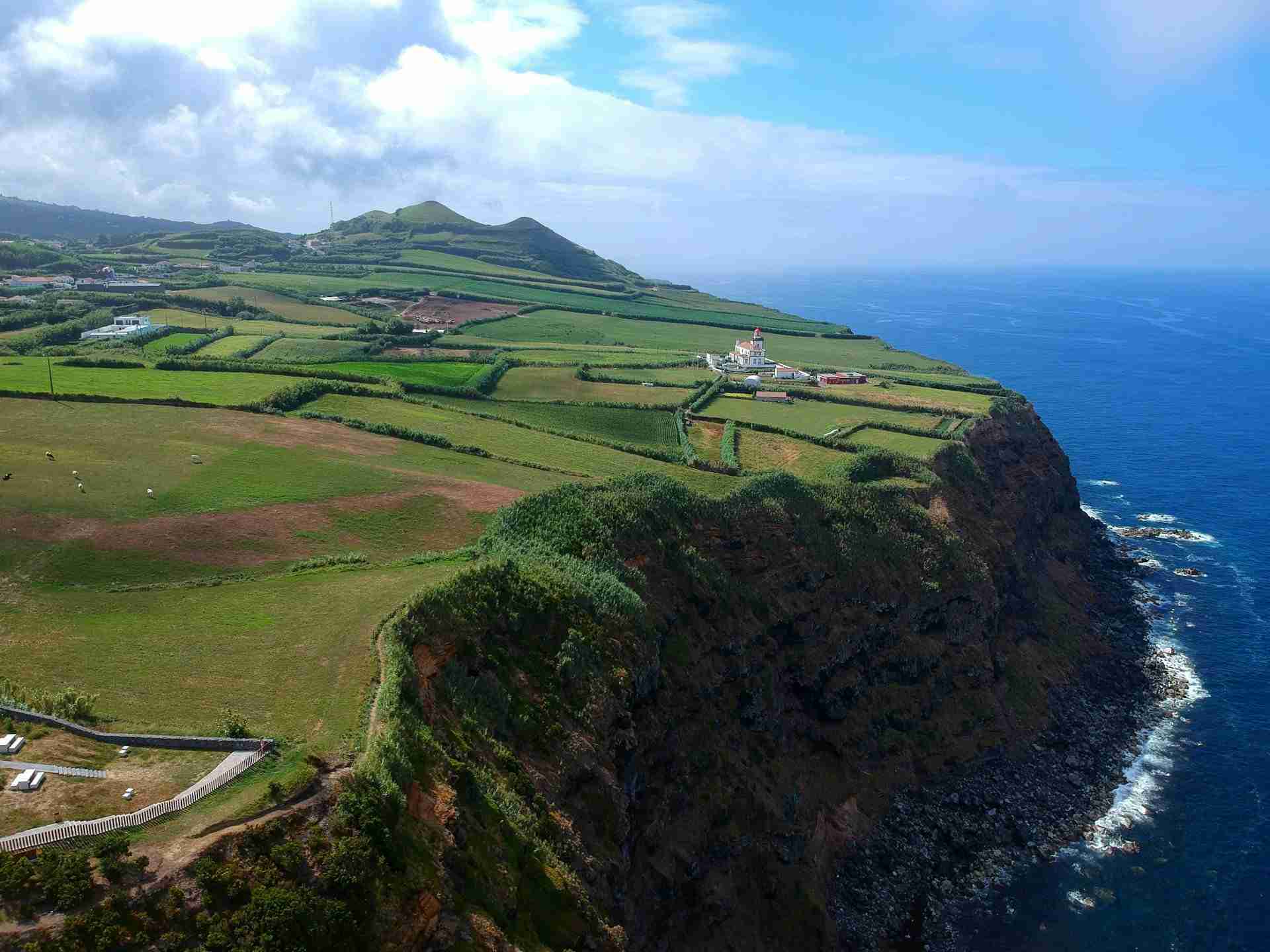
Set dramatically on the western coast of São Miguel Island in the Azores, Farol da Ferraria stands sentinel over a rugged stretch of volcanic shoreline where geothermal waters meet the open Atlantic. Located near the village of Ginetes, this working lighthouse sits atop a black basalt cliff, overlooking natural hot springs that bubble up at low tide. For photographers, the Farol da Ferraria and its surrounding landscape offer an extraordinary fusion of elemental forces: wind-whipped ocean, jagged lava rock, warm coastal light, and the architectural precision of the lighthouse itself. It's a setting where natural drama and man-made structure harmonize beautifully—ideal for long exposures, silhouette work, and minimalist seascapes.
Unlike more urbanized lighthouses, Ferraria feels raw and remote. The land drops away sharply behind the beacon, creating an elevated perspective over the Atlantic that shifts constantly with the light and weather. The whitewashed tower with its red lantern contrasts strikingly with the surrounding dark rock, making it a natural focal point whether viewed from afar or composed tight against a stormy sky.
Best Photography Opportunities
• The Lighthouse and Clifftop Vantage
The lighthouse itself—clean, minimal, and classically Azorean—sits at the top of the cliffs, offering panoramic views in every direction. Wide-angle compositions from just behind the structure allow you to include sweeping coastline, churning sea, and clouds racing overhead. From lower viewpoints along the approach road, the lighthouse can be framed dramatically against the sky, especially with telephoto compression that stacks sea and structure. Golden hour transforms the tower into a beacon of warm light, while post-storm skies lend cinematic contrast.
• Basalt Cliffs and Ocean Texture
The coastline around Ferraria is a study in volcanic texture—jagged black cliffs, sharp ledges, and sea-carved formations that provide endless foreground interest. Shooting from above with a drone (where permitted) or at cliff edge with a wide-angle lens, you can create immersive, high-drama seascapes that emphasize contrast between dark stone and frothy surf. In calmer weather, low-angle side light accentuates ridgelines and textures in the rock. A tripod and ND filter are essential here for capturing long exposures that smooth the water and enhance the moody character of the scene.
• Natural Ocean Pool at Termas da Ferraria
Just below the lighthouse lies the famed thermal bathing area, where geothermal springs heat ocean water in a naturally formed pool. At low tide, this area reveals unique lava formations and calm reflective surfaces that can be incorporated into abstract or minimal compositions. Capture the contrast between soft, still pools and crashing waves beyond the breakwater, or isolate steam rising from the warm water at first light. Including bathers from a distance can add scale and narrative to the image without disturbing the peaceful aesthetic.
• Sunset and Silhouettes
As the sun drops into the Atlantic, the sky above Ferraria often ignites in bands of gold, orange, and purple—ideal conditions for silhouette photography. The lighthouse becomes a bold graphic form, especially when positioned against open sky or framed between basalt outcroppings. Use a small aperture and underexpose slightly to preserve detail in the sky and emphasize the lighthouse's crisp outline. Shooting west across the ocean also allows for classic sunset seascapes, especially when the tide is high and reflecting light through channels in the volcanic rock.
• Storm Fronts and Atmospheric Light
The west-facing coastline is exposed to fast-changing weather, particularly during winter and early spring. Approaching storms roll in over the ocean, bringing dramatic clouds, streaks of sun, and fleeting pockets of intense contrast. This is a perfect opportunity for black-and-white interpretations, moody wide shots, or dynamic time-lapse sequences. Use a graduated ND filter to hold sky exposure and bring out subtle tonal transitions. Timing is critical—storms pass quickly, and the best shots often emerge within a few minutes of shifting conditions.
Best Time to Visit
Farol da Ferraria can be photographed year-round, but the character of the location shifts significantly by season. Spring and autumn offer the best mix of atmospheric light and manageable weather, with softer sun angles and fewer crowds at the thermal pool below. Summer brings more bathers and stronger sun—ideal for vibrant color work and clear coastal views, but less suited to moody or misty conditions unless you shoot early or late in the day.
Sunrise and sunset are the most compelling windows for light. Sunrise offers calm air and pastel tones across the inland hills, while sunset sets the lighthouse aglow and paints the Atlantic in shifting hues. Overcast conditions often work better for capturing detail in the cliffs and pools, especially if you're going for monochrome or low-contrast mood. Blue hour can be particularly effective here, with lighthouse lamps glowing warmly against the darkened sea and sky.
Tidal charts are essential if you're planning to photograph the thermal pool area—low tide reveals more rock textures and calmer reflections, while high tide brings wave action and less accessible footing. Wind can be intense, especially near the cliff edges, so always prioritize stability and safety when composing from elevated locations.
How to Get There
Farol da Ferraria is located near the village of Ginetes, on the western tip of São Miguel Island in the Azores. From Ponta Delgada, it's a 25–30 minute drive via the EN1-1A, heading west through Sete Cidades or Mosteiros depending on your route. The lighthouse itself sits on a narrow road above the Termas da Ferraria geothermal pool, with limited parking available nearby.
Follow signs for Termas da Ferraria, and continue uphill past the thermal spa toward the lighthouse access road. The road is paved but narrow—go slowly and watch for walkers or cyclists. Once you reach the top, a small gravel lot and turnaround point provide a safe place to park. From there, it's a short walk to the clifftop and various shooting positions around the lighthouse.
There are no facilities at the lighthouse itself, but restrooms and refreshments are available at the nearby thermal spa. Access is free and open year-round, though early mornings and evenings offer the best conditions for photography without interference from spa visitors or tour groups.
Recommended Gear and Shooting Tips
Bring a wide-angle lens (16–35mm or equivalent) to capture expansive seascapes, dramatic sky, and full views of the lighthouse in context. A mid-range zoom (24–70mm) is useful for tighter compositions and capturing the structural beauty of the lighthouse from multiple elevations. For compression or detail work on the cliffs and ocean, a 70–200mm telephoto helps isolate motion and abstract patterns from the landscape.
A sturdy tripod is essential for long exposures and sunset work, especially on uneven basalt surfaces where handholding is risky. A 6- or 10-stop ND filter allows for smooth water and cloud motion, while a circular polarizer can enhance contrast and reduce glare from wet rocks. Lens cloths and protective weather covers are advisable, as spray and shifting winds can affect visibility and gear performance.
If you're flying a drone, check local regulations and avoid flying directly over the spa or thermal pool areas. Low-level or cliffside flights can produce excellent top-down compositions that showcase the geometric interplay between land, sea, and the man-made lighthouse above.
Explore different vantage points—shooting from below the cliffs, at eye-level with the tower, or from adjacent ridgelines provides entirely different perspectives and visual stories. Patience and timing are everything here, especially when working with fast-changing Atlantic light.
Nearby Photography Locations
Located about 20 minutes inland, this twin-lake volcanic caldera offers sweeping highland views, forested slopes, and atmospheric light—ideal for early morning shoots or golden hour reflections. Combine lake and lighthouse for a full-day landscape itinerary.
A short drive north along the coast, Mosteiros is known for its offshore rock stacks, rugged volcanic beach, and powerful surf. Sunset from this location is stunning, with silhouettes of the islets providing focal points for dramatic long exposures.
This lesser-known lookout offers expansive views over both Ferraria and Mosteiros, perfect for golden hour panoramas. It's a quiet alternative for shooting the broader context of São Miguel's west coast without obstruction.
While best known for bathing, the spa complex itself has architectural charm—clean white lines set against black basalt and the sea. Shoot the rising steam and natural pool from above during early light for a surreal, otherworldly effect.
Just south of Ginetes, this viewpoint looks over the site of the short-lived 1811 island eruption. It's a fascinating spot for photographers interested in volcanic history and minimalist seascapes with historical context.
Farol da Ferraria is one of those rare coastal locations where natural geology, moody weather, and purposeful architecture meet in perfect harmony. For photographers seeking solitude, contrast, and elemental energy, the lighthouse and its surrounding cliffs are a masterclass in composition and patience.
Comments
Loading comments…