
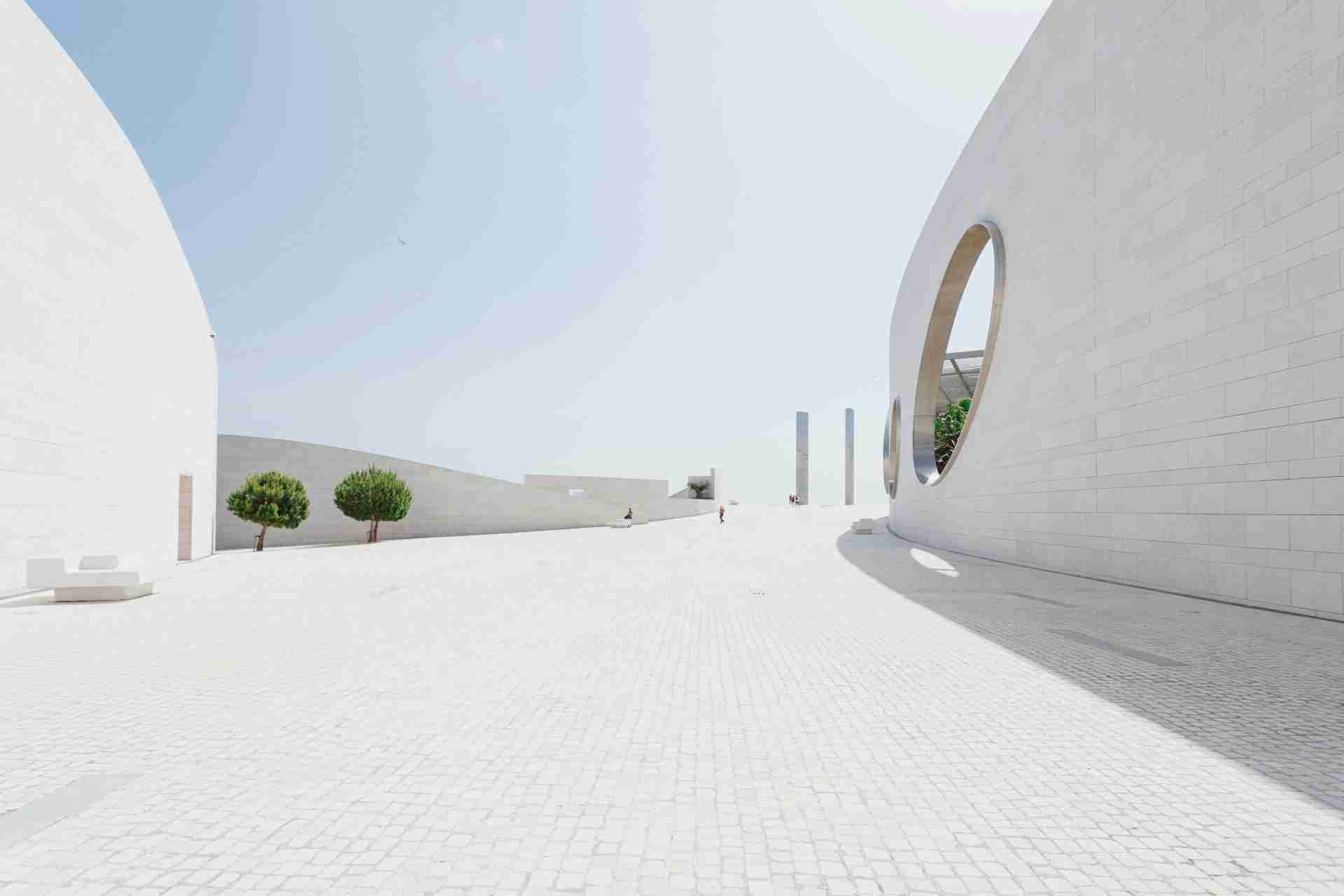
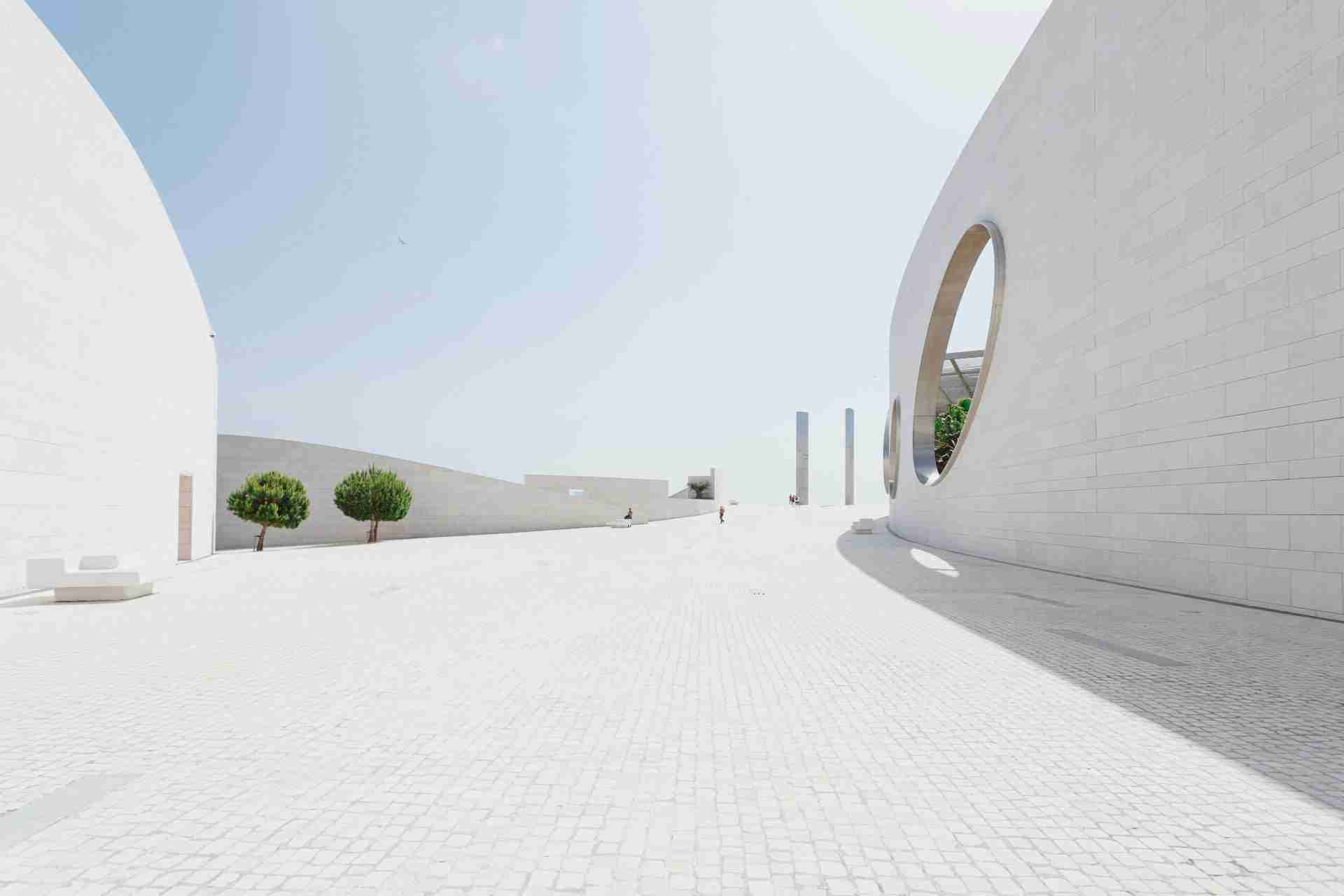
The Champalimaud Centre for the Unknown is a research facility on the edge of Lisbon that also happens to be one of the city's most visually compelling architectural spaces. Overlooking the Tagus River, this complex blends sweeping stone walls, geometric cutouts, and open courtyards with clean water features and carefully designed sight lines. It is not just a building, but a space created with movement and interaction in mind, both for visitors and for natural light. Adjacent to the main structure, the Miradouro da Fundação Champalimaud provides a public terrace and promenade that connects the architecture with the waterfront, making it an ideal location for architectural, abstract, and landscape photography. Quiet, open, and full of visual structure, this location rewards photographers who like to experiment with light, shadow, and space.
Best Photography Opportunities
• Curved Lines and Open Courtyards
The stone walls of the main building bend and sweep through the plaza, giving you a range of architectural curves to work with at nearly any focal length. These lines shift dramatically depending on the time of day, with early and late sunlight cutting across the pale stone to produce crisp shadows and changing tonal depth. A wide angle lens is essential to capture the full shape of the walls, but a standard lens works well for isolating shadow patterns or textural contrasts. There is enough negative space here to let the structure breathe in your frame, especially when shot in the morning before foot traffic picks up. Overcast days reduce contrast and make it easier to focus on form without harsh highlights.
• Geometric Cutouts
One of the most recognizable features of the complex is its two large circular wall cutouts, which frame the sky and surrounding elements depending on your angle. These shapes offer natural framing devices that can be used creatively, especially with changing light or passing clouds. By adjusting your position, you can shoot through them to capture the horizon, nearby buildings, or silhouettes of people walking past. These elements give your compositions a sense of depth. They also hold up well in both color and black and white.
• Reflections and Water Features
The complex includes shallow pools and water channels that reflect both the architecture and the sky, particularly during calm mornings or after rain. These reflective surfaces can be used to mirror the circular cutouts, the building lines, or even nearby figures, adding symmetry and softness to a scene built on hard surfaces. A tripod allows you to capture clean long exposures here during blue hour or twilight. The combination of water and light gives this location a quieter, more contemplative tone, especially when shooting at slower shutter speeds. The surrounding pavement also picks up soft glow during golden hour, which adds warmth to the cooler stone surfaces.
• Riverside Promenade
The riverside promenade near the Miradouro offers minimalist compositions with flat walkways, low concrete benches, and a wide open view of the Tagus. This space works well for horizontal frames, abstract shadows, and layered shots that include boats, birds, or distant bridges. It is also a good spot to photograph people from a distance, walking along the river or standing in silhouette against the sky. Long lenses can help compress space and bring in more background detail, while wide lenses allow for stark, clean arrangements. Because the area is open and uncluttered, it is easy to experiment with different visual styles.
• Light and Human Scale
The complex offers many opportunities to include human figures for scale. The stone walls often dwarf lone walkers or groups, making for effective compositions that contrast movement with permanence. Using shadow to extend or exaggerate these figures is especially rewarding during golden hour. You can also shoot across the plaza or along the side paths to frame silhouettes against the bright sky or the face of the building. These shots work well in both direct sun and softer evening light.
Best Time to Visit
Early morning is one of the best times to photograph the Champalimaud Centre. The light at this hour comes in low across the Tagus River, creating dramatic shadows and highlighting the curvature of the building's walls. Mornings also tend to be quiet, especially on weekdays, which gives you more freedom to shoot wide without interruptions. Late afternoon and golden hour are equally good for side lighting and rich tonal contrast, especially if you are working with reflections in the water features.
Overcast days can also be surprisingly effective here, as the soft, diffuse light helps bring out detail in the stone without strong highlights or dark shadows. The location is photogenic year round, but the open riverfront setting can get windy, especially in winter. Cloud movement over the Tagus can add mood and motion to long exposures, making this a useful spot even in less ideal weather.
How to Get There
The Champalimaud Centre is located in the Belém district of Lisbon, along the riverfront. It is accessible by public transit, walking, or bicycle from central Lisbon, and nearby streets allow for access by car. The surrounding promenade and viewing areas are open to the public at all times, and there are no entry fees to photograph the outdoor space. Paths are level and well maintained, so the site is easy to reach and navigate with camera gear. It is connected by footpaths to other nearby waterfront photography locations in the area.
Recommended Photography Gear
A wide angle lens is the most useful tool here for capturing architectural form, open plazas, and the curvature of the main buildings. A standard zoom allows for more flexibility when framing details, people, or water reflections. If you enjoy abstract or compressed compositions, a short telephoto lens can help isolate geometry, pattern, or layered light within tighter spaces.
A tripod is highly recommended, especially if you plan to shoot long exposures in low light or take advantage of twilight reflections. A polarizing filter can help manage surface glare on the water and deepen sky tones when the sun is higher. Neutral colors dominate the architecture, so if you shoot in color, you may want to expose for subtle contrast in stone and sky. There is no need for rugged gear or specialty equipment here, but it helps to travel light so you can move freely through the open spaces.
Nearby Photography Locations
A short walk away, this fortified tower is a classic Lisbon subject. It is ideal for early morning or late afternoon compositions when the water around it reflects soft light and the carved details take on more definition.
This monument's strong shapes and carved figures offer both formal architectural studies and human-scale detail. It faces the water and catches side light beautifully in the evening.
Farther along the promenade, this museum's curved facade and ceramic tile surfaces provide a very different but complementary architectural subject. It works well in overcast light and also glows under direct sun.
• Belém Promenade and Waterfront
The riverside walkways offer long sightlines, distant views of the 25 de Abril Bridge, and plenty of opportunities for street and environmental photography. The light changes quickly here, which makes repeat visits worthwhile.
If you are exploring on foot, the nearby gardens and the monastery complex provide a switch from modern to historic architecture. Soft garden light and high stone details give you a more classical feel to round out your day of shooting.
The Champalimaud Centre and its adjacent promenade offer a peaceful, design focused setting for photographers who enjoy working with light, space, and shape. It is a location where architecture is not just a backdrop but the main subject, and where changes in light bring constant new ways to frame and interpret the scene. Whether you are shooting wide compositions, abstract forms, or people moving through space, this part of Lisbon rewards careful observation and thoughtful framing.
Comments
Loading comments…