
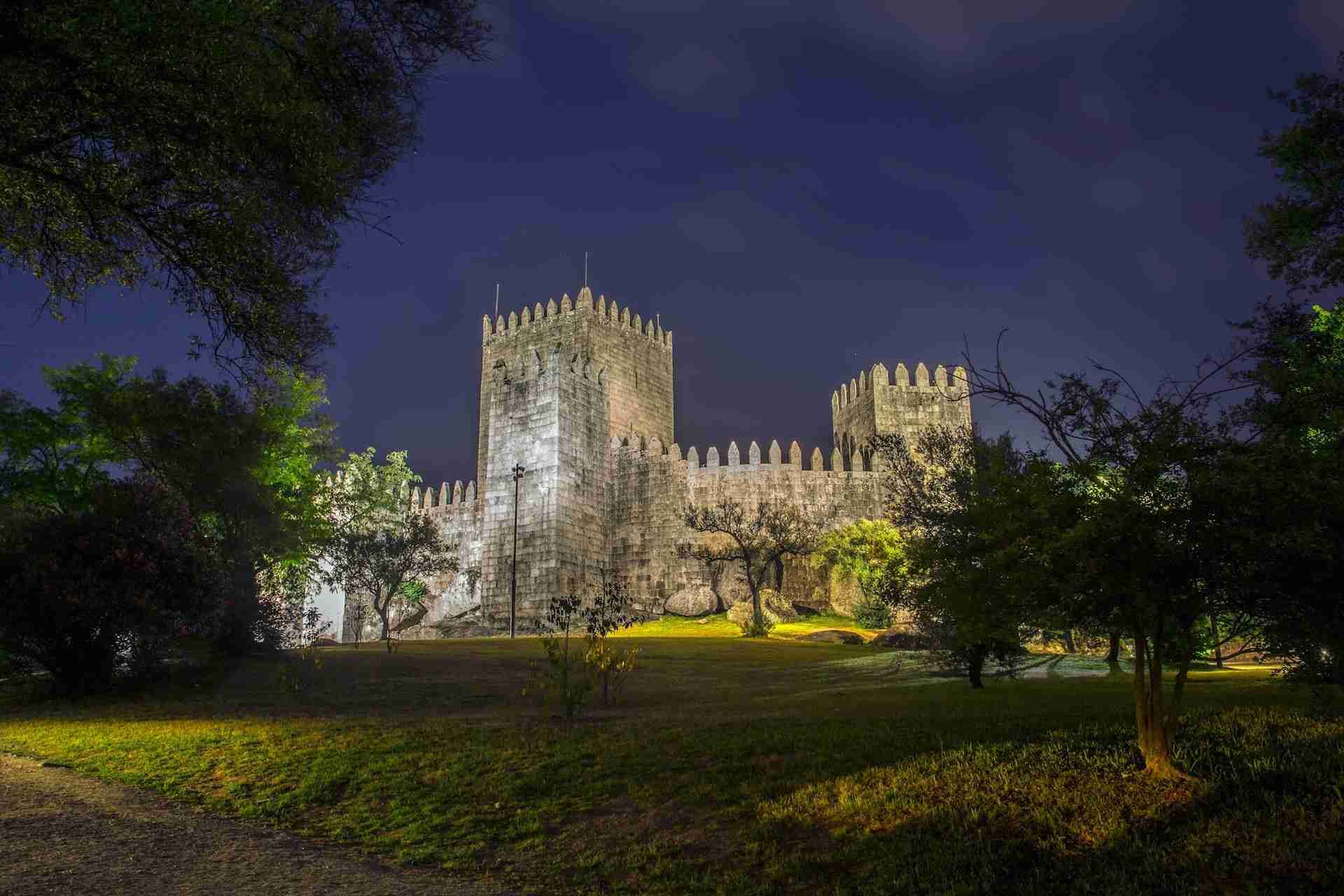
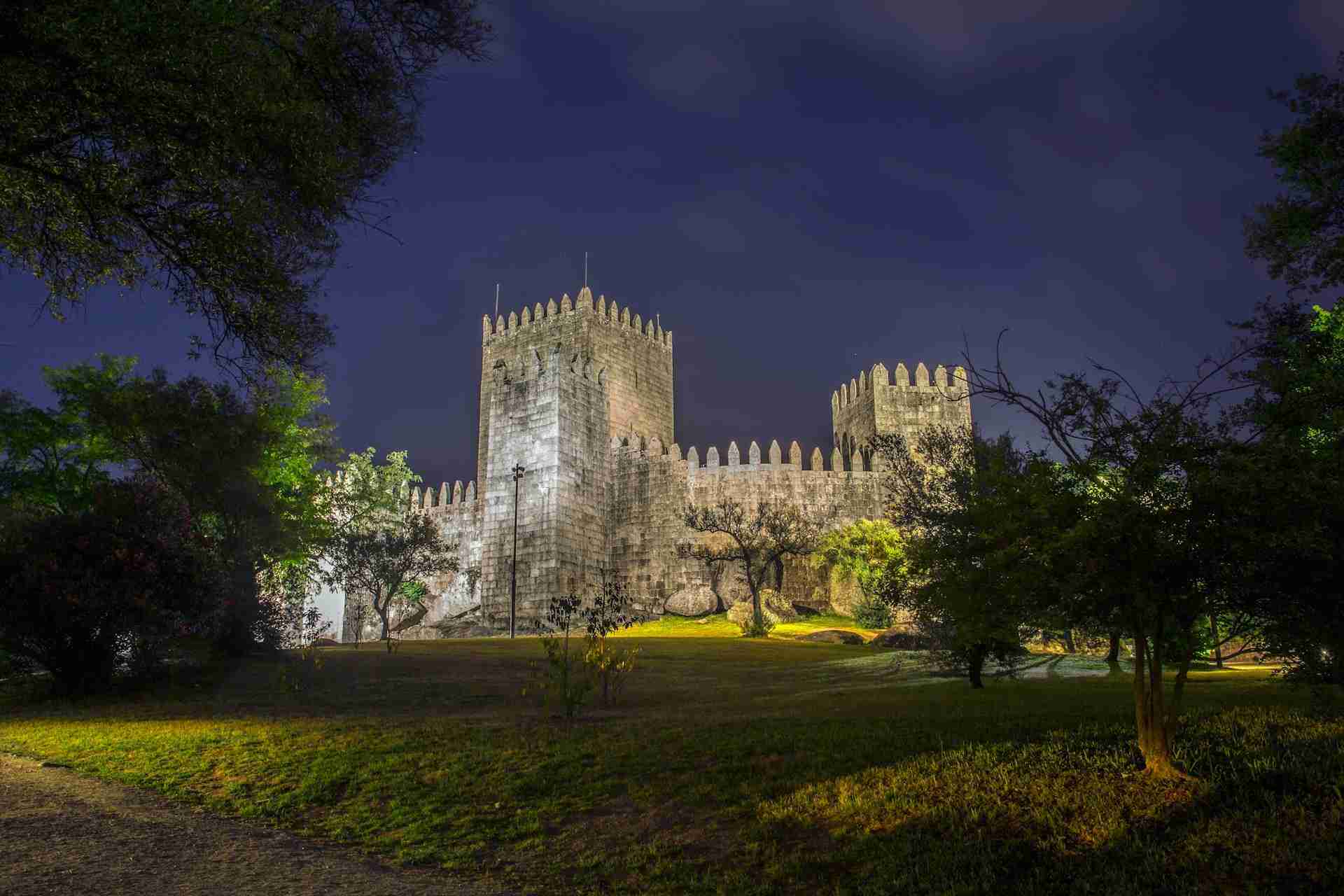
Guimarães Castle stands on a granite hill above the old city center of Guimarães in northern Portugal. With its tall stone walls, corner towers, and quiet presence above red-tiled rooftops, the castle is one of the most important and photogenic medieval sites in the country. Known as the birthplace of Portugal, this 10th-century fortress is where the country's first king, Afonso Henriques, is said to have lived. For photographers, Guimarães Castle offers a chance to work with clean lines, textured stone, shifting light, and the strong visual contrast between ancient walls and the green parkland that surrounds them.
Best Photography Opportunities
• Southwest Entrance and Defensive Walls
The main approach to the castle from the southwest offers one of the most balanced views of the structure. Here, the main gate is framed by strong walls and square towers that catch directional light throughout the day. In the early morning, the sun rises behind the trees and gradually lights up the front wall, revealing every detail of the stone. A wide lens works well here to include the full castle in frame while also pulling in surrounding grass, trees, and visitors for scale. If you return in the evening, side light emphasizes the wall's texture and gives you deeper shadows that add contrast and mood.
• Interior Courtyard and Tower Framing
Once inside the castle, the central courtyard opens up to reveal narrow staircases, wooden walkways, and high stone towers that rise above. Shooting from ground level up toward the sky gives you strong vertical lines and helps highlight the symmetry of the design. These compositions work best in soft light or during overcast days, when the stone surfaces show more detail. You can also climb the inner walkways to shoot across the courtyard and frame the towers from above, using the lower walls to build a sense of depth in the foreground.
• Silhouettes from the Outer Park
Guimarães Castle is surrounded by a small park with trees and open spaces that provide clean sightlines to the structure. At sunrise or sunset, this is a good place to work with silhouettes. Position yourself low to the ground with the castle centered or slightly off-center, and let the structure break the horizon line. Use a small aperture to keep the castle sharp and allow the sky to hold soft color gradients. This approach works especially well during autumn and winter, when the trees are bare and the castle's shape stands out more clearly.
• Textural Details in the Stone
Much of the visual interest in Guimarães Castle lies in its stonework. The walls are built from large granite blocks that show the passage of time through cracks, moss, and uneven surfaces. With a mid-range or macro lens, you can isolate areas where erosion has created unique patterns or where lichen adds soft color to the surface. Morning and late afternoon light help bring out these details without harsh contrast. Try working in black and white to focus on form and shadow without distraction.
• Viewpoints from the Palace of the Dukes of Braganza
Just downhill from the castle is the Palace of the Dukes of Braganza, which offers framed views of the castle from a different angle. From its gardens or windows, you can photograph the castle from below with the palace architecture in the foreground. These shots help tell a broader story about Guimarães' history and allow you to mix architectural styles in a single composition. In the evening, warm lights from the palace can be used as soft highlights in the foreground while the castle fades into the dusk sky.
• Sky and Wall Compositions from the Northern Edge
Walking to the back of the castle gives you views of the northern wall, which is less crowded and offers simple compositions that rely on light and shadow. This area is well suited for shooting minimalist frames that highlight the curve of the wall, the texture of the stone, and the negative space of the open sky. Overcast skies work well here, adding mood without flattening the scene. For more dynamic light, try late afternoon when the sun starts to dip behind nearby hills.
Best Time to Visit
Guimarães Castle is photogenic in all seasons, but spring and autumn offer the best combination of soft light, pleasant weather, and fewer visitors. From March through early June, the grass around the castle is green and the air is clear, creating bright images with clean color. Morning light strikes the southwest wall directly, making it an ideal time to shoot the entrance. Late afternoons bring long shadows and strong contrast across the courtyard and upper walls.
In summer, the midday sun can be harsh, and the light often flattens textures on the stone. Try to avoid mid-day sessions unless you are focusing on interior shots or tight details that benefit from direct lighting. However, summer sunsets can be beautiful, especially when the sky builds soft color above the horizon and reflects warm tones onto the granite.
Autumn, from late September through November, brings golden leaves and a shift in tone. The lower angle of the sun during this season enhances the castle's shape and adds richness to the surrounding trees and pathways. Early morning mist is also more common in the cooler months, softening the view and giving your images a quiet, timeless quality.
Winter offers a quieter experience, with fewer people and a different palette. The stone appears colder and more defined, especially when the sky is clear and the air is dry. Shadows are longer throughout the day, which works well for black and white photography or minimal compositions. The best light in winter usually appears just after sunrise and during the last hour before sunset.
How to Get There
Guimarães Castle is located within walking distance of the city's historic center. If you are arriving by train, Guimarães Station is about a 20-minute walk from the castle, mostly uphill. Taxis and local buses are also available, and several lines stop near the old town. If you are driving, parking is available near the Palace of the Dukes of Braganza, which sits just below the castle grounds. From there, it's a short walk up a stone path to the castle entrance.
The castle is open to visitors throughout the year, and there is a small entry fee to access the interior and climb the towers. Photography is allowed in all areas, and there are no restrictions on personal gear such as tripods or camera bags. However, the interior walkways are narrow and sometimes uneven, so consider packing light if you plan to climb. Public restrooms and a small cafe are located near the palace below, and benches throughout the park allow for breaks between sessions.
If you plan to shoot sunrise or sunset, access to the outer park is always available. The interior of the castle opens and closes based on the season, so check current hours before your visit. Sunset sessions are best approached from the outside, where light hits the upper walls and towers with no time pressure.
Recommended Photography Gear
For Guimarães Castle, a versatile setup will help you capture everything from large landscapes to fine details. A standard zoom lens such as a 24–70mm is ideal for most situations, offering enough range to shoot both wide scenes and tight architectural elements. A wider lens, such as 16–35mm, is helpful for shooting from inside the courtyard or from close to the outer walls, where space can be limited.
If you enjoy shooting textures and stonework, bring a macro or a medium telephoto lens to isolate details and work with shadows. A circular polarizer can help control reflections on stone and bring out sky contrast, especially on partly cloudy days. For low-light work during blue hour or in shaded interior spaces, a tripod is essential. A remote shutter release will make long exposures easier and reduce vibration during your shots.
The castle is surrounded by uneven paths and stone steps, so use a camera bag that balances well on your back and leaves your hands free. A lens hood is useful for managing sunlight when working near the edge of the frame, and a microfiber cloth is always helpful for clearing off dust or moisture from the stone paths.
Comfortable walking shoes and a water bottle will also make a big difference, especially if you plan to spend a full day exploring the area. Extra batteries and memory cards are recommended, since golden hour at this site often extends into blue hour without warning, and you may want to shoot more than expected.
Nearby Photography Locations
, just below the castle, offers rich interior and exterior subjects. Its large stone halls, wooden ceilings, and iron chandeliers make it an excellent setting for low-light, handheld shots. From outside, its long brick rooflines and tall chimneys provide strong shapes that contrast well with the sky.
• Largo da Oliveira and the Old Town
sits a short walk downhill from the castle and contains cobbled streets, arcaded walkways, and small plazas full of historic detail. This area is perfect for street photography, architectural framing, and low-angle light that moves across stone and timber buildings.
, which surrounds the castle, offers winding paths and quiet corners where trees frame views of the walls. This is a good place to build compositions with foreground interest, such as benches, branches, or stone walls leading the eye toward the main structure.
, located near the castle gate, is a small Romanesque church made from the same local stone. Its simple design and quiet setting make it a strong subject in soft light or during misty mornings. You can photograph it on its own or use it as a foreground layer when shooting wider views of the castle.
, located just outside Guimarães, offers panoramic views over the city and surrounding valleys. From the top, you can shoot long exposures at sunrise or sunset with layered hills in the distance. The rock formations and small chapels near the summit also offer varied subjects for landscape and architectural work.
Photographing Guimarães Castle is a chance to connect with Portugal's early history while working with a subject that is strong, simple, and full of detail. With its changing light, quiet surroundings, and connection to the past, the castle provides the kind of setting that encourages slow, thoughtful photography. Whether you are capturing soft light on rough stone or wide views of city and sky, Guimarães is a place where every frame can carry both story and craft.
Comments
Loading comments…