
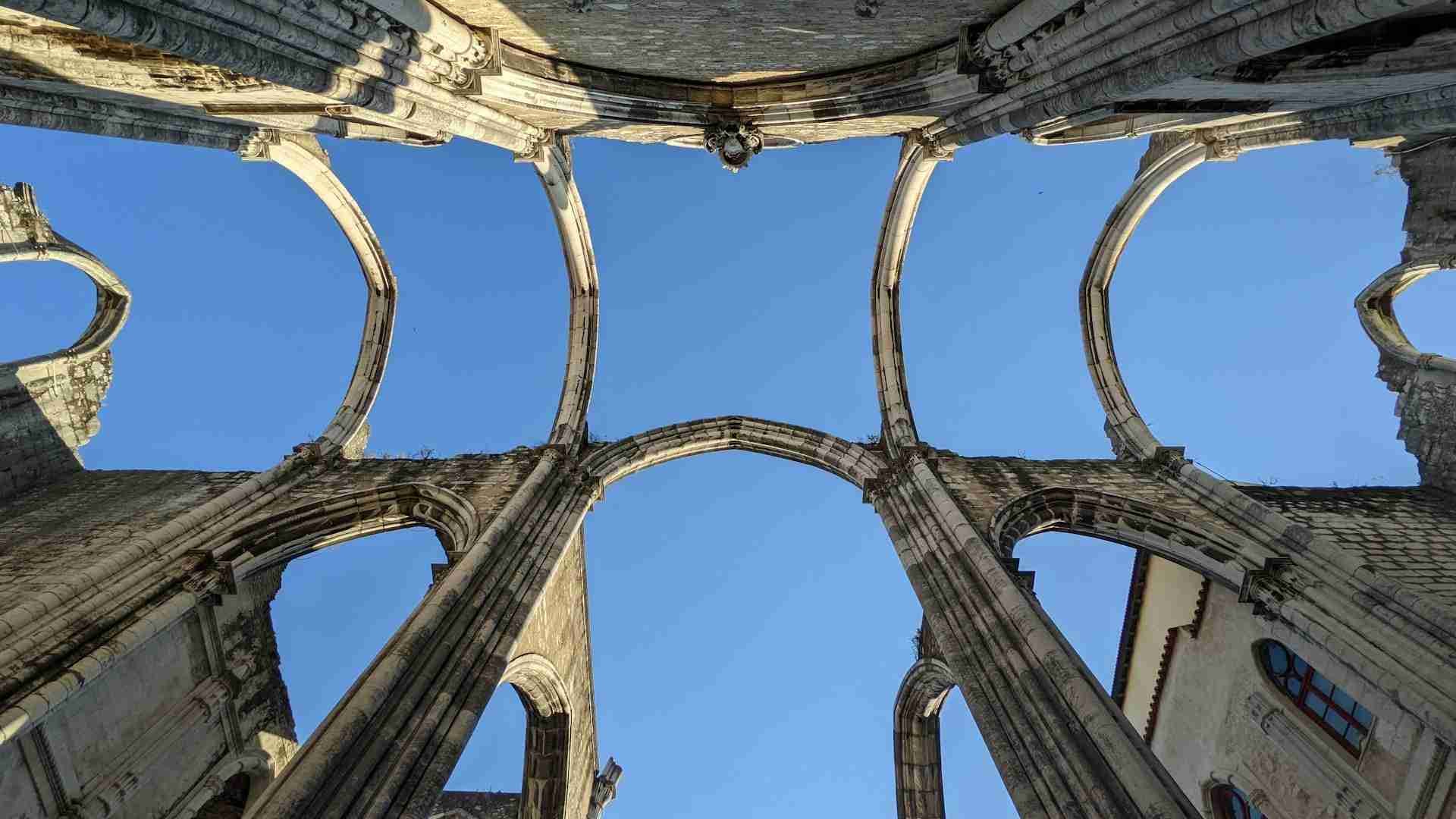
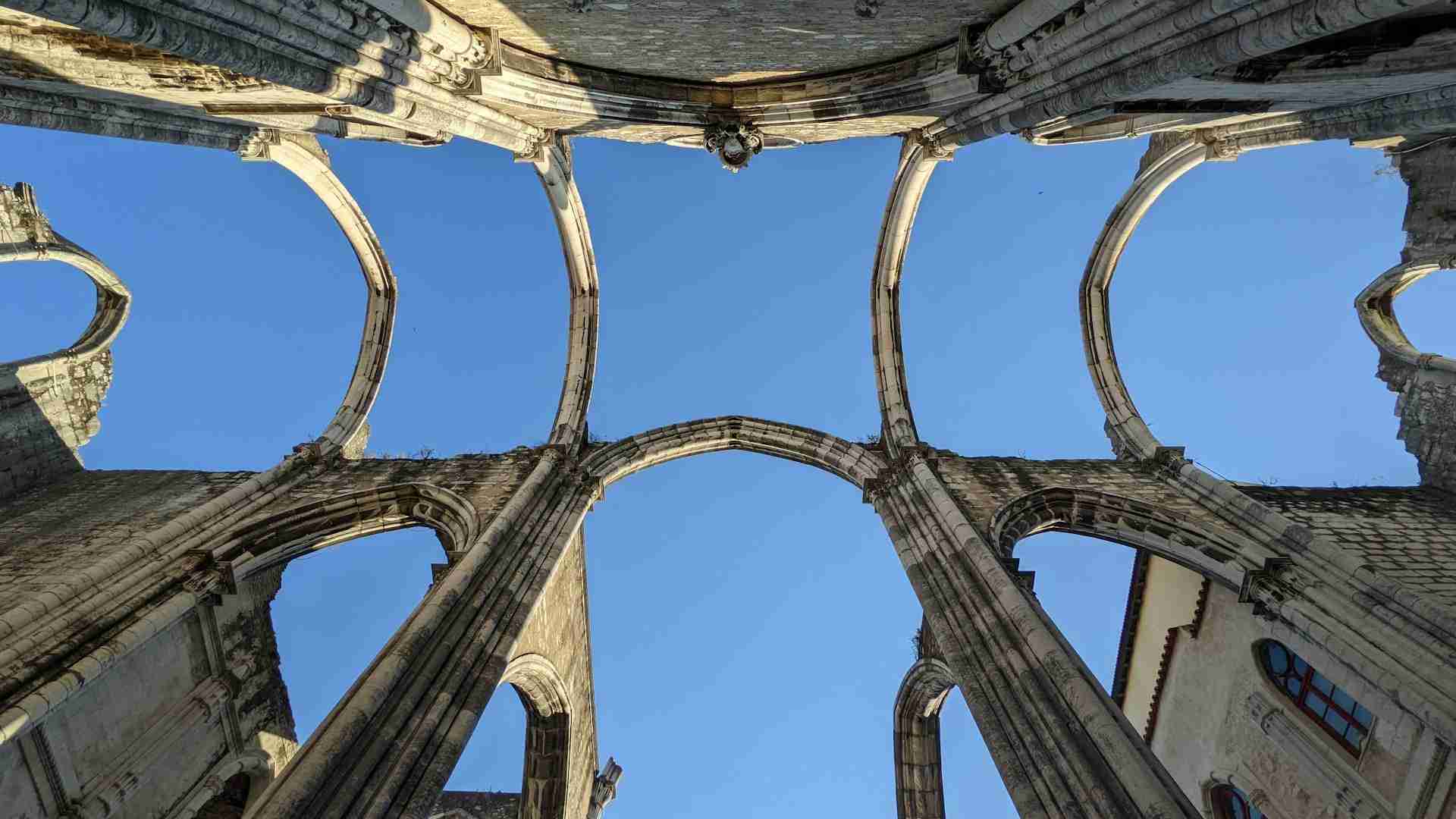
Set within the atmospheric ruins of the Carmo Convent in Lisbon's Chiado district, the Museu Arqueológico do Carmo offers photographers an extraordinary opportunity to explore the convergence of history, architecture, and urban life. Originally a medieval church destroyed by the 1755 earthquake, the site now blends open sky with vaulted remains, juxtaposing empty naves and uncovered corridors with curated archaeological exhibits. Sunlight streams through gaping arches onto ancient stones while museum lighting highlights relics alongside ruins. Every angle tells a layered story. For photographers seeking a visual narrative that spans centuries and speaks of loss, discovery, adaptation, and continuity in the heart of Lisbon, this ruin-cum-museum is deeply rewarding.
Best Photography Opportunities
• Ruined Gothic Nave by Daylight
The heart of the site is its partially collapsed nave, where the ceiling no longer exists and the sky has taken its place. This creates an open-air cathedral effect that is both dramatic and surreal. Photographing the nave requires attention to shifting natural light, which plays across the floor and columns throughout the day. Early morning light tends to be softer and casts gentle shadows, ideal for capturing a sense of stillness and solitude. Try standing at the rear of the nave with a wide-angle lens to incorporate the full breadth of broken arches and jagged walls. Midday sunlight, while more direct, can create powerful high-contrast effects when filtered through side windows and openings. This is also an excellent time to shoot vertical compositions that lead the eye upward into empty space framed by Gothic tracery.
• Vaulted Columns and Fragmented Arches
Each column and arch within the museum stands as a skeletal remnant of its former structure, reaching skyward with broken grandeur. From a compositional standpoint, the verticality of these features makes them perfect subjects for both symmetrical and dynamic framing. Use a low vantage point and aim your lens upward to exaggerate their height. When the sun is low in the sky, shadows wrap around the stone fluting and give volume to each curve and edge. These shadows can be used to guide the eye through the frame or to isolate details on individual columns. By zooming in with a medium telephoto lens, you can also explore patterns in the erosion, carvings, and texture that are not obvious from a distance. These visual details help convey the centuries that have passed since the convent's collapse.
• Sky Views Through Openings
One of the most striking features of the museum is the way it frames the sky. The open roof allows for a direct visual connection between architecture and atmosphere. When clouds move across the opening, they provide motion and drama against the static stone. Consider using a slow shutter speed to blur passing clouds during long exposures, creating a sense of time drifting through the ruins. At sunset, these same openings can be used to capture streaks of pink, orange, and purple sky that contrast beautifully with the gray and ochre tones of the stone. Early evening or stormy skies bring moody, high-drama compositions. Try placing silhouettes of pigeons or branches against bright sky within the arch emphasizes the contrast between built permanence and ephemeral life.
• Exhibits Among Ruins
The museum's artifacts, including Roman tombstones, medieval carvings, and ancient tools, are displayed in a way that preserves the atmosphere of the ruins around them. Photographers should take care to balance exhibit lighting with the ambient natural light that enters the space. For detailed shots, use a prime lens with a wide aperture to keep the focus sharp on artifact texture while letting the background softly blur into walls and columns. For wider compositions, frame exhibits alongside columns or broken arches to reinforce the sense of placement and history. Some pieces are nestled into alcoves or placed on stone plinths that catch side light beautifully, especially in the late afternoon. A small LED fill light or reflector can be helpful in reducing harsh museum shadows without overwhelming the existing light balance.
• Night Photography and Ambient Glow
Once the sun sets and the site is illuminated by warm spotlights, the mood of the museum transforms. Columns glow faintly against a deepening sky, and the contrast between light and darkness creates a contemplative, almost theatrical atmosphere. With a sturdy tripod and long exposure settings, you can frame the entire nave from the front entrance and capture a perfectly still rendition of the glowing ruin against the Lisbon night. Use side angles to emphasize shadow depth and highlight light trails from passersby or nearby street lamps. Blue hour compositions—taken when the sky is cobalt but not yet black—are particularly effective for balancing the interior uplighting with ambient outdoor color. This is also the best time to photograph the play of light on stone textures, where each crevice is softly emphasized by the low, warm light direction.
Best Time to Visit
Photographers will find the museum offers multiple personalities across the day. Early mornings bring tranquility and soft ambient light that gently models interior textures. Weekday visits before major tours are ideal. As the sun climbs the sky it will flood the nave with bright overhead illumination that washes out details, so mid-to-late morning is best suited for working on exhibits or textures, where even lighting offers clarity.
Afternoon light reintroduces drama as sharp shadows form on walls and debris within the nave. Golden hour is particularly beautiful when the final sunlight strikes the top of columns and broken arches. Blue hour begins the minute inside lighting activates while exterior colors deepen, producing a somber but cinematic feeling.
Weather plays an important role in mood and tone. Overcast days bring even tones and make texture shots in the archways simpler to compose. Stormy skies bring drama that is beautifully visible through open roofs and archways. Winter light is cooler and more subdued but reveals form and texture in a way that warmer light cannot. Visiting in autumn or winter also means fewer crowds.
How to Get There
The Museu Arqueológico do Carmo is located in Largo do Carmo, nestled uphill from Baixa-Chiado metro station. Exit the tunnel and walk uphill through Chiado's characterful streets for about five minutes to reach the museum. It is also easily accessible by tram, with lines passing nearby on Rua do Carmo, as well as by taxi or rideshare. Parking throughout Chiado is limited and most streets are pedestrianized, so walking or public transit is the most convenient option.
The museum charges a modest entry fee granting access to both the exterior ruins and the interior exhibits. Opening hours change seasonally and there is often early closure in winter months, so checking the schedule in advance is advised for completion of full shoot sessions.
Photography is permitted both inside and out, though use of tripods may be restricted around exhibits and during busy periods. Paths are paved and level throughout, making it easy to move between interior naves and outer ruin spaces. Allow for at least ninety minutes to two hours for a thorough exploration, especially if mixing interiors, exteriors and long exposures.
Essential Gear Recommendations
Photographing Museu Arqueológico do Carmo demands a versatile kit to capture architecture, ruin textures, low light interiors, and shifting skies. A wide-angle zoom between sixteen and thirty-five millimeters provides coverage of vertical exteriors, open nave walls, and museum rooms. A standard zoom lens covering twenty-four to seventy millimeters lends itself well to framing exhibits with contextual architecture in the background.
A short telephoto lens in the eighty-five to one hundred thirty-five millimeter range allows isolation of capitals, carvings, broken edges, and textures. For low light interior photography, a fast prime such as a thirty-five or fifty millimeter lens with an aperture of f1.8 or f1.4 is excellent. These lenses enable handheld photography at dusk or nighttime with minimal noise.
A compact travel tripod is helpful for long exposures and Blue Hour photography inside the nave. Carry a polarizing filter to help manage reflections on exhibit glass and smooth glare from stone surfaces. A neutral density filter helps with sky movement through arch openings or droplet lines during light rain.
Bring extra batteries, memory cards, micro fiber lens cloths, a weather cover for your camera bag, and consider a portable LED light pad to fill in shadows during evening museum shots. A remote shutter release will provide sharper results during long exposure work.
Nearby Photography Locations
Just steps away from the museum lies the base of the Santa Justa Elevator. From the surrounding square, you can frame both the Gothic ruins and the iron elevator in a single shot, combining two different eras of Lisbon architecture. Visit during late afternoon for balanced light on both structures and experiment with framing them in juxtaposition using a wide lens.
This historic shopping street is lined with literary cafés, traditional bookshops, and tiled façades. Photographers will appreciate the play of light across patterned storefronts and the reflective quality of tiled walls. Capture scenes of daily Lisbon life here, with the ruins visible in the background as a narrative anchor.
A ten-minute uphill walk leads to this panoramic overlook where the Carmo ruins become part of a sweeping cityscape. Use a telephoto lens to frame the skeletal arches of the museum against the broader Lisbon skyline, or go wide to include foreground elements like garden balustrades or evening café lights.
• Praça do Carmo
Directly in front of the museum entrance, this plaza is lined with jacaranda trees and historic buildings. It is a perfect place to frame the museum's exterior walls and entrance amid street activity. Photograph during golden hour for warm tones on the stone and long shadows that enrich the textures of the plaza.
• Convento da Trindade
Located a few minutes away near Largo do Carmo, this former convent turned brewery preserves beautiful monastic architecture. The inner courtyard and vaulted interiors provide contrast to the ruins of the Carmo Convent. Capture scenes that compare preserved versus ruined architecture, all within the same historical context.
The Museu Arqueológico do Carmo stands as a testament to Lisbon's layered past, offering a photographic experience that is both dramatic and contemplative. Its roofless nave opens to the changing sky, its fractured columns hold time in suspension, and its museum exhibits bring clarity to centuries of history. Whether capturing textures at dawn, silhouettes at dusk, or relics in filtered light, this site rewards those who take the time to see history not just in fragments, but as a whole story framed by stone and silence.
Comments
Loading comments…