
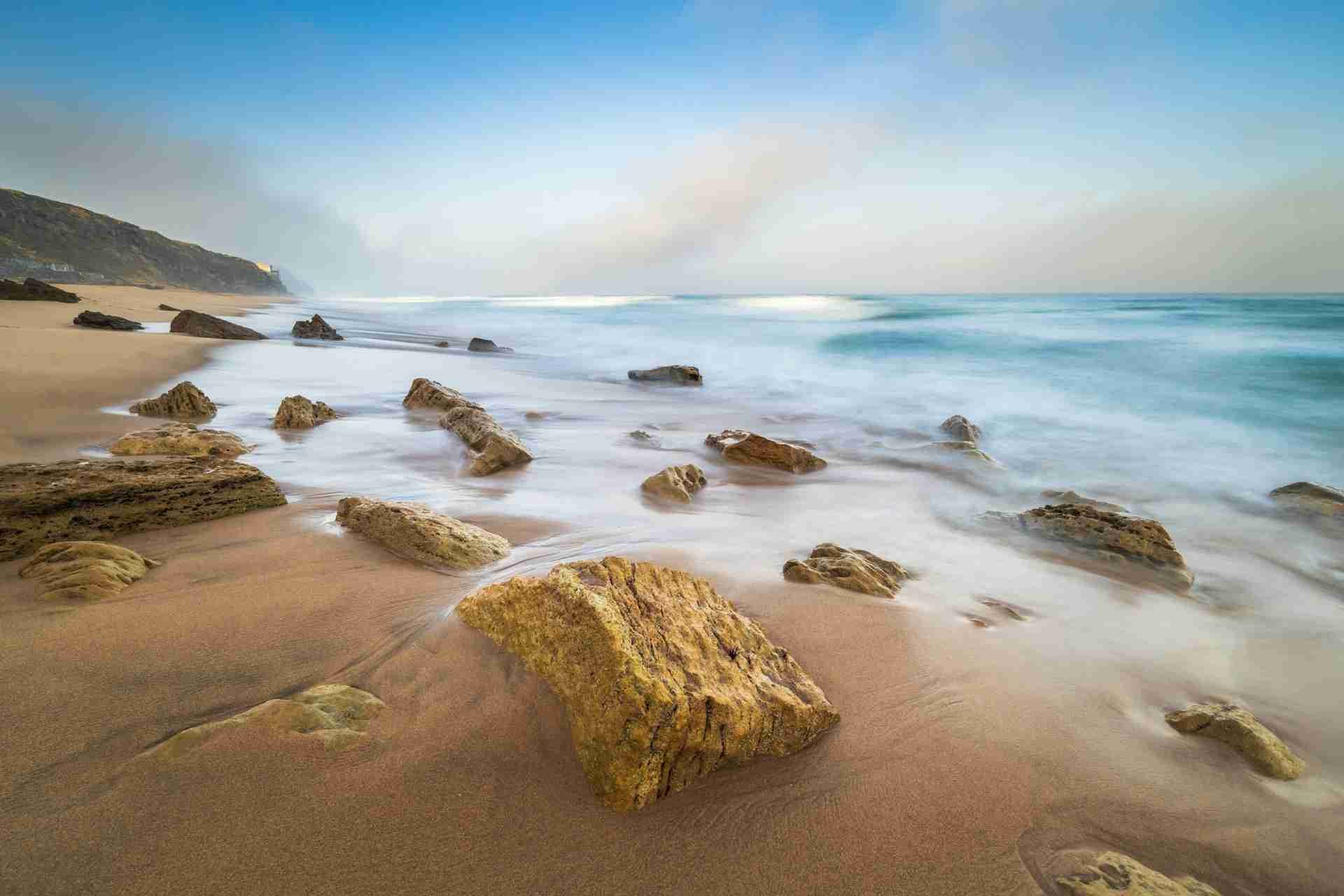
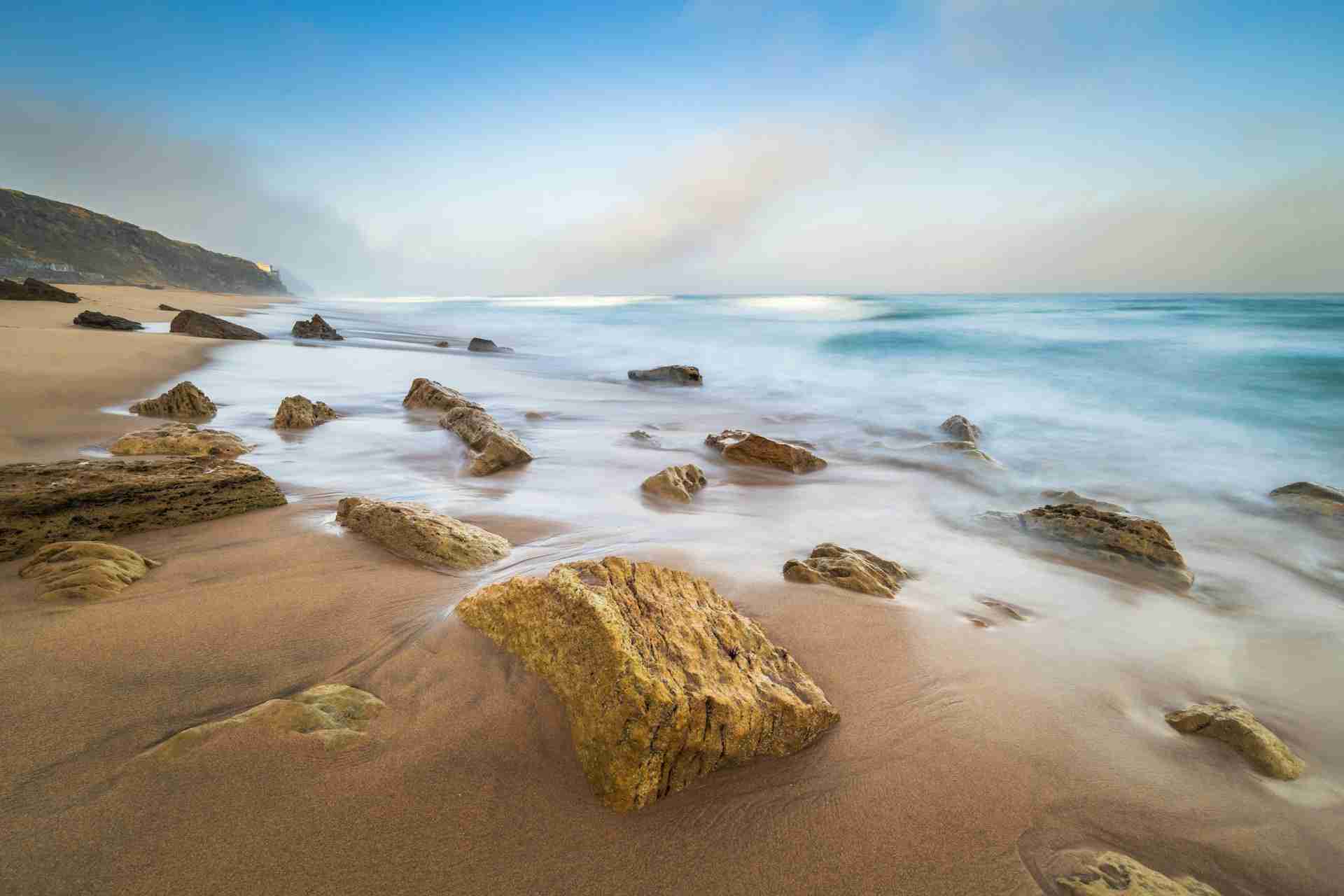
Tucked beneath the cliffs near the village of Colares on Portugal's rugged Sintra coast, Praia Pequena do Rodízio is a beach that rewards photographers with striking contrasts and a raw, elemental feel. Despite its name "Little Beach of Rodízio" there's nothing small about its visual potential. Towering rock walls, wide-open surf, and textured black sand create a cinematic backdrop for both sweeping landscapes and intimate shoreline studies. Unlike the more frequented Praia Grande just to the north, Praia Pequena remains relatively quiet, giving photographers space to work with long exposures, shifting light, and the endless drama of Atlantic waves. It's a location defined by rhythm, shadow, and the interplay between rock and water.
Best Photography Opportunities
Golden Hour Along the Cliffs
The steep cliffs that flank Praia Pequena are a defining element of the location and become especially photogenic during the golden hour. In the late afternoon, warm light grazes the rock faces, accentuating their deep fissures and layered sediment. From the southern end of the beach, you can shoot back toward the cliffs with the setting sun catching their face, creating rich color contrasts between the golden rock and cool-toned water. A wide-angle lens helps capture the sweeping arc of the beach, while a tripod allows for bracketed exposures to manage the light range between shadow and sunlit surfaces. This angle is especially effective when there are scattered clouds to diffuse and catch the light.
Long Exposures of the Atlantic Surf
The Atlantic here is relentless, with consistent swells that break hard against the shore. This makes Praia Pequena an excellent location for long exposure photography. Use a 6- or 10-stop neutral density filter to stretch shutter speeds into the multi-second range, smoothing out the surf and creating a glassy contrast to the jagged rocks that dot the shore. The black sand, often glossed by retreating waves, reflects subtle light tones and adds extra depth to seascape compositions. Position yourself near partially submerged rocks or tidal pools to create natural foreground anchors that pull the viewer's eye into the frame.
High Contrast Black and White Studies
The interplay of dark volcanic sand, frothy white surf, and textured cliff faces makes this beach ideal for black and white photography. On overcast days, the flat light enhances tonal balance and allows photographers to work with the landscape's natural contrast. Try composing minimal frames with a single boulder or wave pattern, or use a long lens to compress and simplify the layered textures. Black and white processing also brings out the subtle shapes in the wet sand as it reflects the sky. This approach works well when color is less vibrant but structure and mood are strong.
Tide Pools and Micro Textures
At low tide, Praia Pequena reveals scattered tidal pools and fine-grain sand patterns shaped by receding water. These details offer an opportunity for macro photography or tight compositions that focus on texture and light reflection. Using a polarizer can help reduce glare on the water surface while enhancing the visibility of patterns beneath. Small shells, seaweed, and the occasional crab or anemone can add points of visual interest, especially for close-up work that complements the larger landscape images.
Storm Light and Moody Horizons
Weather fronts move quickly along Portugal's Atlantic coast, often bringing fast-changing light and dramatic skies. Praia Pequena excels under these conditions, particularly when filtered light breaks through heavy clouds and catches the waves or cliff edges. Use a telephoto lens to compress the scene and emphasize the layering of water, beach, and cliff. These moments are short-lived but highly dynamic, ideal for photographers who enjoy chasing light and working with fleeting atmospheric conditions. Always keep an eye on the tides and surf conditions if venturing close to the waterline during weather shifts.
Best Time to Visit
Praia Pequena is best visited in the shoulder seasons—spring and autumn—when the light is soft, the weather is changeable, and crowds are minimal. In spring, wildflowers bloom along the cliff tops, adding color to wide landscape compositions. Autumn brings lower sun angles and deeper tonal ranges, ideal for both color and monochrome work. Summer offers clear skies and golden light, but the beach can get busier in the late afternoon, particularly with surfers and local visitors. Winter storms create powerful seascape opportunities, though conditions can be less predictable.
Sunset is the most productive time of day for shooting this location, especially when working with side-lit cliffs or ocean reflections. Sunrise is quieter and has potential if clouds are in play, but direct morning light is mostly blocked by the cliffs until the sun is higher in the sky. Midday can be harsh unless you are focusing on detail work in the shadows or using filters to manage contrast. Tidal charts should always be checked in advance, as much of the beach becomes inaccessible during high tide.
How to Get There
Praia Pequena do Rodízio is located near the village of Colares in the Sintra-Cascais Natural Park. If driving from Lisbon, the most direct route is via the A5 and N247 toward Praia Grande. From Praia Grande, a small road leads south to Praia Pequena. There is no official parking lot at Praia Pequena, but visitors can park at Praia Grande's main lot and walk along a short cliffside trail that descends to Praia Pequena in under ten minutes.
Access is free, and there are no entry fees or permits required for photography. However, the descent to the beach involves uneven, rocky paths that can become slippery when wet, so sturdy footwear is essential. Tripods and gear should be packed securely, as some scrambling may be necessary depending on your chosen vantage point. There are no facilities directly at Praia Pequena, but cafés and restrooms are available at Praia Grande just a short walk away.
Recommended Photography Gear
Given the beach's mix of expansive views, fine details, and fast-changing light, versatility is key. A wide-angle lens (16–35mm or similar) is ideal for capturing the beach, cliffs, and sky in a single frame. A standard zoom (24–70mm) provides flexibility for tighter compositions, while a telephoto lens (70–200mm) allows for compression shots and isolating details on cliffs or wave crests. A macro lens or a close-focusing prime will be useful for sand patterns and tide pool textures.
A sturdy tripod is essential for long exposures, especially in windy conditions. Neutral density filters (6–10 stop) and a circular polarizer will give you control over shutter speed and reflections. Bring a lens cloth or microfiber towel, as salt spray can build up quickly. A rain cover for your gear and layered clothing are smart additions, as wind and sudden temperature shifts are common on this coast. Drone photography is possible here as well, though subject to national park regulations—always check local airspace rules before launching.
Nearby Photography Locations
Just south of Praia Pequena, Praia da Adraga features towering sea stacks and dramatic caves that become accessible at low tide. The beach is framed by cliffs and is especially striking at sunset when the last light hits the jagged rock formations. Its dynamic surf and curved shoreline make it ideal for wide compositions and long exposures.
Europe's westernmost point, Cabo da Roca offers panoramic views of the Atlantic from a series of rugged cliffs. The lighthouse and surrounding headlands are excellent subjects for golden hour photography, and the constant wind and sea movement add visual energy to every frame. The hike down to nearby Praia da Ursa is challenging but worth it for truly wild coastal shots.
Just north of Praia Pequena, Praia Grande offers a larger stretch of sand with a sweeping curve that works beautifully in wide shots. It's a popular surf beach, so action photography is possible here as well. The promenade above the beach offers elevated views perfect for shooting down onto the water during sunset.
A clifftop village cascading down to the sea, Azenhas do Mar is a favorite among photographers for its whitewashed houses and dramatic location. The natural seawater pool below and the surrounding cliffs create a layered composition that works well at both sunrise and twilight. Dusk is especially magical when the village lights begin to glow against the fading sky.
For a completely different photographic palette, head inland to the forests and palaces of Sintra. The misty woods, moss-covered ruins, and ornate architecture offer fairytale-like scenes that contrast beautifully with the rawness of the coastline. This area is ideal for a day of varied shooting, especially when the coast is fogged in or windblown.
Though often overshadowed by its larger neighbor, Praia Pequena do Rodízio delivers a quieter, more intimate coastal experience that thrives on texture, mood, and movement. Whether you're chasing golden light across cliff faces, smoothing out the surf with long exposures, or studying the patterns in wet sand, this beach invites a slower, more attentive photographic approach. Its proximity to other top-tier coastal and inland locations makes it a perfect stop in a well-rounded Sintra-area photography itinerary.
Comments
Loading comments…