
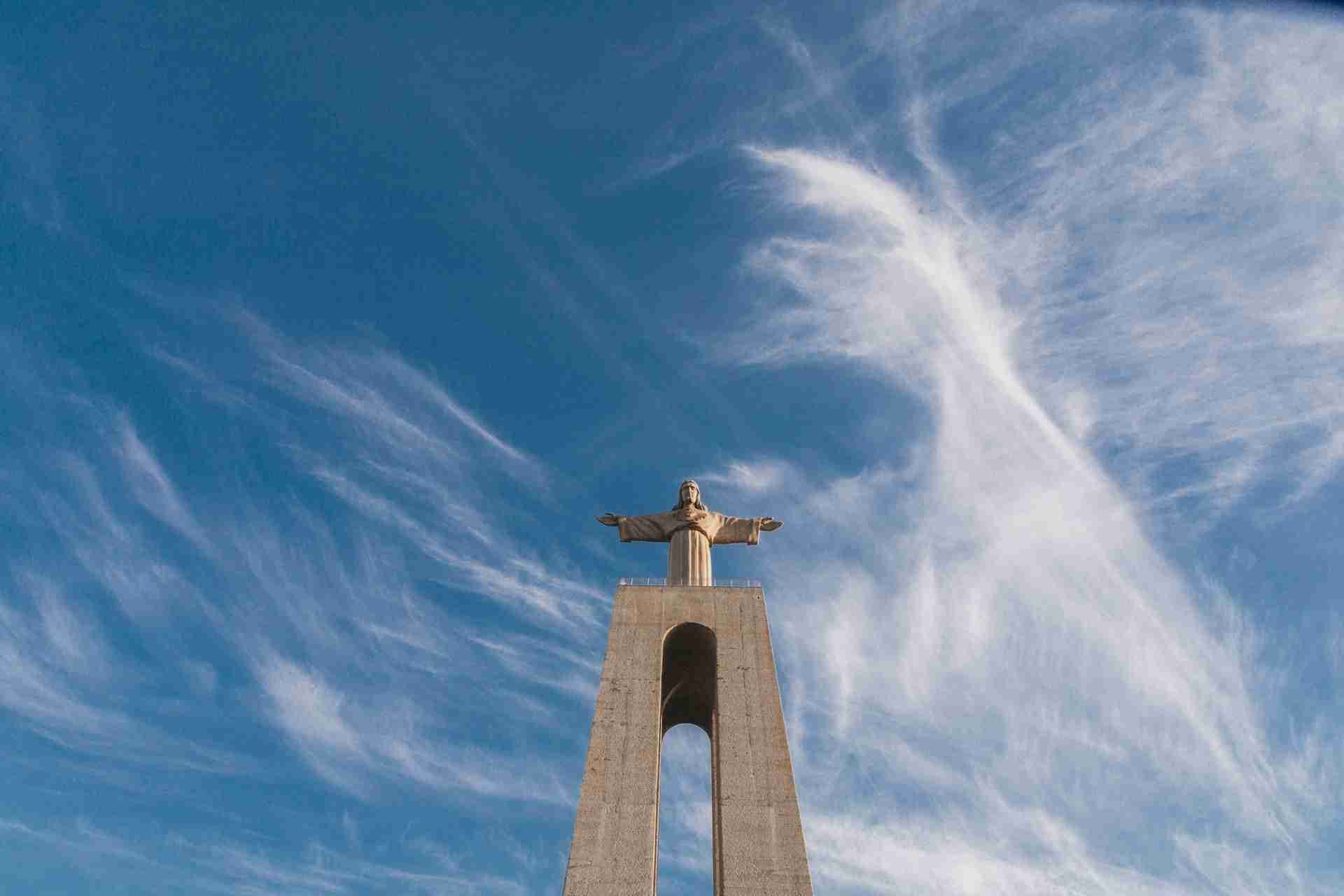
Standing high on the cliffs of Almada, the Santuário de Cristo Rei offers one of the most commanding views across the Tagus River toward Lisbon. Inspired by the Christ the Redeemer statue in Rio de Janeiro, this monument rises over one hundred meters above the river and features a towering figure of Christ with outstretched arms, facing the Portuguese capital. From its base, visitors can photograph panoramic views of the 25 de Abril Bridge, the city skyline, and the layered hills beyond. More than a religious site, Cristo Rei is a powerful visual anchor that combines symbolic presence with unmatched spatial perspective, making it an essential stop for photographers working with architectural scale, light transitions, and city-wide compositions.
Best Photography Opportunities
• Panoramic Cityscape from the Base Platform
The viewing terrace at the base of the Cristo Rei statue provides one of the most comprehensive views of Lisbon across the Tagus River. From this elevated position, you can capture the curve of the 25 de Abril Bridge, the downtown rooftops, and the rising terrain of the city center. Use a wide-angle lens to take in the full sweep of the scene, especially during golden hour when the bridge casts long shadows and the buildings catch warm sidelight. A mid-range zoom also works well for isolating neighborhoods or architectural details like the dome of the National Pantheon. The expansive view benefits from a clear day, but light mist or scattered clouds can add welcome atmosphere.
• Silhouettes of Cristo Rei at Sunset
Shooting back toward the statue itself from surrounding park trails or the edge of the cliff near the visitor center allows you to use Cristo Rei as a silhouetted subject against the setting sun. Sunset occurs behind the figure from this angle in warmer months, providing bold color gradients in the sky and deep shadows across the monument. A tripod and longer focal length help compress the scene and highlight the scale of the structure. Including foreground elements such as trees or fencing helps provide depth and place the statue in context. This perspective is also effective for creating layered compositions that lead the eye from ground to sky.
• Bridge and Statue from Below on the Riverside
Down at the riverside near Cacilhas or the Jardim do Rio, you can photograph Cristo Rei from below with the 25 de Abril Bridge in the foreground. This angle emphasizes the verticality of the statue and creates a powerful composition that combines modern infrastructure with spiritual monumentality. Use a telephoto lens to isolate the statue through the bridge's girders or support beams, or shoot wide to include both elements side by side. Early morning light strikes the face of the monument and the western side of the bridge, enhancing contrast and depth. A polarizer can reduce haze and emphasize the tonal differences between stone, steel, and sky.
• Details and Textures of the Monument Base
Closer to the pedestal of Cristo Rei, the surface of the structure reveals patterns of concrete, aging stone, and casting marks that lend themselves to detail work. A short telephoto or macro lens is useful for isolating sections of the robe, the support columns, or inscriptions along the walkways. Soft light from overcast skies or late afternoon makes these textures more visible without harsh contrast. Including small elements such as passing visitors or pigeons can scale the space and bring energy to otherwise still compositions. These close-up studies contrast effectively with the wide scenic views available from the same site.
• Night Views of Lisbon and the Bridge
After dark, the view from Cristo Rei becomes a glowing panorama of Lisbon's city lights reflecting off the river below. The 25 de Abril Bridge is lit along its length, and the city behind it twinkles with warmth and motion. Use a tripod for long exposures to capture light trails from boats or traffic along the riverside avenues. A mid to long telephoto lens helps highlight specific districts or create abstract images of the bridge lights and their reflections. Blue hour is particularly effective for balancing artificial light with remaining sky tone, giving you more flexibility in exposure and color control.
Best Time to Visit
Late afternoon into sunset is the most productive time to photograph from Santuário de Cristo Rei, particularly in spring and autumn when the light hits the city at a pleasing angle and the air is relatively clear. Golden hour transforms the view of Lisbon across the river, warming the buildings and casting long shadows that enhance the depth of the scene. Sunset is also ideal for shooting back toward the statue, capturing it as a silhouette or partially lit figure.
Early morning light is softer and hits the front of the statue and the western side of the bridge. This is a quieter time with fewer visitors and less atmospheric haze, making it well suited for clean architectural shots or long-lens cityscapes. Overcast days create even light for textural work and reduce the extremes between highlights and shadows.
Night photography is rewarding from the observation areas, especially on clear evenings when the city lights reflect off the Tagus and the bridge illumination forms clean lines across the water. Winter skies tend to be clearer and crisper, which improves visibility for distant city scenes, though the light drops off quickly and requires faster setups.
Weather and wind are considerations at this elevated site. Strong breezes can affect tripod stability, and sudden cloud movements can change light balance rapidly. Arrive early to scout your preferred compositions and adjust for the day's conditions.
How to Get There
Santuário de Cristo Rei is located in Almada, directly across the Tagus River from central Lisbon. If driving, take the A2 motorway southbound across the 25 de Abril Bridge, then exit toward Almada and follow signs to Cristo Rei. There is parking available near the monument, although spaces can fill up during weekends and holidays.
Public transportation from Lisbon involves taking the ferry from Cais do Sodré to Cacilhas, then transferring to local buses or walking uphill for about thirty minutes. Alternatively, the Almada Metro system connects nearby neighborhoods, though the final portion of the trip still requires some walking.
Entry to the grounds is free, but there is a fee to take the elevator to the top platform directly beneath the feet of the statue. The surrounding park and viewing areas remain open during daylight hours, and tripods are permitted for personal use. There are restrooms, a small chapel, and a café on site, making it suitable for longer sessions.
Recommended Photography Gear
A wide-angle lens, such as a 16 to 35 millimeter, is essential for capturing the expansive views across Lisbon and the full scale of the monument from close range. A mid-range zoom lens between 24 and 70 millimeters offers flexibility for switching between cityscapes and architectural details. A telephoto lens in the 70 to 200 millimeter range allows you to isolate building clusters in Lisbon or compress the bridge and statue into tighter compositions.
A tripod is necessary for long exposures at sunrise, sunset, or night, especially when working with panoramic scenes or bracketing for exposure blending. A circular polarizer helps reduce haze and enhances sky contrast, particularly when photographing toward the city from midday through late afternoon.
Neutral density filters are useful for softening cloud motion or water reflections during longer exposures, and lens hoods help reduce flare when shooting into the sun from the western overlook. Extra batteries and memory cards are recommended if you plan to shoot across changing light conditions.
Given the exposed setting, consider bringing a weighted bag or hook for tripod stabilization in wind. A compact camera bag or sling allows for easy movement between the upper platform and lower trails without hindering access to your gear.
Nearby Photography Locations
Just downhill from Cristo Rei, this riverside area offers views back toward the monument and excellent angles on the 25 de Abril Bridge. The old shipyards and ferry piers add industrial character to wide compositions.
• 25 de Abril Bridge Pedestrian Viewpoints
From either end of the bridge, various public spaces and parks provide side-on perspectives of the structure with the city or Cristo Rei in the background. These locations are especially good for long-lens architectural shots.
Back in Lisbon, this elevated viewpoint looks toward Almada and Cristo Rei across the river. It's ideal for shooting the statue from a distance, silhouetted by the sky at sunset or lit against a twilight backdrop.
• Padrão dos Descobrimentos
Located along the river in Belém, this monument offers wide compositions that include the Tagus, maritime elements, and the bridge in the distance. It's a useful companion location for photographers interested in Lisbon's navigational history.
This panoramic elevator in Almada connects the lower waterfront with the upper city and provides open views of the river, bridge, and Lisbon skyline. It's a less crowded alternative for twilight cityscapes.
Santuário de Cristo Rei offers both symbolic power and visual clarity, pairing monumental architecture with layered urban scenery. For photographers, it is not just a site to look at but a platform from which to view the surrounding world. Whether capturing Lisbon at golden hour or isolating the towering figure in fog or shadow, this site provides endless compositional paths shaped by height, light, and history.
Comments
Loading comments…