
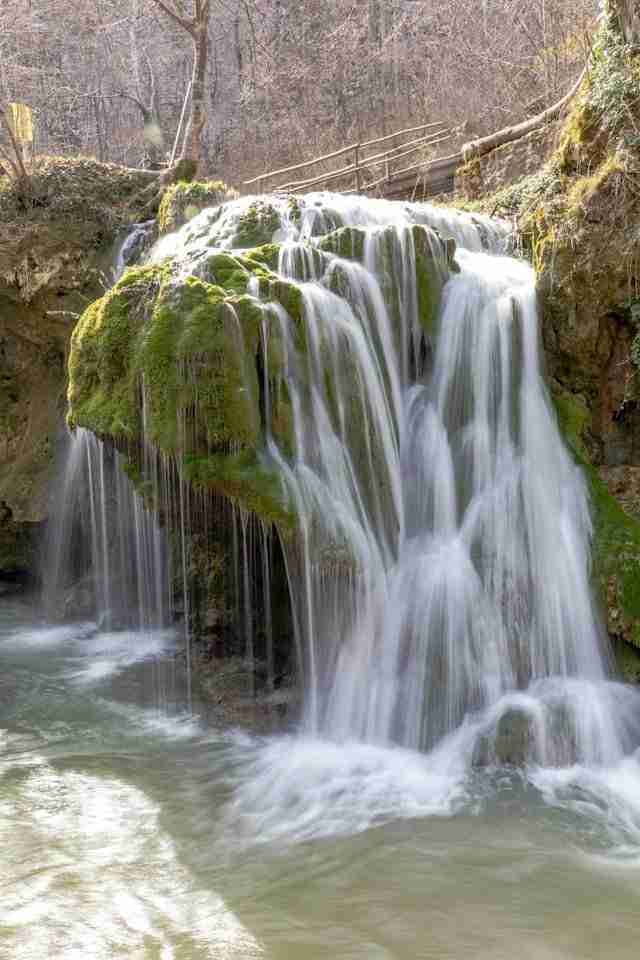
Tucked within the heart of Romania's Cheile Nerei-Beușnița National Park, Cascada Bigăr
is one of Europe's most distinctive waterfalls and an enchanting destination for nature photographers. Known for its unique shape and almost fairytale appearance, the water of Bigăr cascades over a rounded, moss-covered cliff in fine, continuous veils. The entire surface of the rock is cloaked in bright green moss, which glows vividly in the filtered light of the surrounding forest. Though the upper part of the cascade partially collapsed in 2021, the location remains visually striking and culturally symbolic—an emblem of Romania's natural beauty. For those seeking atmospheric landscapes, intimate waterfall textures, and lush forest compositions, Cascada Bigăr remains an essential photography subject in the Carpathian foothills.
Best Photography Opportunities
• Classic frontal composition of the moss-covered rock
: The iconic perspective of Cascada Bigăr is a wide view from directly in front, where the water flows evenly over the mossy dome and descends into the river below. A wide-angle lens allows you to frame the full structure of the falls while including forest textures and river elements for context. Overcast days provide ideal lighting, eliminating harsh contrast and allowing the green moss to glow with saturated vibrance. Framing with surrounding tree branches or ferns helps to encapsulate the waterfall in a natural vignette.
• Close-up studies of moss, water, and light patterns
: The fine veils of water trickling over the moss make for beautiful macro and detail compositions. Use a mid-range zoom or macro lens to capture the interplay between the thin sheets of water, the vivid green texture of the moss, and the way light dances across the droplets. A slow shutter speed blurs the movement into delicate white ribbons, while a faster shutter can freeze individual threads of water for a more kinetic feel. Shooting during light rain enhances surface sheen and color depth without introducing fog or lens glare.
• Long exposures for ethereal waterfall effects
: For a dreamlike effect, use a tripod and neutral density filters to extend your exposure and soften the waterfall into misty strands. This is especially effective during low-light conditions or in the soft illumination of early morning. Long exposures also help smooth the surface of the pool below the falls, creating a calm visual counterpoint to the complexity of the water above. Positioning your tripod slightly downstream allows you to include subtle foreground movement in the stream or floating leaves.
• Environmental shots with forest framing and footbridge
: The surrounding area offers several angles that include nearby footpaths and the small wooden bridge that spans the stream just before the cascade. Including these human elements in the frame provides scale and introduces a storybook quality to the image. A vertical composition can accentuate the drop and emphasize the vertical symmetry between the canopy, falls, and pool below. Shooting in early autumn, when hints of gold and orange peek through the foliage, adds rich contrast to the dominant green.
• After the collapse: side compositions and alternate angles
: Since the partial collapse of the overhanging rock in 2021, photographers have begun exploring less traditional angles. Side views and low, upward perspectives now offer new ways to appreciate the altered structure of the waterfall and its integration into the landscape. These approaches reveal more of the surrounding geology and root systems, making for earthy, grounding compositions that focus on resilience and natural evolution rather than symmetry alone.
Best Time to Visit
The most photogenic period for Cascada Bigăr is between late spring and early autumn, when the surrounding forest is lush and the moss is at its greenest. May through June is especially rewarding after spring rains, as the flow is full and the plant life is dense with fresh growth. Summer brings easier access and long days for shooting in variable light, while early autumn adds subtle golden tones to the foliage without overwhelming the green palette of the waterfall itself.
Overcast or lightly rainy days are ideal for waterfall photography here, softening the light and deepening colors without creating harsh reflections. Early morning visits offer peaceful conditions, diffuse light through the canopy, and minimal foot traffic—essential for long exposures or thoughtful compositions without interruption.
Winter and early spring are less favorable due to reduced flow, fallen leaves, and limited color contrast, although a light dusting of snow or frost can add a minimalist beauty to the moss-covered rock and surrounding terrain if conditions allow safe access.
How to Get There
Cascada Bigăr is located along National Road 57B in the southwestern region of Romania, in Caraș-Severin County. The falls are found near the village of Poneasca, within Cheile Nerei-Beușnița National Park, and are easily accessed by car.
From the nearby town of Bozovici, it's about a 10-minute drive north to a designated parking area near the roadside. From there, it's just a short walk on a paved path to reach the viewing area. Signage is clear and the trail is level, making it accessible to all visitors with minimal gear.
There is no formal entrance fee for visiting the falls, although visitors are asked to respect the natural surroundings and adhere to local conservation guidelines, especially in the wake of the structural changes following the collapse.
Recommended Gear and Shooting Tips
A wide-angle lens is ideal for capturing full compositions of the waterfall and its surrounding forest. A mid-range zoom is perfect for exploring tighter compositions, vertical frames, and structural details of the moss and cascade. A macro lens or close-focusing prime will allow you to isolate textures and water droplets on the moss surface with fine detail.
A tripod is essential for long exposures and low-light shooting in the shaded forest. Bring neutral density filters to extend shutter speed even in bright conditions, and a polarizer to cut glare on the water and enhance color saturation, particularly on the moss. Waterproof footwear is helpful, as some of the best angles may require stepping close to the stream or navigating damp ground.
Keep lens cloths handy—forest moisture, mist, and occasional spray from the falls can fog your lens quickly. Scout your composition before setting up your tripod, and use slow, deliberate movements to avoid disturbing moss or natural surfaces.
Nearby Photography Locations
: This nearby gorge offers towering limestone cliffs, turquoise pools, and dramatic footpaths winding through dense forest. It's a great location for wide landscapes and long-exposure stream photography in a wild, untamed environment.
: A short hike deeper into the national park, this multi-tiered waterfall features a wide, fan-like cascade framed by beech trees and mossy rock. It's an ideal secondary location for soft water shots and compositions that emphasize rhythm and form.
: Famous for its vivid turquoise color, this small, spring-fed lake is surrounded by dense forest and is often mirror-like in the morning. It's excellent for reflection shots, minimalist compositions, and detailed studies of water clarity and plant life.
• Bozovici Village and countryside
: The pastoral scenery surrounding the town includes rolling fields, rustic fences, and traditional Romanian architecture. In golden light or foggy mornings, it's an excellent place for quiet rural compositions and environmental storytelling.
• Anina Mountains
: For those looking to explore farther, the forested Anina range offers dramatic landscapes, limestone formations, and historic mining roads with sweeping views. It's a less-traveled region rich in texture and high-contrast imagery.
Cascada Bigăr remains a place of photographic enchantment, even in its changed form—a natural sculpture shaped by time, water, and myth. Whether capturing its cascading elegance head-on or exploring the hidden textures that surround it, Bigăr continues to inspire photographers with its unique, almost surreal presence in the Romanian wilderness.
Comments
Loading comments…