
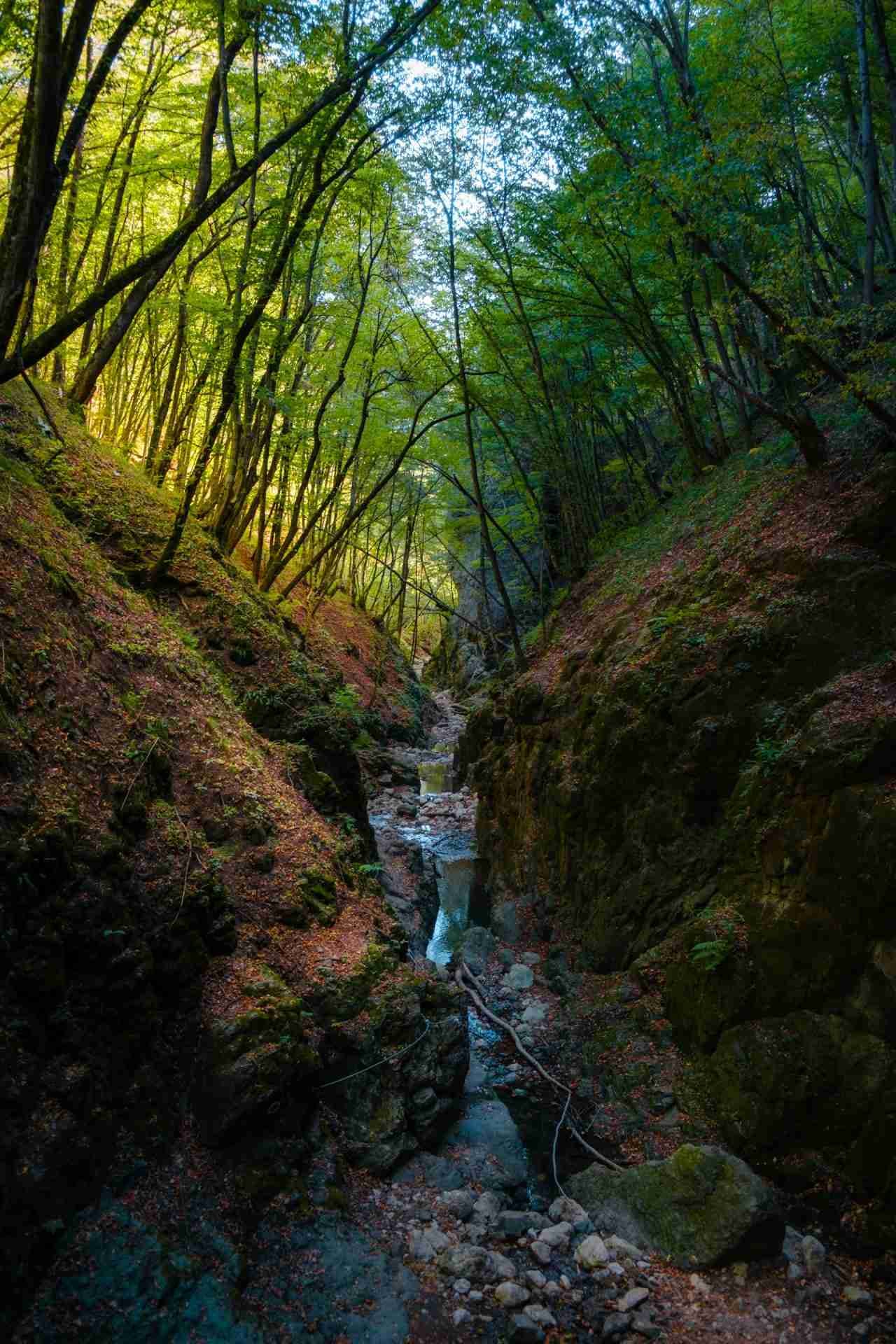
Hidden within the forested limestone ridges of Apuseni Natural Park, Cheile Borzești is a narrow gorge that winds through northwest Romania like a vein of carved stone. Known for its sheer cliffs, hanging moss, and intermittent waterfalls, the gorge presents a tightly composed landscape that challenges photographers to work with light, texture, and perspective. Unlike wider canyons or sweeping vistas, Cheile Borzești rewards those who look closely and frame with intent. It is a place where light cuts sharply through dense forest, bounces off wet rock faces, and reveals subtle shifts in color and detail. For landscape photographers, it offers intimate compositions shaped by weather, water, and time.
Best Photography Opportunities
• Vertical Cliff Walls and Forest Canopy Contrast
The tall, narrow cliffs of Cheile Borzești create dramatic vertical frames that work best when balanced with the trees and foliage above. A wide angle lens around 16 to 24mm captures the steep stone flanks rising above you while allowing enough sky and canopy to contextualize the scene. On overcast days, the forest light becomes diffused and wraps gently around the rock surfaces, bringing out subtle textures in the limestone. Including fallen logs or river stones in the foreground adds depth and contrast between natural elements.
• Streamside Long Exposures
The creek running through the gorge offers countless chances for long exposure work, particularly at bends or near small cascades. Use a tripod and neutral density filter to blur the water's movement and emphasize its smooth contrast against jagged rock. These scenes work especially well in low light conditions or during cloudy weather when the reflections are minimized. Position your camera low to the water's edge and use a small aperture to increase depth of field. Look for leaves caught in eddies or moss-covered stones as natural focal points.
• Tight Compositions of Rock Texture and Detail
Cheile Borzești is filled with geological detail that invites close study. The limestone walls are marked with fissures, water streaks, and hanging vegetation that work well as minimalist compositions. A short telephoto lens or macro capable zoom lets you isolate these textures without introducing surrounding distractions. These images are strongest in flat light, especially after rain when the rock surfaces darken and saturation increases. Consider shooting vertically to emphasize the cliff's height even in a close up.
• Seasonal Light Beams and Shadow Play
In late spring and autumn, the angle of sunlight in early morning or late afternoon can create shafts of light that cut through the gorge. These light beams are brief and localized, but when they align with the canyon walls or illuminate mist, they become powerful compositional elements. Bring a fast lens with wide aperture settings and be ready to work handheld. Use spot metering to expose for the light column, letting the darker walls fall into shadow for dramatic contrast.
• Forest Framing at the Gorge Entrance
As you approach the gorge, the forest opens just enough to allow for framing shots that capture both the stone entrance and the surrounding trees. This is a good place for layered compositions, using tree trunks or branches in the foreground to frame the entry gap in the cliffs. Early morning mist or fog adds mood and helps separate the foreground from background. These are ideal conditions for capturing the transition from open trail into the tighter stone corridor beyond.
Best Time to Visit
Cheile Borzești is best visited in spring and autumn when water flow is higher, light is softer, and vegetation brings life to the rocky landscape. Spring adds moss and wildflowers to the gorge, while autumn brings gold and rust colored leaves that contrast beautifully with the cool gray stone. Early morning is ideal for long exposures and diffuse light throughout the gorge, especially on overcast days. Summer can be more crowded and brighter, making exposure control more difficult in the narrow sections. Winter, while quieter, brings icy footing and limited access to the water's edge, though it offers striking opportunities for snow dusted cliffs and frozen cascades for those prepared to hike in carefully.
How to Get There
Cheile Borzești is located in Alba County, Romania, within the Apuseni Natural Park. The closest major town is Câmpeni, from which it is about a 30 minute drive to the village of Sălciua. From there, a marked forest road leads to a small parking area near the trailhead. The hike into the gorge is short but moderately uneven, following the Borzești stream and crossing several wet and rocky sections. Waterproof boots and careful footing are recommended. There are no entrance fees, visitor centers, or maintained infrastructure, so bring everything you need for the day, including food, water, and weather protection. The area is remote and quiet, with no cell signal in most parts of the gorge. Photographers should plan for a half or full day to explore and shoot, depending on weather and light.
Recommended Photography Gear
A wide angle lens is essential for capturing the steep gorge walls and interior scenes. A focal range of 16 to 35mm allows flexibility while keeping distortion manageable. A lightweight tripod is critical for long exposures along the stream. A 70 to 200mm lens is useful for isolating cliff details and distant vegetation textures. A polarizing filter helps cut glare on wet stone and enhance leaf color, while a neutral density filter allows for longer shutter speeds in flowing water. Pack extra batteries and memory cards, as you will likely shoot a high number of frames in changing light conditions. A waterproof backpack or dry bag is recommended to protect gear when moving close to water or in rainy weather.
Nearby Photography Locations
One of the largest cave entrances in Romania, this dramatic opening in the cliff face is just a short drive from Cheile Borzești. It offers towering scale, subterranean textures, and striking light transitions. Best photographed early in the day when light filters into the mouth of the cave.
• Sub Piatră Hamlet
This small, remote settlement at the base of limestone cliffs offers traditional Romanian architecture, wooden fences, and quiet pastoral scenes. It is ideal for documentary or rural landscape work in golden hour light.
Located nearby, this protected area features high alpine meadows, weathered limestone outcrops, and broad views of the Trascău Mountains. It is well suited to wide landscapes and more open compositions than the gorge allows.
• Valea Morilor Waterfall
Tucked into the forest near Sălciua, this multi-tiered waterfall is best after rain and offers vertical compositions through trees and over moss covered rocks. Use a tripod and long exposure techniques to capture the motion.
A natural stone arch perched above a forested slope, this location requires a bit more hiking but offers unique rock formations and expansive views. It pairs well with sunset light or moody cloud cover for dramatic framing.
Comments
Loading comments…