
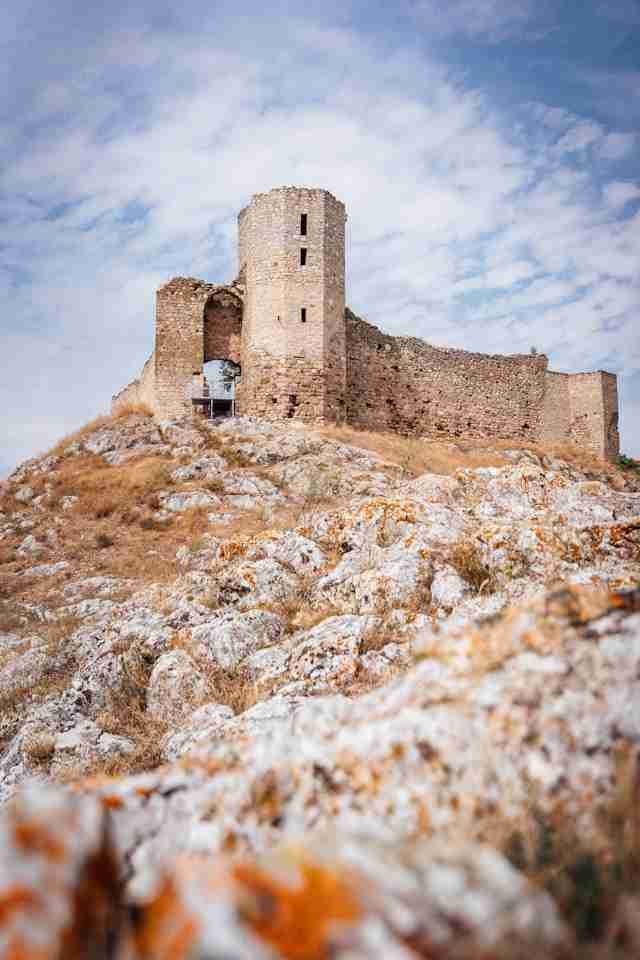
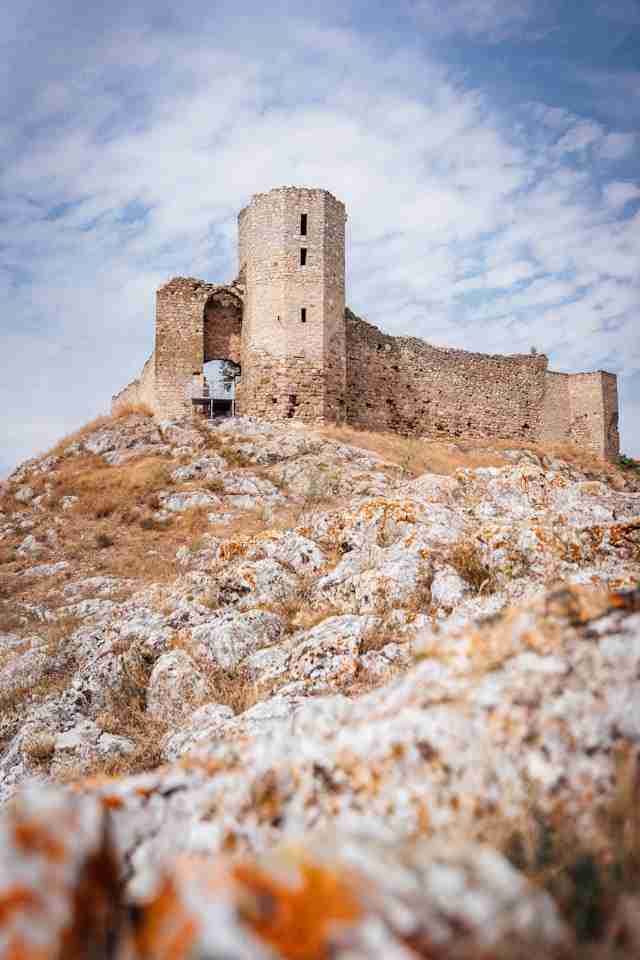
Perched on a limestone hill above the rolling landscape of northern Dobrudja, Enisala Fortress offers photographers sweeping views of the surrounding lakes and plains, along with centuries-old walls that have stood through layers of regional history. Built in the 13th or 14th century, the fortress commands a strategic point between Lake Razim and Lake Babadag, and its rugged, weathered stone contrasts beautifully with the open Romanian sky. The structure's towers and outer walls remain partially intact, forming strong geometric shapes that catch and hold light across the day. Whether approached at sunrise for golden side lighting or at dusk when the sun dips behind distant hills, Enisala is a setting where natural and manmade forms meet in dramatic simplicity.
Best Photography Opportunities
• Wide-Angle Shots of the Fortress on the Hill
From the road or surrounding fields, use a wide-angle lens to capture the full fortress structure in its elevated position. Composing from below exaggerates the scale of the walls and allows for sky-heavy frames that work well during colorful sunrise or sunset skies. Early morning side light gives depth to the stonework and casts long shadows across the slopes. Include the surrounding farmland or lakes in the lower frame to show the fortress within its regional context. A small aperture ensures sharpness from foreground to background and allows cloud detail to contribute to the image.
• Close-Ups of Arched Windows and Stonework
The remaining sections of Enisala's defensive walls include arched windows and partially collapsed doorways that lend themselves well to detail-oriented compositions. Use a mid-range zoom or standard lens to isolate these features, especially during overcast conditions that enhance texture without harsh shadow. Side angles allow you to emphasize depth and show how time has worn the stone surfaces. These close shots benefit from soft directional light, especially during early morning or the hour before sunset. A shallow depth of field can help draw attention to craftsmanship while allowing distant landscape hints to remain in the background.
• Silhouettes of the Fortress at Sunset
The fortress's shape is strong and easily recognizable in silhouette, especially when shot from below with the sun setting behind the structure. Use a moderate telephoto lens to compress the shape against the glowing sky. These compositions work best with a clean horizon and minimal foreground clutter. A fast shutter speed will preserve edge sharpness, while a tripod allows you to wait for the peak moment of color without camera shake. Strong cloud presence enhances these frames and adds drama without relying on direct sunlight.
• Views from Within the Walls Looking Out
Standing inside the fortress walls, photographers can shoot outward through windows and openings, using the stone architecture to frame the wider landscape. These images work well with wide or standard lenses, depending on how much of the window frame you want to include. Early or late light entering from the side highlights the inner surfaces and draws attention to texture and age. Use spot metering to properly expose the stone interior without losing highlight detail in the landscape beyond. These compositions offer a sense of time and perspective from within the structure itself.
• Elevated Panoramas of the Dobrudja Landscape
From the fortress platform, you can photograph Lake Razim, Lake Babadag, and the low hills and plains that stretch toward the horizon. Panoramic stitching is highly effective here, especially with a mid-range lens set to a vertical orientation. Morning fog or afternoon clouds can add volume and movement to otherwise open skies. Position landmarks such as distant fields, boats, or clusters of trees to anchor the frame. These shots are strongest when light rakes across the hills, giving contrast to the gentle contours of the land.
Best Time to Visit
The best time to photograph Enisala Fortress is from April through October, when weather is milder and access roads are in good condition. Spring brings green grass to the hillsides, which pairs well with the pale stone of the fortress. Summer skies often carry high clouds or developing storms that add interest to wide compositions. Autumn delivers warm earth tones and long shadows that enhance depth in both the landscape and stonework.
Morning and evening are the most productive times of day. Sunrise provides golden light on the eastern walls and the open view toward Lake Razim, while sunset bathes the fortress in side light from the west and offers ideal conditions for silhouette photography. Midday can be harsh, but overcast conditions soften the contrast and allow for more detail work.
Winter visits can be productive for photographers seeking stark contrast or snow-covered scenes, but access can be limited and the wind across the hilltop is often strong. Always check local conditions before planning a winter shoot.
How to Get There
Enisala Fortress is located near the village of Enisala in Tulcea County, Romania. From the city of Tulcea, it's approximately a 45-minute drive via the DJ222 road. The route is well signed and passes through scenic farmland and low hills before reaching the site.
There is a small parking area at the base of the hill, from which visitors must make a short walk uphill along a gravel path to reach the fortress. The incline is moderate but manageable with gear, and the walk offers preview angles of the site. There is a small entry fee collected at the entrance, which supports local maintenance and preservation.
The fortress grounds are open-air and mostly unstructured, so wear sturdy footwear, especially if visiting in wet or windy conditions. There are no shops or restaurants directly at the site, but the nearby village of Enisala offers basic services and accommodations. Mobile signal is generally available on the hilltop, and maps can be downloaded in advance for offline use.
Recommended Photography Gear
A wide-angle lens is key for capturing the full scale of the fortress and the expansive views over the surrounding region. A standard zoom (24–70mm) is useful for detail work, window framing, and medium-distance landscape compositions. A telephoto lens helps isolate distant elements or compress the shape of the fortress against dramatic skies.
A tripod is essential for low-light shooting during sunrise or sunset, as well as for panoramic stitching and long exposures. A polarizing filter can help cut through haze when photographing distant lakes or plains, and a neutral density filter is useful for slowing shutter speed if you're working with fast-moving clouds or wind-driven grass.
Wind can be a factor, so bring a weighted tripod or use your bag to stabilize it. Extra batteries and memory cards are recommended, especially if you're shooting time-lapses or extended sequences. A lens cloth is useful for cleaning dust that may blow up from the rocky slope.
Nearby Photography Locations
This shallow lake stretches out east of Enisala and offers peaceful compositions of fishing boats, reed beds, and distant waterfowl. Sunrise and early morning provide the best reflections and still water.
A short drive northeast, this fishing village along the Black Sea lagoon system offers colorful boats, stilted docks, and cultural textures. It's ideal for documentary-style photography and environmental portraiture.
Nestled in forested hills, this Orthodox monastery features elegant architecture, peaceful grounds, and tree-lined paths. Soft light and overcast days suit its quiet, spiritual mood.
• Sarichioi on Lake Babadag
Known for its Lipovan Russian community and traditional houses, Sarichioi offers lakeside views, vibrant facades, and active fishing culture. The docks are best photographed in golden light with long shadows over water.
South of the fortress, this protected area includes rare oak species and rolling forested hills. It's a good stop for nature photography, especially in spring and autumn when color and light are more varied.
Enisala Fortress rewards photographers who appreciate both landscape context and architectural form. Its solitude, elevated position, and connection to the land below make it a compelling place to explore light, structure, and space in a single frame.
Comments
Loading comments…