
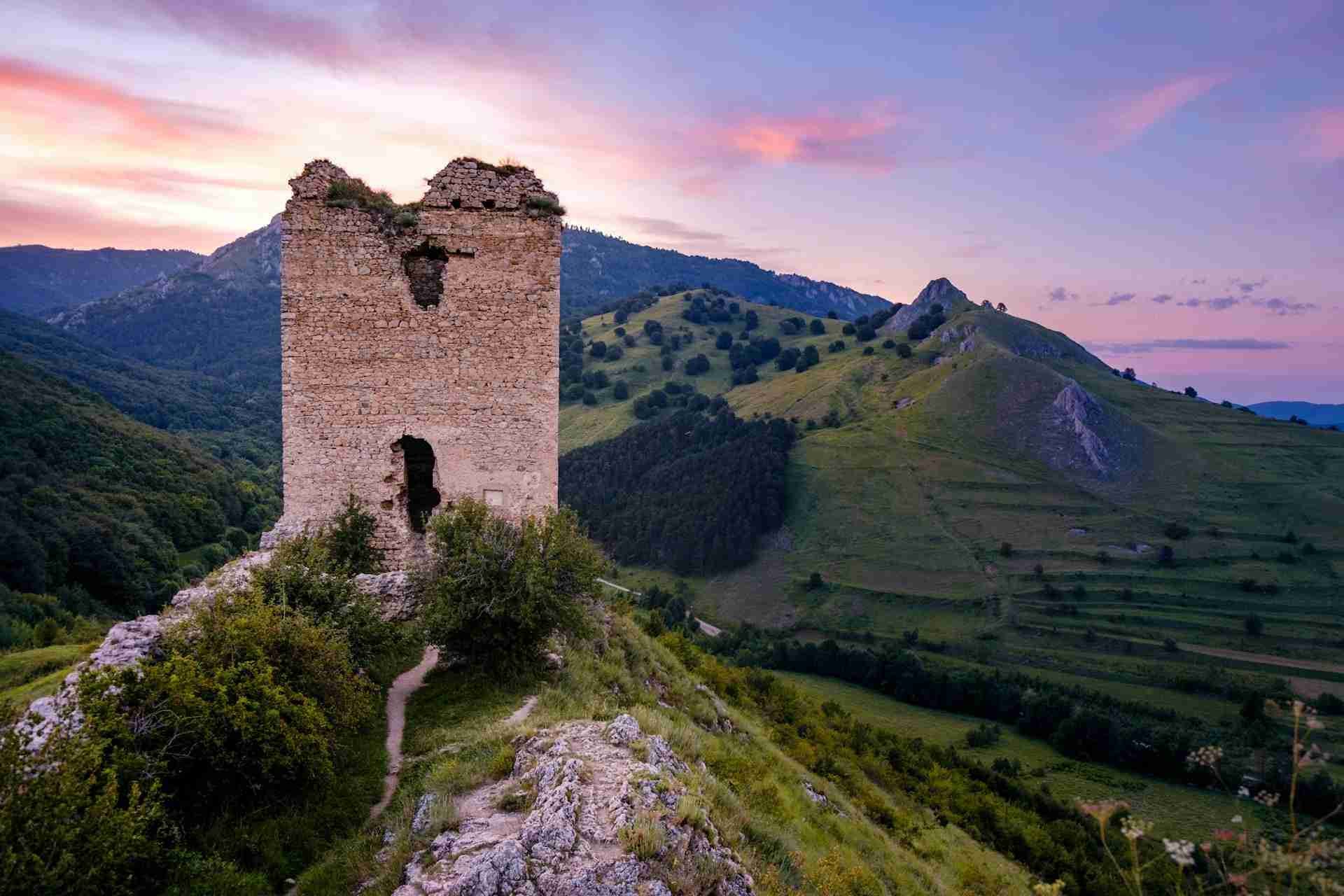
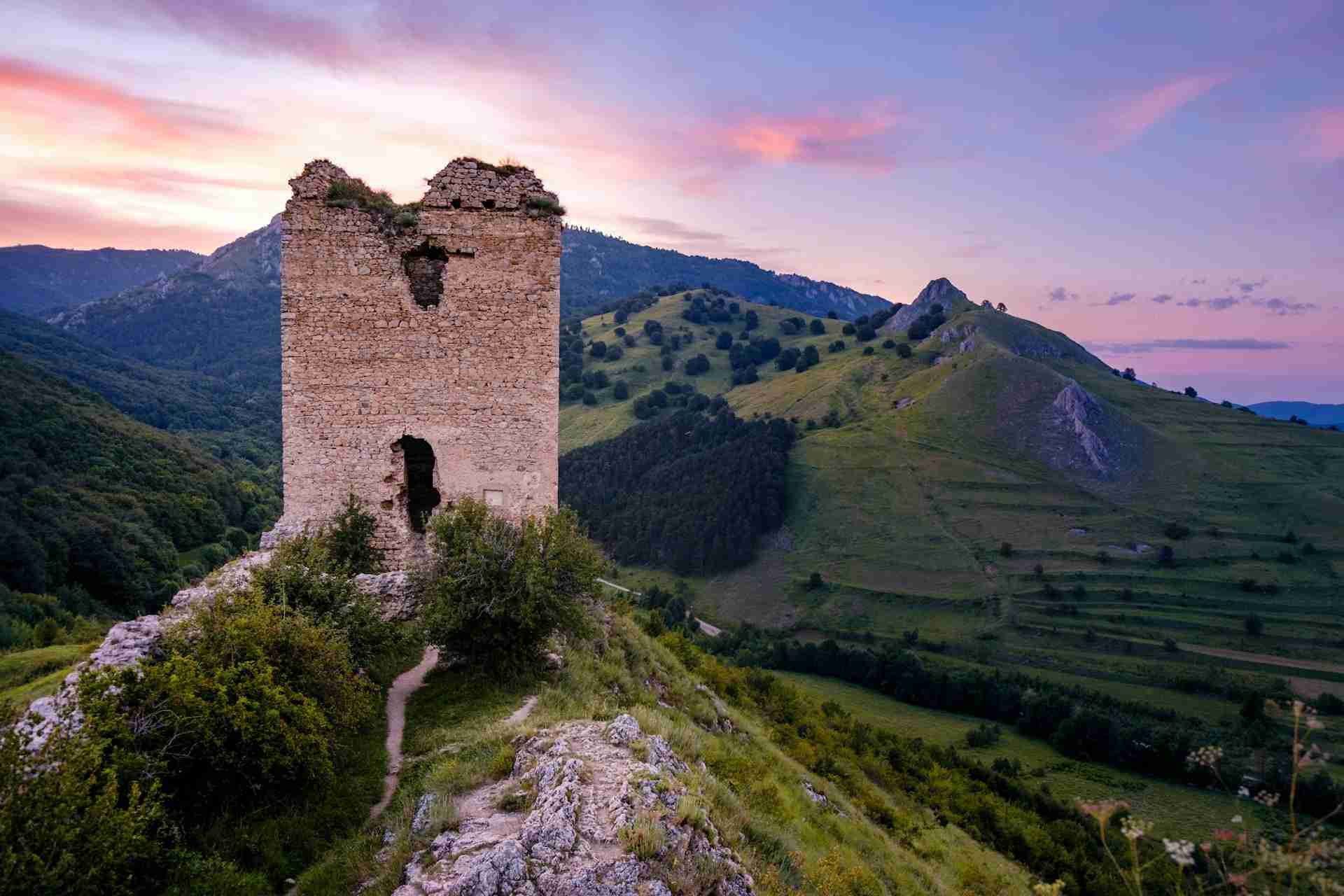
Rising dramatically from the limestone spine above the village of Colțești in Romania's Apuseni Mountains, Trascău Fortress is a relic of medieval defense surrounded by unspoiled natural beauty. Perched on a ridge with commanding views over the Trascău Valley, the ruined stronghold invites photographers into a scene of weathered stone, shifting light, and wide horizons. Originally built in the 13th century, the fortress has slowly returned to the landscape, with walls and towers that now blend into the terrain. Unlike more restored or touristed castles, Trascău remains raw and exposed, making it a location that rewards careful planning, strong compositional thinking, and a willingness to work with changeable mountain conditions. The site offers both broad landscape work and tightly framed studies of crumbling architecture framed by sky and ridge.
Best Photography Opportunities
• Fortress on the Ridge at Sunrise
The most powerful image at Trascău Fortress is its silhouette rising above the valley at first light. From the fields southeast of Colțești, you can capture the fortress framed by the rolling foothills, especially when the early sun paints the rock and ruins with golden light. The surrounding meadows provide clean foreground elements like grazing animals, stone fences, or flowering grasses, which can lead the viewer into the scene. Shooting from this low position with a telephoto lens compresses the ridge and flattens the fortress against the sky, emphasizing its weathered verticality. This time of day also gives you the best chance of catching fog or low clouds hanging in the valley below.
• Interior Stonework and Partial Walls
Once at the site, the fractured remains of Trascău's towers and inner walls offer a textural counterpoint to the open landscapes around them. The cracks, archways, and stone layering provide detail-rich subjects that change character depending on the direction of light. Use a wide-angle lens to shoot from inside collapsed chambers, placing fragments of the structure against the bright sky for contrast. A polarizer can help bring out the contrast in the rock surface while darkening the blue sky, especially midday. These compositions are strongest when you let the surrounding ridgeline or treeline appear in the background to give scale and location context.
• Overhead Drone Perspectives
For those equipped with a drone, Trascău Fortress opens up a completely different visual field. The aerial view reveals how the castle follows the contour of the ridge and exposes the relationship between fortress, forest, and village. Shooting top-down creates abstract images of ruined geometry set against grass and stone, while oblique views during golden hour highlight shadowed depth and texture. The best drone compositions are captured during calm morning or evening hours, when wind is minimal and light creates long, readable shadows across the slope. Always verify local regulations before flying, as visibility and altitude restrictions vary in mountainous areas.
• Long Lens Compression from Nearby Hills
From higher trails to the west, such as those leading toward the Piatra Secuiului massif, you can shoot back across the valley with a long lens and compress Trascău Fortress against the landscape. This angle is particularly strong in the afternoon, when light falls from the west and brings out the texture in both ruins and ridgeline. Layered hills behind the fortress add depth and tonal variation, especially in hazy or golden light. A 100–400mm lens is ideal for isolating sections of the castle and playing with framing options that incorporate rock formations, trees, or passing clouds.
• Village and Castle Together at Dusk
As the sun sets behind the Piatra Secuiului cliffs, soft light flows down into the valley and illuminates Colțești village while the fortress remains perched in silhouette above. Shooting from the north, along the farm roads behind the village, you can frame both the settlement and the castle in one scene, using winding paths or fence lines as leading elements. This composition balances human scale with historical depth and works especially well during blue hour when warm house lights begin to glow. A stable tripod and graduated ND filter help preserve dynamic range as sky and land enter different lighting zones.
Best Time to Visit
Spring and autumn offer the most flexible and photogenic conditions at Trascău Fortress. In spring, the surrounding fields burst into green, and wildflowers fill the meadows below the ridge. Morning light is soft and directional, and the skies tend to be clean, with occasional mist that clings to the valley floor and separates the layers of the scene. This season also provides the best access along trails, as paths are dry and wildlife activity adds visual interest to early hours.
Autumn brings a broader tonal palette, with tree lines shifting into yellow and orange and grasses along the ridge turning pale gold. The low sun highlights the fortress walls and surrounding contours without harsh glare, making this a great season for late afternoon shooting. Fog is more frequent in October and November, especially in the early morning, helping to isolate the ridge and create a sense of mood around the ruins.
Summer has longer daylight hours and consistently clear weather, but midday light can be overly harsh and the ridge can get quite warm under full sun. Early morning or evening remains the best window for shooting in summer. Winter transforms the site into a stark, monochrome scene of bare stone and snow-covered grass. Though access is more challenging, especially after snowfall, the location becomes quiet and austere, lending itself to minimalist compositions and tight architectural details under cold light.
How to Get There
Trascău Fortress is located above the village of Colțești in Alba County, within the Apuseni range of western Romania. The closest larger town is Aiud, about 30 minutes away by car. If arriving from Cluj-Napoca, the drive takes around two hours via DN1, followed by local roads through Rimetea and toward Colțești. Once in Colțești, the fortress can be reached on foot from the end of the village road. Follow marked trails that wind through the fields and ascend toward the ridge; the hike takes approximately 30 to 40 minutes depending on pace and gear.
The trail is unpaved but well-used, with uneven footing in places and sections that can be slippery after rain. Sturdy hiking shoes or boots are essential, and there are no railings or barriers around the fortress itself. Access is unrestricted and free of charge, but be aware that the site is entirely unstaffed and has no facilities. Bring water and prepare for changeable weather, especially in spring and autumn. If you plan to shoot at sunrise or sunset, begin your ascent with enough time to navigate in low light and return safely, as there is no artificial lighting on the trail or near the ruins.
Recommended Photography Gear
For photographing Trascău Fortress, pack a range of lenses that handle both broad landscapes and fine architectural detail. A wide-angle lens between 16–35mm is essential for interior and close-range ruin work, as well as dramatic ridge-line perspectives from the base or summit. A mid-range zoom like a 24–70mm is versatile for most walk-and-shoot scenes, capturing general views of the fortress from multiple angles as you move along the approach. A telephoto lens, ideally 70–200mm or longer, is crucial for compressing layers of valley, ruin, and sky from more distant or elevated trails.
A tripod is necessary for long exposures, especially at sunrise, twilight, or when working with low-light compositions from shaded sides of the ridge. A polarizing filter helps reduce haze in landscape shots and improves contrast between rock and sky. A neutral density filter can be useful for softening fast-moving cloud or capturing longer exposures during daylight, particularly when photographing fog or sunrays breaking through over the hills.
If you fly a drone, bring spare batteries and confirm wind conditions in the valley, which can shift quickly due to the shape of the ridge. Weather-sealed bags and lens wipes are useful in spring and autumn when moisture and wind-blown dust are more common. Hiking poles and gloves are recommended in cooler months for comfort and safety on steeper or loose terrain. Finally, a headlamp is essential for early or late-day sessions where trail navigation begins or ends in dim light.
Nearby Photography Locations
Towering over the village of Rimetea, this dramatic limestone massif offers panoramic views of the valley and fortress from the opposite side. It's best climbed for sunrise when the first light hits Trascău Fortress across the landscape and paints the cliffs in warm tones.
This well-preserved Transylvanian village is known for its whitewashed houses, traditional wooden details, and mountainous backdrop. Early morning light bathes the facades while the cliffs behind catch the sun's first glow, creating perfect conditions for village and landscape compositions.
About an hour's drive away, this deep forested gorge offers a completely different shooting environment. Narrow passages, waterfalls, and dramatic rock walls provide opportunities for long exposures, texture studies, and atmospheric forest scenes.
This karst canyon with vertical limestone walls is ideal for shooting scale, shadow play, and reflective stream details. It works well in late afternoon when warm light cuts across the stone and illuminates climbers or hikers moving through the gorge floor.
Back in town, the historic Aiud Fortress offers walled architecture, gate towers, and a more urban backdrop. It's well suited for architectural and historical detail photography, particularly in low, angled light when the surrounding buildings cast long shadows.
Trascău Fortress rewards photographers who seek more than just a postcard view. Its setting, character, and natural integration into the landscape invite careful compositions, experimentation with light, and quiet time in a space where history and nature meet. With the right gear, patience, and timing, the site reveals itself as both a landmark and a landscape, full of shape, shadow, and story.
Comments
Loading comments…