
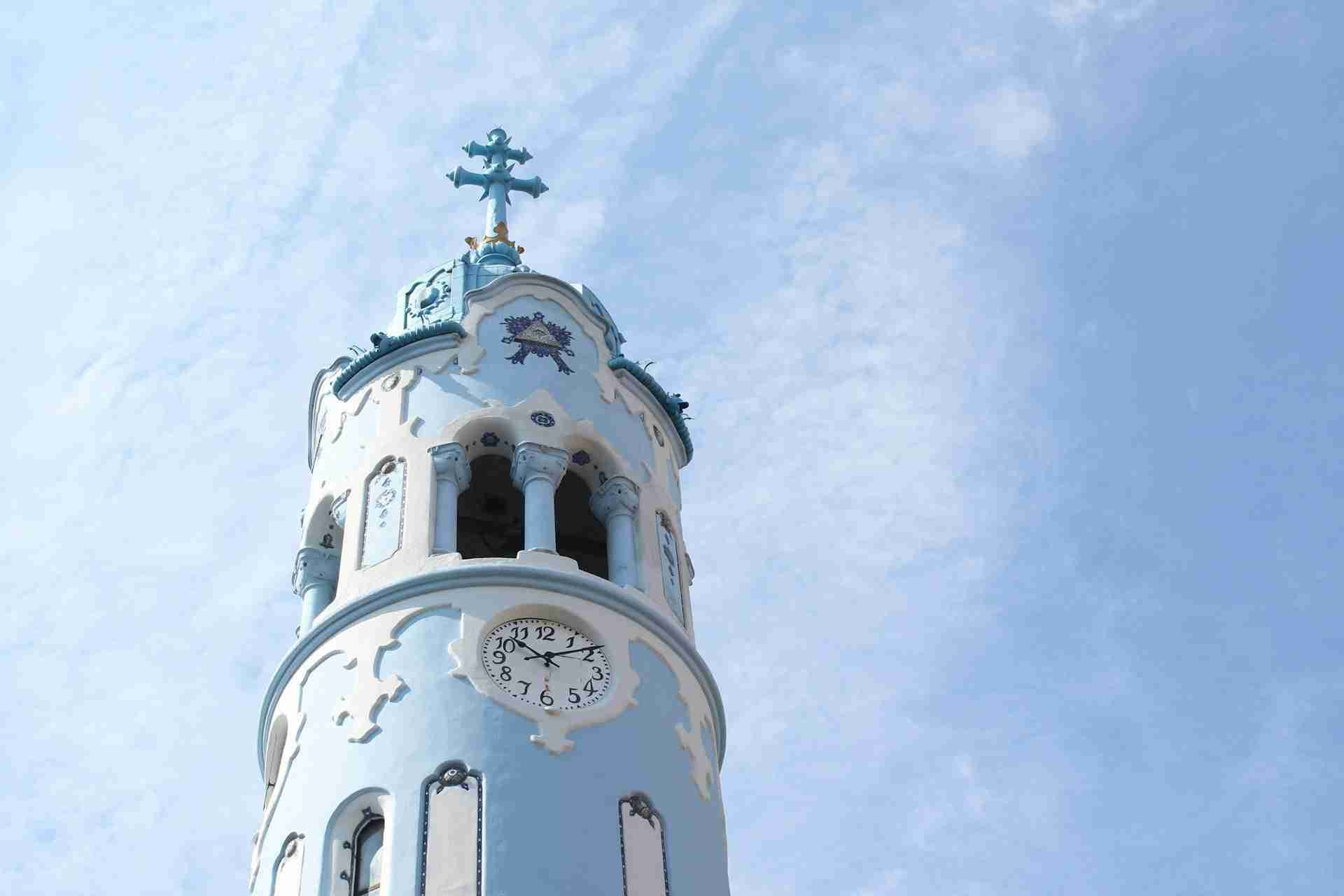
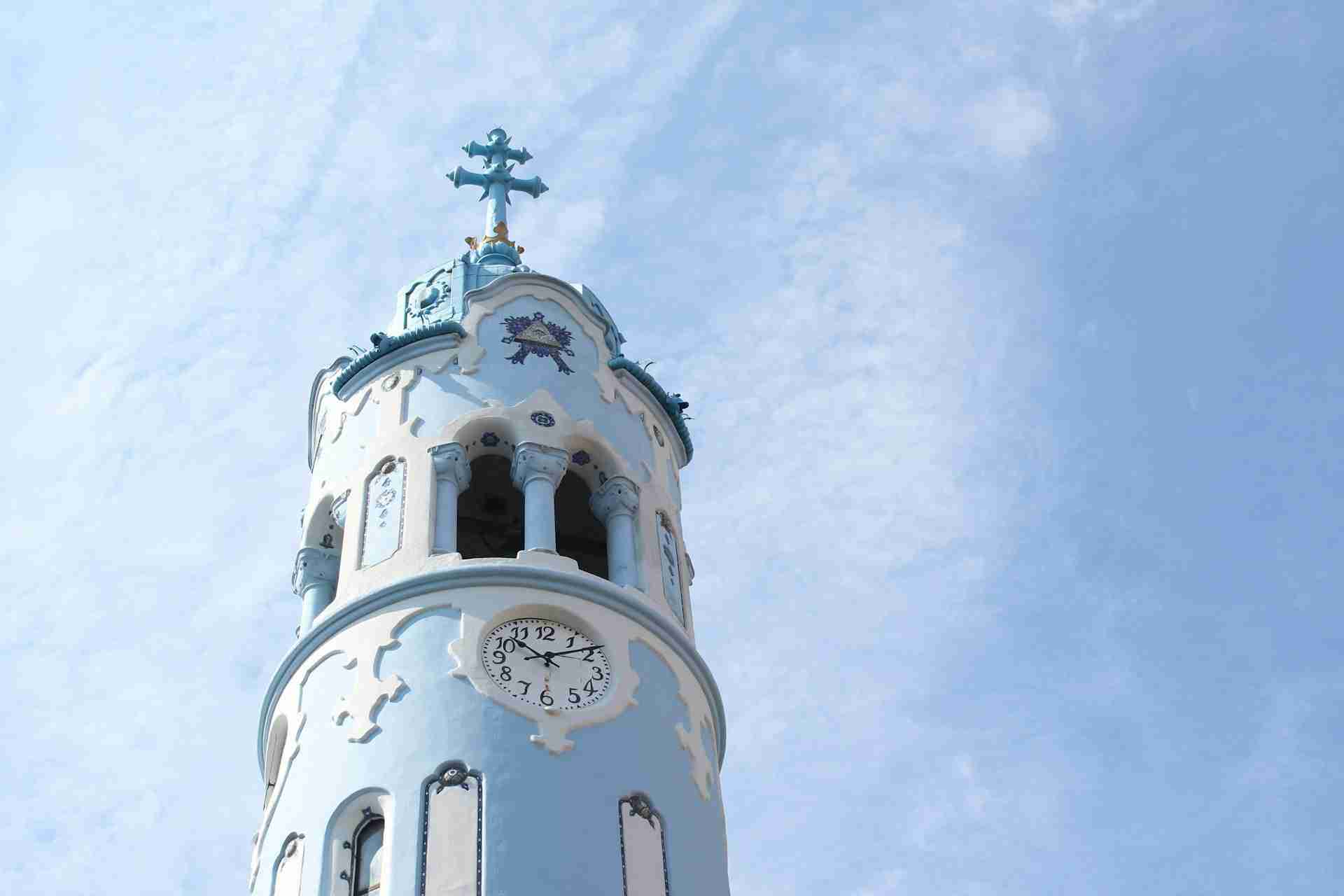
In a quiet corner of Bratislava's Old Town stands one of Central Europe's most visually unique houses of worship: the Church of St. Elizabeth, more affectionately known as the Blue Church. With its sky-blue stucco walls, glazed blue roof tiles, and delicate Art Nouveau curves, this compact but captivating building offers photographers an opportunity to explore a subject that feels equal parts fairy tale and architectural study. Designed by Hungarian architect Ödön Lechner and completed in the early 1900s, the church departs from the city's prevailing Gothic and Baroque tones. Its rounded corners, soft lines, and consistent palette create a unified, whimsical exterior that reads almost like a pastel dream against the Slovakian sky. For photographers interested in shape, detail, symmetry, and color harmony, the Blue Church is an ideal subject that rewards both wide environmental shots and intimate studies of its elegant ornamentation.
Best Photography Opportunities
• Symmetrical Frontal Views from Bezručova Street
The most recognizable angle of the Blue Church is its front elevation, viewed from the quiet end of Bezručova Street. This perspective reveals the full facade, including the horseshoe-shaped arch framing the entrance and the round clock tower rising slightly off-center. Shooting straight on from across the small square allows for clean symmetry, with the smooth paving stones forming a neutral foreground that places full emphasis on the building's blue tones and decorative reliefs. In early morning or just before sunset, the light falls gently across the facade, warming the pale blue surfaces and casting soft shadows that enhance the curves without creating harsh contrast.
• Angled Side Views with the Tower and Dome
Walking around the southeast corner of the church, you'll find a slightly elevated view that shows the bell tower in full and reveals the rounded apse extending from the rear. This angle works particularly well with a moderate wide-angle lens in the 24 to 35 millimeter range, which allows you to capture the vertical elegance of the tower without introducing distortion. This composition also highlights the deep blue ceramic roof tiles that shimmer under direct sun. Including the surrounding trees or buildings in the frame can provide a useful sense of scale and urban context without distracting from the church itself.
• Close-Up Details of Tilework and Decorative Reliefs
The exterior of the Blue Church is full of subtle visual treasures that reward close observation. Its glazed ceramic roof tiles shift in tone depending on the light and weather, offering gradients of blue, teal, and even hints of violet. Delicate floral patterns are etched into the plaster, and the crest above the entrance is framed by stylized flourishes that echo Hungarian folk motifs. A mid-range zoom lens is useful here, allowing you to isolate textures and architectural details without needing to stand too far back. Overcast skies are ideal for this kind of work, as diffused light helps reveal surface detail without glare or hard shadow.
• Interior Photography with Permission or During Services
While the interior is not always open to the public, it is possible to visit during scheduled masses or on special occasions such as heritage days. The interior continues the Art Nouveau design language in softer pastel tones, with curving archways, floral motifs, and light pouring through circular stained glass windows. The nave is relatively small but full of gentle lines and warm tones. If you are granted permission to shoot inside, use a fast prime lens in the 24 to 50 millimeter range and prepare to work with available light only, as flash photography is typically prohibited. A silent shutter mode and respectful presence are essential.
• Seasonal Contrast with Spring Blossoms or Winter Snow
The pale blue exterior of the Blue Church takes on a very different character depending on the season. In spring, blooming trees around the church introduce soft pink and white blossoms that contrast beautifully with the cool blue facade. In winter, snow gathers lightly on the ceramic tiles and smooth surfaces, turning the building into something from a storybook. Each season brings a chance to work with complementary colors or monochromatic palettes that can shift the tone of your compositions entirely. Wider scenes that incorporate seasonal elements help to place the church within its natural and urban surroundings.
Best Time to Visit
Photographing the Blue Church is largely a matter of timing the light and choosing your season. In terms of daily schedule, the early morning hours offer the quietest experience, with fewer visitors and a soft side light that bathes the facade without flattening it. The church faces slightly west, so late afternoon golden hour light also works well, casting a gentle glow on the tiles and giving dimensionality to the curved structure. Midday sun is best avoided if you are trying to capture detail, as the smooth surfaces can become reflective and harsh, making it harder to work with subtle color transitions.
In spring and summer, long days allow for multiple shooting opportunities and the surrounding foliage helps frame the church. Autumn brings deeper light and rich color in nearby trees that can be used to contrast or complement the church's tones. Winter, though colder and more variable in weather, can be especially striking after a light snowfall, particularly if the sky remains bright. Check ahead if you hope to photograph the interior, as access is not always guaranteed and may require coordination with local staff or alignment with religious service schedules.
How to Get There
The Blue Church is located just east of Bratislava's Old Town in the quiet residential neighborhood of Staré Mesto. It is easily accessible on foot from the city center, with a walk of about ten to fifteen minutes from the main square or Bratislava Castle. The nearest public transit stop is Šafárikovo námestie, served by several bus and tram lines. From there, it is a short walk down Grösslingova or Gajova Street to Bezručova, where the church sits tucked into a small open plaza.
There is no entrance fee to photograph the exterior of the church or to walk the surrounding streets. The church grounds are open during the day, though the interior is only accessible during scheduled events or public services. Tripods can be used outside the building, but their use inside may require special permission. There are benches nearby for reviewing your shots or waiting for better light, and a handful of quiet cafes within a few minutes' walk if you need a break between sessions.
Recommended Photography Gear
Photographing the Blue Church requires a relatively lightweight but thoughtful setup tailored for both architectural and detail work. A wide-angle zoom in the 16 to 35 millimeter range is ideal for capturing the full structure, especially when working in tight spaces where stepping back is not possible. To avoid distortion when shooting upward at the tower or roofline, consider using a tilt-shift lens or correcting perspective distortion in post-processing. A mid-range zoom or prime lens around 50 to 85 millimeters allows you to isolate architectural details and surface textures, especially useful for the tilework and ornate decorative features.
A tripod can be helpful for early morning or twilight shoots when shutter speeds drop, but it is not strictly necessary if you are working handheld in good light. A polarizing filter can assist with managing reflections on the glazed tile roof and enhancing the richness of the blue tones, particularly under bright skies. If interior access is possible, a fast lens with a wide aperture will allow you to shoot handheld in lower light without the need for artificial lighting. Because this is a pedestrian area with cobblestone streets and minimal car traffic, a shoulder bag or compact backpack will make it easy to move between compositions while keeping your gear accessible.
Nearby Photography Locations
Just a short walk from the Blue Church, the Old Town offers a completely different visual experience, with narrow streets, Baroque facades, and small public squares. Early morning is the best time to capture the soft character of these historic alleyways without crowds. The interplay of light and shadow along pastel walls and the textures of worn stone pavements make this area a dream for photographers who enjoy quiet urban scenes and subtle historical detail.
• Bratislava Castle and Hilltop Views
Perched above the city, Bratislava Castle provides sweeping views of the Danube River, the Old Town rooftops, and the more modern skyline across the river. From the upper terraces, you can create layered compositions that contrast medieval and contemporary architecture. Sunset from this vantage point is particularly rewarding, and the castle itself offers strong symmetrical forms for architectural photography.
• Eurovea Riverfront and Apollo Bridge
For a modern contrast to the historical core, the Eurovea district along the Danube presents clean lines, glass reflections, and a wide boardwalk that comes alive with evening color. The Apollo Bridge, with its dramatic white arch and river views, is best photographed during blue hour, when city lights begin to reflect in the water and the structure takes on a sculptural quality.
One of the most important churches in Slovakia, this Gothic cathedral stands near the base of the castle hill and offers a more traditional form of religious architecture to photograph. Its soaring tower and deep stone interior provide a strong visual contrast to the curved, colorful Blue Church. Consider visiting both on the same day to capture the broad range of ecclesiastical styles within Bratislava.
The Blue Church of Bratislava may be compact in scale, but its charm and visual richness make it one of the most rewarding photographic subjects in the city. Its consistent palette, whimsical curves, and harmonious proportions allow for a wide variety of creative interpretations, whether you are shooting full architectural frames or focusing on the smallest ceramic tile. Surrounded by the quiet rhythm of a residential neighborhood and within easy reach of the Old Town, the church offers a moment of calm in a bustling capital and a perfect space for photographers to slow down, explore, and work with care.
Comments
Loading comments…