
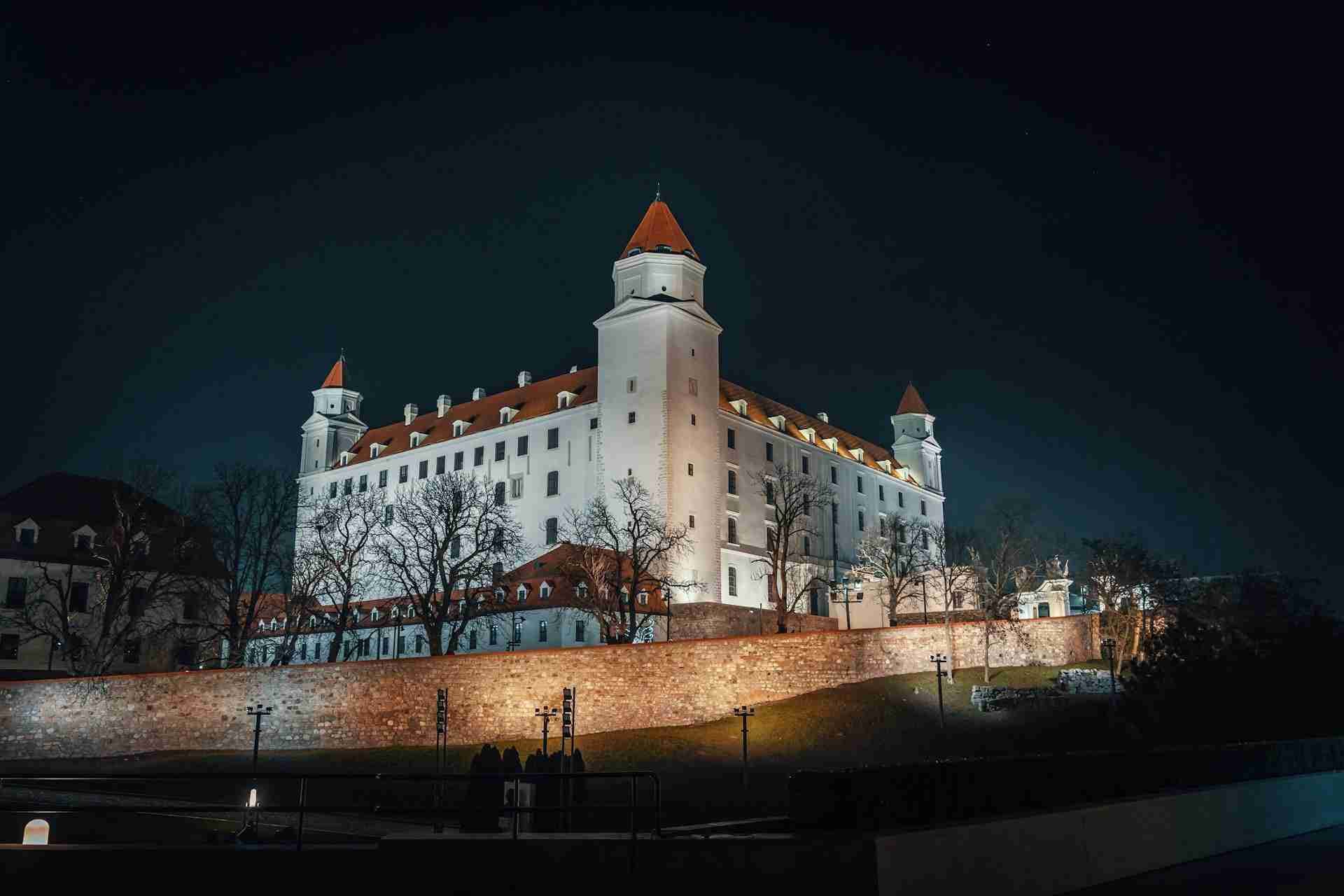
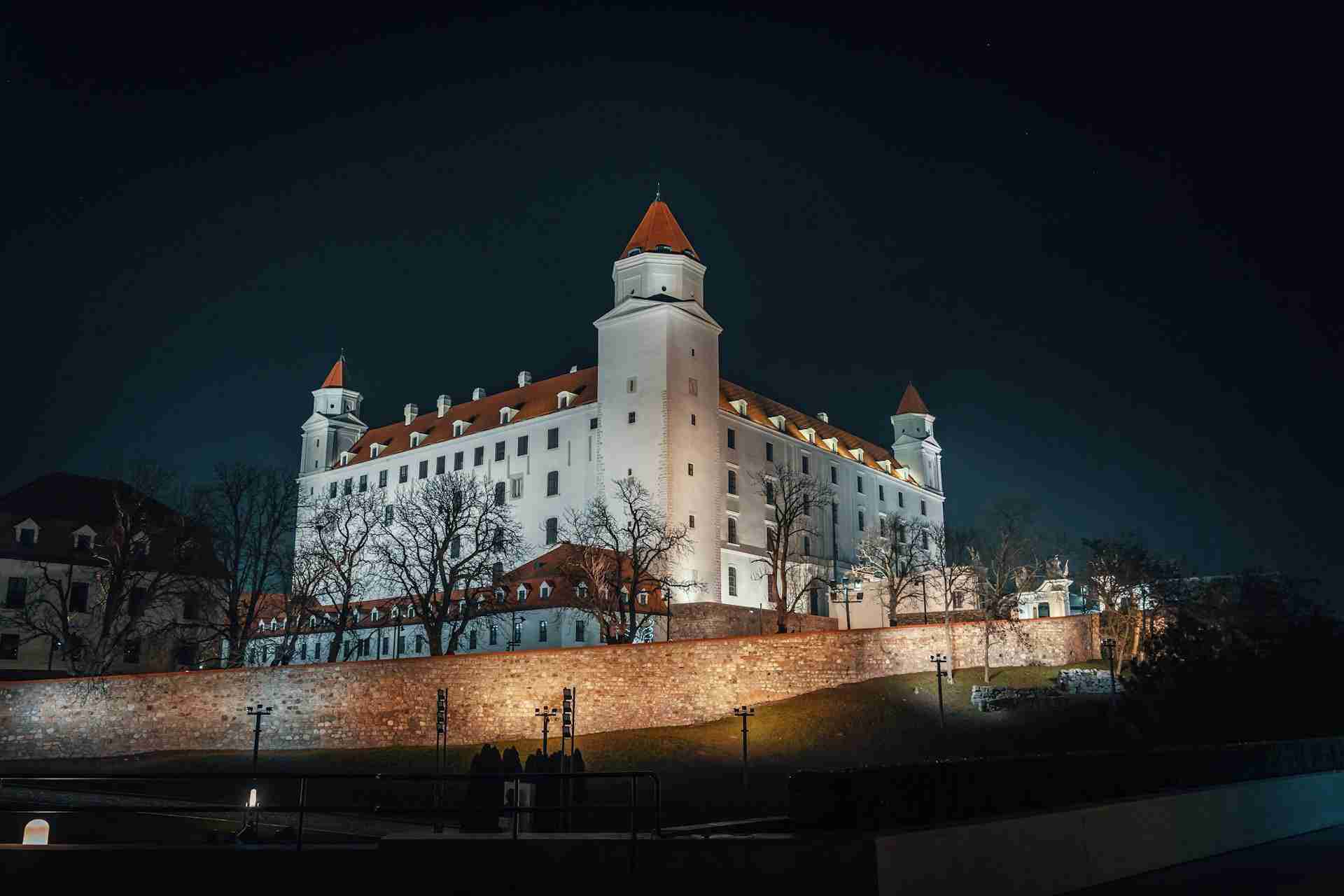
Bratislava Castle rises above the city on a quiet plateau that offers clean lines, historic form, and a wide view across both the old town and the Danube River. The structure itself is symmetrical, compact, and easy to frame from almost any direction, which gives photographers strong control over composition. White stone walls, orange-red rooftops, and simple window patterns reflect and hold light in both early and late hours, while the outer grounds provide access to elevated views across the city. The location is especially effective for sunrise, golden hour, and blue hour photography, with enough space to work at different focal lengths without crowding. Whether shooting the building directly, working from nearby hills, or framing it as part of a cityscape, Bratislava Castle remains one of the most flexible architectural subjects in the region.
Best Photography Opportunities
Courtyard Framing in Early Morning Light
Just after sunrise, the castle's inner courtyard receives soft, even light that gives depth to the symmetry of the architecture. This is the best time to capture the contrast between the white walls and warm-colored roof tiles, especially when the stone paths are still damp from overnight dew. Using a wide-angle lens allows you to emphasize the strong verticals and organize the space with minimal distortion. The courtyard is often quiet in the early hours, making it easier to shoot without distractions or heavy foot traffic. These images work well when balanced with a clear or lightly clouded sky, and the early sun helps add texture to the surrounding surfaces.
Side Elevation from the Eastern Garden Paths
The eastern garden paths run parallel to the side of the castle and offer a clean, slightly elevated angle that highlights both the wall textures and surrounding vegetation. During late afternoon, the warm light cuts across the structure and defines the repeating window patterns without overwhelming the highlights. Including a section of the garden wall or trimmed hedges in the foreground can add scale and visual interest. These images benefit from a mid-range zoom lens, which gives enough flexibility to frame tight details or include architectural context. This area also remains accessible and relatively calm throughout the day, making it a dependable spot for slower, deliberate work.
Panoramic City Views from the Castle Wall
The outer walls of the castle provide a strong perspective over Bratislava's cityscape, especially when looking south across the Danube. This angle is best explored during golden hour or blue hour, when the river reflects warm or cool tones from the sky. A wide-angle lens can capture the skyline, bridge, and tower all within one frame, while a 24 to 70 millimeter zoom allows more selective compositions with leading lines from rooftops or distant traffic trails. This is also a useful location for long exposure work, particularly after sunset when vehicle lights add structure to the lower frame. The view remains open and unobstructed, offering flexibility as the light changes.
Distant Compression from the Kamzík Hill Area
From the hills north of the city, especially near Kamzík or the Koliba TV tower, long lenses can isolate the castle above the rooftops and surrounding blocks. The elevation here lets you work with atmospheric layers and soft haze, particularly in early morning when the sun catches the higher elevations first. These distant views work well in both color and black and white, depending on the sky and overall contrast. Use a 70 to 200 millimeter or longer lens to compress the frame and create stronger relationships between elements. A tripod is helpful to maintain sharpness, especially when working with smaller apertures to preserve detail at distance.
Night Photography from the Old Town Streets Below
Once the city lights are on and the sky transitions into deep blue, the castle becomes a bright geometric form against the darker rooftops below. Walk through the narrow lanes of the Old Town to find natural framing using arches, windows, or alleys that lead the eye upward. A mid-range zoom allows you to work with both wide and tight framing, depending on how much of the surrounding context you want to include. These compositions benefit from long exposures to balance the bright illumination of the castle with the dimmer streets below. Pay attention to warm and cool color temperature balance to keep tones consistent throughout the frame.
Best Time to Visit
Bratislava Castle can be photographed year-round, but spring and autumn offer the best combination of soft air, clean light, and shifting sky. In spring, sunrise brings light from the east that lands evenly across the courtyard and eastern walls. Autumn often adds a touch of fog over the city, especially in the early morning, which creates separation between the castle and background buildings.
Golden hour in the evening is best for photographing both the castle and the skyline, particularly when the sun sets low and brings warm tones to the south and west-facing walls. The outer courtyard and garden paths remain accessible during these hours, and the light changes gradually enough to support multiple compositions from different points.
Winter visits give you clarity in the air, sharper architectural lines, and a higher chance of snow, which adds contrast to the roofline and simplifies foreground elements. Summer is productive for late-night blue hour shots and long exposures with minimal interference from weather, though mid-day sun can be harsh. Plan for early or late hours to avoid flat light.
How to Get There
Bratislava Castle sits above the city center and is easily reached on foot from the Old Town. From the base of the hill, follow Zámocká Street upward toward the castle gates. The walk is steady but not difficult, and takes roughly ten to fifteen minutes. You can also reach the site by car or public transport, with several bus lines stopping near the castle entrance.
There are no fees to access the castle grounds, outer courtyard, or gardens. Photography is permitted throughout the exterior areas, and tripods are allowed in most locations. If you plan to photograph from within the castle interior, be aware that restrictions may apply, and flash or tripod use indoors may not be allowed without special permission. Most photographers will find more flexibility and visual potential in the outdoor areas.
Recommended Photography Gear
A 16 to 35 millimeter wide-angle lens is essential for courtyard and architectural compositions inside the castle grounds. A 24 to 70 millimeter zoom is helpful when working around the gardens or when combining building detail with city views. For distant skyline shots or compression from surrounding hills, a 70 to 200 millimeter telephoto is highly useful.
Use a tripod for blue hour, night photography, and long exposures across the city. A circular polarizer can help reduce glare on windows or stone surfaces during bright daylight, though be cautious of uneven sky tone when shooting wide. A three or six stop neutral density filter allows for slow shutter effects on passing people or traffic below.
Wear supportive shoes for walking uphill, and carry a lightweight pack that keeps your gear secure while moving through cobbled paths and open courtyards. A lens cloth and rain cover are helpful in changing weather, particularly in spring or autumn when fog or light rain is common during early hours.
Nearby Photography Locations
Visible from the castle grounds, this modern structure contrasts sharply with the historic skyline and makes a strong subject during twilight. Use long exposures to smooth the river and capture vehicle trails along the bridge surface.
Just below the castle, the cathedral's tall spire and textured roof provide useful vertical contrast when framed from side streets or higher elevation points. The building also works well as foreground when shooting back toward the castle from the Old Town.
Narrow lanes, historic facades, and soft side light make this district one of the most photogenic in the city. Visit during early morning for clear walkways and calm color. Look for opportunities to frame the castle between buildings.
Kamzík Hill and Koliba Area
This northern high point offers sweeping views of the city with clean air and a layered skyline. It is ideal for evening photography when city lights begin to appear below. A long lens and stable tripod are necessary for this location.
Situated on another hill above the city, Slavín gives a different angle on the castle and the surrounding urban grid. The memorial's wide steps and open platform allow for clean compositions in both daylight and low light.
Bratislava Castle is a place where simple geometry, soft light, and wide city views come together in a way that supports photographers who want to work with structure and space. Its open layout and varied angles let you move easily between wide frames, long-distance compression, and detailed architectural studies. Whether you visit once or return in every season, the location continues to hold value for anyone seeking quiet, clear composition in an accessible city setting.
Comments
Loading comments…