
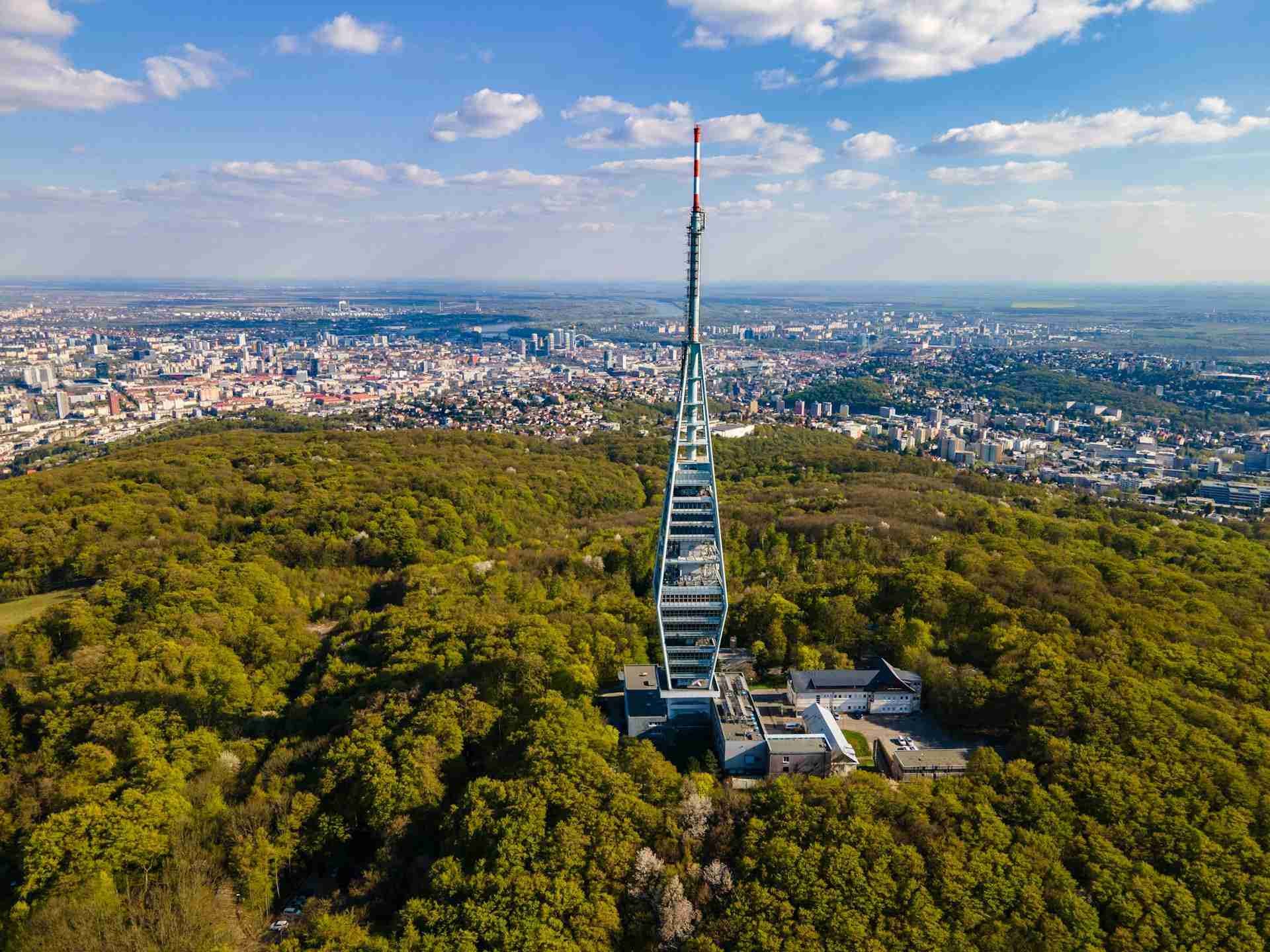
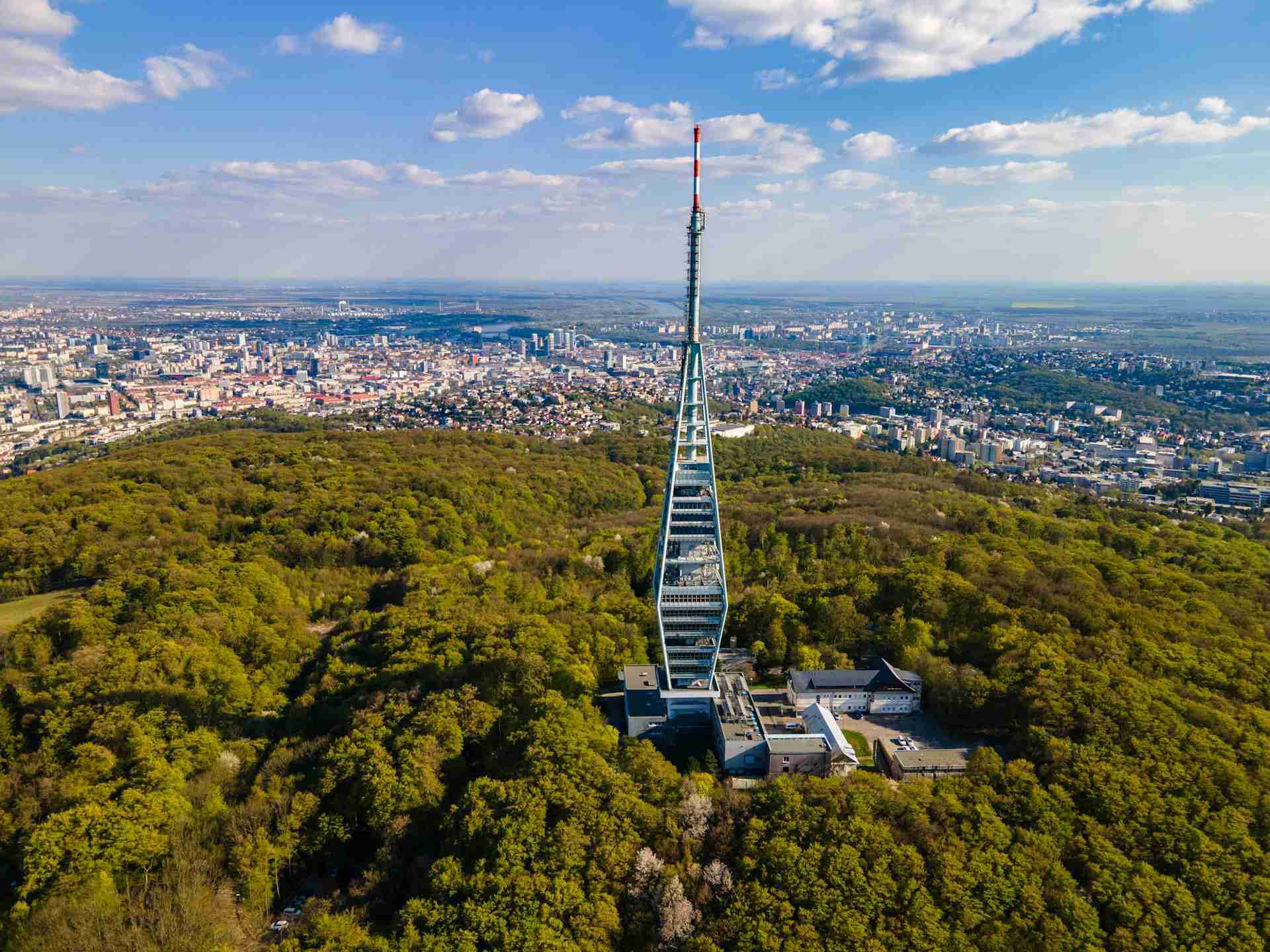
Kamzík TV Tower rises from the forested hills north of Bratislava, offering some of the cleanest long views across the city and beyond. Set within the Koliba area of the Little Carpathians, the tower itself is a slender structure of metal and glass, surrounded by trails, quiet slopes, and elevated terrain that is well-suited to both wide and compressed landscape work. Photographers come here for the height, but stay for the calm and flexible framing options. Whether you are looking for sweeping skyline panoramas, layers of ridge and valley, or a minimal architectural subject above the treeline, this location supports a range of working styles. In clear conditions, visibility stretches deep into Austria and Hungary, and in shifting weather, fog and contrast bring new variation to the scene with every hour.
Best Photography Opportunities
City Views through the Southern Openings near the Tower Base
From the open slope just south of the tower, the city spreads out beneath the treetops with a full view of the skyline, including Bratislava Castle, the SNP Bridge, and the Danube. This frame works well in early morning when the light strikes the buildings at a low angle and the air is still clean. A 70 to 200 millimeter lens helps compress the scene and control the layers of detail from forest edge to city center. When the conditions are clear, this is one of the few places where you can combine foreground branches with deep urban context. A tripod allows for stable exposure and careful adjustment of horizon placement.
Telephoto Compression toward Bratislava Castle and the Old Town
If you move slightly along the forested ridge, there are several clearings that offer direct lines of sight to Bratislava Castle and the clustered rooftops around it. A telephoto lens between 135 and 300 millimeters isolates the historic core of the city and reduces visual noise from the surrounding buildings. These shots work best in late afternoon or early evening when light filters through the western sky and softens the structure of the skyline. Framing tight allows you to avoid harsh contrast and focus on tonal balance. Using focus peaking or manual adjustments helps retain edge clarity, especially when haze begins to shift with the wind.
Framing the Tower with Forest Canopy and Path
The tower itself can be used as a central subject, particularly when working with the tree canopy or trail as part of the frame. Try a wide-angle lens between 16 and 35 millimeters to bring the structure forward and emphasize its vertical form against the soft curve of the slope. Morning light gives the tower a clean silhouette, while filtered midday sun can soften the structure and balance it against the treetops. Shooting from lower on the path adds a natural leading line and makes the tower appear even taller. In cloudy or low-contrast conditions, black and white processing helps simplify the frame and highlight shape over texture.
Golden Hour Layers over the Lower Hills and Fields
From the western and southern ridges around the tower, you can look out across the lowlands and farmland beyond the city limits. This view becomes especially productive during golden hour when soft tones stretch across the ground and the horizon begins to layer in cool tones. Use a 24 to 70 millimeter lens to balance depth with detail, and adjust focus to match the depth of field you want to maintain through the foreground. Framing with a nearby tree trunk or slope adds scale and anchors the image. These views are especially strong in autumn when the ground shifts in color and the sky remains open.
Night Photography with Skyline Lights and Tower Silhouette
Once the city lights rise and the last ambient glow fades from the sky, the tower can be photographed either as part of the foreground or as a dark form silhouetted against the light below. Long exposures reveal the spread of streetlights, window glow, and vehicle movement across the entire city. A 70 to 200 millimeter lens can compress the scene for skyline-focused images, while a wider frame allows for star points or cloud movement above. Be cautious of flare from ambient light near the observation area and adjust your position if needed. This location is quiet at night but fully accessible, making it a good base for extended blue hour sessions.
Best Time to Visit
Kamzík TV Tower is productive in all seasons, but autumn and spring bring the best balance of air clarity, light angle, and forest texture. In spring, the forest floor is open, and the branches are just beginning to fill in, which allows partial views through the trees while the city remains well lit. Autumn gives you color variation, soft edges in the background, and a longer golden hour due to the lower arc of the sun.
Summer provides extended daylight and stable weather, though midday light can feel harsh on the tower and surrounding terrain. Early morning or late evening is best during this season to avoid flat images. Winter conditions often offer the clearest views, especially after snow or cold wind clears the air. In fog, the tower can disappear completely, but partial conditions allow for strong, moody compositions and contrast between layers.
Because the site sits well above the city, light reaches this location early and lingers later than lower viewpoints. Always check wind and cloud forecasts before planning telephoto work, as even minor shifts in air clarity can dramatically affect sharpness and visibility.
How to Get There
Kamzík TV Tower is located in the Koliba forest area on the northern edge of Bratislava. The site is accessible by paved road, with a parking area near the base. If using public transit, several buses stop near the bottom of the hill, and a network of marked trails leads directly to the tower. The path is not steep and remains easy to follow, making it suitable for carrying gear without difficulty.
There is no fee to access the area, and photography is permitted from all public spaces surrounding the tower. A restaurant and small observation deck are housed within the structure, though tripod use inside may be restricted. Most photographers will find the best shooting points along the exterior paths or nearby clearings. These offer enough space to work with long lenses and set up tripods without interference.
Recommended Photography Gear
A telephoto lens between 70 and 200 millimeters is essential for skyline compression and long-distance detail across the city. A 24 to 70 millimeter zoom is useful for mid-range views and balancing background depth with nearby structure. A wide-angle lens between 16 and 35 millimeters helps when composing with the tower as subject, especially from the forested trail or lower ridge path.
Bring a tripod for golden hour, blue hour, and night exposures, as longer shutter speeds will be needed once the light begins to fall. A circular polarizer is useful for managing glare on bright days and reducing haze when working over long distances. A lens cloth or microfiber towel is helpful, especially in early morning when humidity can settle on glass surfaces. Consider a lightweight pack with a padded insert, since the area requires a short walk from vehicle or bus stop to the best shooting locations.
Footwear with good grip is recommended, especially after rain or in late autumn when leaves can make the trail slick. Dress in layers if staying through sunset or nightfall, as temperature drops quickly in the hills even when the city remains mild.
Nearby Photography Locations
From this elevated military memorial, you can frame the entire city from a different angle and include the castle, the Danube, and the main skyline in one clean sweep. The structure itself also provides strong geometric framing and flat open space for long exposures.
Closer to the city center, the castle grounds offer detailed architectural studies and city views from a lower elevation. Use this location for early light or architectural work with mid-range zooms.
This location brings contrast with modern structure and river light. Long exposures work well from below or across the Danube during twilight when bridge traffic and water reflection come together.
These streets provide textured foreground and soft color when photographing early or late in the day. Use the architecture as leading lines or framing elements for skyline and distance shots.
Further west, this riverside ruin offers a very different feel with aged stone, high cliffs, and views where the Danube meets the Morava River. It is especially photogenic in soft light and fog.
Kamzík TV Tower gives photographers time, space, and perspective to build deep images of the city and surrounding terrain. With forest edges, shifting atmosphere, and multiple angles to explore, it remains a solid base for both clear-sky cityscapes and quiet, layered landscape studies. Whether you return for changing seasons or shifting skies, this ridge continues to reward patient and thoughtful framing.
Comments
Loading comments…