
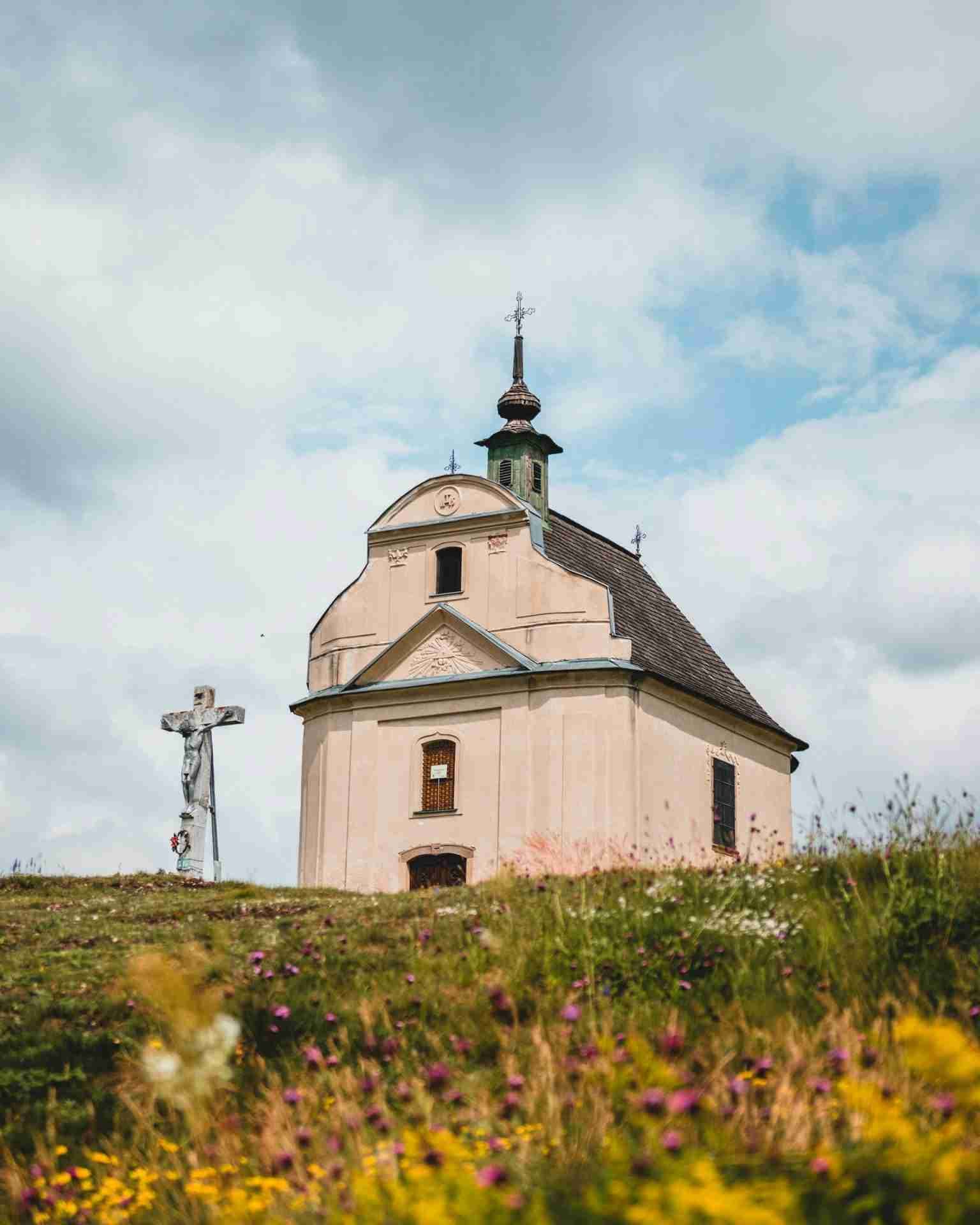
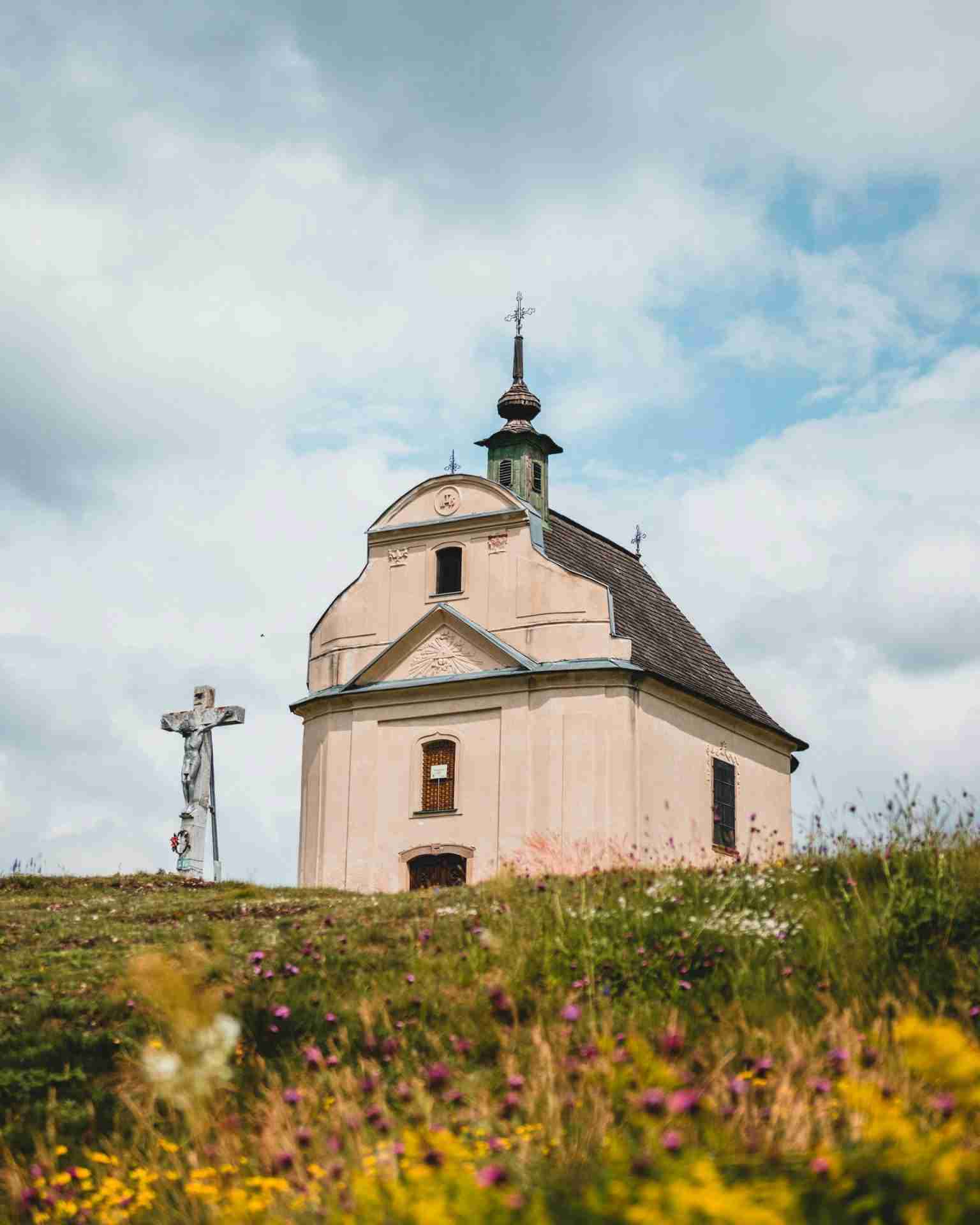
Set on a quiet hillside near the medieval heart of Spišské Podhradie, Kaplnka sv. Kríža offers a minimal yet striking subject for landscape and architectural photography. The small white chapel, simple in structure but commanding in placement, stands alone against open fields with a direct view toward the massive walls of Spiš Castle. This clean separation between land, structure, and sky creates a rare chance to build images from light, space, and form without visual noise. The setting works equally well for long-lens compression, environmental context, or subtle seasonal studies. Kaplnka sv. Kríža is not about intricate detail or ornate design. Its strength is in stillness, scale, and its quiet relationship to the surrounding land.
Best Photography Opportunities
Wide Environmental Frames from the South Slope
From the southern slope beneath the chapel, you can frame it with a clear line of earth beneath and the open sky above. This works best during early morning or just before sunset when the low sun creates soft side light across the white walls and the hill behind stays in shadow. A 24 to 70 millimeter lens will let you control how much foreground and sky you include. Working from slightly off-center allows the slant of the hill to balance the frame naturally. This position is also well-suited for incorporating human scale, such as a single figure or cyclist in the lower third of the frame.
Direct View Toward Spiš Castle in the Background
One of the strongest compositions places the chapel in the foreground with the vast outline of Spiš Castle rising behind it. Use a telephoto lens between 100 and 300 millimeters to compress the distance and draw both structures into a clean relationship. This shot works best in early morning with cool, clear light or on overcast days when the color palette stays soft and uniform. Position yourself to the northeast of the chapel and move gradually to find the exact alignment where both forms stack without overlap from trees or slope. Be patient with atmospheric haze, which often softens the castle outline during warmer months.
Golden Hour Side Light on the Chapel Façade
Late afternoon brings direct golden light to the chapel's west-facing wall. This is the best time to work with texture in the plaster, cast shadows, and the warm color contrast between the wall and surrounding grass. A mid-range lens helps isolate the structure while still keeping the line of the hill in frame. Move carefully to keep power lines and nearby signage out of view. Use a tripod if needed to frame slow exposures during the last light. On partly cloudy days, shifting sunlight adds movement and variation to the wall surface.
Minimalist Framing with Sky and Grass
The simplicity of the chapel makes it ideal for minimal compositions built from space and shape. On foggy mornings or just after rain, position the building in the lower third of your frame with a wide sky above. Keep your lines clean and allow space to dominate. A wide-angle lens used from a low angle can flatten the grass foreground and lift the chapel against the background. These shots work well in both color and black and white. Be prepared for subtle adjustments as the light changes or the fog clears.
Detail Studies of the Cross and Entrance in Soft Light
The front of the chapel features a simple iron cross and a small arched entrance. These elements reward close work in flat or soft light, especially after sunrise when shadows are not too deep. Use a short telephoto lens and work from just off center to include the curve of the arch and the texture in the white surface. On overcast days, you can control contrast without blowing highlights or losing shadow detail. These images often function as visual anchors when paired with wider environmental shots from the same location.
Best Time to Visit
Spring and autumn offer the best combination of clear light, soft weather, and visual interest in the surrounding landscape. In spring, green hills and shifting clouds create layers of contrast between land and sky. The light remains low and warm well into the morning. Autumn brings golden grass and crisp air, with early fog that often settles over the lower ground and lifts around the chapel by mid-morning. These moments create strong separation and a sense of calm across the scene.
Early morning is the most productive time for both side light and for catching distant clarity on Spiš Castle. The air is cleaner, the ground is quiet, and the light falls gently across the structure. Evening light brings warmth and shadow to the west-facing wall and often adds subtle pink or lavender tones to the sky behind.
Overcast days are well-suited for detail work, compression, and simple frames with low contrast. These conditions also keep color even and allow for more flexibility in exposure. Snow transforms the chapel's surroundings into a high-key environment, especially useful for minimalist framing and black and white studies. Avoid mid-day in summer when the light is flat, shadows are harsh, and the ground tends to glare.
How to Get There
Kaplnka sv. Kríža is located just outside Spišské Podhradie in the Prešov Region of eastern Slovakia. From the town center, take the small road northeast toward the cemetery, then continue uphill on a paved route that turns to gravel as you approach the chapel. The drive is short and accessible by car, with room to park just below the chapel near the treeline.
The chapel is also reachable on foot in about fifteen to twenty minutes from town. The incline is steady but not difficult, and the path is clear. There is no fee to access the site, and the grounds remain open year-round. Tripods are allowed, and the surrounding hillside provides ample space for composing without interference from buildings or infrastructure. There are no fences or gates around the chapel, but interior access is generally locked unless arranged in advance through local contacts.
Recommended Photography Gear
Bring a 24 to 70 millimeter zoom for flexibility in framing both wider environmental shots and more isolated views of the chapel. A 70 to 200 millimeter lens is helpful for compressing the scene and bringing Spiš Castle into relationship with the chapel. For minimalism and strong foreground presence, a 16 to 35 millimeter wide-angle lens works well, especially when shooting low against sky.
A tripod is essential for early light, late shadow, and long exposures in shifting conditions. Include a circular polarizer to control sky reflection and reduce glare on the white plaster surface. A three or six stop neutral density filter can be used for soft motion in passing clouds or to control exposure on brighter days. A lens cloth is useful for managing morning moisture or wind-driven dust from the hillside.
Footwear should be suited to uneven ground, especially in wet or muddy conditions. A small, lightweight pack is enough for this location, with space for a camera body, two lenses, and basic support gear. Weather shifts quickly in the region, so a rain cover or pack liner is recommended during shoulder seasons.
Nearby Photography Locations
This massive hilltop fortress dominates the skyline and is one of the most rewarding photographic locations in the country. Early morning or late evening light helps define its scale and texture. The structure pairs well with long lenses from below or wide angles from the surrounding ridge paths.
Just a few kilometers from the chapel, this early Gothic church is known for its medieval frescoes and rounded apse. The church sits on a low hill with open land around it, ideal for simple environmental framing in soft light.
This UNESCO-listed town includes preserved Renaissance and Gothic buildings, narrow streets, and the striking St. James Church. Visit during golden hour to capture shadow play and architectural texture in the cobbled main square.
Mariánska hora in Levoča
A short walk or drive from the town, this hilltop pilgrimage site offers open views across the valley and toward the mountains. The church and grounds provide clean shapes and changing light, especially during sunrise.
The Fields Above Spišské Podhradie
The rolling fields north of town offer open views back toward the chapel and castle, especially effective during sunrise or after harvest when the lines in the land are clear. These areas are best explored on foot with a long lens for compression and scale.
Kaplnka sv. Kríža may be modest in size, but its placement, light, and relationship to the land give it strong photographic weight. With just the right mix of openness, contrast, and structure, it invites photographers to work slowly and build clean, expressive frames that hold space and stillness in equal measure.
Comments
Loading comments…