
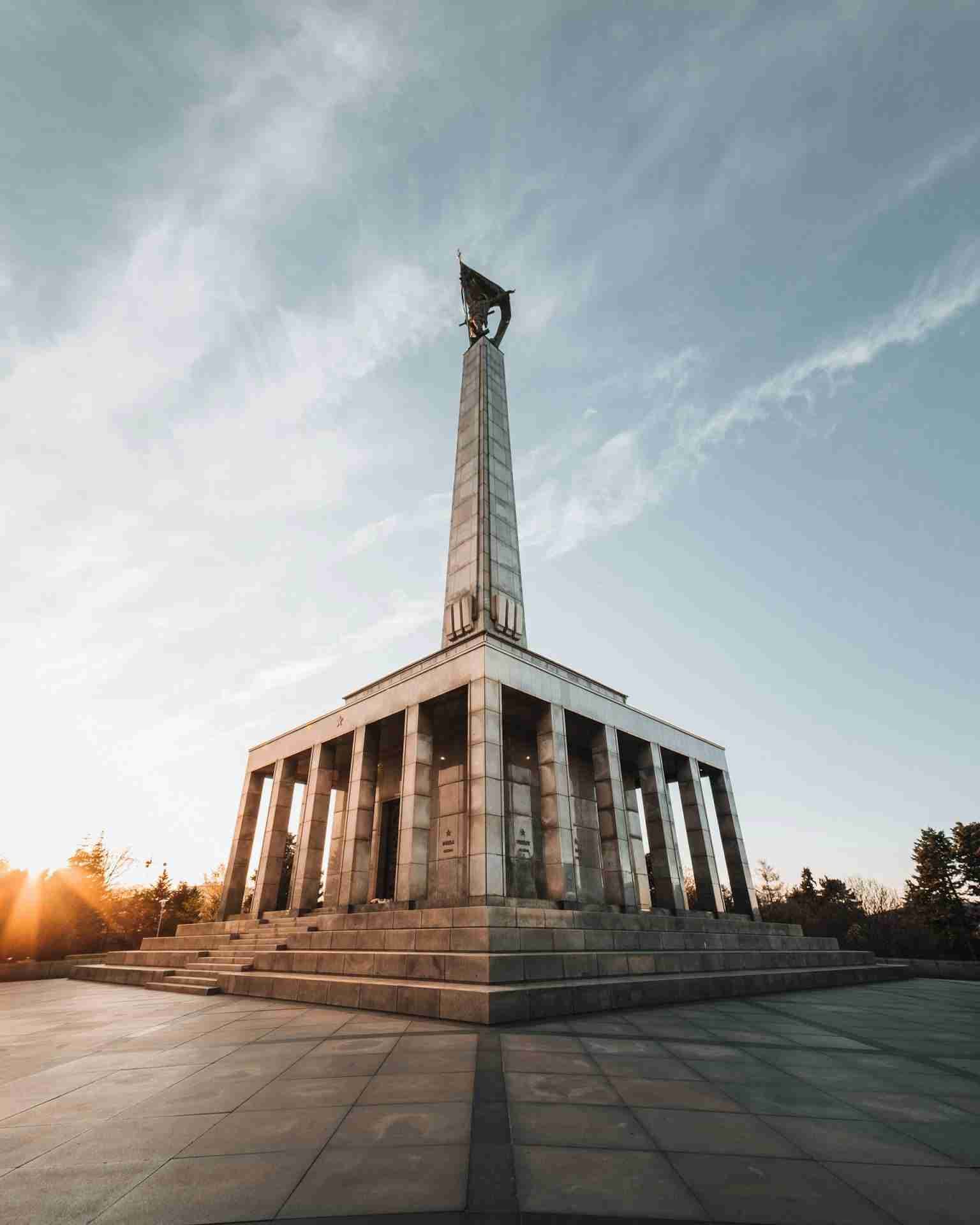
Slavín stands above Bratislava as both a military memorial and a strong photography location, offering clear views across the city, clean geometric elements, and long sightlines over rooftops, bridges, and distant hills. Set on a calm, elevated ridge, the monument and its surrounding platform combine strong stonework with open space, which makes it ideal for minimal framing, long exposures, or layered urban compositions. The location remains accessible year-round, and because of its height and unobstructed position, it catches first light early and holds golden tones late into the evening. This is not a busy tourist site, so photographers often have the area to themselves during early and late hours. The view toward Bratislava Castle, the Danube, and the clustered rooftops below makes this one of the most flexible and reliable high points in the city.
Best Photography Opportunities
Wide City Views from the Eastern Edge of the Platform
From the edge of the terrace, you can frame the city skyline with a strong sense of structure and separation. Early morning is best for this shot, especially when low fog lingers in the valley and softens the middle ground between rooftops and horizon. A 24 to 70 millimeter lens gives you the flexibility to work with either tight skyline details or wider views that include the steps and platform edge. If the clouds are high and broken, you may catch soft light over both the rooftops and the memorial itself. This vantage point is useful in every season, and subtle changes in the atmosphere shift the color palette from warm to cool with very little effort.
Architectural Framing of the Monument and Tower
The central monument, with its square platform and vertical tower, supports strong, centered compositions that work well in both color and black and white. A wide-angle lens allows you to include foreground interest such as engraved walls, railings, or the slope of the steps below. Afternoon light works best for texture on the western and southern faces, and cloud cover helps reduce contrast while keeping lines crisp. Using a tripod at this location helps maintain balance and accuracy, especially when shooting low or framing with symmetry in mind. This is also a great opportunity to experiment with slow movement or changing conditions over a single structure.
Framing Bratislava Castle from the Upper Terrace
Looking southwest from Slavín, you can frame Bratislava Castle across the layered rooftops below. A 70 to 200 millimeter lens compresses the distance and places the castle clearly against the skyline. This composition is strongest during golden hour when side light gives definition to the castle's roof and outer walls. Look for small shifts in elevation along the wall to fine-tune the shape of the frame. This shot is repeatable in all seasons, and the background haze or clarity of the sky adds variety to multiple visits.
Minimalist Compositions Using the Forecourt and Steps
The paved forecourt and surrounding walkways provide open space for creating simple, geometric compositions. Use overcast skies or soft winter light to reduce distractions and focus on the stone texture and clean structure. Shooting low along the platform edges or directly into the steps can create visual rhythm without needing a focal subject. These scenes work well in both horizontal and vertical orientation and support longer exposures if the light is changing rapidly. When framed carefully, these images can reflect subtle shifts in tone, scale, and balance.
Twilight and Night Work with the Lit Tower
Once the sky darkens and the memorial is lit from below, the tower becomes a strong focal point against the remaining blue tones in the sky. Long exposures help bring out the contrast between the monument and the softly glowing city beyond. A tripod is essential here, and small aperture settings help preserve background detail without softening the shape of the tower. Color temperature varies depending on weather and season, so monitor your white balance to avoid inconsistent tones in the sky and lighted surfaces. These nighttime frames often carry more mood than structure, especially when the light fades slowly and the city begins to glow.
Best Time to Visit
Slavín is productive in every season, but spring and autumn offer the most consistent mix of light, air, and atmosphere. In spring, the sun rises cleanly over the city and lights the monument and skyline evenly from the east. Autumn mornings often start with soft fog in the valley, which breaks apart by mid-morning and leaves you with a clear, cool sky. These conditions support both broad city views and more focused architectural frames.
During summer, light is available later into the evening, and long sessions are possible without rush. However, early or late hours are still the most effective times, since midday light tends to flatten detail and reduce contrast. Winter brings low, directional light that adds structure to the stone and sharpness to distant buildings. Snowfall can highlight the steps and railings while giving the monument added clarity against a soft background. Plan your timing based on weather and desired light angle, and consider return visits to study how changing air quality affects depth and separation across the city.
How to Get There
Slavín is located west of Bratislava's city center and is reachable on foot, by public transit, or by car. From the Old Town, the walk takes about twenty to thirty minutes and leads uphill through quiet residential streets. The path is paved the entire way and includes several stopping points with views. Multiple bus lines reach stops within a few minutes of the entrance, making it accessible without needing to hike.
Free parking is available nearby, and there is no fee to visit the memorial. The platform is open year-round with no restrictions on tripods or other camera equipment. The wide space around the monument allows for movement between different positions, and the lack of visual clutter helps simplify setup. Benches and walls offer rest points or temporary supports for low-angle frames.
Recommended Photography Gear
Bring a 16 to 35 millimeter wide-angle lens for shots of the monument and forecourt where strong verticals and foreground interest matter. A 24 to 70 millimeter zoom is ideal for flexible work that includes skyline or platform details without switching lenses too often. For city views or compression shots toward Bratislava Castle, a 70 to 200 millimeter lens adds important reach and perspective control.
A tripod is strongly recommended, especially for twilight and night work or layered skyline scenes. Include a circular polarizer if working during daylight, especially when the stone reflects overhead light or when contrast in the sky becomes difficult to manage. A neutral density filter between three and six stops may help if you want to smooth movement or extend shutter times without losing sharpness. Use a shutter release or timer to reduce vibration when working at longer focal lengths.
Footwear with grip is helpful in wet or icy weather, and a lightweight pack makes it easier to move across the open platform. Bring a lens cloth to manage light mist or windblown dust, and dress in layers for early sessions when the elevated air holds more chill than the city below.
Nearby Photography Locations
Just downhill to the southeast, the castle offers detailed architecture, wide open grounds, and strong golden hour potential. Shoot back toward Slavín for layered skyline images or stay close to frame rooftop texture and clean symmetry.
From river level, the bridge and tower offer bold modern forms that work well with long exposure techniques. Sunset or early evening is ideal, especially when reflections appear in the river below.
These narrow streets and stone buildings photograph best in early light when shadows define texture. This is a great area for handheld street work or controlled architectural detail with a short zoom.
This high ridge to the north offers strong panoramic views across the city with minimal haze. It is useful during late afternoon and early evening when the light defines distant forms without washing them out.
Riverwalk Along the Danube
The riverfront allows for low-angle compositions looking back at the skyline. These frames are strongest when the water is still and the light is warm, especially just after sunrise or before blue hour.
Slavín rewards calm and measured photography with its clean layout, layered skyline, and open air. Whether you are focusing on city views or architectural balance, this location allows for repeat visits, each with new light and subtle changes in tone. For anyone building a visual study of Bratislava, Slavín provides an essential and consistent anchor point above the city.
Comments
Loading comments…