
Photographing Cerkev Sv. Areh
Tucked into the pine-covered slopes of Slovenia's Pohorje range, Cerkev Sv. Areh is a mountain chapel that rewards photographers with simplicity, seasonal variation, and a quietly layered environment. The church itself, with its whitewashed walls and modest tower, sits on a gentle plateau surrounded by dense forest and open meadows. This is not a location about grandeur or spectacle. It is a place where fog hangs low through the trees, where snow softens every line, and where careful compositions emerge through a close relationship with light, weather, and terrain. Whether blanketed in snow, wrapped in mist, or basking in warm alpine light, Cerkev Sv. Areh invites slow photography rooted in patience and timing.
Best Photography Opportunities
Front-Facing Elevation and Seasonal Framing
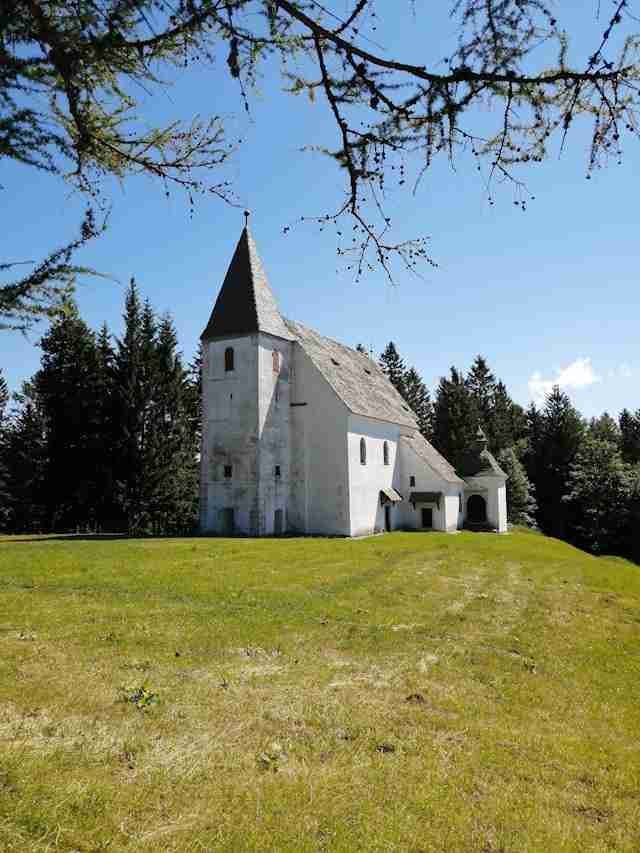
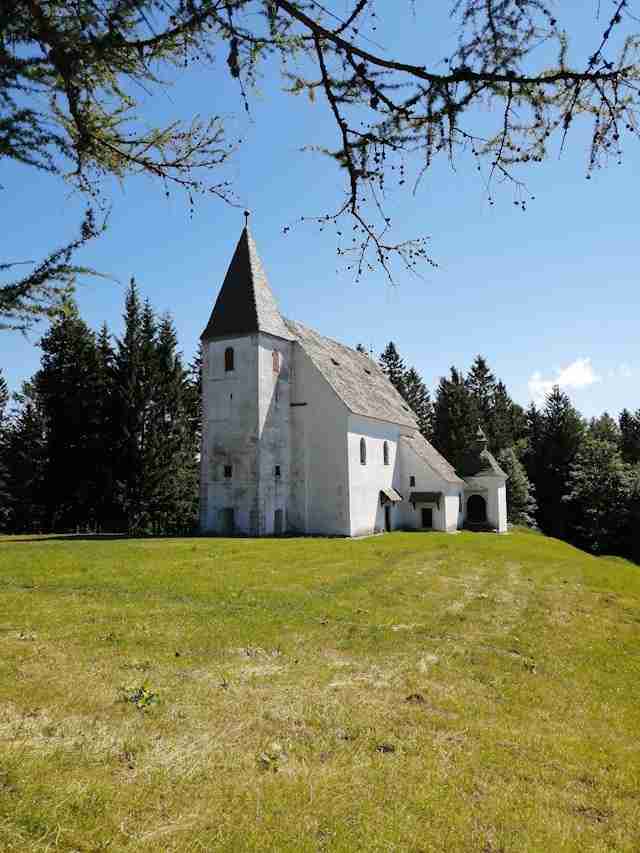
The church's front elevation, framed by forest on either side, makes a balanced and inviting composition. A standard lens works well here to maintain correct proportions without distortion. This view shifts dramatically with the seasons. In winter, the church stands against a backdrop of snow-covered firs, while spring and autumn bring warm color palettes and soft side lighting. Early morning often provides low fog in the tree line, which adds visual separation between the chapel and background. Include the path or foreground grasses to add depth and lead the viewer into the frame.
Rear View with Tower and Tree Line
From behind the church, you can frame the tower rising above the ridgeline with the forest extending outward in both directions. This composition is ideal in the early morning when sunlight breaks through the trees and catches the upper part of the tower. Use a short telephoto to compress the trees and draw attention to the architectural details of the roofline and cross. Fog is common in this area and helps reduce background contrast, making the tower appear to float above the tree line. This view works best under diffused or low-angled light that softens shadow transitions.
Side Profile in Fresh Snow or Frost
During the colder months, the church takes on a completely different character. Snow clings to its roof and outlines the edges of the building in a way that simplifies the structure and enhances form. Shoot from the south-facing side with a wide lens to include both the building and the clearing beyond. When the snow is untouched, the scene offers a clean composition with subtle texture and tone. A polarizer can help reduce glare on snow, and a lower exposure preserves highlight detail in the bright foreground. Avoid strong sunlight when possible, as it flattens the snow and removes subtle shadow texture.
Detail Studies of Stone, Wood, and Ironwork
Beyond the wide scenes, Cerkev Sv. Areh offers rich textures in its doors, windows, and nearby outbuildings. Use a macro or short telephoto lens to focus on iron hinges, wooden carvings, or weathered paint. These subjects are strongest in flat light when shadows are soft and detail is preserved across the surface. On overcast days, explore how water droplets hang on branches or how frost builds up on railings. These close studies give a more intimate sense of place and are perfect complements to wider landscape work.
Forested Pathways Leading Toward the Church
The trails approaching the chapel pass through dense forest, offering opportunities for compositions that build anticipation and atmosphere. Shoot at a wide aperture to allow the trees to blur gently around the frame and focus the viewer's attention on the chapel at the end of the path. This technique is effective in morning fog or light snowfall when the air itself becomes part of the visual texture. Include tree trunks, low branches, or trail markings to guide the eye forward. These compositions work well as vertical frames to emphasize upward movement and scale within the forest.
Best Time to Visit
Cerkev Sv. Areh holds photographic interest throughout the year, with each season offering distinct possibilities. Winter transforms the chapel into a quiet architectural form amid heavy snow and monochrome tones. Sunrise and early morning light are best during this season, when the sky remains low and color subtle. Spring brings contrast between fresh greens and the white walls of the church, while summer allows for easier access and longer shooting windows. Autumn is perhaps the most photogenic season, with golden light filtering through the trees and the forest surrounding the chapel turning deep orange and red.
Fog is common year-round, especially in the early morning or late afternoon after rainfall. These conditions are ideal for isolating the structure and creating images with depth and soft gradients. Avoid strong midday light, which tends to flatten both the landscape and architectural features. Early and late hours provide better light quality, more subdued contrast, and quieter surroundings with fewer visitors.
How to Get There
Cerkev Sv. Areh is located on the Pohorje Plateau above Maribor in northeastern Slovenia. From Maribor, follow signs for Areh or Mariborsko Pohorje via Hoče, then continue along the local mountain roads toward the church. The roads are paved but narrow and winding, so drive cautiously, especially in winter or fog.
Parking is available near the church in a small lot, with direct pedestrian access to the chapel. There are no entrance fees, and the grounds are freely accessible year-round. In snowy conditions, the final section of road may require snow tires or chains. During summer and autumn, the location is also reachable by several well-marked hiking trails from lower elevations. Be sure to check weather conditions, as fog and snow can appear quickly and reduce visibility.
Recommended Photography Gear
A wide-angle lens is essential for working with the chapel and its forested surroundings, especially when including foreground trails or snow-covered clearings. A 24 to 70 millimeter lens offers excellent flexibility for composing both environmental portraits of the building and tighter architectural frames. A short telephoto lens helps compress tree lines and isolate the church tower against fog or sky. A macro or close-focus lens is recommended for detail studies in stone, wood, and seasonal textures like frost or dew.
A tripod is necessary for shooting in low light or during extended blue hour sessions. A circular polarizer will reduce glare on snow, water, and reflective surfaces while also enriching contrast on cloudy days. In bright conditions, a neutral density filter helps manage exposure during longer shutter work. Lens cloths are useful in fog or light rain, and waterproof covers for your bag and camera are important during winter or shoulder seasons. Footwear with grip and warmth is essential for navigating icy or muddy paths.
Nearby Photography Locations
In winter, the ski lifts and snow-covered slopes of nearby Mariborsko Pohorje offer sweeping alpine views and strong visual contrast between forest and open terrain. Ride the cable car for elevated perspectives over the valley and soft sunset light on the ridgelines.
A short hike from Areh leads to this tranquil, tree-lined lake surrounded by thick spruce forest. The water is often mirror-still in the morning, offering reflections and delicate compositions with reeds, branches, and soft light across the surface.
Ruše Valley from the Ridge
The higher elevations above Cerkev Sv. Areh provide clear views down into the Ruše Valley, especially during clear weather. Use a telephoto lens to compress the distant hills and isolate layers of forest and farmland. Early morning fog often fills the valley, creating atmospheric separation between foreground and background.
Located further east on the Pohorje ridge, this church offers a more open surrounding and a different architectural style. It is a good companion location for comparing how two nearby mountain chapels respond differently to light, weather, and framing.
Nestled in a narrow forest gorge, this small but photogenic waterfall is best captured after rainfall or during spring melt. Use a tripod and neutral density filter to smooth water flow and build compositions with stone, moss, and moving water.
Cerkev Sv. Areh is a place where photography becomes an act of stillness. The architecture does not overwhelm its surroundings, and the forest does not crowd the building. Instead, they exist together in quiet balance. For photographers who value patient observation, muted color, and clean lines shaped by seasonal change, this chapel on the ridge continues to offer quiet stories told through careful light and thoughtful framing.
Comments
Loading comments…