
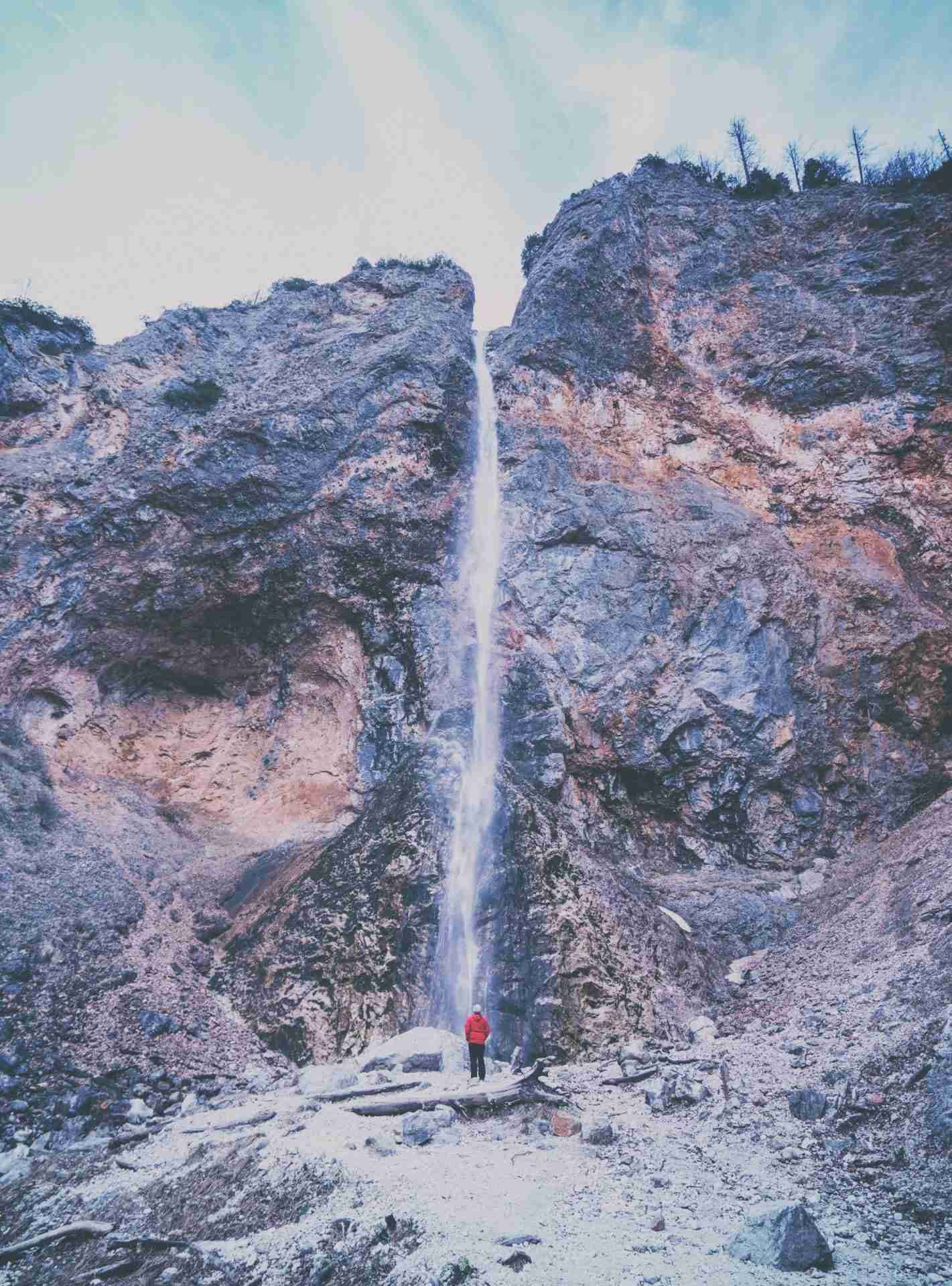
Rinka Waterfall stands as one of Slovenia's most dramatic natural features, pouring from a high cliff at the end of the Logar Valley in a powerful, uninterrupted fall. Framed by steep limestone walls and alpine forest, the water drops more than 100 meters in a narrow column that seems to slice the air. The setting is immersive and close, with the roar of water echoing off stone and cool mist drifting into the trail below. For photographers, the scene offers clean vertical compositions, atmospheric conditions, and the chance to work with both wide and intimate frames. It is a location where light, water, and rock come together in shifting ways throughout the day.
Best Photography Opportunities
• Long Exposure from the Base Platform
At the base of the waterfall, a wooden platform gives you a direct and centered view of the plunge. This is the best spot for a vertical composition that emphasizes the height and clean fall of the water. A wide angle lens lets you include the splash pool and surrounding rock, while a 35mm or 50mm frame focuses more tightly on the interaction between water and cliff. Overcast skies are ideal here, allowing for longer exposures without blown highlights. A shutter speed between one and four seconds softens the water and draws attention to its path. Look for slight color variation in the mist, especially when sunlight filters in at a low angle.
• Diagonal Compositions from the Side Trail
As you approach the waterfall from the main path, several points allow for diagonal framing of the entire fall. These shots include more context, with trees, layered cliffs, and occasional hikers that add a sense of scale. Use a lens in the 24 to 70mm range to control how much of the slope and background you want to include. Morning light from the east side of the valley can add glow to the upper section of the fall, while afternoon clouds keep contrast under control.
• Detail Studies of Cliff Texture and Spray
Closer to the plunge pool, there are several opportunities to isolate smaller elements of the scene. Shoot tight details of the cliff face where water meets stone, or capture the edge of the stream as it breaks into mist. These images are strongest in diffused light, where subtle tonal changes come forward. A short telephoto lens can help compress the layers and reduce background distraction. Use a fast shutter to freeze spray or a slow one to blur motion depending on your goal.
• Upward Framing from Below
For a more dramatic sense of scale, position yourself low and angle the camera upward toward the lip of the cliff. This technique works well with a wide lens, especially if the sky is textured with cloud or low light. Including a section of the rock wall or platform in the foreground adds structure to the frame. These compositions are strongest in the hour after sunrise or before sunset, when the angle of light brings out texture in the stone.
• Rainbow Effects in Misty Conditions
On sunny days, the mist rising from the plunge pool can catch the light and create rainbows in the lower third of the frame. These are easiest to capture with the sun behind you and the waterfall centered in the frame. Use a polarizer to manage glare and deepen contrast between water and rock. This effect is fleeting and often depends on time of year and volume of flow, but when conditions align, it adds a striking accent to an otherwise monochrome scene.
Best Time to Visit
Spring and early summer bring the strongest water flow as snow melts from the surrounding mountains. These months also offer the most moisture in the air, increasing the chance of mist and motion in the frame. Early morning visits are best for soft light, fewer visitors, and the potential for fog or cold air layers in the valley. Autumn brings warm color in the forest and lower sun angles that help define the texture of the cliffs. Overcast days are ideal for detail work and long exposure. Winter can be difficult due to trail conditions, but when the waterfall partially freezes, it becomes a different kind of subject altogether.
How to Get There
Rinka Waterfall is located at the far end of Logar Valley in northern Slovenia. The valley is accessible by car from the towns of Solčava or Luče, with a toll road leading into the park. From the parking area near the end of the road, a well marked walking trail leads to the base of the waterfall in about 10 to 15 minutes. The trail is easy and well maintained, suitable for carrying photography gear or a small tripod. There is no entrance fee to the waterfall itself, though access to the valley by car may require a toll payment depending on the season. The platform at the base provides a stable shooting position, but for other angles, be prepared to walk along uneven paths or damp rock.
Recommended Photography Gear
Bring a wide to standard zoom lens for flexibility, and a short telephoto for isolating detail. A sturdy tripod is essential for long exposures and early or late light. Use a polarizer to manage reflections off wet rock and bring out color in the forest or sky. Waterproof boots or trail shoes help with footing near wet areas, especially during spring runoff. A lens cloth or microfiber towel is important for keeping spray off your glass. A rain cover for your camera is optional but recommended in high mist. A remote shutter release or timer function helps avoid camera shake during longer exposures.
Nearby Photography Locations
The road through the valley provides multiple pull-off points with views of alpine meadows, forest, and high peaks. These work well for wide environmental landscapes, especially in early light when shadows stretch across the fields.
A smaller waterfall located earlier along the valley road, Slap Palenk is surrounded by dense forest and has a different feel than Rinka. It is ideal for layered compositions and long exposures in a more enclosed space.
• Solčava Panoramic Road
This high route above the valley gives wide views across the Kamnik Alps and offers changing perspective as you drive or walk between viewpoints. Best for early or late light with atmospheric depth and soft layering.
• Planšar Farm Pastures
Traditional wooden buildings, grazing cattle, and open alpine pasture sit not far from the entrance to the valley. These locations are perfect for rural scenes that blend culture and landscape.
A neighboring valley that is less visited but equally photogenic, with a wild, untamed atmosphere. It offers more intimate forest paths and hidden stream crossings, rewarding slower exploration and careful composition.
Comments
Loading comments…